
AI in Aviation Component Maintenance: Transforming Prognostics, Efficiency, and Fleet Readiness
Artificial Intelligence (AI) is no longer a futuristic concept in aviation; it is actively reshaping maintenance paradigms from reactive troubleshooting to predictive and prescriptive analytics. This guide explores how AI-driven technologies are revolutionizing the upkeep of critical components like Military Aviation Relays, Aviation Sensors, and Aircraft Contactors. For procurement managers and MRO directors, understanding AI's role is essential for optimizing fleet availability, reducing operational costs, and implementing true Condition-Based Maintenance (CBM) for systems ranging from Aircraft Engines to complex avionics in modern Planes and UAVs.

Industry Dynamics: From Condition Monitoring to Predictive and Prescriptive Analytics
The industry is rapidly evolving beyond basic condition monitoring. By applying machine learning (ML) and deep learning algorithms to vast datasets from flight data recorders, onboard sensors, and maintenance histories, AI can identify subtle patterns indicative of impending failure. This enables a shift to Predictive Maintenance (PdM), where maintenance is performed just before a failure is likely to occur. The next frontier is Prescriptive Maintenance, where AI not only predicts failure but also recommends optimal corrective actions, spare parts logistics, and even suggests design improvements to OEMs.
Key AI Applications in Component-Level Health Management
AI is being deployed across several critical maintenance functions:
- Anomaly Detection in Sensor Data: AI models continuously analyze data from Aviation Sensors (vibration, temperature, current) to detect deviations from normal baselines for components like High quality Aviation Engine bearings or generator brushes, flagging issues long before they trigger traditional alarms.
- Remaining Useful Life (RUL) Prediction: By learning from historical failure data and real-time operating conditions, AI can estimate the RUL of specific components, such as an Aviation Fuse nearing its end-of-life due to cumulative electrical stress or a Military Aviation Contactor based on its switching cycle count and arcing history.
- Automated Visual Inspection and Defect Classification: Computer vision AI can analyze images or video from borescopes and automated drones to inspect hard-to-reach areas, automatically identifying and classifying defects like corrosion, cracks, or contact erosion in Aircraft Contactors with higher consistency than human inspectors.
- Optimized Maintenance Scheduling and Logistics: AI algorithms can process fleet-wide health data, parts availability, and technician schedules to generate optimized maintenance plans, minimizing aircraft on ground (AOG) time and optimizing spare parts inventory, including for complex Train systems.
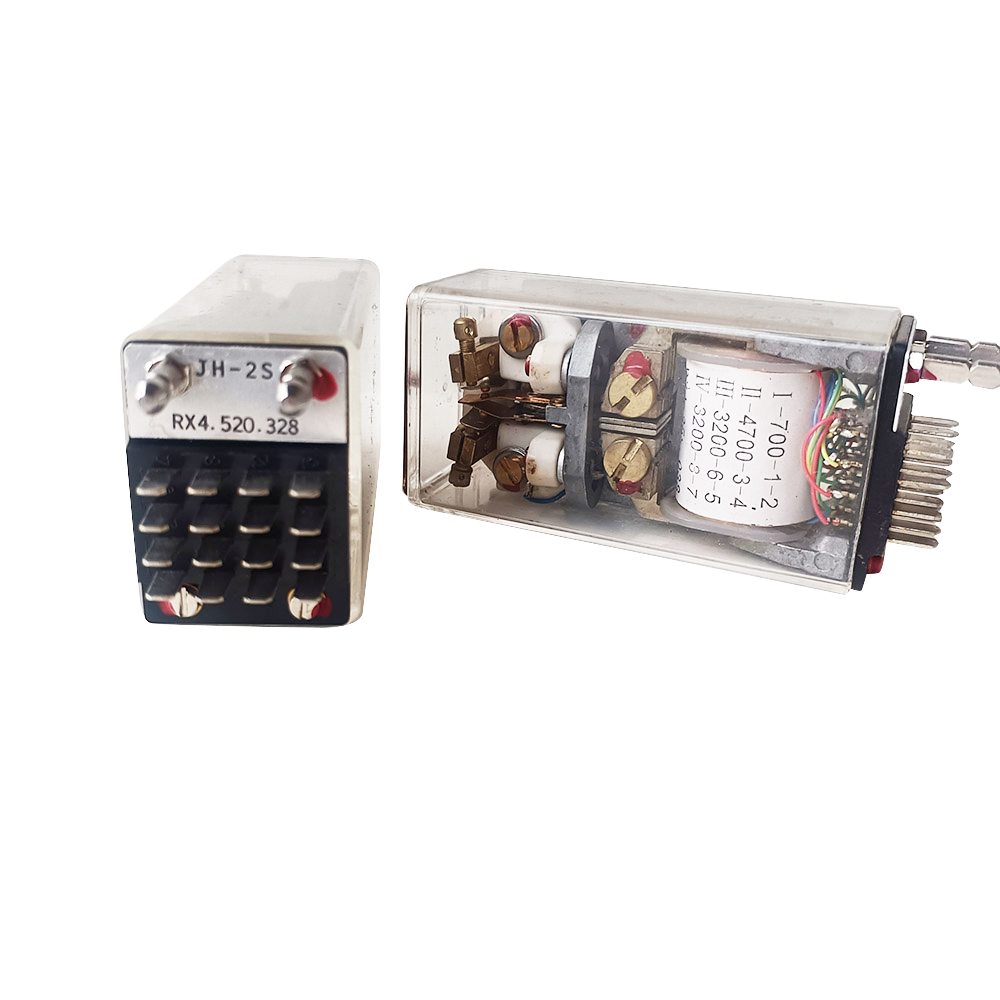
Procurement Priorities: 5 Key AI-Enabled Maintenance Concerns from Russian & CIS Buyers
For procurement teams evaluating AI-driven maintenance solutions or smart components, the focus is on practicality, security, and verifiable ROI:
- Algorithm Transparency, Validation, and Certification Path: Buyers demand understanding of how the AI makes predictions (avoiding "black box" models). They require evidence of algorithm validation against historical data and a clear path for regulatory acceptance of AI-driven maintenance recommendations within their national airworthiness frameworks (e.g., adapting EASA AI Roadmap or FAA guidelines).
- Data Quality, Ownership, and Integration Requirements: The adage "garbage in, garbage out" is critical. Suppliers must specify the quality, granularity, and volume of data required from the customer's systems to train and run their AI models. Clear agreements on data ownership, usage rights, and integration methods with existing MRO IT systems (like AMOS or SAP) are mandatory.
- Cybersecurity of AI Systems and Data Pipelines: AI systems introduce new attack surfaces. Buyers require assurance that the AI platform, its data ingestion pipelines, and its outputs are secured against manipulation, data poisoning, or theft, aligning with standards like NIST AI RMF and DO-326A/ED-202A for airworthiness security.
- Total Cost of Ownership (TCO) and Measurable ROI Metrics: Clear metrics for success must be defined upfront: e.g., percentage reduction in unscheduled removals of Aviation Meters for Drones, increase in mean time between failures (MTBF), or reduction in inventory carrying costs. The AI solution's subscription/implementation cost must be justified against these tangible savings.
- Human-AI Collaboration and Change Management Support: Procurement values suppliers who provide not just software, but also training and change management support for maintenance crews. The solution should augment, not replace, human expertise, providing clear, actionable insights that technicians can use to make final decisions.
YM's Approach: Integrating AI into Component Design and Support Services
We are proactively embedding intelligence into our products and services. Our factory scale and facilities generate a rich dataset used to train our proprietary AI models. By analyzing production test data from thousands of Aviation Sensors and relays, we can identify micro-trends that correlate with long-term reliability. This allows us to offer AI-enhanced reliability forecasts for specific batches or applications, providing customers with deeper insight into their expected maintenance needs.

This capability is powered by our R&D team and innovation成果 in data science and embedded systems. We have developed edge-AI algorithms that can run directly on our smarter components, such as a next-generation Military Aviation Relay that can locally analyze its own coil current signature to detect early signs of mechanical binding. Furthermore, our cloud-based Predictive Health Analytics service aggregates field data from subscribed components to provide fleet-wide health insights and early warning notifications.
Step-by-Step: Implementing an AI-Driven Component Maintenance Program
Organizations can adopt AI in maintenance through a phased, data-centric approach:
- Phase 1: Data Foundation and Readiness Assessment:
- Audit available data sources: component serial numbers, maintenance logs, sensor feeds, flight data.
- Clean, label, and organize historical failure and maintenance data to create a quality training dataset.
- Phase 2: Pilot Project Selection and Model Development:
- Select a high-value, high-failure-cost component for a pilot (e.g., a specific Aircraft Engine valve actuator or power generator).
- Partner with a solution provider or internal data science team to develop and train a focused AI model for that component's RUL or anomaly detection.
- Phase 3: Integration and Validation:
- Integrate the AI model's outputs into the existing maintenance workflow (e.g., as an alert in the CBM dashboard).
- Run the model in parallel with traditional methods for a defined period to validate its accuracy and build trust with technicians.
- Phase 4: Scaling and Optimization: Expand the program to other component families, continuously retraining models with new data. Use AI insights to optimize spare parts inventory and refine maintenance manuals based on real-world failure patterns identified by the AI.

Industry Standards and Regulatory Evolution for AI in Maintenance
Building a Framework for Trustworthy AI
The regulatory landscape for AI in maintenance is under active development, relying on evolving frameworks:
- EASA AI Roadmap & FAA Initiatives: Regulatory bodies are publishing roadmaps and seeking industry input to define acceptable means of compliance for AI/ML in aviation, focusing on safety, explainability, and continuous learning.
- SAE G-34 / EUROCAE WG-114: Industry committees dedicated to developing standards for AI in aviation, including ethics, verification, and validation.
- DO-178C & DO-254 (Adapted): While for software/hardware, their principles of design assurance, verification, and configuration management are being applied to the development of safety-related AI/ML models.
- ISO 55000 (Asset Management) & ISO 13374 (Condition Monitoring): Provide a foundational framework for data-driven asset management into which AI solutions must integrate.
- Internal Assurance Processes: Leading suppliers implement rigorous internal AI model assurance processes for development, testing, and monitoring to ensure reliability and build customer trust ahead of formal regulations.
Industry Trend Analysis: Digital Twins, Federated Learning, and Autonomous Diagnostics
The convergence of AI with other technologies is creating powerful new trends: The integration of AI with high-fidelity Digital Twins enables ultra-accurate simulation of component degradation under various scenarios. Federated Learning allows AI models to be trained on data from multiple organizations (e.g., different airlines) without sharing the raw, sensitive data, overcoming a major hurdle for data collaboration. Finally, the move toward fully autonomous diagnostics and repair recommendations for certain line-replaceable units (LRUs) is on the horizon, where an AI system could diagnose a fault in a Military Aviation Relay panel and automatically generate a work order with parts list and repair instructions.

Frequently Asked Questions (FAQ) for Maintenance and Procurement Teams
Q1: Can AI really predict random, catastrophic failures in components?
A: AI is excellent at predicting wear-out failures with identifiable precursors in data. Truly random, instantaneous failures (e.g., from a latent material defect) remain challenging. However, AI can often identify subtle anomalies that precede what was previously thought to be a "random" event by correlating multiple, seemingly unrelated data streams, thereby reducing the pool of unpredictable failures.
Q2: What infrastructure is needed to start using AI for maintenance?
A: The foundation is digitized, structured data. You need a way to collect and store component serial numbers, work orders, and ideally, sensor data. Starting does not require a massive data lake; a focused pilot project on a single component type with well-curated historical data can yield valuable insights. We offer readiness assessment services to help customers evaluate their starting point.
Q3: How does AI handle new components with no historical failure data?
A: For new components, AI models can initially rely on physics-based models and data from similar components or accelerated life testing. They can also employ unsupervised learning to establish a baseline of "normal" behavior from initial field data and then monitor for deviations. The model's accuracy improves as operational data accumulates.
Q4: Are you developing "smarter" components with built-in AI capabilities?
A: Yes, as part of our next-generation product roadmap. We are developing components with increased onboard processing and sensing. For example, an advanced Aviation Sensor might include a tiny microcontroller that runs a lightweight AI model to pre-process data, detect faults locally, and transmit only meaningful alerts, reducing bandwidth needs and enabling faster response. Explore our edge AI technology developments.
References & Technical Sources
- European Union Aviation Safety Agency (EASA). (2023). Artificial Intelligence Roadmap 2.0.
- IEEE Standards Association. (2021). IEEE P2802, Standard for System of Concepts for Prognostics and Health Management of Systems [In Development].
- SAE International. (2023). AIRXXXX, Guidelines for the Use of Machine Learning in Aerospace Prognostics and Health Management [Under Development].
- Jardine, A. K., Lin, D., & Banjevic, D. (2006). "A review on machinery diagnostics and prognostics implementing condition-based maintenance." Mechanical Systems and Signal Processing, 20(7), 1483-1510. (Foundational PHM concepts).


