
Aviation Component Testing Services: The Foundation of Airworthiness and Reliability
In the aerospace and defense industries, component reliability is non-negotiable. For procurement managers, quality assurance specialists, and engineering teams at OEM/ODM manufacturers, distributors, and operators, comprehensive testing services are the critical gateway that validates performance, ensures safety, and achieves regulatory compliance. This guide examines the essential role of testing services for core aviation components like military Aviation Contactors, aviation relays, aviation fuses, sensors, and meters, providing a framework for selecting and leveraging these services to mitigate risk and ensure mission success.
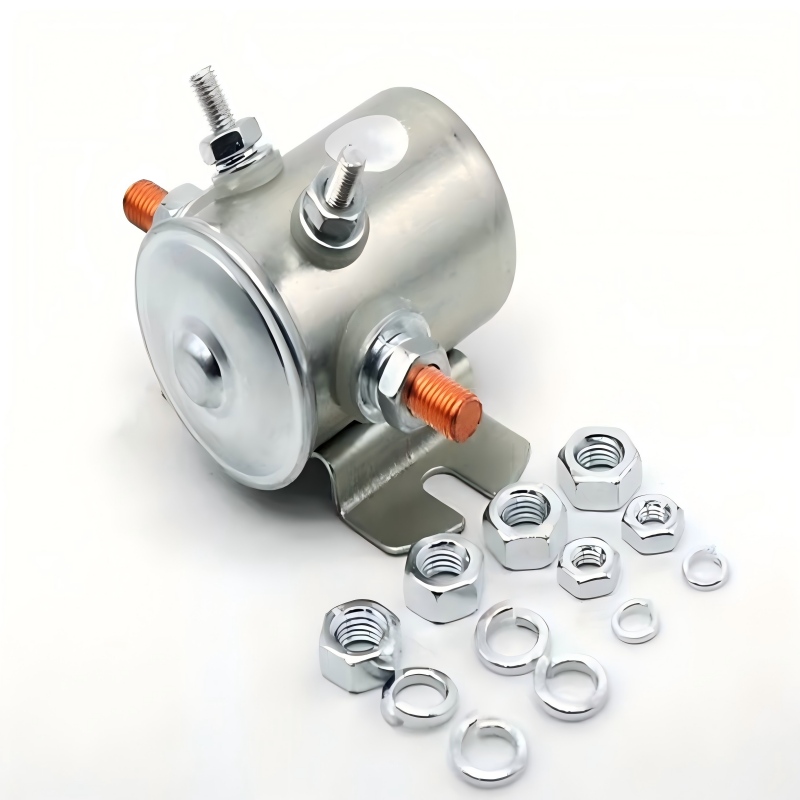
The Multilayered Testing Paradigm for Aviation Components
Aviation components undergo a rigorous, tiered testing regime throughout their lifecycle, from design validation to end-of-life.
1. Qualification and Certification Testing (Proving Design Integrity)
This is the most comprehensive level, required to certify a new component design or a significant modification. It involves testing to internationally recognized standards to prove the component can survive its intended operational environment. For a military Aviation Contactor, this means undergoing a battery of tests per standards like:
• RTCA/DO-160: Environmental Conditions and Test Procedures (Sections for Temperature, Altitude, Vibration, Shock, EMI/EMC).
• MIL-STD-810: Environmental Engineering Considerations (for ground/military applications).
• MIL-STD-461: Requirements for the control of electromagnetic interference.
Qualification testing on an Aviation Sensor for a high quality aviation engine would validate its accuracy and survival across extreme temperature, pressure, and vibration profiles.
2. Production Acceptance and Lot Acceptance Testing (Ensuring Manufacturing Consistency)
Once a design is qualified, every production unit or lot must be tested to ensure it meets the same performance standard. This typically includes:
• Functional Testing: Verifying basic operation (e.g., does the relay switch when commanded? Does the meter display correctly?).
• Parametric Testing: Measuring key electrical parameters (contact resistance, coil resistance, current draw, sensor output) against tight tolerances.
• Environmental Stress Screening (ESS): Subjecting 100% of units or a sample lot to accelerated stress (e.g., temperature cycling, burn-in) to precipitate latent manufacturing defects before they reach the field.
3. In-Service and Maintenance Testing (Sustaining Airworthiness)
Testing continues throughout the component's service life.
• Bench Testing: Testing a suspected faulty Aviation Relay or sensor after removal from an aircraft to confirm the failure and diagnose the root cause.
• Overhaul/Repair Testing: Comprehensive re-testing after maintenance or repair to ensure the component meets its original performance specifications before return to service.
• Periodic or Condition-Based Testing: Testing performed at scheduled intervals or based on condition indicators to predict remaining useful life.

Latest Industry Technology Dynamics in Testing
The testing landscape is being transformed by automation, digitalization, and new physical test methods.
- Automated Test Equipment (ATE) and Robotic Handler Integration: For high-volume production testing (e.g., of aviation fuses or common relays), ATE systems with robotic handlers automate the entire test sequence—insertion, connection, test execution, and sorting—dramatically increasing throughput, repeatability, and data integrity.
- Digital Twins for Virtual Testing and Validation: A high-fidelity digital model of a component can be subjected to simulated environmental and operational stresses long before physical prototypes are built. This "virtual testing" accelerates development, reduces cost, and optimizes the physical test plan by focusing on critical edge cases.
- Advanced Non-Destructive Testing (NDT) and Inspection: Techniques like phased-array ultrasonic testing (PAUT), computed tomography (CT) scanning, and laser shearography provide unparalleled internal views of components. This is crucial for inspecting solder joints in aviation meter assemblies, detecting delamination in composite housings, or finding cracks in critical actuator parts.
- AI-Powered Test Data Analytics: Machine learning algorithms analyze terabytes of historical test data to identify subtle correlations and patterns that humans miss. This can predict test outcomes, optimize test parameters, and identify nascent production process drifts before they yield defective parts.
Procurement Focus: 5 Key Testing Service Requirements for Russian & CIS Aviation
Engaging testing services in this market requires careful navigation of national standards, certification pathways, and technological sovereignty.
- Accreditation by National Aviation Authorities and GOST R Certification: The testing laboratory must be accredited by the relevant national body (e.g., IAC AR, Rosaviatsiya) and capable of issuing test reports that are recognized for GOST R certification. The lab's scope of accreditation must explicitly cover the required test standards (often national derivatives of international ones) for the specific component type.
- Testing to Indigenous Standards and Technical Conditions (ТУ): Beyond international standards, components for the CIS market often must be tested to specific national standards (GOSTs) and the product's own Technical Conditions (Технические Условия, or ТУ). The testing service must have the procedures, fixtures, and expertise to execute these specific, often unique, test protocols.
- Secure Handling and Testing of Classified or Sensitive Components: For military components, the testing facility must have secure areas, cleared personnel, and protocols to handle sensitive hardware. This includes ensuring that no unauthorized data (e.g., performance characteristics, internal design) is extracted or exposed during testing.
- Local Presence or Partnerships for Witness Testing and Audits: Russian and CIS customers often require the right to witness critical tests (like qualification life tests) and to audit the testing facility. Providers with in-country labs or established partnerships with local accredited labs have a significant logistical and trust advantage.
- Comprehensive Russian-Language Test Reporting and Documentation: The final test report must be a formal, detailed document issued in Russian. It must not only present pass/fail results but also include all raw data, calibration dates of equipment used, environmental conditions during the test, and be signed/stamped by authorized personnel to be valid for submission to regulatory authorities.
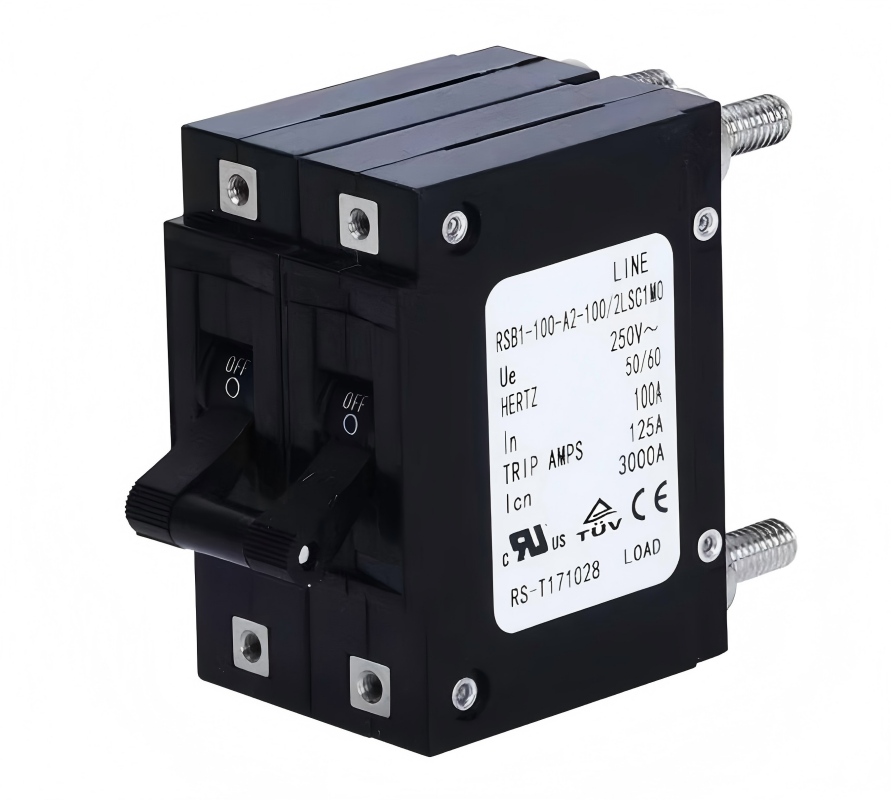
YM's Integrated Testing and Validation Infrastructure
YM operates a world-class, integrated testing ecosystem that supports our own production and offers third-party services. Our Center for Test and Validation (CTV) is a 25,000 square meter dedicated facility housing over 200 specialized test systems. Our capabilities span the entire spectrum: from material analysis labs and HALT/HASS chambers for design ruggedization, to full DO-160/MIL-STD qualification suites, and high-throughput automated production test lines. We are accredited to ISO/IEC 17025 and hold numerous OEM approvals. A key differentiator is our Digital Twin-Assisted Testing service. For clients developing new Aviation Sensors or contactors, we create a digital twin, run extensive virtual qualification, and then execute a targeted, optimized physical test plan, reducing time-to-certification and cost by up to 40%.
A Step-by-Step Guide to Engaging a Testing Service
Successfully outsourcing testing requires a clear, collaborative process. Follow this framework:
- Phase 1: Define Requirements and Develop the Test Plan
- Clearly define the test objective: Is it for qualification, lot acceptance, failure analysis, or reliability growth?
- Identify the governing standards (DO-160, MIL-STD, GOST, customer-specific TÜ).
- Develop a detailed Test Plan document specifying: units under test (UUT), test sequences, pass/fail criteria, required fixtures, and data deliverables.
- Phase 2: Laboratory Selection and Quotation
- Evaluate labs based on accreditation scope, technical capability (equipment list), experience with your component type, and security/compliance posture.
- Request a formal quotation based on your Test Plan. Review it for clarity on costs, timeline, and any assumptions.
- Conduct a pre-award audit or site visit if the project is critical.
- Phase 3: Test Article Preparation and Submission
- Prepare the test articles, including any required cabling, software, or mounting fixtures.
- Provide the lab with all necessary technical data (specifications, interface diagrams, software).
- Complete all logistics and shipping documentation, especially for international or sensitive items.
- Phase 4: Test Execution and Monitoring
- The lab performs the tests as per the approved plan.
- Maintain communication for daily updates, especially if witness testing is required for key milestones.
- Address any unforeseen issues or test deviations through a formal change process.
- Phase 5: Data Review, Reporting, and Closure
- Review the draft test report meticulously. Scrutinize the data, ensuring it aligns with the pass/fail criteria.
- Ensure the final report meets all contractual and regulatory formatting requirements (language, signatures, etc.).
- Archive the report and data. Conduct a lessons-learned session to inform future testing or design activities.

Governance by Aviation Testing Standards and Quality Systems
Credible testing is performed within a framework of strict standards that ensure methodological rigor and data integrity.
- RTCA/DO-160: The ubiquitous environmental test standard for airborne equipment.
- MIL-STD-810 / MIL-STD-461: Foundational military standards for environmental and EMI/EMC testing.
- ISO/IEC 17025:2017: The international standard for the competence of testing and calibration laboratories. Accreditation to this standard is the primary indicator of a lab's technical competence and operational quality.
- SAE ARP6178: Guidelines for the Management of Technical Testing Laboratories.
- AS9100 / AS9110: While these are quality management standards for organizations, they include requirements for controlling testing as a key process. YM's testing services are delivered under our corporate quality management system, which is certified to AS9100. This ensures that every test—whether a simple continuity check on a fuse or a complex durability test on a flight-critical contactor—is performed under controlled conditions, with traceable equipment, and results in data that can be trusted for certification and safety decisions.
Frequently Asked Questions (FAQ)
Q1: What is the difference between HALT (Highly Accelerated Life Test) and HASS (Highly Accelerated Stress Screening)?
A: These are complementary but distinct reliability engineering techniques:
HALT (Design Phase): A discovery process used during product development. It involves subjecting prototypes to progressively higher levels of stress (temperature, vibration, multi-axis shock) to find design weaknesses and operational limits. The goal is to improve the design's robustness by fixing flaws.
HASS (Production Phase): A screening process applied to production units. It uses stresses derived from HALT (but at lower levels) to precipitate latent defects introduced during manufacturing (e.g., bad solder joints, contaminants). The goal is to remove defective units before they are shipped. HALT finds weaknesses; HASS finds defects.


