
Aircraft Emergency System Components: Engineering for Ultimate Reliability in Critical Moments
When primary systems fail, aircraft emergency systems become the last line of defense for crew, passengers, and the airframe itself. For B2B procurement managers and system integrators—from global distributors to specialized OEM/ODM manufacturers—specifying and integrating components for these systems carries an unparalleled weight of responsibility. This guide examines the critical role of military Aviation Contactors, aviation relays, aviation fuses, sensors, and meters within emergency systems, focusing on the design, qualification, and integration principles that ensure fail-safe operation when it matters most.

Core Components and Their Mission-Critical Functions
Emergency systems encompass a range of functions, from backup power to crash survivability. Each relies on electromechanical and electronic components with exceptional reliability.
1. Emergency Power Transfer and Essential Bus Management
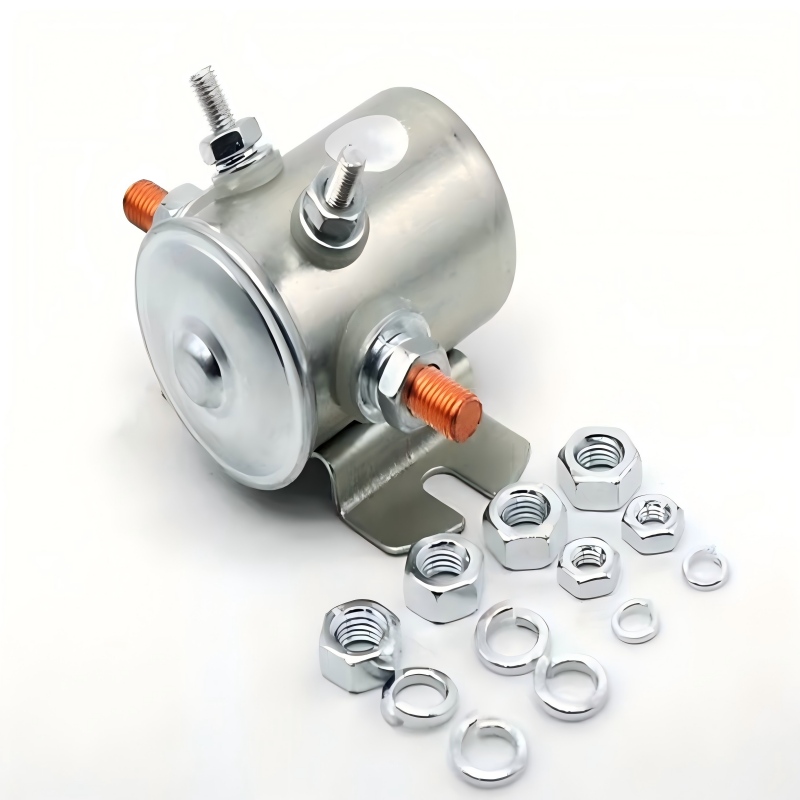
In the event of primary generator failure, the Ram Air Turbine (RAT) or backup batteries must be deployed and connected. Military Aviation Contactors perform this critical power transfer function. Their design prioritizes positive, fail-safe actuation—often using dual coils or mechanical latches to ensure engagement even with degraded signals. These contactors isolate the failed bus and connect the emergency source to the essential bus, which powers instruments, communication, and basic flight controls. Aviation Relays within the emergency power distribution panel then route this limited power to the highest priority systems.
2. Protection and Isolation in Fault Conditions
Emergency scenarios often involve electrical faults (e.g., short circuits from impact or fire). Aviation Fuses with very specific time-current curves are used to protect emergency circuits. They must isolate faults quickly to prevent fire propagation or total loss of the emergency bus, yet be tolerant of the inrush currents from motor-driven pumps or actuators. The integration of these fuses requires precise coordination studies to ensure selective tripping, preserving as much emergency functionality as possible.
3. Monitoring, Activation, and Health Checking
Aviation Sensors are the triggers and monitors of emergency systems. Impact sensors (G-switches) may automatically deploy emergency locator transmitters (ELTs). Smoke and fire sensors activate extinguishing bottles. Meanwhile, Aviation Meters and sensors continuously monitor the health of the emergency system itself: battery charge state, oxygen bottle pressure, RAT deployment status, and hydraulic pressure for emergency landing gear extension. This health data is vital for pre-flight checks and post-incident analysis.

Latest Industry Technology Dynamics: Smarter and More Survivable Systems
Emergency system design is evolving to be more intelligent, integrated, and resilient to extreme events.
- Integrated Vehicle Health Management (IVHM) for Predictive Alerts: Advanced analytics on data from emergency system sensors and meters can predict component degradation (e.g., a weakening battery or slow-acting relay) before failure, allowing preventative maintenance and increasing system readiness.
- Distributed and Decentralized Emergency Power: Moving beyond a single RAT or battery bus, new architectures use multiple, smaller backup batteries distributed near critical loads. This requires a network of smart aviation contactors and relays capable of autonomously reconfiguring the emergency power network.
- Enhanced Crashworthy Design and Power Preservation: Components and wiring are being designed to remain functional for a specified time after a crash (e.g., to power ELTs and cockpit voice recorders). This involves physical reinforcement, fire-resistant materials, and "last gasp" power management circuits.
- Drones and eVTOL Emergency Protocols: For unmanned and electric vertical take-off aircraft, emergency systems include ballistic parachutes, forced autorotation modes, and distributed lift motor management. The power switching and sensor integration for these novel systems create new challenges for OEM/ODM manufacturers.
Procurement Focus: 5 Key Concerns for Russian & CIS Aerospace Emergency Systems
Procurement for emergency systems in this market is governed by rigorous national standards and operational doctrines that emphasize survivability in harsh conditions.
- Certification to Stringent National Airworthiness Rules (IAC AR, AP) and GOST: Every component must have formal certification for use in emergency systems according to Russian Aviation Rules (IAC AR) and relevant GOST standards (e.g., GOST R 54073 for environmental testing). The certification dossier must include specific failure mode analyses.
- Extreme Environment Performance, Especially Cold Weather Activation: Systems must be guaranteed to activate and function at extreme low temperatures (-55°C to -60°C) without delay. This is critical for oxygen generation, battery performance, and the mechanical release of systems like RATs or parachutes. Components must use cold-rated lubricants and materials.
- Physical and Electromagnetic Survivability (EMP/HEMP Consideration): For military platforms, emergency systems must be hardened to survive not just crashes but also electromagnetic pulse effects that could disable electronic triggers. This may require non-electronic mechanical backups or specially shielded components.
- Long-Term Storage Reliability and Shelf Life: Emergency components like squibs, oxygen generators, and sealed batteries may sit unused for years. Suppliers must provide validated shelf-life data and storage condition requirements. A robust product change notification process is essential to manage long-term inventory.
- Complete Traceability and Documentation for Investigation Readiness: In the event of an accident, every component must be fully traceable to its raw material batch. Documentation (manufacturing records, test reports, conformity certificates) must be impeccably maintained and available in Russian to support official investigations.
YM's Commitment to Zero-Failure Emergency Component Manufacturing
Manufacturing for emergency systems demands a culture of absolute quality. YM's safety-critical systems division operates within a segregated, ultra-clean 45,000 square meter facility dedicated to such products. Our processes feature 200% testing (test during assembly + 100% final test), with every Aviation Contactor and relay undergoing burn-in cycles and every fuse sample-destruct tested from each production lot. Our R&D focus on reliability physics has yielded patented innovations like our hermetically sealed, welded-contact relay, which eliminates contact oxidation and provides a guaranteed minimum contact resistance over decades of dormancy—an ideal solution for emergency circuits that are rarely energized.
Installation, Testing, and Maintenance Protocol for Emergency Systems
The integration of emergency components requires procedures that exceed those for standard systems. Follow this stringent protocol:
- Handling and Pre-Installation Verification (No-Fault-Forward):
- Components shall be handled as ESD- and moisture-sensitive. Use original packaging until installation.
- Verify part numbers, serial numbers, and expiration dates (for items with shelf life) against the installation drawing and certification paperwork.
- Perform pre-installation electrical checks (coil resistance, contact continuity) per the component manual.
- Installation with Positive Locking and Sealing:
- Mount components using all provided hardware. Apply specified thread-locking compound where required.
- For connectors, use the correct torque and ensure environmental seals (O-rings, backshells) are properly installed.
- Route wiring in dedicated, protected conduits away from high-risk areas (fuel lines, hot ducts). Use fire-resistant sleeving.
- System Integration and Functional Testing:
- Continuity and Isolation Tests: Verify no shorts to ground or between isolated systems.
- Operational Sequence Test: Simulate failure modes (e.g., pull generator breaker) and verify the automatic, correct response of all emergency components (contactor transfer, relay sequencing, indicator activation).
- Sensor Activation Test: Functionally test fire/impact sensors (using test buttons or calibrated simulators) to verify correct output signals.
- Periodic Maintenance and Health Checks (Strict Intervals):
- Adhere rigorously to calendar-based or flight-hour-based replacement intervals for life-limited parts (squibs, oxygen generators, batteries).
- During heavy checks, perform meggering (insulation resistance testing) on emergency system wiring.
- Download and analyze data from health monitoring sensors and meters to identify trends.

Governance by the Highest Levels of Airworthiness Standards
Emergency system components are subject to the most stringent design, testing, and documentation standards in aerospace.
- RTCA/DO-160: Environmental testing, but often to more severe test levels (e.g., Category A for temperature, Category Z for crash safety).
- RTCA/DO-178C & DO-254: For any software or complex electronic hardware involved in emergency system control (e.g., a smart battery controller), these standards apply at the highest Design Assurance Level (DAL A).
- SAE ARP4754A & ARP4761: Define the systems engineering and safety assessment process. Failure Modes and Effects Analysis (FMEA) and Fault Tree Analysis (FTA) are mandatory for emergency systems.
- FAA TSO / EASA ETSO: Many emergency components (ELTs, oxygen masks, flotation devices) require a Technical Standard Order authorization, which is an official approval of the design and manufacturing.
- AS9100 with Safety-Critical Extensions: YM's quality system incorporates additional, self-imposed requirements for safety-critical products. Our full lot traceability system and controlled access manufacturing ensure that every Aviation Relay or sensor destined for an emergency system meets a standard of evidence far beyond typical aerospace requirements, suitable for integration into any military aviation or commercial plane safety system.
Frequently Asked Questions (FAQ)
Q1: What is "fail-safe" design in the context of an emergency power contactor?
A: A fail-safe contactor is designed to default to a predetermined safe state upon loss of its control signal or power. For an emergency power transfer contactor, this is typically the "connected" state. It might use a spring to mechanically force the contacts closed if the holding coil loses power, ensuring the emergency bus is powered even if the control circuit fails. This is a prime example of a safety-by-design principle, distinct from the operation of standard aviation contactors.
Q2: How are emergency system components tested for "dormant" reliability?
A: Testing for dormant reliability (shelf life) involves Accelerated Life Testing (ALT). Components are subjected to elevated temperatures and humidity (per Arrhenius equation models) to simulate years of aging in a short time. They are then functionally tested. For example, a batch of aviation relays might be baked at 125°C for 1,000 hours to simulate 10 years of storage, then tested for operate/release times and contact resistance. This data validates the stated shelf life.
Q3: As an OEM, can YM provide complete, tested emergency system LRUs (Line Replaceable Units)?
A: Yes. YM offers certified LRU-level solutions to reduce your integration risk and time-to-certification. We can design and manufacture units such as Integrated Emergency Power Control Units, Battery Monitoring and Control Units, or combined Fire/Overheat Detection Control Modules. These LRUs incorporate our proven contactors, relays, fuses, and sensors, pre-wired, tested, and delivered with a full certification support package, ready for installation on your aircraft engine pylon or airframe.


