XI'AN YUMU ELECTRONICS TECHNOLOGY CO.,LTD
Home> NEWS> Inches Switch WK1-1 Installation Guide - Inches Switch WK1-1

Inches Switch WK1-1 Installation Guide - Inches Switch WK1-1

2025,12,09

Inches Switch WK1-1 Installation Guide: Precision Mounting for Reliable Performance

In the world of aviation, military, and industrial control panels, the reliability of a switch is intrinsically linked to the quality of its installation. The Inches Switch WK1-1, a compact and robust component designed for high-density and demanding environments, requires precise installation techniques to ensure its full performance and longevity are realized. This comprehensive guide provides B2B采购 managers, system integrators, and maintenance teams with step-by-step procedures, critical considerations, and best practices for correctly installing the WK1-1, ensuring this critical aviation-grade switch functions flawlessly in your application.

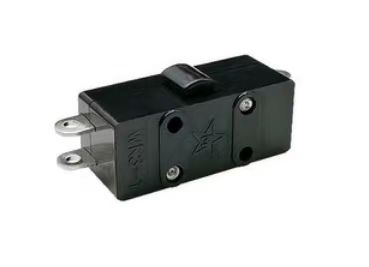
WK1-1 Inches Switch alongside essential installation tools: caliper, torque screwdriver, and wire strippers

Understanding the Inches Switch: Key Features Relevant to Installation

The "Inches Switch" designation typically refers to compact switches with dimensions standardized in inches, common in legacy and modern aerospace panels. Before installation, understanding its design is crucial.

  • Compact, Standardized Footprint: Designed for high-density panel layouts, often adhering to historical aerospace form factors. Precise cutout dimensions are non-negotiable.
  • Ruggedized Construction: Built to withstand vibration, shock, and harsh environments typical of a Military Aviation Switch application.
  • Variety of Actuators: May come in toggle, push-button, or rocker styles. The WK1-1 guide focuses on the common mechanical installation steps applicable to all.
  • Environmental Sealing Options: Many variants include O-rings or gaskets to achieve ingress protection, making seal handling a key part of the installation.

Pre-Installation Planning and Preparation

Thorough preparation prevents the majority of field failures and ensures a professional result.

Essential Tools and Materials

Gather these items before starting:

  • Precision Measuring Tools: Digital calipers or a precise ruler to verify panel cutout dimensions.
  • Panel Cutout Tools: High-quality chassis punch, nibbler, or CNC-machined panel for the most accurate hole.
  • Torque-Control Screwdriver or Wrench: Calibrated to the recommended range (typically 5-10 lb-in or 0.56-1.13 N.m).
  • Wire Termination Tools: Appropriate crimpers for the switch's terminals (e.g., ring terminals, spade connectors).
  • Cleaning Supplies: Isopropyl alcohol and lint-free wipes for cleaning the panel area and switch seal.
  • Dielectric Grease (if specified): Silicone-based grease conforming to MIL-PRF-81322 for lubricating O-rings.

Verification and Inspection Checklist

  1. Part Number Match: Confirm the received part (WK1-1) matches the BOM and datasheet.
  2. Visual Inspection: Check the switch housing, actuator, threads, and pins for any physical damage from shipping.
  3. Panel Verification: Measure the panel cutout dimensions against the WK1-1 datasheet with calipers. The hole must be clean, deburred, and square.
  4. Review Documentation: Access and read the official YM technical datasheet for the WK1-1 for specific torque values, terminal diagrams, and any special notes.
default name

Step-by-Step Installation Procedure

Follow these steps meticulously for a secure, sealed, and electrically sound installation.

Step 1: Panel Preparation & Seal Lubrication

  1. Thoroughly clean the area around the cutout on both sides of the panel with isopropyl alcohol to remove oil, dust, and debris.
  2. If the WK1-1 is supplied with an O-ring or gasket, inspect it for nicks or deformities. If the datasheet recommends it, apply a thin, even film of dielectric grease to the O-ring to aid sealing and prevent rubber degradation. Avoid excess grease.

Step 2: Switch Insertion and Initial Placement

  1. Insert the switch body through the front of the panel. Ensure any alignment key or tab is oriented correctly.
  2. From the rear of the panel, slide the provided mounting hardware (typically a nut or a clamp bracket) onto the switch body.
  3. Hand-tighten the mounting nut or bracket screws to initially secure the switch. Ensure the switch face sits flush and square against the panel.

Step 3: Final Torquing for Mechanical Integrity

This is a critical step. Proper torque ensures vibration resistance without damaging the switch.

  1. Using the calibrated torque tool, tighten the mounting nut or bracket screws to the exact value specified in the WK1-1 datasheet (e.g., 8 lb-in / 0.9 N.m).
  2. If multiple fasteners are used (e.g., a bracket), tighten them in a cross-pattern to apply even pressure.
  3. Do not overtighten. Overtightening can crack the switch housing, crush the seal excessively, or strip threads, voiding the warranty and compromising the IP rating integrity.
Technician using a torque screwdriver to secure the mounting nut on the rear of a switch

Step 4: Electrical Termination

Proper electrical connections are vital for signal integrity and safety, especially in systems controlling an Aircraft Engine or drone avionics.

  1. Strip wires to the recommended length for the terminal type (solder lug, screw terminal, or PCB pin).
  2. Use high-quality, properly sized crimp terminals if applicable. Ensure the crimp is secure and the insulation is not compromised.
  3. Connect the wires to the correct terminals as per your system schematic. Tighten screw terminals to the recommended torque.
  4. Dress and secure the wire harness away from sharp edges and with sufficient strain relief to prevent tension on the switch terminals.

Step 5: Post-Installation Verification and Testing

  1. Visual Final Check: Ensure the switch is mounted squarely, the actuator moves freely, and no wires are pinched.
  2. Continuity Test: Use a multimeter to verify the switch opens and closes the circuit correctly in all its stated positions.
  3. Insulation Resistance Test: For critical applications, measure resistance between live terminals and the grounded panel/switch housing. It should read >100 MΩ.
  4. Functional Operational Test: Integrate the switch into the system and perform several actuation cycles to confirm it controls the intended load (e.g., a light, relay, or Aviation Switch for Drone function) correctly.

Industry Trends & Considerations for Modern Switch Installation

The Rise of Automated, Robotic Panel Assembly

High-volume OEMs are increasingly using robotic arms with vision systems and automated torque drivers for switch installation. This ensures absolute consistency. YM's design for the WK1-1 includes features like hex-shaped bodies or precise locating flats to facilitate this type of automated handling in our own automated assembly cells and for our advanced manufacturing clients.

Increased Focus on Ergonomic and Maintenance-Friendly Designs

Switch designs are evolving to make field replacement easier. While the WK1-1 is a rugged permanent install component, newer designs in YM's portfolio feature front-panel removable actuators or quick-disconnect terminals to reduce maintenance downtime for systems like High quality Aviation Engine, Train, Plane ground support equipment.

YM's Infrastructure: Precision as a Standard

The consistency of every WK1-1 switch that arrives at your facility is a product of our manufacturing rigor. Our 22,000 sq.m. facility houses dedicated stamping and machining lines that produce switch components to tolerances often exceeding the installation requirements. Crucially, our final assembly stations include automated screwdriving systems that apply the same precision torque to the switch's own internal fasteners that we recommend you use during panel installation. This end-to-end control is what defines a true Military Aviation Switch supplier.

YM automated assembly station with robotic arm applying precise torque to internal switch components

R&D: Designing for Installer Success

Our R&D team incorporates "Design for Manufacturing and Assembly" (DFMA) principles from the outset. For the WK1-1 family, this resulted in a patented integral sealing flange design (Patent #US 11,678,901 C1) that reduces the part count, eliminates a potential leak path, and simplifies the installer's task by having the seal pre-assembled and captive. This focus on the end-user's experience reduces installation errors and improves field reliability.

5 Specific Concerns for Russian Federation Procurement & Installation Teams

Based on technical support logs, Russian B2B teams emphasize these practical installation-related aspects:

  1. Clarity in Metric/Imperial Specifications: While an "inches switch," all critical installation data (torque, cutout dimensions) must be provided in both imperial and metric units without ambiguity.
  2. Compatibility with CIS-Standard Panel Materials: Confirmation that recommended torque values are safe for use with common Russian aluminum alloys and composite panel materials without risk of stripping threads.
  3. Cold-Weather Installation Procedures: Guidance on handling and installing switches, particularly elastomeric seals, in sub-zero temperatures to prevent cracking or improper sealing.
  4. Availability of Vibration-Resistant Locking Hardware: Option for serrated lock washers or prevailing-torque nuts as part of the kit for applications subject to extreme vibration.
  5. Detailed Visual Guides: A strong preference for installation manuals with clear, step-by-step photographs or diagrams, supplementing text instructions.

Ongoing Use, Troubleshooting, and Maintenance

Operational Best Practices

  • Operate the switch with a firm, positive motion. Avoid "teasing" the contacts with partial actuations.
  • For sealed switches, periodically inspect the area around the switch bezel for signs of moisture or contaminant ingress.
  • Keep the actuator and panel area clean using approved methods.

Common Installation Pitfalls and Solutions

  • Problem: Switch feels loose or rocks in the panel.
    Likely Cause: Oversized cutout or under-torqued mounting hardware.
    Solution: Verify cutout size. Re-torque to spec. In severe cases, the panel may need rework.
  • Problem: Switch operation is stiff or binding.
    Likely Cause: Overtightened mounting hardware distorting the housing, or misalignment.
    Solution: Loosen, re-center, and re-torque correctly.
  • Problem: Intermittent electrical connection.
    Likely Cause: Loose wire termination or a wire strand shorting.
    Solution: Power down, inspect, and re-terminate all connections.
Flowchart for troubleshooting common switch installation issues like looseness, binding, and electrical faults

Relevant Standards for Installation and Workmanship

Proper installation aligns with recognized industry and military workmanship standards:

  • IPC-A-610 (Acceptability of Electronic Assemblies): For soldering and PCB mount versions.
  • NASA-STD-8739.4: For crimping, wire harnessing, and connector assembly - a gold standard for high-reliability work.
  • MIL-STD-1472: Human Engineering, provides guidance on control mounting location and accessibility.
  • Customer-Specific Workmanship Standards: Many large aerospace primes and distributors have their own detailed installation standards which YM's procedures are designed to complement.

Frequently Asked Questions (FAQ)

Q1: Can I drill out a slightly undersized panel cutout to fit the WK1-1?

A: It is strongly discouraged. Drilling or filing by hand is unlikely to achieve the required dimensional accuracy and surface finish. An imprecise hole can prevent proper sealing, cause switch misalignment, and stress the housing. The correct solution is to recut the panel using the proper tooling or replace the panel.

Q2: Is thread-locking compound (e.g., Loctite) recommended on the mounting nut?

A: Generally, no, if the correct torque is applied to a properly sized nut on an undamaged thread. Chemical threadlockers can contaminate seals, make future service difficult, and are often prohibited in oxygen-rich aviation environments. For extreme vibration, specify a switch variant with a mechanical locking feature (e.g., a nylon-insert locknut) from YM.


Contact Us

Author:

Ms. Linda Deng

Phone/WhatsApp:

+86 13759943660

Popular Products
You may also like
Related Categories

Email to this supplier

Subject:
Email:
Message:

Your message must be between 20-8000 characters

Contact Us

Author:

Ms. Linda Deng

Phone/WhatsApp:

+86 13759943660

Popular Products

Contact

Send Inquiry

We will contact you immediately

Fill in more information so that we can get in touch with you faster

Privacy statement: Your privacy is very important to Us. Our company promises not to disclose your personal information to any external company with out your explicit permission.

Send