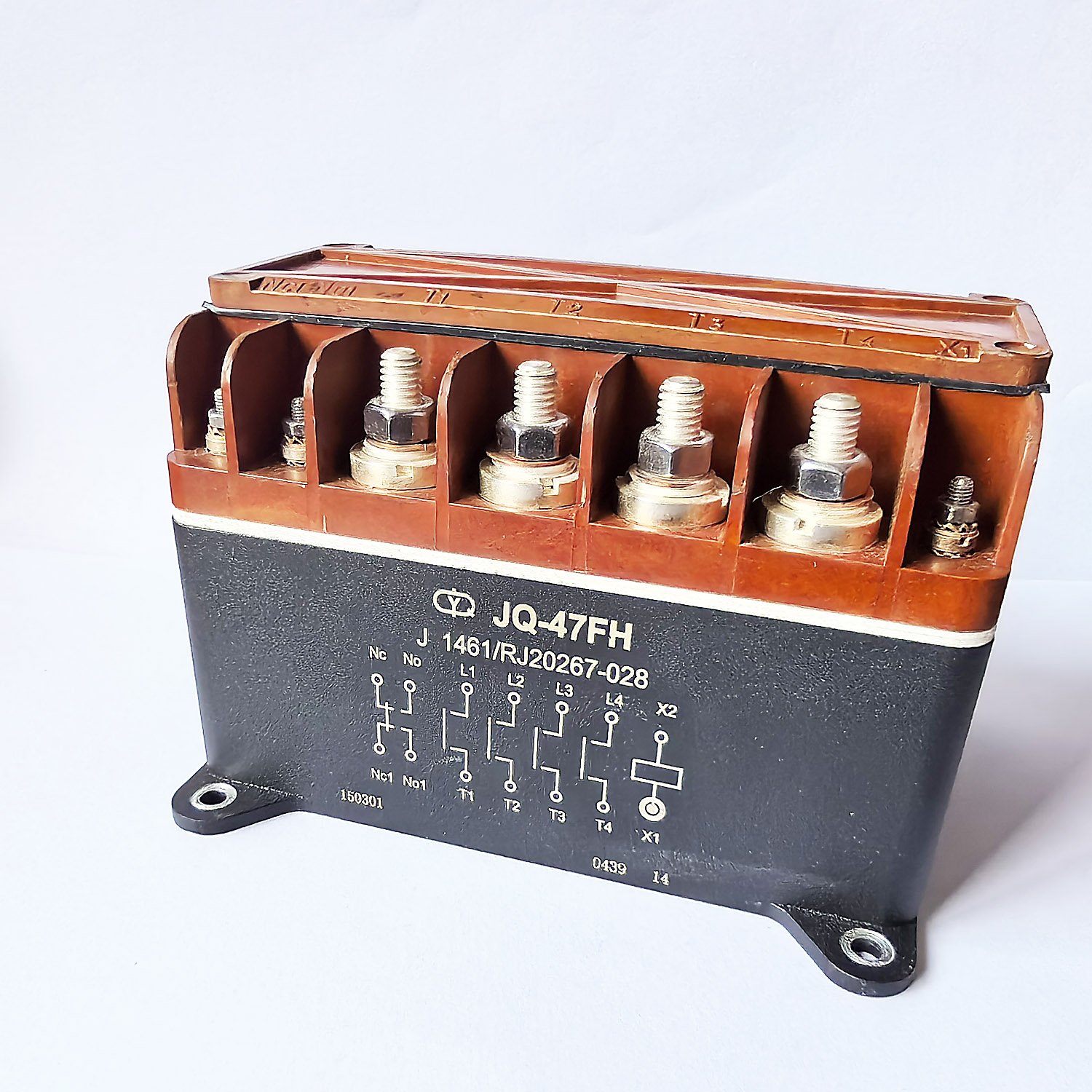
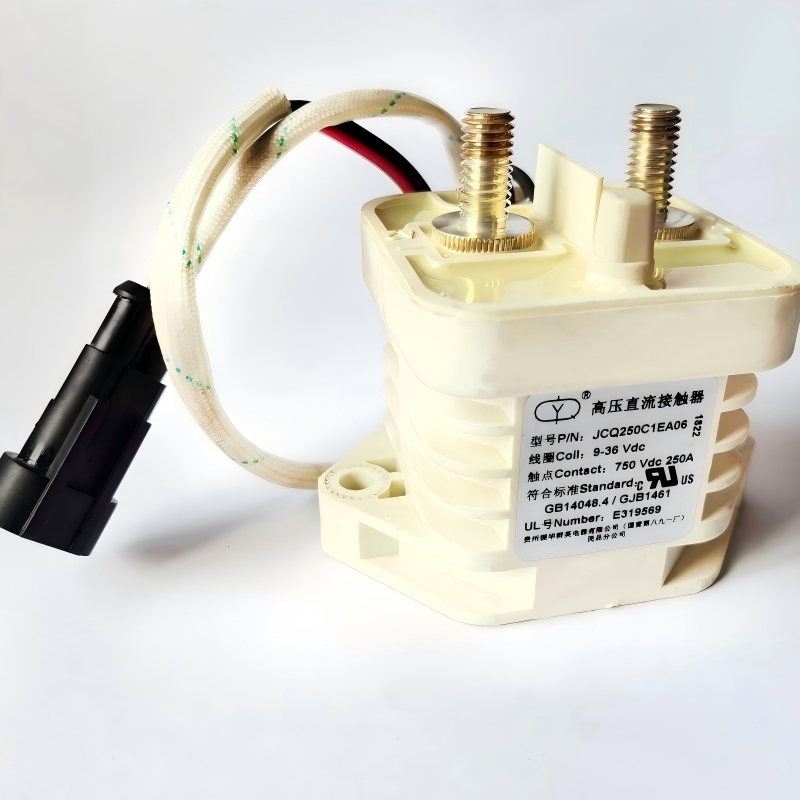
JQ-QY Series Special Application Contactors: Engineering Solutions for Unique Power Switching Challenges
In the complex landscape of aerospace, defense, and heavy industry, standard components often fall short of unique system requirements. The JQ-QY Series Special Application Contactors from YM are engineered to bridge this gap. This series represents a flexible platform of high-reliability contactors designed to be adapted and optimized for scenarios where off-the-shelf solutions are inadequate. This article explores the design philosophy, core capabilities, and diverse applications of the JQ-QY series, providing crucial insights for procurement professionals and design engineers facing non-standard power switching challenges.
Understanding the JQ-QY Series: A Platform for Customization
The "QY" designation signifies a product line built around adaptability and tailored performance. Unlike fixed-design contactors, the JQ-QY series is conceived as a modular platform where core reliable architecture is combined with configurable features to meet precise application demands.
Core Architectural Strengths
All JQ-QY contactors are built upon a foundation of uncompromising quality, sharing key attributes with our standard military Aviation Contactors:
- High-Reliability Contact System: Utilizes premium silver-cadmium oxide or silver-tin oxide contacts for excellent arc resistance and low welding tendency, ensuring long electrical life even in demanding cyclic operations.
- Ruggedized Mechanical Design: Constructed with materials and seals capable of withstanding extreme vibration, shock, and environmental exposure per standards like MIL-PRF-6106 and DO-160.
- Advanced Magnetic Circuit: Optimized for consistent pull-in and dropout characteristics across a wide temperature and voltage range, providing reliable operation in unstable power conditions.
Key Configurable & Specialized Features
This is where the JQ-QY series distinguishes itself. Common customization areas include:
- Coil Voltage and Configuration: Available in a wide array of standard and non-standard DC/AC voltages. Options may include dual-voltage coils or coils with special impedance characteristics.
- Terminal Types and Arrangements: Choices between heavy-duty screw terminals, high-reliability solder cups, MIL-SPEC connectors (e.g., MIL-DTL-38999), or flying leads of specified length and gauge.
- Enclosure and Sealing: Options for open-frame, enclosed, potted, or hermetically sealed versions to achieve specific Ingress Protection (IP) ratings or protection against corrosive atmospheres.
- Auxiliary Contacts: Integration of mechanically linked normally-open (NO) and/or normally-closed (NC) auxiliary contacts for control feedback, with various contact material options.
- Actuation and Mounting: Custom mounting brackets, manual override levers, or special actuator configurations to fit unique mechanical layouts.
Typical Application Scenarios for JQ-QY Series Contactors
The flexibility of the JQ-QY series makes it the go-to solution for a range of specialized applications across industries.
1. Extreme Environment Aerospace & Defense
- High-Altitude or Space-Near Applications: Custom sealed or low-outgassing versions for equipment operating in near-vacuum conditions.
- Naval & Marine Systems: Contactors with enhanced corrosion-resistant plating and sealing for salt-fog environments, used in shipboard power distribution.
- Armored Vehicle Systems: Units designed to withstand extreme shock and vibration levels beyond standard JQ-series ratings, with connectors resistant to dust and mud.
2. Next-Generation Transportation & Energy
- Electric & Hybrid Vehicle Powertrains: Specialized contactors for battery pack disconnect or motor controller integration, with focus on high continuous current, low contact resistance, and compact size.
- Railway Rolling Stock: Versions compliant with specific fire safety standards (e.g., EN 45545-2) for train applications, with custom coil voltages matching onboard auxiliary power supplies.
- Renewable Energy Systems: Contactors for solar or wind farm combiner boxes, potentially featuring arc fault detection interfaces or special DC breaking capabilities.
3. Industrial & Test Equipment
- High-Power Test & Burn-in Racks: Custom-configured contactors for automated test equipment (ATE), often with fast cycling capabilities and integrated current monitoring taps.
- Specialty Machine Tools: Solutions for machines with unique sequencing or safety requirements, incorporating multiple auxiliary contacts for interlocking.
- Medical and Scientific Equipment: Low-noise, low-EMI versions for sensitive diagnostic or research apparatus.
Procurement and Specification Strategy for Special Application Components
Sourcing a special application contactor is a collaborative process that requires clear communication and a capable supplier partnership.
Steps for Defining Your Requirements
- Define Core Electrical Parameters: Document the absolute requirements: maximum continuous current, voltage (AC/DC, frequency), inrush current profile, and required electrical life (number of operations).
- Map the Environmental Profile: Detail the operating temperature range, humidity, vibration/shock spectra, and any unique hazards (radiation, fuel, ozone). Reference standards like DO-160 or MIL-STD-810 if applicable.
- Identify Mechanical & Interface Constraints: Provide detailed spatial constraints, preferred mounting method, and connector/terminal type. A 3D model or detailed sketch is invaluable.
- List Control & Auxiliary Needs: Specify coil voltage, power consumption limits, and the need for any auxiliary contacts or status indicators.
- Outline Regulatory & Certification Needs: List all required compliance marks or standards (e.g., MIL-PRF-6106 qualification, UL, CE, specific customer standards).
Evaluating a Special Application Supplier
When selecting a partner for components like the JQ-QY series, consider these factors beyond price:
- Engineering Engagement Capability: Does the supplier have a dedicated R&D team and application engineers who can understand your needs and propose solutions? YM's team operates from our integrated R&D center, facilitating this collaboration.
- Prototyping and NPI Process: What is their process for developing and validating prototypes? Look for a structured New Product Introduction (NPI) process with defined review gates.
- Manufacturing Flexibility and Scale: Can their factory scale and facilities handle low-to-medium volume custom runs without sacrificing quality? Flexible, modular production lines are key.
- Quality Systems for Custom Parts: How does their AS9100-quality system manage configuration control, documentation, and testing for non-catalog items? Traceability remains critical.
- Total Cost of Development: Evaluate the entire cost of engagement, including NRE (Non-Recurring Engineering), tooling, qualification testing, and unit price at your target volumes.
Industry Context: Driving the Need for Specialization
Technology and Market Trends
The demand for special application contactors is accelerating due to several key trends:
- Platform Proliferation in Drones & eVTOL: The rapid development of diverse aviation contactors for drone and urban air mobility platforms creates unique voltage, current, and form-factor requirements that standard parts cannot meet.
- More Electric & Hybrid Architectures: In both aerospace (aircraft engine starters, generators) and automotive, new powertrains demand contactors with higher breaking capacity for DC, better thermal management, and integration with control electronics.
- Miniaturization with High Performance: The constant drive to reduce size and weight (SWaP) while maintaining or increasing power density pushes the boundaries of contactor design, requiring custom magnetic and thermal solutions.
- Increased System Intelligence: Demand for contactors with built-in health monitoring sensors (temperature, contact wear) or communication interfaces (e.g., for prognostic health management) is a growing specialty area.
Focus: Russian & CIS Market Requirements for Special Components
Procurement in this region for specialized items involves distinct considerations:
- Certification to Local & International Standards: Requires dual validation, often needing to demonstrate equivalence between MIL/DO standards and GOST specifications.
- Extreme Environmental Robustness as Default: Special applications are assumed to include operation at -60°C, resistance to wide thermal cycling, and survival in high dust/sand environments.
- Emphasis on Maintainability with Limited Tools: Custom designs must consider field maintenance scenarios where only basic tools are available, favoring accessible connections and modular replacement.
- Deep Documentation and Local Language Support: Technical data packs, wiring diagrams, and maintenance manuals for the custom component must be comprehensive and available in Russian.
- Long-Term Product Configuration Freeze: Once qualified, the exact component configuration must be frozen and available for production for the life of the platform, which can span decades.

Guidance for Integration and Lifecycle Management
Best Practices for Integrating a Custom Contactor
- Conduct a Formal First Article Inspection (FAI): When the first production units arrive, perform a detailed inspection against all agreed specifications and drawings.
- Validate in a Subsystem Test: Before full system integration, test the custom contactor in a representative sub-assembly to verify performance under simulated operational loads and cycles.
- Follow Installation Instructions Precisely: Custom parts may have specific torque values, clearance requirements, or wiring sequences that differ from standard practice.
- Document As-Installed Configuration: Record the serial numbers and specific version of the custom contactor installed in each unit for future support and traceability.
Lifecycle and Sustaining Support
For special application components, planning for the long term is essential:
- Secure a Spare Parts Agreement: Negotiate and document terms for the purchase of spare parts over the projected lifecycle of the end product.
- Establish a Change Control Process: Agree with the supplier on a formal process for managing any future engineering changes (ECOs) to the component, ensuring changes are reviewed and approved.
- Archive All Technical Data: Maintain a complete master data pack (drawings, specs, test reports, compliance certificates) for the custom component in a controlled document management system.
Frequently Asked Questions (FAQ)
Q1: What is the typical lead time for a custom JQ-QY series contactor, from design to first production units?
A: Lead time varies significantly based on complexity. A modification of an existing QY platform (e.g., different coil and terminals) may take 8-12 weeks for prototyping and initial production. A highly novel design requiring new tooling and full qualification can take 6-9 months. Early engagement with YM's application engineering team is the best way to develop an accurate timeline.
Q2: How does the cost of a JQ-QY custom contactor compare to modifying a standard industrial contactor in-house?
A: While the unit cost of a custom JQ-QY is higher, the Total Cost of Ownership (TCO) is often lower. In-house modification voids certifications, lacks traceability, introduces reliability risks, and consumes internal engineering and labor resources. A properly engineered and certified custom component like the JQ-QY delivers validated performance, maintains system certification, and reduces lifecycle risk and support costs.
Q3: Can the JQ-QY platform be used for very low-current, signal-level switching applications?