
MIL-STD-704 Aircraft Electrical Power Standards: The Critical Framework for Military and Aerospace Component Design
In military and aerospace applications, electrical power quality is not a convenience—it's a fundamental requirement for system reliability and safety. MIL-STD-704, the authoritative standard governing aircraft electrical power characteristics, defines the rigorous voltage, frequency, and transient limits that all onboard equipment must tolerate. This in-depth analysis explores how compliance with MIL-STD-704 influences the design, selection, and testing of critical components like Military Aviation Relays, Aircraft Contactors, and Aviation Sensors. For procurement managers and design engineers, mastering this standard is essential for ensuring component interoperability and robustness in the demanding electrical environments of modern Planes, UAVs, and next-generation platforms.

Industry Dynamics: Evolving Standards for More Electric Aircraft (MEA)
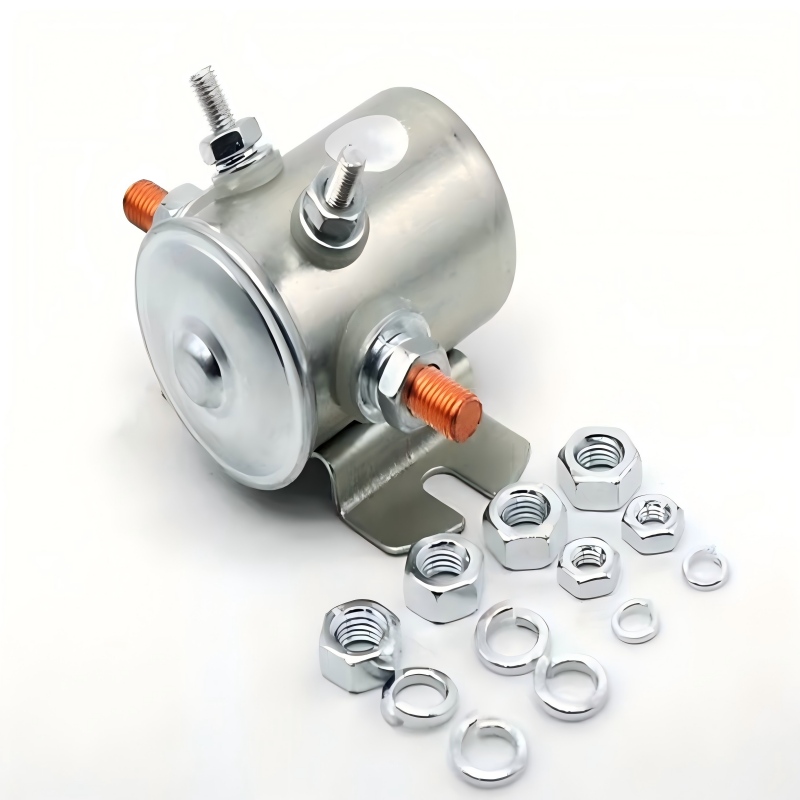
The widespread adoption of More Electric Aircraft (MEA) architectures, which replace hydraulic and pneumatic systems with electrical ones, places unprecedented demands on aircraft power systems. This evolution is driving updates and increased scrutiny of standards like MIL-STD-704. The standard's provisions for handling high-power inductive loads—such as those presented by large Aircraft Engine starters or electromechanical actuators—are particularly critical. Components like Aviation Fuses and Military Aviation Contactors must be rated not only for steady-state conditions but also for the complex transients defined in the standard, ensuring system stability as electrical loads become more dynamic and numerous.
New Technology and the 704 Challenge: Solid-State Switching & Active Power Conditioning
Modern power electronics introduce both challenges and solutions for MIL-STD-704 compliance. Solid-State Power Controllers (SSPCs) and advanced Aircraft Contractors can generate electrical noise (switching transients) that must be filtered to stay within 704 limits. Conversely, these same technologies enable active power conditioning and in-rush current limiting, actively shaping a device's load profile to be more "grid-friendly" and mitigating the impact of voltage sags or surges on sensitive Aviation Sensors and Aviation Meters for Drones. Designing for 704 compliance is now an integral part of power component R&D.

Procurement Priorities: 5 Key MIL-STD-704 Concerns from Russian & CIS Integrators
When evaluating components for military platforms, procurement and engineering teams in Russia and the CIS region apply a stringent, standards-based lens:
- Verification of Full Compliance Testing: Suppliers must provide certified test reports from an accredited laboratory demonstrating the component meets all applicable portions of MIL-STD-704F (or later revision) for its intended power input (28VDC, 270VDC, 115VAC 400Hz, etc.). Generic claims are insufficient.
- Transient Immunity & Generation Data: Detailed data on how the component behaves during and after power quality events defined in 704—such as voltage spikes (surges), dips (sags), and frequency shifts. This is crucial for High quality Aviation Engine control units and flight-critical systems.
- Input Filter Design & External Component Requirements: Understanding whether the component has built-in input filtering to meet 704, or if the integrator must add external filters, which adds cost, weight, and complexity. Preferred suppliers provide filter design support or integrated solutions.
- Lifecycle Performance Degradation Analysis: Evidence that the component's 704 compliance (particularly its input characteristics and EMI) will not degrade over its operational life due to contact wear in relays or aging of capacitors in power supplies.
- Compatibility with Local Standards & Platform-Specific Derivatives: In some cases, local military standards (GOST derivatives) may reference or build upon MIL-STD-704. Suppliers must understand these nuances and provide documentation that bridges international and local requirements for Train and aircraft applications.
YM's Engineering and Testing Infrastructure for 704 Compliance
Designing to a standard is one thing; proving it requires dedicated capability. Our factory scale and facilities include a state-of-the-art Power Quality & Environmental Test Lab. This lab is equipped with programmable power sources capable of generating the exact voltage waveforms, transients, and abnormal conditions specified in MIL-STD-704, DO-160 Section 16, and related standards. Here, every Military Aviation Relay and power-controlling Aircraft Contactor is subjected to these conditions to validate performance and generate the compliance data our customers require.
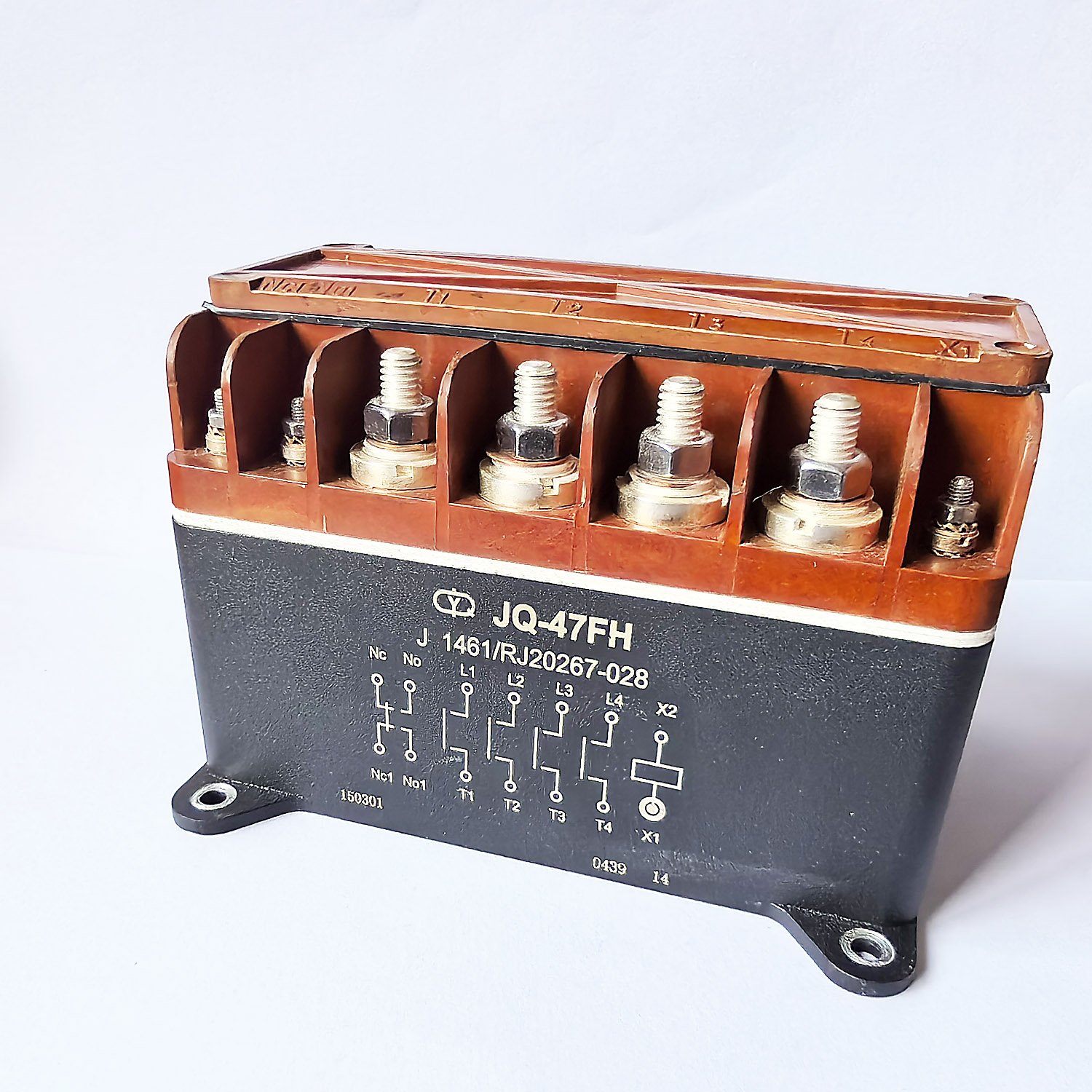
This empirical validation is preceded by design work from our R&D team and innovation成果. Our electrical engineers use advanced simulation tools to model component behavior under 704 transients early in the design phase. This has led to patented input circuit designs for our Aviation Sensors and meters that provide wide-range input voltage tolerance and内置 protection, ensuring they remain operational and accurate even during power system disturbances.
Step-by-Step: Validating Component Compliance with MIL-STD-704
For integrators, verifying a supplier's claims requires a methodical approach. Follow this process:
- Define the Applicable Test Conditions:
- Identify the correct revision of MIL-STD-704 (currently 704F).
- Determine the aircraft power system type (e.g., 28VDC, 270VDC, 115VAC 400Hz) and the corresponding equipment category (A, B, Z).
- Review the Supplier's Compliance Matrix & Test Report:
- Request a detailed compliance matrix showing which tests were passed.
- Scrutinize the independent test report. Check the lab's accreditation, test dates, and that the unit under test (UUT) configuration matches your intended use.
- Conduct or Witness Bench Verification (if critical):
- Set up a test with a programmable power supply and oscilloscope/data logger.
- Apply key transient conditions from the standard (e.g., a 50V spike on a 28VDC line) to the component.
- Monitor for any malfunction, reset, or performance deviation in components like an Aviation Meter for Drone or a control sensor.
- Integrate and Monitor at System Level: After installation, monitor the component's power input point during ground and flight tests to ensure real-world aircraft power quality does not cause issues.
Industry Standards: The MIL-STD-704 Ecosystem and Related Specifications
Key Interlinked Standards for a Complete Picture
MIL-STD-704 does not exist in isolation. Component qualification requires understanding its relationship with other critical standards:
- RTCA/DO-160, Section 16: Power Input. The commercial aerospace counterpart to MIL-STD-704. Many military programs accept DO-160 Section 16 testing as equivalent or require testing to both standards.
- MIL-STD-461: EMI/EMC. Closely related, as power quality transients can cause conducted emissions (CE) issues, and components must not be susceptible to external interference that could disrupt their function.
- MIL-STD-810: Environmental Engineering. Performance must be maintained under environmental stress; a component that passes 704 at room temperature may fail at -55°C.
- SAE AS5692: Interface Standard for Aircraft Electric Power Characteristics. Works in conjunction with 704 to define interface requirements.
- Internal Design Standards: Leading manufacturers like YM often have even more stringent internal derating and design standards that ensure a margin of safety beyond the minimums set by MIL-STD-704.
Industry Trend Analysis: High Voltage DC (HVDC) and the Future of 704
The industry's trajectory toward High Voltage DC (HVDC) power systems (e.g., ±270VDC, 540VDC) for next-generation aircraft and UAVs is the most significant trend impacting this domain. While MIL-STD-704F includes limits for 270VDC, future revisions or new standards will need to address the unique challenges of higher voltage architectures, including arc fault management, new insulation requirements, and transient characteristics. Components like Aircraft Contactors and Aviation Fuses for these systems are already under development, requiring extensive new testing protocols. This evolution makes partnering with a supplier engaged in forward-looking R&D essential for future-proofing procurement strategies.
Frequently Asked Questions (FAQ) for Procurement & Engineering
Q1: What is the most common compliance failure for components related to MIL-STD-704?
A: Voltage Spike (Surge) Immunity and In-Rush Current are frequent issues. A component may operate fine at steady state but latch up or be damaged by a 50V/50ms spike on a 28VDC bus. Similarly, a device drawing excessive in-rush current during turn-on can cause a system-wide voltage sag that violates the standard and disrupts other equipment. Our designs incorporate protective circuitry specifically for these transients.
Q2: Is testing to DO-160 Section 16 sufficient for a military contract requiring MIL-STD-704?
A: It can be, but this must be explicitly agreed upon in the contract. While the tests are very similar, there are subtle differences in limits and procedures. The safest path is to request testing to both standards or to the one explicitly called out in the procurement specification. We maintain test setups for both and can provide dual reports.
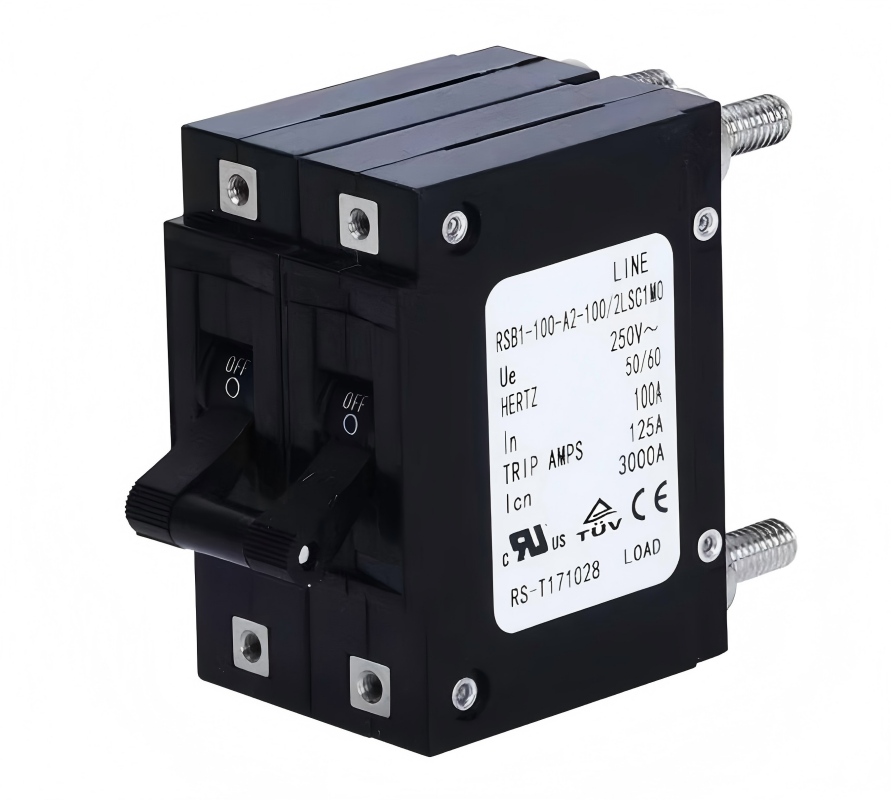
Q3: How does MIL-STD-704 affect the selection of fuses and circuit breakers?
A: Profoundly. Protective devices must interrupt fault currents under the "abnormal" voltage conditions defined in the standard (which can be as low as 50% of nominal). A fuse that clears correctly at 28VDC might not interrupt safely at 14VDC. Our Aviation Fuses are selected and validated to ensure reliable interruption across the entire voltage range specified in MIL-STD-704 for the applicable category.
Q4: Can you provide components that are "MIL-STD-704 Compliant" as part of a larger pre-tested LRU?
A: Absolutely. A key OEM/ODM service is the design and certification of complete Power Distribution Units (PDUs) or LRUs. We validate the entire unit against MIL-STD-704, ensuring internal components are compatible and that the unit's overall input characteristics and output power quality meet the standard, simplifying your system-level certification.
References & Technical Sources
- U.S. Department of Defense. (2015). MIL-STD-704F, Aircraft Electric Power Characteristics. Retrieved from Defense Standardization Program.
- RTCA, Inc. (2010). DO-160G, Environmental Conditions and Test Procedures for Airborne Equipment, Section 16: Power Input.
- Moir, I., & Seabridge, A. (2008). Aircraft Systems: Mechanical, Electrical, and Avionics Subsystems Integration. John Wiley & Sons. (Chapter on Electrical Power).
- IEEE Aerospace and Electronic Systems Society. (2021). "The Transition to More-Electric and HVDC Aircraft: Power Quality Challenges." IEEE AESS Systems Magazine.
- Wikipedia contributors. (2024, February 15). "MIL-STD-704." In Wikipedia, The Free Encyclopedia. Retrieved from: https://en.wikipedia.org/wiki/MIL-STD-704
- Professional Engineering Forums (Eng-Tips). (2023, September). Thread: "Real-world interpretation of MIL-STD-704F Category A vs. B for LRU design." [Online Technical Discussion].


