Military Electronics Quality Assurance: Beyond Compliance to Mission-Critical Reliability
For procurement managers in defense and aerospace, quality assurance (QA) is the cornerstone of every sourcing decision. It transcends paperwork and becomes a measurable indicator of system reliability, operational safety, and total cost of ownership. This article examines the rigorous QA frameworks governing Military Aviation Contactors, Aviation Sensors, and other critical components, providing insights for informed supplier evaluation and risk mitigation.
The Foundation of Military Electronics QA: A Multi-Layered Approach
Military QA is not a single checkpoint but an integrated system spanning the entire product lifecycle. For components like Military Aviation Relays or Aviation Fuses, failure is not an option, making this layered defense essential.
The Three Pillars of Military-Grade QA:
- Design Assurance: Reliability is engineered in from the start. This includes rigorous failure mode analysis (FMEA) for a new Aircraft Engine sensor or contactor design.
- Process Assurance: Consistent manufacturing under controlled conditions (e.g., ESD-protected, clean-room assembly for sensitive Aviation Meters for Drones).
- Product Assurance: Comprehensive testing and inspection of the final output against stringent performance and environmental specifications.
Industry Trends & Technological Advancements in QA
New Technology R&D and Application Dynamics
The adoption of Artificial Intelligence (AI) and Machine Vision in inspection is revolutionizing QA. AI systems can analyze solder joints on Aircraft Contactors or microscopic imperfections on Aviation Sensor die with superhuman consistency and speed. Additionally, Blockchain for Digital Thread is emerging, creating an immutable, cradle-to-grave record of every test, inspection, and material certificate for components like High Quality Aviation Engine parts, enhancing traceability and auditability.
Insight: Top 5 QA Concerns for Russian & CIS Procurement Managers
Procurement in this region places unique emphasis on the following QA aspects:
- Dual Certification (MIL-STD + GOST/OST): Components must not only meet Western standards but also possess valid Russian military acceptance certificates, often requiring testing at accredited local institutes.
- Full Material Disclosure and Sourcing: Detailed documentation proving the origin and compliance of all raw materials, especially for components exposed to extreme conditions, is mandatory.
- Long-Term Performance Data & MTBF Validation: Suppliers must provide validated Mean Time Between Failures (MTBF) data from field operations or accelerated life testing that simulates harsh environments.
- Resilience to Climatic Extremes: Proven test results (not just claims) for operation across the extreme temperature and humidity ranges specified in Russian standards.
- On-Site Audit Access & Technical Interchange: A strong preference for the ability to conduct or witness audits at the supplier's facility and have direct technical dialogue with their QA and engineering teams.
The QA Process: From Incoming Material to Final Shipment
A step-by-step overview of a robust military electronics QA pipeline:
- Incoming Material Inspection (IMI): All raw materials and sub-components, from contact alloys for Military Aviation Relays to semiconductor wafers for sensors, are verified against certs and subjected to sampling tests.
- In-Process Quality Control (IPQC): Continuous checks during assembly. For example, automated optical inspection (AOI) of populated circuit boards for Aviation Meters, or torque verification on Aircraft Engine accessory assemblies.
- Environmental Stress Screening (ESS): Finished products undergo accelerated aging through temperature cycling, vibration, and burn-in testing to precipitate early-life failures.
- Final Acceptance Testing (FAT): 100% functional testing against all performance parameters specified in the datasheet (e.g., pull-in voltage for a contactor, accuracy for a sensor).
- Lot Traceability and Documentation: Every unit is serialized, and its complete manufacturing and test history is compiled into a Data Package for delivery with the shipment.
Product Knowledge: Ensuring Quality in the Field
Proper handling post-delivery preserves the integrity built in during manufacturing.
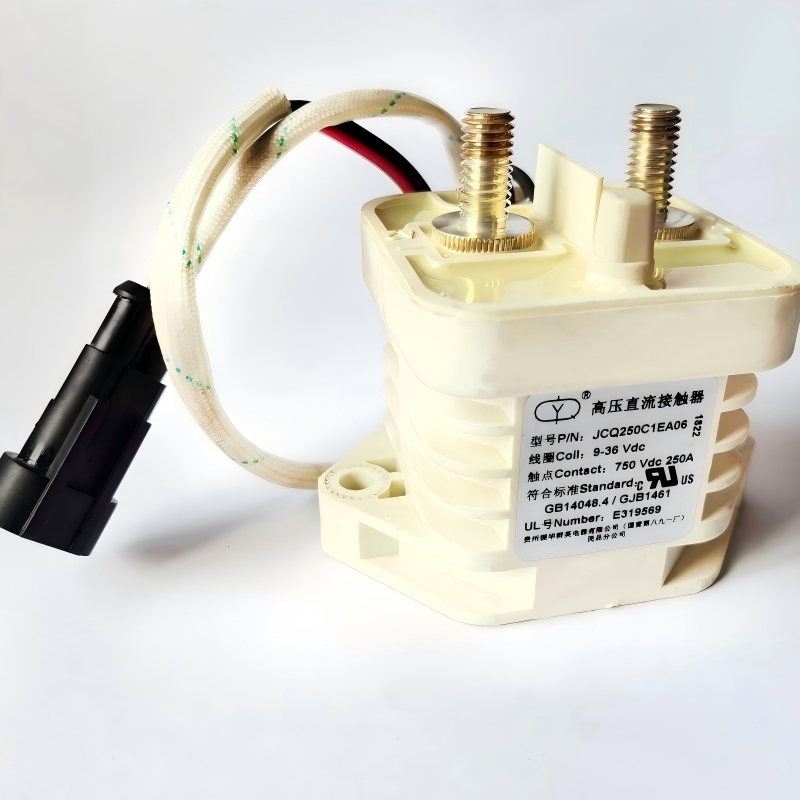
- Storage of Sensitive Components: Aviation Fuses and electro-mechanical parts like contactors must be stored in climate-controlled, low-humidity environments to prevent corrosion. ESD-sensitive items require proper grounding.
- Installation Best Practices: Follow manufacturer-specified torque values and handling procedures. Improper installation is a leading cause of field failure, even for the most High Quality Aviation Engine monitoring sensors.
- First Article Inspection (FAI): Upon receiving a new batch, especially for complex or custom components, conduct your own FAI to verify conformance before releasing to production or maintenance.
YM's Quality Infrastructure: Engineered for Zero Defects
At YM, our QA philosophy is proactive, not reactive. It is embedded in our culture and physically manifested in our facilities and processes.
Manufacturing Scale and Facilities: The Hardware of Quality
Our 60,000 sq.m. integrated manufacturing campus houses dedicated, certified laboratories. These include a Metrology Lab with coordinate measuring machines (CMM) for precision mechanical parts, an Environmental Test Lab with multi-axis shakers and thermal shock chambers to validate Military Aviation Relays against MIL-STD-810, and an Electrical Test Lab with automated systems for 100% testing of every Aviation Fuse and contactor before shipment.
R&D and Innovation: Designing for Inherent Reliability
Our R&D center, led by veterans from the aerospace sector, focuses on Design for Excellence (DfX). A recent achievement is our patented “Hermetic-Lite” sealing technology for Aviation Sensors, which provides near-hermetic protection against moisture and contaminants at a fraction of the cost and weight of traditional welding. This innovation directly resulted from a DfMEA (Design Failure Mode and Effects Analysis) aimed at improving field reliability in humid environments.
Core Industry Standards for Military Electronics QA
Understanding these standards is key to specifying and evaluating components:
- MIL-STD-810: The benchmark for environmental engineering considerations and test methods (temperature, humidity, shock, vibration).
- MIL-STD-461/ MIL-STD-464: Govern electromagnetic compatibility (EMC) requirements for equipment and systems, critical for avionics.
- MIL-I-45208A & MIL-STD-45662A (Superseded but foundational): Historically defined inspection system and calibration system requirements. Their principles live on in modern equivalents like AS9100.
- AS9100 (Rev D): The pinnacle quality management system (QMS) standard for the aerospace industry, incorporating risk-based thinking and emphasizing product safety.
- MIL-HDBK-217F (Not a standard but a guide): Provides reliability prediction methods for electronic equipment, often used to calculate MTBF.
Frequently Asked Questions (FAQ)
Q: What is the single most important document to request from a potential military electronics supplier?
A: The Supplier’s Quality Manual and evidence of their AS9100 certification (with valid audit reports). This document outlines their entire QMS. However, for specific components like a Military Aviation Contactor, also request the full test report (FTR) or certificate of conformance (CoC) for a recent lot to see the actual data.
Q: How can I verify the authenticity of MIL-SPEF components and avoid counterfeits?
A: Demand full traceability back to the original component manufacturer (OCM) or an authorized distributor. Scrutinize markings, packaging, and documentation. For high-risk items, consider non-destructive testing (X-ray, decapsulation). Partnering with manufacturers like YM, who control production from raw material to finished good, eliminates this risk at the source.
Q: What does "High Quality Aviation Engine" part mean in a QA context?
A: It signifies a component that has been designed, manufactured, and tested to exceed the minimum performance and durability requirements of its specification. This is demonstrated through:
- Use of premium, traceable materials.
- ESS that exceeds standard duration/severity.
- Statistical process control (SPC) data showing extremely low process variation.
- Possession of additional, voluntary certifications.
References & Further Reading
- Department of Defense (DoD). (2019). Military Standard: Environmental Engineering Considerations and Laboratory Tests, MIL-STD-810H. Washington, D.C.: U.S. DoD.
- SAE International. (2016). Quality Management Systems - Requirements for Aviation, Space and Defense Organizations, AS9100D. Warrendale, PA: SAE.
- Smith, J. R., & Landers, T. L. (2021). Advances in Automated Inspection for Aerospace Electronics Manufacturing. IEEE Transactions on Components, Packaging and Manufacturing Technology, 11(4), 567-575.
- Wikipedia contributors. (2024, March 10). Failure mode and effects analysis (FMEA). In Wikipedia, The Free Encyclopedia. Retrieved from https://en.wikipedia.org/wiki/Failure_mode_and_effects_analysis
- Industry Forum Thread. (2024, January). "Challenges in Sourcing MIL-SPEC Components with Dual (NATO/Russian) Certification." Defense One Online Forum. [Professional Discussion].