
Military Fuse BHC-1-30 6X30 Technical Guide: Engineering Protection for Harsh Environments
For procurement specialists and design engineers in defense, aerospace, and rugged industrial sectors, circuit protection is a critical line of defense against catastrophic failure. The Military Fuse BHC-1-30 6X30 is not a standard commercial component; it is a purpose-built, high-reliability fuse designed to meet the stringent demands of MIL specifications. This comprehensive technical guide decodes its specifications, applications, and qualification requirements, providing B2B professionals with the knowledge to specify, integrate, and maintain this essential protective device in systems ranging from tactical vehicle electronics to Aircraft Engine test equipment and secure communications.
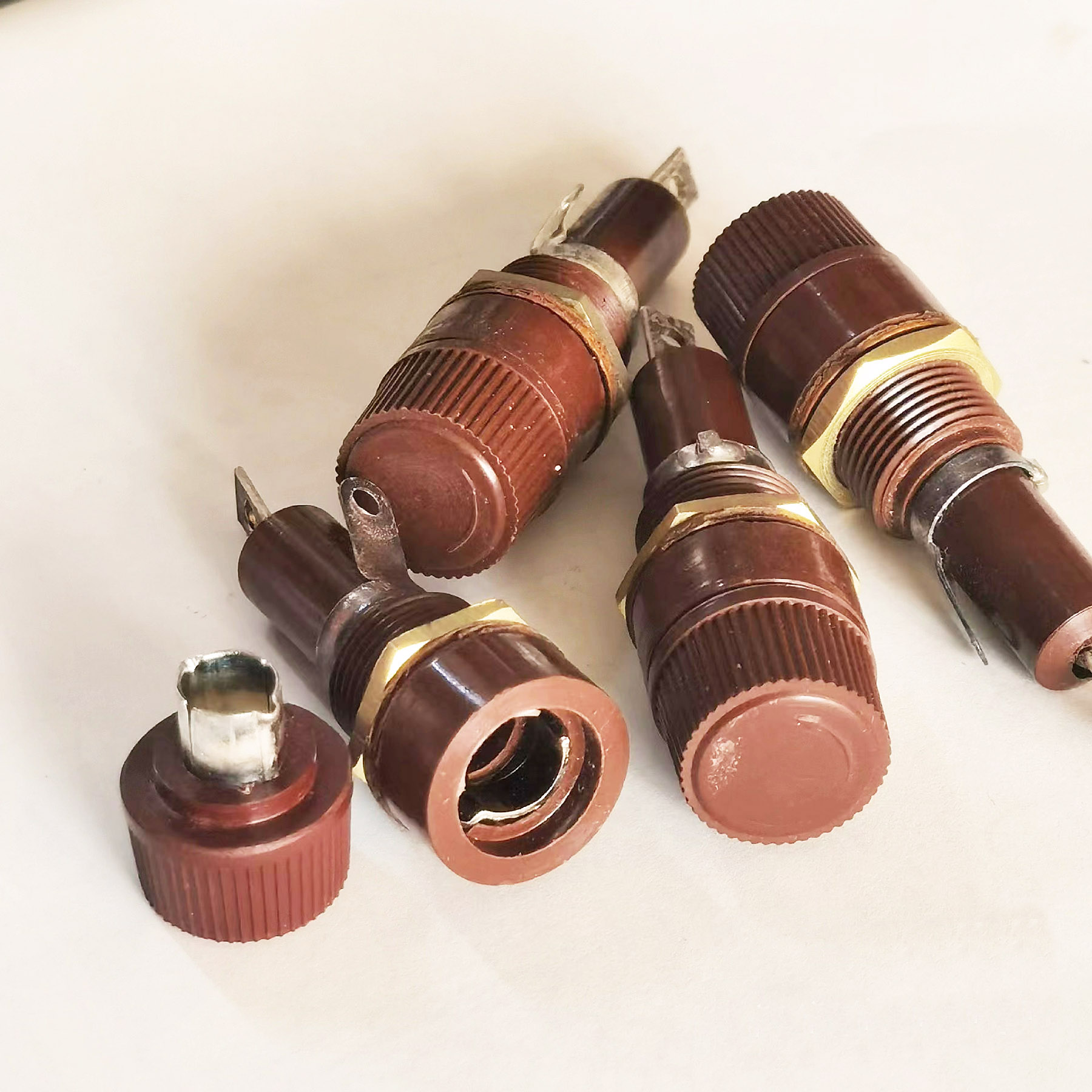
Decoding the BHC-1-30 6X30: Anatomy and Specifications
The part number itself reveals key attributes: BHC likely indicates a military style/series, 1-30 denotes a 30-ampere current rating, and 6X30 specifies the physical dimensions (6mm diameter x 30mm length). This is a cartridge-style fuse designed for severe environments.
- Hermetically Sealed Construction: As a true Military Metal Sealing Fuse, the BHC-1-30 features a metal casing (often brass or stainless steel) that is welded shut. This prevents moisture, dust, and corrosive gases from affecting the fusible element, ensuring long-term stability and reliable performance—a necessity shared with hermetically sealed relays in Military Metal applications.
- Calibrated Fusible Element: Internally, a precision-formed element, often made of a silver or special alloy, provides a predictable time-current characteristic. This allows for selective coordination in complex military power distribution systems.
- High Interrupting Rating (Icn): Engineered to safely interrupt very high short-circuit currents, typically in the range of several kiloamperes (kA), preventing arc-related damage to the fuse holder and panel during a fault event.
- Robust End Caps: Feature durable, solderable or screw-type terminals for secure, low-resistance connections capable of withstanding high vibration.
The Procurement Lens: Beyond the Amperage Rating
For B2B buyers, specifying the BHC-1-30 requires more than just matching the 30A rating. It involves verifying its qualification to relevant MIL standards (e.g., MIL-PRF-23419), ensuring its time-delay characteristics match the protected circuit's inrush profile, and confirming its physical compatibility with existing fuse holders in legacy military platforms. This due diligence is as critical here as it is when selecting a PCB Signal Fuse for an avionics black box.
Core Electrical and Mechanical Parameters
Key Performance Specifications
- Rated Current (In): 30 Amperes, DC or AC as specified. This is the current it can carry indefinitely without opening.
- Rated Voltage: Typically 250VAC/65VDC or higher, suitable for both aircraft (115VAC, 28VDC) and ground vehicle electrical systems.
- Time-Current Characteristic (TCC): Defined as fast-acting or time-delay (slow-blow). The time-delay variant is crucial for circuits with motor starts or capacitive inrush, allowing temporary overloads without nuisance blowing.
- Interrupting Rating: The maximum fault current the fuse can safely interrupt. For military applications, this is often 10kA or higher at the rated voltage.
- Cold Resistance: The initial DC resistance of the fuse, which should be very low (a few milliohms) to minimize voltage drop and power loss under normal operation.

Environmental & Durability Specifications
- Operating Temperature Range: Typically -55°C to +125°C or wider, ensuring functionality in extreme climates from desert to arctic.
- Vibration & Shock Resistance: Tested to MIL-STD-202 method standards to withstand the severe mechanical environment of tracked vehicles, helicopters, or shipboard deployment.
- Hermeticity (Seal Integrity): Subjected to fine and gross leak tests per MIL-STD-883 to guarantee the internal atmosphere remains stable and uncontaminated for the product's lifespan.
Primary Applications in Defense and Aerospace
1. Military Ground Vehicles & Mobile Systems
Protecting critical power and control circuits in electrically noisy, high-vibration environments.
- Communications & Electronic Warfare (EW) Racks: Protecting sensitive power supplies from fault currents.
- Weapon System Power Feeds: Providing branch protection for turret drives, missile launchers, and fire control systems.
- Engine & Transmission Control Units (ECU/TCU): Protecting the power input to critical vehicle management computers.
2. Aviation & Aerospace (Non-Primary Flight Circuits)
While not for primary flight control, these fuses are vital for ancillary systems.
- Aircraft Engine Ground Test Equipment: Protecting test stands and monitoring units from faults.
- Military Aircraft Cabin & Auxiliary Systems: Protection for galley power, lighting, and non-essential avionics buses.
- Unmanned Aerial Vehicle (UAV) Power Distribution: In larger military drones, protecting power rails for payloads and control systems, a role conceptually related to Solid State Fuse for Drone protection in more compact forms.

3. Naval & Maritime Defense Systems
Where salt spray corrosion resistance is as important as electrical performance.
- Shipboard Communication & Radar Panels: Internal protection for equipment power supplies.
- Below-Deck Auxiliary Machinery Control: Protection for pump and fan motor controllers.
4. Secure Infrastructure & Industrial
Leveraging military-grade reliability for critical civilian applications.
- Emergency Power & Backup Systems: In command centers or hospitals where failure is not an option.
- Harsh Industrial Environments: Mining, oil & gas, where vibration, dust, and moisture are prevalent—similar demands to those met by robust Industrial Power Fuse products.
Industry Trends: Smarter Protection and Material Innovation
Even in traditional fuse technology, advancements are being driven by new platform needs:
- Hybrid & Electric Military Vehicle Development: Creating demand for fuses with optimized performance for high-voltage DC systems (e.g., 400V/800V), overlapping with New Energy Fuse research.
- Condition Monitoring Integration: Exploration of fuses with integrated blow indicators that can send a remote signal, moving towards predictive logistics for maintenance crews.
- Advanced Arc-Quenching Fillers: R&D into new silica sand compositions and other filler materials to improve interrupting performance and reduce let-through energy (I²t) for better downstream equipment protection.
5 Critical Evaluation Criteria for Russian Defense Procurement
Technical buyers in Russia's defense and aerospace sector apply a meticulous, standards-based assessment:
- Full Compliance with GOST-V / Russian Military Standards: The fuse must be qualified to the relevant GOST military standard (replacing or equating to MIL-PRF-23419) and carry the necessary markings and certification from approved Russian test institutes.
- Complete Technical Passport & Material Certificates: A formal Russian-language "Технический паспорт" (Technical Passport) detailing all parameters, along with certified mill reports for all metals used in the casing and element.
- Performance Validation in Extreme Cold & Thermal Shock: Test reports specifically showing successful operation and maintained seal integrity after exposure to -60°C and rapid temperature cycling, critical for Arctic and continental climate operations.
- Interoperability with Legacy Soviet/Russian Holders: The fuse must be a direct form-fit-function replacement for fuses used in existing platforms (e.g., T- series tanks, MiG aircraft support equipment) without modification to holders or panels.
- Supply Chain Audits & Sovereign Manufacturing Assurance: For sensitive programs, evidence of a controlled, domestic (or friendly-nation) supply chain for key raw materials and manufacturing stages, minimizing geopolitical supply risk.
Selection, Installation, and Maintenance Protocol
Step-by-Step Selection Guide
- Identify Circuit Parameters: Determine normal current, maximum operating voltage (AC/DC), and available short-circuit current at the installation point.
- Choose Characteristic (Fast vs. Time-Delay): Select time-delay for motor, transformer, or capacitive load circuits to withstand inrush. Select fast-acting for resistive loads or to protect sensitive semiconductors.
- Verify Environmental Suitability: Ensure the fuse's temperature, vibration, and sealing ratings match or exceed the installation environment.
- Confirm Physical Compatibility: Match the 6x30mm dimensions and terminal style (e.g., solder tab, ferrule) to the existing fuse holder or panel design.
Installation Best Practices
- Use Approved Holders: Install only in MIL-spec fuse holders rated for the current and voltage.
- Proper Torque & Soldering: For screw terminals, torque to spec. For solder connections, use high-temperature solder and avoid thermal stress on the glass or ceramic body.
- Avoid Mechanical Stress: Do not bend leads or subject the body to point loads. Provide strain relief for connecting wires.
- Clear Labeling: Label the fuse location with its amperage, voltage, and criticality.

YM's Capability: Precision Manufacturing for Mission-Critical Protection
The reliability of the BHC-1-30 is a direct result of YM's controlled, high-precision manufacturing environment. Within our dedicated component facility, we produce these fuses in a cleanroom setting to prevent contamination. The fusible element is laser-trimmed for exact calibration, and every unit undergoes 100% electrical continuity and hi-pot testing. Our MIL qualification lab runs periodic destructive tests to verify interrupting ratings and time-current curves. This rigorous approach is applied across our protection portfolio, from the BHC-1-30 to our miniature PCB Board Fuse lines. A recent R&D achievement is a proprietary metallurgical process for the fuse element that improves fatigue resistance under vibration, directly extending the service life in mobile military applications.
Frequently Asked Questions (FAQ)
Q1: Can the BHC-1-30 6X30 be used in both AC and DC circuits?
A: It depends on the specific rating. Some variants are rated for both AC and DC up to specified voltages (e.g., 250VAC/65VDC). However, DC interruption is more challenging due to the sustained arc. Always check the datasheet for the voltage type rating. Using an AC-only rated fuse on a DC circuit of similar voltage can be dangerous, as it may fail to clear a DC fault safely.
Q2: What does the "1-30" in BHC-1-30 signify? Is there a BHC-2-30?
A: Typically, the numbering in military fuse designations indicates specific characteristics within a series. "1-30" often designates a specific time-current characteristic profile (e.g., normal blow, fast-acting) for the 30A rating. A "2-30" might indicate a different profile, such as a time-delay version. It is crucial to consult the manufacturer's (YM's) cross-reference or specification sheet to confirm the exact characteristic associated with the part number.
Q3: How should blown BHC-1-30 fuses be disposed of, and are there visual blow indicators?
A: Hermetically sealed metal fuses like the BHC-1-30 typically do not have external visual indicators. You must check continuity with a multimeter. For disposal, they should be treated as electronic waste. Due to their metal content and potential internal materials, follow local hazardous/electronic waste regulations. Do not incinerate.


