XI'AN YUMU ELECTRONICS TECHNOLOGY CO.,LTD
Home> NEWS> Military Grade Sensors Environmental Testing - Aviation Sensors

Military Grade Sensors Environmental Testing - Aviation Sensors

2025,12,08

Military Grade Sensors Environmental Testing: The Crucible of Reliability

For defense procurement managers and aerospace engineers, specifying components for military platforms demands more than reviewing datasheets—it requires absolute confidence in a product's ability to survive the harshest conditions on Earth and beyond. Environmental testing is the definitive process that separates commercial-off-the-shelf (COTS) components from genuine military grade sensors. This comprehensive guide examines the rigorous environmental testing protocols that validate sensors for military aviation, cutting-edge drones, and next-generation defense systems, providing procurement professionals with the critical knowledge needed to assess supplier capabilities and ensure mission success.

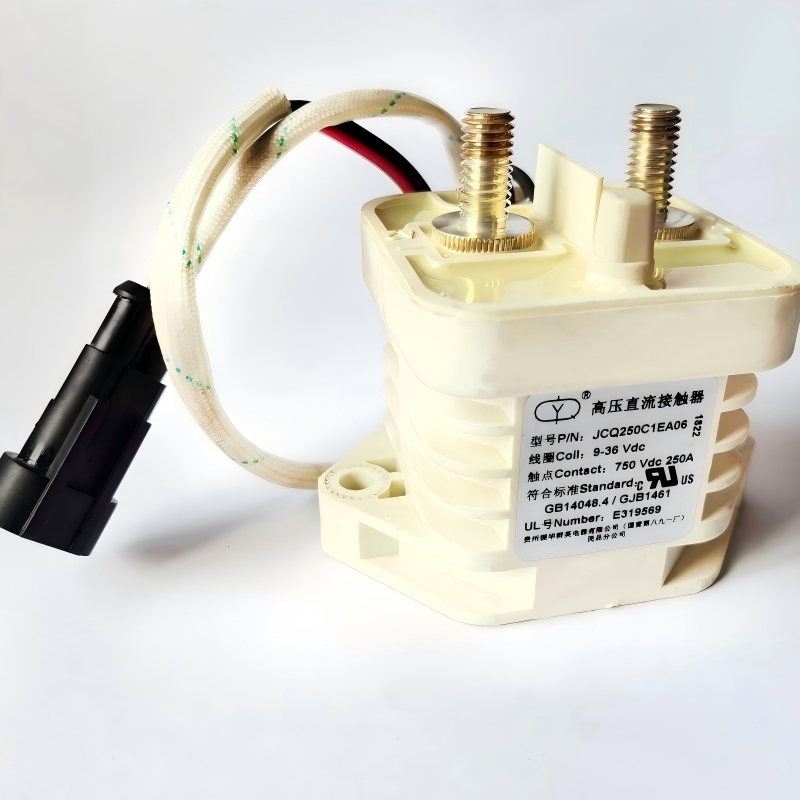
JCQ250C1EA06-2

Why Environmental Testing is Non-Negotiable for Military Sensors

A military Aviation Sensor may operate in the sub-zero vacuum of high altitude, the searing heat of a desert engine bay, and be subjected to constant vibration and shock—all within a single mission. Environmental testing simulates these extremes in a controlled laboratory setting to prove a sensor will not just function, but maintain its specified accuracy under duress. This process de-risks procurement and integration for programs involving aircraft engines, armored vehicles, naval systems, and unmanned platforms.

The High Cost of Test Failure vs. Field Failure

  • Lab Failure: Identifies design or material weaknesses early, allowing for corrective action with minimal cost and schedule impact. A failed test is a learning opportunity.
  • Field Failure: Results in system downtime, costly unscheduled maintenance, mission compromise, and potentially catastrophic loss of equipment and life. The financial and operational consequences are exponentially greater.

Robust environmental testing is therefore a critical component of Total Cost of Ownership (TCO) analysis for any OEM/ODM or integrator.

The MIL-STD-810H Framework: A Closer Look

While multiple standards exist, MIL-STD-810H, "Department of Defense Test Method Standard: Environmental Engineering Considerations and Laboratory Tests," is the cornerstone for military grade equipment in the US and is widely adopted globally. It employs a "tailored testing" philosophy, where test profiles are based on the specific lifecycle environmental profile of the platform.

GWR-1(1)

Critical Test Methods for Aviation & Military Sensors

1. Temperature Extremes (Method 501 & 502)

  • Procedure: Sensors are subjected to storage and operational cycles between extreme temperatures, often from -65°C to +150°C or higher for engine-adjacent applications.
  • Purpose: Validates material integrity, solder joint reliability, and electronic performance across the full operational envelope. It also tests for thermal shock during rapid altitude changes.

2. Vibration (Method 514)

  • Procedure: Exposes sensors to defined vibration profiles (sinusoidal and random) that replicate the environments of tracked vehicles, helicopter rotor wash, jet engine harmonics, and ballistic shock.
  • Purpose: Uncovers resonant frequencies, tests mechanical fastening, and ensures electrical connections (like Aviation Connectors) remain secure. This is paramount for sensors on aircraft engines and external pods.

3. Shock (Method 516)

  • Procedure: Subjects the sensor to high-acceleration, short-duration shock pulses simulating cannon fire, explosive blast overpressure, hard landings, or transportation mishandling.
  • Purpose: Tests structural robustness and ensures the sensing element itself (e.g., the MEMS die in a GY15-3 pressure sensor) does not detach or crack under extreme transient loads.
Haulage pressure senser GY-10(15)

4. Humidity & Fungus (Methods 507 & 508)

  • Procedure: Humidity testing exposes sensors to high humidity (95%+) and temperature cycling to induce condensation. Fungus testing places them in a chamber with fungal spores for 28+ days.
  • Purpose: Validates the effectiveness of hermetic seals and conformal coatings. Prevents corrosion and ensures functionality in tropical, maritime, and other high-humidity environments.

5. Salt Fog & Corrosion (Method 509)

  • Procedure: A continuous salt spray (5% NaCl solution) is applied for dozens or hundreds of hours.
  • Purpose: Tests the corrosion resistance of housings, fasteners, and external aviation connectors, critical for naval applications and sensors exposed to de-icing fluids or coastal operations.

6. Sand & Dust (Method 510) & Immersion (Method 512)

  • Purpose: Validates ingress protection (IP ratings) for sensors used on ground vehicles, helicopters in desert environments, or those that may be subject to temporary immersion.

Beyond MIL-STD-810: Other Critical Military Standards

  • MIL-STD-461: Controls electromagnetic interference (EMI). Testing ensures sensors do not emit excessive RF noise and are not susceptible to interference from other onboard systems—vital for electronic warfare (EW) platforms.
  • MIL-STD-704: Defines aircraft electrical power characteristics. Sensors must operate correctly despite voltage spikes, drops, and frequency variations in the aircraft's power bus.
  • MIL-PRF-38534: Specifies performance requirements for hybrid microcircuits, often applicable to the packaged sensor module, demanding high-reliability manufacturing processes.
  • RTCA DO-160: While commercial, its environmental sections are often used as a baseline or for dual-use platforms, and its procedures are harmonized in many ways with MIL-STD-810.

Industry Trends and YM's Advanced Testing Capabilities

Trend: Combined Environment Testing (CET)

The latest trend moves beyond sequential single-stress tests. Combined Environment Testing simultaneously applies multiple stresses—such as vibration while at extreme temperature and humidity. This more accurately replicates real-world conditions (e.g., a sensor vibrating on a hot, humid engine) and uncovers failure modes that sequential testing might miss.

YM's State-of-the-Art Testing Infrastructure

To meet these demands, YM has invested in one of the most comprehensive in-house environmental test facilities among independent sensor manufacturers. Our factory facilities dedicate over 1,500 sqm to qualification labs featuring:

  • Thermal shock chambers with rapid transition rates (>30°C/minute).
  • Multi-axis vibration systems with slip tables for replicated motion.
  • Combined environment chambers (temperature-humidity-vibration).
  • In-house salt fog and sand/dust chambers.
  • Anechoic and shielded chambers for MIL-STD-461 testing.

This allows us to conduct full qualification testing for our C30950E and GY-10 sensor families internally, providing complete, auditable data packages to clients.

QDF-1

R&D Driving Test Innovation

Our R&D team includes specialists in environmental engineering who work on two fronts: 1) Designing sensors like the QDF-42A to inherently pass stringent tests through material selection and mechanical design, and 2) Developing innovation achievements in test methodology itself. An example is our proprietary data analytics software that correlates real-time sensor performance data *during* environmental tests with predictive lifetime models, giving us—and our customers—deeper insight into failure thresholds and margins of safety.

Procurement Insights: Evaluating a Supplier's Test Credentials

5 Key Concerns for Russian & International Defense Procurement

  1. Test Traceability & Witnessing: Ability for client quality representatives to witness critical tests or access unedited, high-fidelity test data logs. Full traceability of test equipment calibration to Russian (Rosstandart) or internationally recognized NMIs is mandatory.
  2. Platform-Specific Tailoring: Willingness and capability to tailor test profiles beyond the standard "H" methods to match the unique environmental profile of a specific Russian platform (e.g., Arctic-spec cold soaks, unique vibration spectra from Russian engines).
  3. Post-Test Functional Validation: Not just survival, but proof of maintained performance. Procurement requires detailed pre- and post-test calibration data showing accuracy specifications were held after exposure to all environments.
  4. Cyber-Physical Security of Test Data: For sensitive military aviation sensor programs, the security protocols around test data—both digital and physical—must be robust and verifiable, often requiring compliance with local defense data handling regulations.
  5. Lifecycle Test Support: Supplier commitment to supporting not just initial qualification, but also periodic re-qualification testing, lot acceptance testing (LAT), and failure analysis throughout the platform's multi-decade service life.
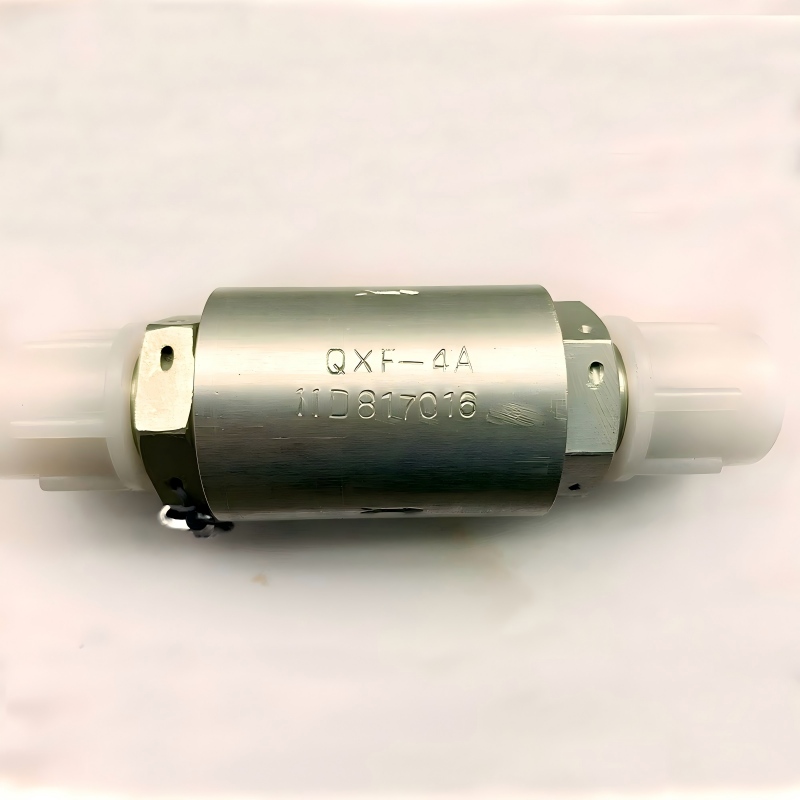
Aviation Single Valve QXF-4A

Frequently Asked Questions (FAQ)

Q1: If a sensor passes MIL-STD-810 testing, does that mean it's qualified for our specific military program?

A: Not automatically. Passing a standard set of MIL-STD-810 tests is a strong indicator of robustness, but formal qualification requires testing to a program-specific Environmental Qualification Specification (EQS) or Tailored Test Plan. This plan defines the exact test levels, durations, and sequences derived from your platform's specific predicted environment. YM's test engineering team works closely with OEM/ODM clients to develop and execute these tailored plans.

Q2: How does environmental testing for an aviation sensor for drone differ from one for a manned fighter jet?

A: While both require rigor, the profiles differ. A high-altitude long-endurance (HALE) drone sensor might emphasize extreme low temperature, low pressure (altitude), and prolonged solar radiation exposure. A fighter jet sensor will be tested to higher extremes of vibration (from afterburner harmonics), higher G-shock (from high-speed maneuvers and weapons release), and may include additional specs for engine fire resistance. The test regimen is always derived from the mission profile.

Q3: Can YM perform environmental testing on sensors we have sourced from other manufacturers, or only on YM products?

A: Yes, YM's test laboratory operates as an independent service. We provide environmental qualification and failure analysis services for third-party components. This can be invaluable for OEM/ODM integrators managing complex supply chains, allowing you to validate components from other suppliers against your program's EQS using our accredited facilities and expertise.

The YM Advantage: Testing as a Foundation, Not a Checkbox

At YM, environmental testing is embedded in our culture, not a final gate before shipment. It begins in the design phase with our R&D team using predictive modeling, continues through component-level screening, and culminates in full system qualification in our advanced factory facilities. This proactive, data-driven approach ensures that when we claim a sensor like the C30950E is suitable for military aviation or the GY-10 for rugged haulage, it is backed by empirical evidence of survival and performance. For global procurement managers, this translates to reduced program risk, assured compliance, and the confidence that comes from partnering with a supplier whose standards meet the severity of the mission.

Aviation Hand Valve YSF-1A

References & Further Reading

  • Department of Defense, USA. (2019). MIL-STD-810H, Department of Defense Test Method Standard: Environmental Engineering Considerations and Laboratory Tests.
  • Department of Defense, USA. (2015). MIL-STD-461G, Requirements for the Control of Electromagnetic Interference Characteristics of Subsystems and Equipment.
  • Piotrowski, J. (2021). The Handbook of Military and Defense Electronics. Chapter 7: Environmental Testing and Qualification. CRC Press.
  • International Council on Systems Engineering (INCOSE). (2022). Systems Engineering Handbook: Verification and Validation Techniques. 5th Edition.
  • Defense Systems Information Analysis Center (DSIAC). (2023). "Trends in Combined Environmental and Reliability Testing for Defense Electronics." Journal of the DSIAC, 10(2).
Contact Us

Author:

Ms. Linda Deng

Phone/WhatsApp:

+86 13759943660

Popular Products
You may also like
Related Categories

Email to this supplier

Subject:
Email:
Message:

Your message must be between 20-8000 characters

Contact Us

Author:

Ms. Linda Deng

Phone/WhatsApp:

+86 13759943660

Popular Products

Contact

Send Inquiry

We will contact you immediately

Fill in more information so that we can get in touch with you faster

Privacy statement: Your privacy is very important to Us. Our company promises not to disclose your personal information to any external company with out your explicit permission.

Send