XI'AN YUMU ELECTRONICS TECHNOLOGY CO.,LTD
Home> NEWS> Military Standards Comprehension Guide

Military Standards Comprehension Guide

2025,12,11

Military Standards Comprehension Guide: A Procurement Professional's Framework for Aerospace & Defense Components

Navigating MIL-SPECs is more than compliance—it's a strategic procurement skill. For B2B buyers sourcing Military Aviation Contactors, Aircraft Relays, and Aviation Fuses, understanding these standards directly impacts supply chain reliability, cost control, and risk mitigation. This guide decodes the MIL-SPEC ecosystem, empowering you to specify confidently, qualify suppliers effectively, and ensure every component, from an Aircraft Engine sensor to a Drone Aviation Meter, meets the uncompromising demands of defense and aerospace applications.

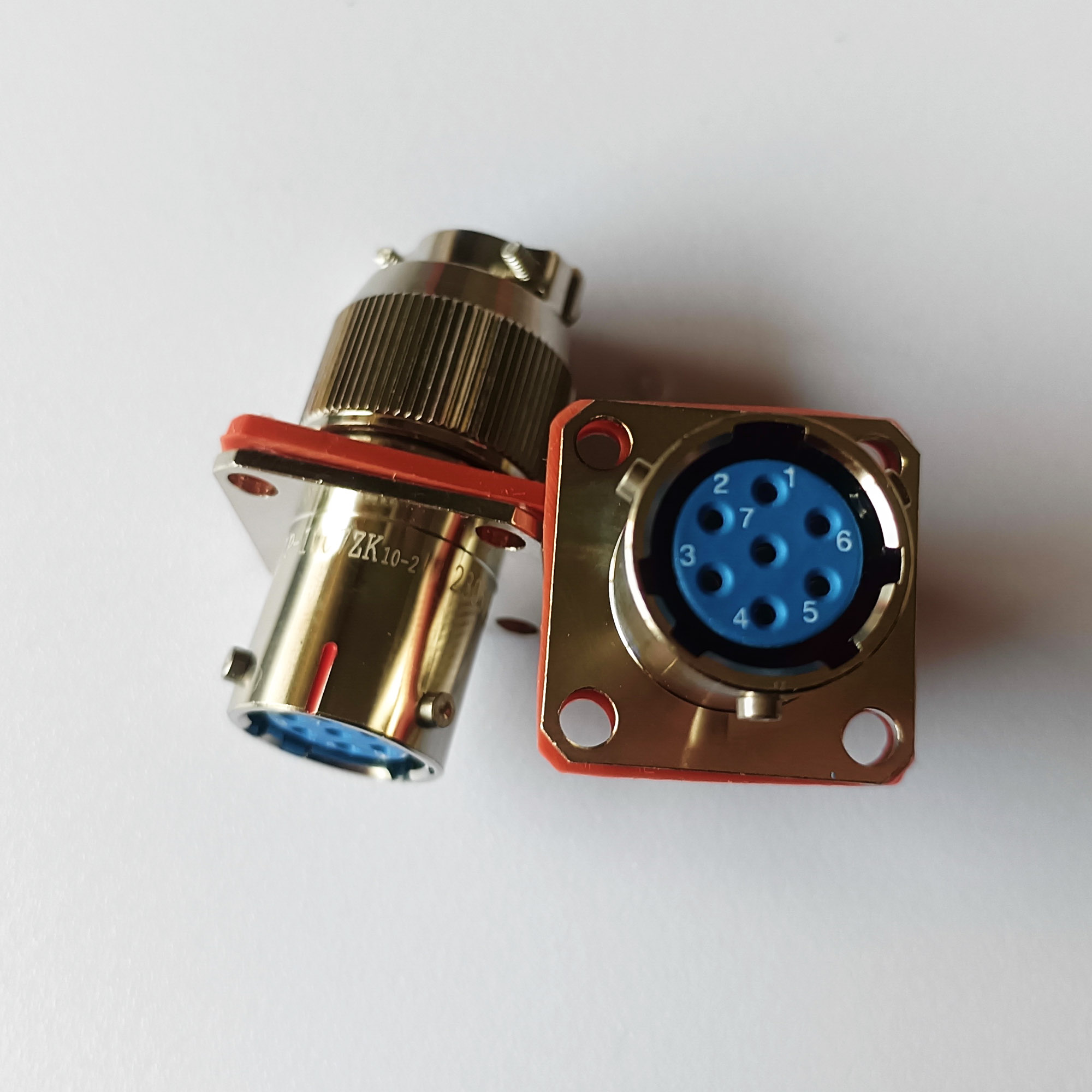
Aviation Connector Y11P-1007ZK10-Z

Decoding the MIL-SPEC Universe: Key Standards for Critical Components

Understanding the Naming Convention

MIL standards follow a logical naming system that reveals their purpose:

  • MIL-DTL- (Detail Specification): Defines specific product requirements. E.g., MIL-DTL-38999 for connectors.
  • MIL-PRF- (Performance Specification): Focuses on required results, allowing supplier innovation in design.
  • MIL-STD- (Standard): Prescribes processes and methods (e.g., testing, design).
  • MIL-HDBK- (Handbook): Provides guidance and supplemental information.

Core Standards for Electrical & Avionics Procurement

  • MIL-DTL-38999: The paramount specification for high-reliability, circular environmental connectors used across avionics. Compliance is essential for systems involving Military Aviation Relays and critical sensors.
  • MIL-PRF-6106: Governs the performance of Aviation Fuses. It specifies crucial parameters like time-current characteristics and breaking capacity under fault conditions.
  • MIL-STD-810: Environmental Engineering Considerations and Laboratory Tests. The benchmark for proving a component (like an Aviation Sensor) can survive shocks, vibrations, and temperature extremes.
  • MIL-STD-461: Requirements for the Control of Electromagnetic Interference. Critical for ensuring avionics, especially in densely packed Aviation Meters for Drones, do not interfere with each other.
  • MIL-STD-704: Defines the electrical power characteristics ( Aircraft Electric Power Characteristics) for military aircraft. Any Military Aviation Contactor or power distribution component must be designed to this standard.
dc7fc6cdc6dfebed095bcfc6d1e47c6

Industry Trends & The Evolution of Military Standards

The Shift Towards Performance-Based Specifications (MIL-PRF-)

The trend is moving away from overly prescriptive "how-to-build" documents (MIL-DTL) towards performance-based specs. This allows approved suppliers like YM greater freedom to leverage modern materials and manufacturing techniques to meet or exceed the required performance for a High Quality Aviation Engine control unit, often resulting in lighter, more efficient, and more cost-effective solutions.

Commercial Off-The-Shelf (COTS) & Modified COTS (MCOTS) Adoption

To accelerate procurement and reduce costs, there's a strategic push to use proven commercial components in less critical applications, hardened or tested to relevant MIL-STDs. Understanding the boundary between a full-MIL and a qualified COTS Aviation Meter for Drone is a key procurement decision point.

YM's R&D strategy aligns with this. Our team, which includes veterans from major defense primes, focuses on developing MCOTS-ready platforms. For instance, our latest generation of smart Aviation Sensors is designed on a commercial IoT platform but is fully characterized and tested to MIL-STD-810G and -461F profiles, offering a pragmatic path to compliance.

The Russian Procurement Lens: 5 MIL-SPEC-Related Priorities

When dealing with Russian defense supply chains, procurement managers must understand these nuanced requirements:

  1. Equivalency Mapping (GOST vs. MIL/AS): Suppliers must provide clear cross-reference documentation showing how their MIL-SPEC compliance maps to relevant Russian GOST standards (e.g., GOST R 54073 for environmental testing).
  2. Traceability to Original Source Materials: Extreme emphasis on full-chain traceability, often requiring material certificates from the original mill, especially for metals and alloys used in Aircraft Engine components.
  3. Long-Term Archival of Test Data: Requirement for test reports (e.g., MIL-STD-810) to be maintained and accessible for the entire lifecycle of the platform, often 30+ years.
  4. Focus on Extreme Cold-Start Performance: Beyond standard temperature ranges, specific validation for functionality and material integrity at Arctic temperatures (-55°C and below) is frequently requested.
  5. Certification of Sub-Tier Suppliers: Not just the final assembler, but key sub-suppliers (e.g., for connector contacts or fuse elements) may need to be audited or certified against the required standards.
default name

A Practical Guide: Steps to Verify & Specify MIL-SPEC Compliance

Use this checklist during supplier qualification and RFQ processes:

  1. Identify the Correct Standard: Consult the system design authority or prime contractor. Don't assume—a Military Aviation Contactor for an actuator may have different requirements than one for lighting.
  2. Request the Specific Revision: Standards evolve (e.g., MIL-STD-810H vs. 810G). The contract must specify the exact revision.
  3. Demand Certified Test Reports: Ask for copies of the actual test reports from an accredited independent lab (e.g., per MIL-STD-810) for the product family, not just a certificate of compliance.
  4. Audit the QMS: Ensure the supplier's Quality Management System is AS9100 certified, which provides the framework for consistent MIL-SPEC execution.
  5. Review the Source Control Drawing (SCD): For MIL-DTL items, the SCD is the governing document. Ensure your supplier has the latest, approved version.

Maintaining Compliance: Product Handling & Documentation

Compliance doesn't end at manufacturing. Proper handling is mandated by standards like MIL-STD-129 (marking for shipment) and MIL-STD-2073 (packaging). For example, Aviation Fuses and sensitive Aviation Sensors must be stored in controlled, ESD-safe environments with humidity monitoring to prevent degradation before installation.

YM's 200,000 sq. ft. campus includes dedicated, climate-controlled warehousing that meets these stringent storage requirements. Our automated logistics systems ensure that every MIL-SPEC component is kitted, packed, and documented in full compliance with these standards, providing a turnkey solution for our procurement partners.

P3H 29-2

Frequently Asked Questions (FAQ) on Military Standards

Q1: Does "MIL-SPEC" automatically mean "Made in the USA" (DFARS Compliant)?

A: No. A component can be built to a MIL-SPEC anywhere. DFARS compliance (Buy American Act) is a separate, country-of-origin requirement for U.S. Department of Defense contracts. Always clarify both the performance standard (MIL-SPEC) and the sourcing requirement (e.g., DFARS 252.225-7014) in your RFQ.

Q2: What is the difference between "Compliant with" and "Qualified to" a MIL-STD?

A: This is critical. "Qualified to" means the specific part number has undergone formal, witnessed testing and is on an official Qualified Products List (QPL). "Compliant with" or "designed to meet" means the manufacturer believes it meets the standard, but it may not be formally QPL-listed. For critical applications, mandate QPL status.

Q3: How do aviation industry standards (like AS9100) relate to MIL-SPECs?

A: AS9100 is the overarching quality management system standard for aviation, space, and defense. It provides the process framework to ensure an organization can consistently design and produce items that meet requirements—including MIL-SPECs. A supplier's AS9100 certification is your first indicator of systemic capability to handle MIL-SPEC work.

Q4: For a COTS-based Aviation Meter for Drone, which MIL-STDs are most relevant?

A: Focus on environmental and EMI robustness. MIL-STD-810 (for vibration, shock, temperature) and MIL-STD-461 (for EMI) are typically the most relevant performance benchmarks. MIL-STD-704 may apply if the drone is part of a larger military aircraft system.

Aviation Hours Timer D3JZ301

References & Authoritative Sources

  • Department of Defense. (2019). MIL-STD-810H: Department of Defense Test Method Standard: Environmental Engineering Considerations and Laboratory Tests. Washington, D.C.: DoD.
  • Department of Defense. (2015). MIL-STD-461G: Requirements for the Control of Electromagnetic Interference Characteristics of Subsystems and Equipment. Washington, D.C.: DoD.
  • SAE International. (2021). AS9100D: Quality Management Systems - Requirements for Aviation, Space and Defense Organizations. Warrendale, PA: SAE International.
  • Defense Logistics Agency (DLA). (2023). "Understanding the Qualified Products List (QPL)." Retrieved from https://www.dla.mil.
  • Procurement Technical Assistance Center (PTAC) Forum. (2023, November 7). "Navigating DFARS with MIL-SPEC Components." [Online Discussion]. Retrieved from https://www.aptac-us.org.
  • Wikipedia contributors. (2024, February 20). "MIL-STD." In Wikipedia, The Free Encyclopedia. Retrieved from https://en.wikipedia.org/wiki/MIL-STD.
Contact Us

Author:

Ms. Linda Deng

Phone/WhatsApp:

+86 13759943660

Popular Products
You may also like
Related Categories

Email to this supplier

Subject:
Email:
Message:

Your message must be between 20-8000 characters

Contact Us

Author:

Ms. Linda Deng

Phone/WhatsApp:

+86 13759943660

Popular Products

Contact

Send Inquiry

We will contact you immediately

Fill in more information so that we can get in touch with you faster

Privacy statement: Your privacy is very important to Us. Our company promises not to disclose your personal information to any external company with out your explicit permission.

Send