Oxygen Valve QF-21A Safety Standards: Critical Components for Aviation Life Support Systems
For procurement managers and systems engineers in the aerospace industry, few components carry the weight of responsibility associated with oxygen systems. The Oxygen Valve QF-21A is a precision component designed for aircraft life support, emergency oxygen, and portable breathing apparatus. This technical guide delves into the stringent safety standards, material considerations, and operational protocols that govern this critical valve, providing essential knowledge for sourcing reliable components for military aviation, commercial aircraft, and specialized applications.
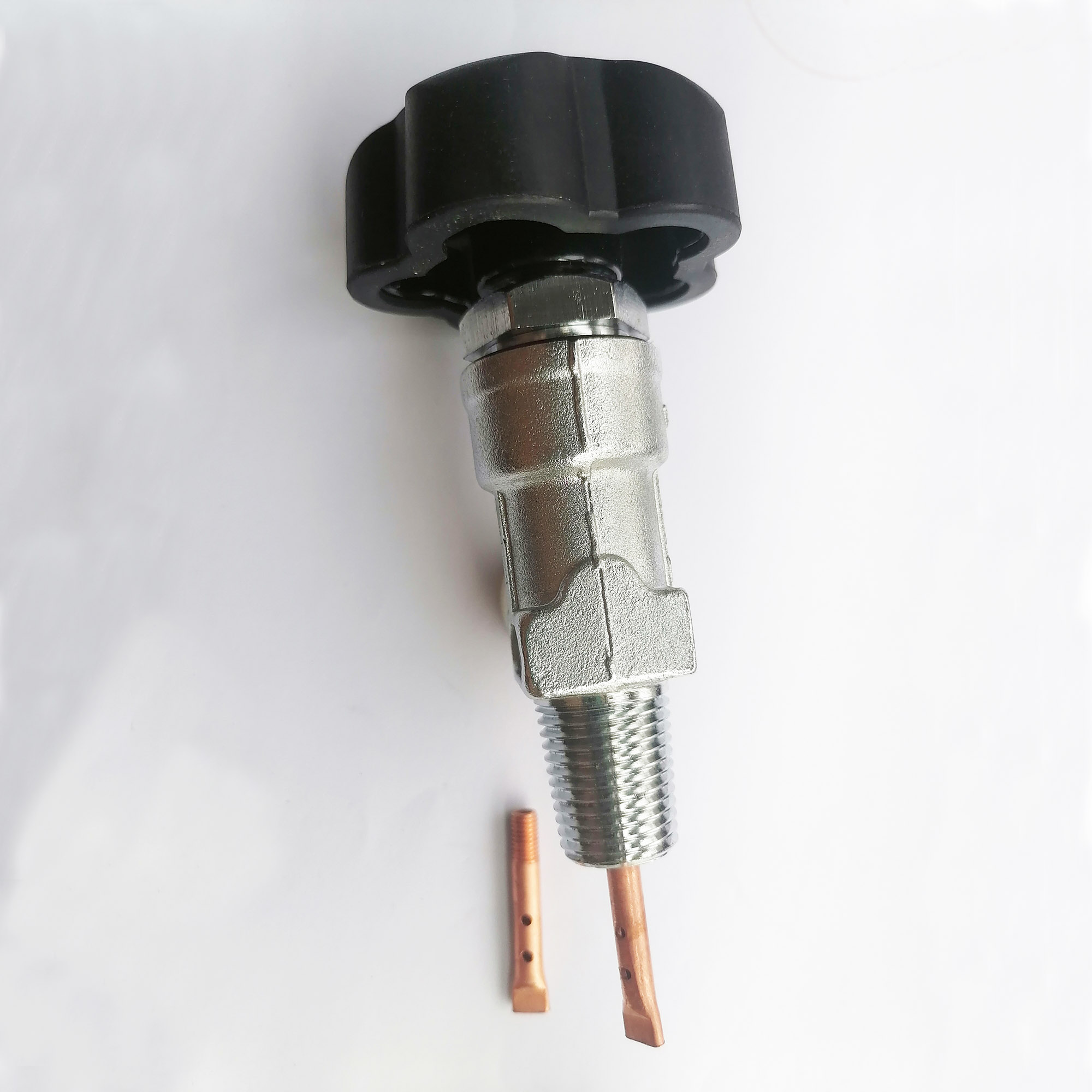
Product Overview: Function and Critical Role
The YM Oxygen Valve QF-21A is a high-purity, manually or automatically operated valve designed to control the flow of medical-grade or aviators' breathing oxygen (ABO). It serves as a critical interface in systems where gas purity and leak-tight integrity are non-negotiable for crew and passenger safety.
Core Technical Specifications
- Type: Shut-off or regulating valve, typically brass or stainless steel with oxygen-compatible finishing.
- Port Size & Connection: Common sizes: 1/4" to 3/8" NPT or SAE J514 with specific Aviation Connectors designed for oxygen service (e.g., MS33656 series).
- Pressure Rating: Designed for high-pressure oxygen systems, typically rated for 1,800-3,000 PSI (124-207 bar) working pressure.
- Temperature Range: Operational from -65°F (-54°C) to +160°F (+71°C), covering cockpit and unpressurized cargo bay environments.
- Flow Capacity (Cv): Engineered to meet specific system flow requirements for passenger masks or crew outlets.
- Actuation: Manual lever, knob, or solenoid-actuated for integration with cockpit Aviation Sensors and emergency systems.
- Leakage Rate: Exceeds Class VI (bubble-tight) per ANSI/FCI 70-2, with exceptionally low internal and external leakage specifications.
The Paramount Importance of Safety Standards
Oxygen service introduces unique hazards, primarily the dramatic increase in flammability of materials in enriched atmospheres. Components like the QF-21A are therefore governed by a specialized and stringent set of standards focused on material compatibility, cleanliness, and ignition prevention.
Primary Governing Standards and Regulations
- ASTM G93 / SAE ARP1176: The cornerstone standards for "Standard Practice for Cleaning Methods and Cleanliness Levels for Material and Equipment Used in Oxygen-Enriched Environments." They define cleaning procedures, acceptable contaminant levels, and verification methods.
- ISO 15001: "Anaesthetic and respiratory equipment — Compatibility with oxygen" — outlines principles for minimizing ignition risk.
- FAA 14 CFR Part 25.1441 & EASA CS-25.1441: Airworthiness standards specifying requirements for oxygen equipment and supply, including flow rates, pressures, and usability.
- MIL-STD-1330 & MIL-V-27163: Military specifications covering valves and components for aircraft oxygen systems, often referencing stringent cleanliness and testing protocols.
- CGA G-4.1: Cleaning Equipment for Oxygen Service (Compressed Gas Association).
- NASA-STD-6016: Standard Materials and Processes Requirements for Spacecraft, with strict protocols for oxygen systems applicable to high-end aerospace.
Industry Trends and YM's Technological Edge
Trend: Integration with Smart Monitoring Systems
The industry is moving towards digitally integrated life support systems. This includes valves like the QF-21A being equipped with position aviation sensors (e.g., Hall-effect sensors) to provide real-time "open/closed" status to the cockpit display system. Furthermore, the use of additive manufacturing (AM) is being explored for creating complex internal flow paths that minimize dead volume and turbulence, which are critical factors in high-flow oxygen systems for next-generation aircraft and military aviation platforms.
YM's R&D and Manufacturing Excellence in Oxygen Components
Supplying oxygen components requires a dedicated infrastructure. YM's factory facilities include a segregated, controlled "Oxygen Clean" manufacturing area. This area features dedicated tools, filtered air, and strict material handling protocols to prevent hydrocarbon contamination. Our R&D team has contributed key innovation achievements, such as a proprietary surface finishing process for valve interiors that minimizes particulate generation and reduces adsorption sites for contaminants. Additionally, we conduct rigorous ignition resistance testing per ASTM G175 on non-metallic components used in our valves.
Key Applications Across Aerospace
- Commercial Aircraft Passenger Oxygen: Part of the drop-down mask deployment and supply system.
- Flight Crew Oxygen Systems: Valves in regulator panels and quick-donning mask supply lines.
- Military Aviation: High-pressure oxygen systems in fighter jets, transport aircraft, and helicopters for crew at high altitude.
- Portable Oxygen Equipment: Valves in crew carry-on bottles and first-aid oxygen kits.
- Medical Evacuation (Medevac) Aircraft: Integrated into onboard medical oxygen systems.
- Unmanned Systems: While not for crew, used in systems supporting payloads or test equipment requiring pure oxygen in specialized Aviation Sensor for drone applications (e.g., certain chemical detection payloads).
Procurement and Compliance: A Strategic Guide
5 Critical Concerns for Russian & CIS Aerospace Procurement
- Certification of Oxygen Cleaning & Traceability: Demand for a validated, documented oxygen cleaning process certificate for each batch/lot, with full traceability of cleaning fluids, procedures, and verification tests (e.g., UV light inspection, solvent extraction analysis). Compliance with Russian operational documents (like РД, руководящие документы) on oxygen system cleanliness is mandatory.
- Material Certification Against Russian Standards: Material certificates (CMTR) must verify that all wetted materials (metals, elastomers, lubricants) are not only oxygen-compatible per Western standards but also certified against relevant GOST standards for metals and polymers used in oxygen service.
- Compatibility with Russian Oxygen Cylinders & Systems: Valve threading (e.g., metric/GOST threading), pressure ratings, and connector types must be compatible with the oxygen cylinders and distribution systems commonly used in Russian-made planes and helicopters (e.g., systems on Sukhoi, MiG, Kamov aircraft).
- Fire & Ignition Resistance Documentation: Specific test data or analysis demonstrating the valve's design minimizes ignition risks from adiabatic compression, particle impact, or mechanical friction, aligned with safety philosophies of Russian design bureaus.
- Local Service & Recertification Capability: Availability of approved service procedures and, ideally, authorized service centers within the CIS that can perform maintenance, seal replacement, and most critically, re-cleaning and recertification of valves to the original oxygen-clean standard after service.
Handling, Installation, and Maintenance Protocols
Step-by-Step: Safe Handling and Installation Precepts
Warning: Oxygen components require specialized handling to maintain cleanliness and safety.
- Preserve Cleanliness:
- Keep valves in their sealed, clean packaging until the moment of installation.
- Handle only with clean, powder-free gloves.
- Use only tools dedicated to oxygen service.
- System Preparation:
- Ensure the mating pipe or hose is certified oxygen-clean and sealed until connection.
- Inspect threads and sealing surfaces for damage or contamination.
- Installation:
- Use only oxygen-compatible thread sealant (e.g., PTFE tape formulated for O2) sparingly, or preferably use seal-less fittings like MS aviation connectors with specified O-rings.
- Avoid using lubricants unless they are specifically qualified for high-pressure oxygen service.
- Torque connections to the manufacturer's specification—overtightening can damage seats and gall threads.
- Post-Installation:
- Cap or plug any open ports immediately if the system is not being pressurized.
- Clearly label the valve and system as "OXYGEN" to prevent accidental cross-connection with other gases.
Operational and Maintenance Safety Checklist
- No Modification: Never modify or repair an oxygen valve outside of a qualified facility with proper procedures.
- Leak Testing: Use only oxygen-compatible leak detection solutions (e.g., specially formulated snoop liquid).
- Periodic Inspection: During system checks, inspect for physical damage, corrosion, and verify smooth operation. Do not force a valve that feels stuck.
- Re-cleaning Required: If the valve is removed from the system or its cleanliness is compromised, it must be sent to a certified facility for re-cleaning and testing before reuse.
- Record Keeping: Maintain a log of installation, any maintenance, and re-certification dates for each valve as part of the aircraft or system records.
Frequently Asked Questions (FAQ)
Q1: Why can't we use a standard hydraulic or pneumatic valve that has the same pressure rating for an oxygen system?
A: Absolutely not. Standard valves harbor machining oils, grease, dust, and use incompatible materials (e.g., certain elastomers that become explosive in oxygen). Under high pressure and flow, these contaminants can ignite violently due to adiabatic compression or particle impact, causing a fire or explosion inside the valve. The QF-21A is manufactured, cleaned, and certified specifically to eliminate these risks.
Q2: As an OEM/ODM developing a new life support system, can YM provide the QF-21A valve with custom porting or integrated pressure aviation sensors?
A: Yes, but with critical considerations. Our R&D team collaborates with OEM/ODM clients on customized oxygen system components. We can design variants with specific port configurations. Integrating a pressure sensor (like a GY-10 variant) requires even more stringent design, as the sensor itself must be oxygen-cleaned and compatible. This is a complex but feasible engineering service we provide, leveraging our expertise in both valve and aviation sensor manufacturing within our controlled factory facilities.
Q3: What documentation should we expect from YM to prove the QF-21A's compliance for our airline's audit?
A: You should receive a comprehensive certification package including: 1) A Certificate of Conformity, 2) Material Certificates for all wetted parts, 3) An Oxygen Cleaning Certificate detailing the process standard (e.g., SAE ARP1176, Class B or C), cleaning agent, and verification test results, 4) Pressure Test Certificate, 5) Functional Test Report, and 6) Detailed product traceability information. YM provides this full dossier as standard for all oxygen components.
The YM Commitment to Life-Critical Safety
Manufacturing the Oxygen Valve QF-21A is a responsibility YM takes with the utmost seriousness. It represents the intersection of precision engineering, rigorous process control, and an unwavering safety culture. From our segregated factory facilities to the specialized expertise of our R&D team, every step is governed by protocols designed to ensure absolute reliability. For global procurement managers, choosing YM for oxygen components means partnering with a supplier that understands the profound stakes involved, delivering not just a valve, but a certified, traceable, and trustworthy element of life support for crews and passengers in high-quality aviation systems worldwide.