ZB4-BS542 Emergency Elevator Switch – Aircraft Encoding Switch for Flight Control & Safety Systems
Product Overview
The ZB4-BS542 Emergency Elevator Switch is a high‑reliability, emergency‑rated encoding switch designed for critical aircraft flight control systems, specifically for elevator (pitch) control in emergency situations. This aviation encoding switch with military grade integrates a multi‑position encoding output with a rugged, sealed actuator, providing unambiguous pilot commands during system failures. Rated for 28V DC / 10A and capable of low‑level signal switching (10μA–50μA), the ZB4‑BS542 delivers positive tactile feedback, high insulation resistance (>500MΩ), and exceptional durability (50,000+ cycles). Its IP67 sealed front panel protects against moisture, fuel vapors, and dust, while the encoding function outputs binary or Gray code for direct interface with flight computers. As a core component in YM’s aviation switch portfolio – which includes Aviation Rocker Switch with military grade, military rocker switches, certified aircraft rocker switches, military grade rotary switches, and aircraft rocker switches – the ZB4‑BS542 is the ideal solution for emergency elevator control and other critical encoding applications in military and civil aircraft.
Technical Specifications
Electrical Ratings (Encoding Switch)
- Contact configuration: Multi‑position rotary encoder with 8, 12, or 16 positions (binary/ Gray code output)
- Maximum voltage: 28V DC (compatible with 14V, 28V aircraft systems)
- Current rating (resistive): 10A at 28V DC (power contacts); 1A at 28V DC (coding contacts)
- Low level switching capability: (10–50)μA, (10–50)mV – 1×10⁵ operations
- Initial contact resistance: ≤50mΩ; after life test ≤200mΩ
- Insulation resistance (normal atmosphere): >500MΩ at 500V DC; after life >50MΩ
- Dielectric strength (normal atmosphere): 500Vrms, 50Hz between contacts and case; under low pressure: 250Vrms
Mechanical & Environmental (Aviation Grade)
- Mechanical life: 50,000 cycles minimum (full encoder rotation)
- Electrical life (rated load): 25,000 cycles
- Actuator torque: 0.5 – 1.5 N·cm (detent feel)
- Detent positions: 8, 12, or 16 (selectable)
- Encoding type: Binary, Gray code, or custom (consult YM)
- Sealing (leakage rate): ≤10⁻³ Pa·cm³/s (hermetic seal on feedthroughs) – IP67 front panel
- Operating temperature range: -55°C to +85°C
- Vibration resistance: 20g RMS, 10-2000Hz per RTCA/DO‑160
- Shock: 50g, 11ms half‑sine
- Weight: <3g – lightweight for airborne use
- Terminal style: Gold‑plated solder pins (12‑pin circular arrangement) or D‑sub connector
All parameters validated at 25°C ambient. The ZB4‑BS542 meets MIL‑PRF‑8805 (switch) and RTCA/DO‑160G environmental requirements for airborne equipment.
Product Images & Visuals
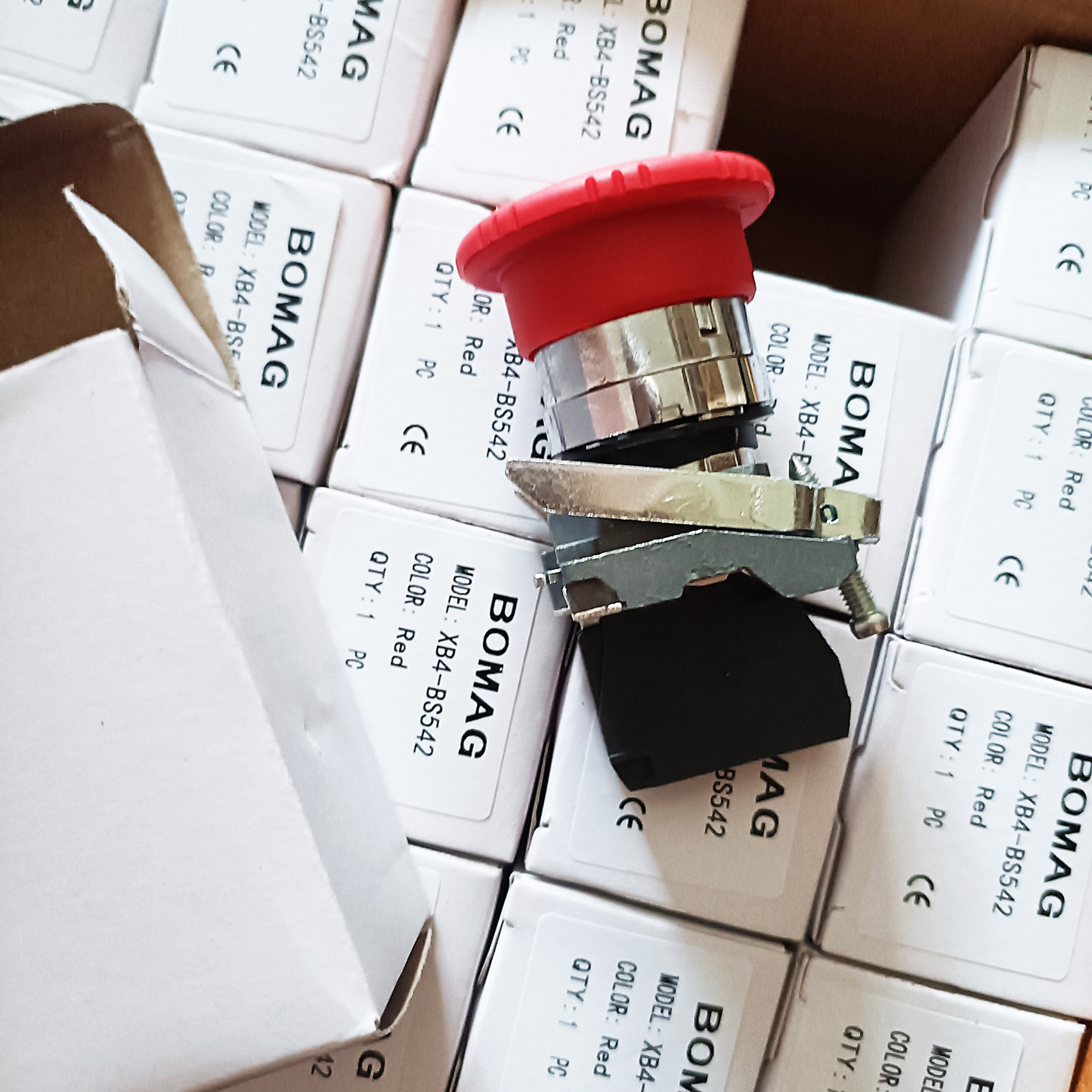
Above: ZB4‑BS542 emergency encoding switch (shown with knob and legend plate). Contact YM for dimensional drawing, pinout, and environmental qualification reports.
Key Features & Advantages for Aircraft Emergency Systems
- Emergency‑grade encoding function: Provides binary or Gray code output directly readable by flight computers – eliminates separate A/D conversion and reduces wiring errors. Ideal for aviation encoding switch with military grade applications.
- Positive detent & tactile feedback: Distinct detents at each encoding position prevent unintended selection – critical for emergency elevator trim and flight mode switching under stress.
- Hermetic sealing (≤10⁻³ Pa·cm³/s): Glass‑to‑metal seal and panel gasket protect against moisture, fuel vapors, and altitude changes – ensures reliable operation in unpressurized bays.
- Wide temperature & vibration tolerance: -55°C to +85°C and 20g vibration meet RTCA/DO‑160 – suitable for all types of fixed‑wing and rotary‑wing aircraft.
- High reliability contacts: Gold‑plated bifurcated contacts ensure <50mΩ resistance and >1×10⁶ operations mechanical life – reduces maintenance.
- Compatible with legacy panels: Standard 28V DC and low‑level signal compatibility allows direct replacement of obsolete emergency switches in C‑130, F‑16, and other platforms.
YM’s engineering advantage: The ZB4‑BS542 builds on YM’s proven military rocker switch and certified aircraft rocker switches technologies, adding a precision encoding mechanism. Compared to separate switches and encoders, this integrated solution reduces panel space and wiring complexity. For complete flight control interfaces, YM also offers aircraft grade toggle switches, static encoder aviation, and gx Aviation Connector – a one‑stop source for cockpit safety systems.
How to Install & Use the Emergency Elevator Encoding Switch – Step by Step
- Select encoding type & number of positions: Determine the required Gray or binary code and position count (8/12/16) based on flight computer input requirements.
- Panel cutout preparation: Standard mounting hole diameter: 22.5mm (for round encoder) or rectangular cutout for D‑shape. Use a precision punch or CNC router. Deburr edges.
- Mounting: Insert the switch from the front, secure with the nut and lock washer (torque 0.8‑1.2 N·m). Ensure the panel gasket seals against the panel surface.
- Wiring: Solder MIL‑spec wires (22‑24 AWG) to the gold‑plated pins according to the encoding truth table provided in the datasheet. For power/load contacts, use 18‑20 AWG wire. Connect the common pin to aircraft ground or 28V reference as required.
- Functional test: Apply 28V DC to the common terminal. Rotate the knob to each detent position and verify the output bits (using a multimeter or logic analyzer) match the expected code. Test also the power contact closure if used.
- Labeling: Install a legend plate (e.g., “EMERG ELEV TRIM”, positions NOSE UP / NOSE DOWN) around the switch for pilot reference. YM can provide custom laser‑engraved plates.
- Maintenance: Periodically check for loose connections or seal damage. Clean the exterior with a soft cloth. The internal encoder is maintenance‑free for the life of the aircraft.
Pro tip for avionics integrators: For fail‑safe design, use the switch’s redundant coding contacts (two independent outputs per position) to feed dual flight channels. YM can pre‑configure Gray code with illegal state detection.
Application Scenarios & Key Buyer Benefits
Typical Military & Civil Aircraft Applications
- Emergency elevator trim control: Provides direct pilot command to the flight control system when primary trim fails – encoding prevents accidental overshoot.
- Flight mode selection (Emergency): Allows pilot to manually select alternate flight law, direct law, or mechanical backup – each detent position corresponds to a unique code.
- Autopilot disconnect & override: Encoding switch ensures a unique command to disengage autopilot and revert to manual elevator control.
- Cockpit test panels: Used for built‑in test (BIT) mode selection during emergency procedures – rugged and sealed.
- Ground support equipment (GSE): Simulator panels and test rigs for flight control validation – long life and high precision.
Direct Value to International Buyers (Defense OEMs, MROs, System Integrators)
- Enhanced flight safety: Positive detent and encoding output eliminate ambiguous commands – meets MIL‑STD‑1472 human factors standards for emergency controls.
- Reduced installation cost: Integrated encoding replaces separate rotary switch and encoder – less wiring, fewer connectors, smaller footprint.
- Lower lifecycle cost: Hermetic sealing and gold‑plated contacts prevent corrosion and wear – reduces field returns and unscheduled maintenance.
- Global compliance: MIL‑PRF‑8805, RTCA/DO‑160G, and AS9100D certified – ready for defense procurement and FMS.
For new aircraft programs, YM offers customization of encoding tables, detent torque, and panel legend engraving. Engineering samples available for qualification testing.
Certifications & Compliance
- MIL-PRF-8805 (switches, sensitive, snap‑action, general specification).
- RTCA/DO-160G (environmental conditions for airborne equipment): tested for temperature/altitude, vibration, humidity, salt spray, and sand/dust.
- MIL-STD-810G (environmental – shock, vibration, temperature, humidity).
- ISO 9001:2015 & AS9100D certified manufacturing (aerospace quality management).
- RoHS & REACH compliant – full material declaration available.
Each ZB4‑BS542 switch is 100% tested for contact resistance, insulation resistance, dielectric strength, encoding truth table, and mechanical detent torque. Lot traceability per AS9100 is maintained. First Article Inspection (FAI) reports per AS9102 are provided upon request.
Customization Options
YM supports tailored ZB4‑BS542 variants for volume aircraft and defense programs. Customizations include:
- Encoding type & positions: Binary, Gray, or custom code; 4 to 24 positions (with stops).
- Actuator style: Round knob, winged knob, or lever with ergonomic grip; custom colors.
- Contact rating: 28V DC 10A (standard) or 115V AC 400Hz 5A.
- Termination: Solder pins, D‑sub connector, or flying leads with mating connector (e.g., GX aviation connector).
- Sealing level: IP67 front panel (standard), IP68 (submersible), or hermetically sealed (for high‑altitude/unpressurized use).
- Marking & legends: Laser‑engraved panel legend, position indicators (e.g., “UP”, “DOWN”, “TEST”), or customer logo.
Our engineering team provides free feasibility analysis and 3D models for cockpit integration. Minimum order quantities for custom options apply – contact YM with your specification sheet.
Production Process & Quality Assurance (AS9100D Certified)
YM’s aviation switch and encoder production line follows a zero‑defect, fully traceable process designed to meet the most stringent requirements for aerospace and defense programs.
- Raw material control: 100% verification of plastic resins, metal contacts, gold‑plated pins, and glass preforms – all from approved aerospace suppliers with COC and batch traceability.
- Encoder contact assembly in Class 100 cleanroom: Precision stamping of code disc and wipers; dynamic contact force testing to ensure ≤50mΩ resistance.
- Detent mechanism calibration: Automated detent torque testing (0.5–1.5 N·cm) and position verification using optical encoders.
- Sealing & leak detection: Glass‑to‑metal sealing of feedthrough pins; 100% helium mass spectrometry leak test (sensitivity 10⁻⁹ Pa·cm³/s).
- Environmental screening (100% for high‑rel lots): Thermal cycling (-55°C to +85°C, 10 cycles), vibration (20g RMS), and mechanical life test (50,000 cycles).
- Final electrical test: Automated test system (ATS) measures contact resistance per position, insulation resistance, dielectric strength, and encoding truth table at both 28V and logic levels.
- Destructive Physical Analysis (DPA): One unit per lot cross‑sectioned per MIL‑STD‑1580 for internal workmanship verification.
With decades of experience in aviation switch with military grade and aviation encoder manufacturing, YM has supplied emergency control switches to leading aircraft OEMs. The ZB4‑BS542 is built to exceed the reliability expectations of modern flight control systems.


 Contact Now