GY15-3 Military Aviation Pressure Sensor: High-Density Monitoring for Critical Systems
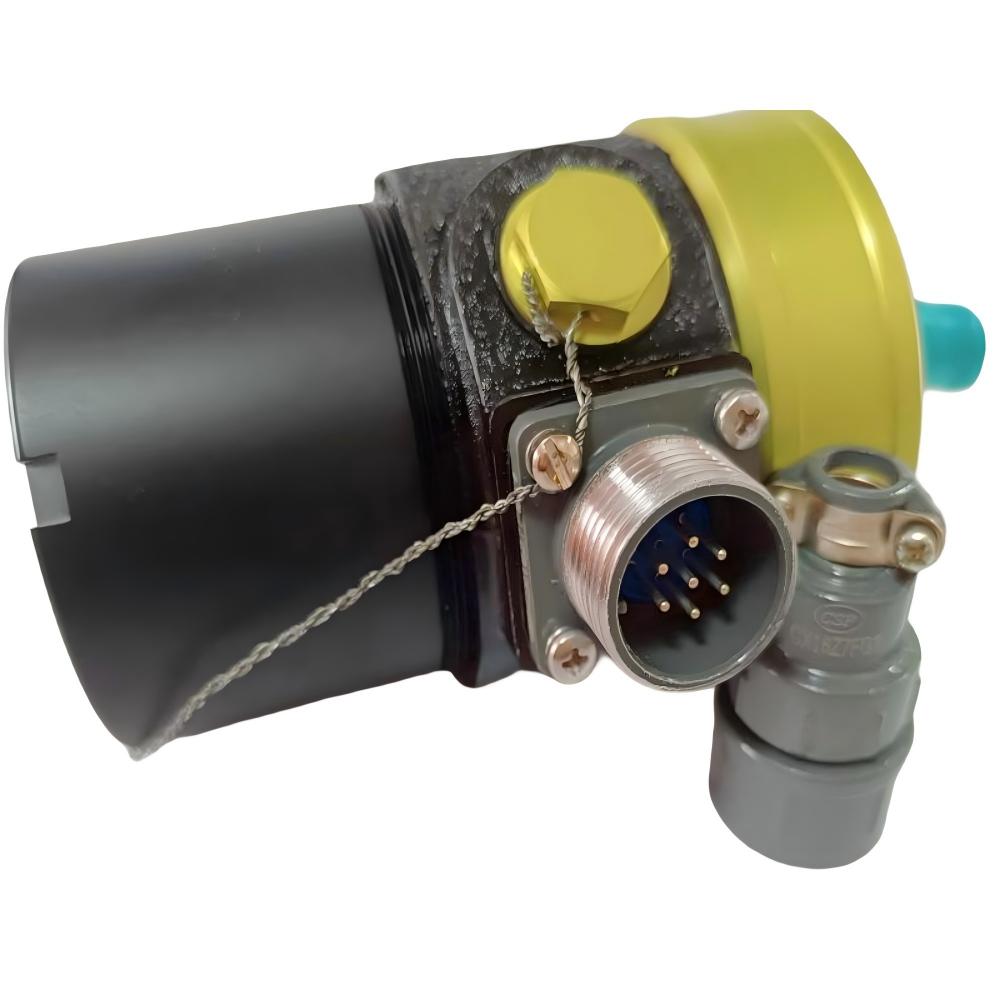
The YM GY15-3 Military Aviation Pressure Sensor is a compact, multi-pin precision instrument engineered for high-density system integration in demanding aerospace and industrial applications. Featuring a 7-pin configuration for comprehensive signal and power management, this sensor delivers accurate, real-time pressure data essential for the control and safety of aircraft engines, drone propulsion systems, and other mission-critical platforms. Its robust military-grade construction ensures reliable performance under extreme vibration, temperature, and pressure conditions.
Technical Specifications
The GY15-3 is defined by parameters that guarantee precision and resilience, matching the rigorous demands of aviation system integrators.
Electrical & Signal Performance
- Coil Power Consumption: Optimized for efficiency at (0.3~0.43)W, suitable for power-constrained avionics environments.
- Contact Load & Lifecycle: Rated for 1A at 28V DC resistive load, with a high-reliability lifecycle of 1x10⁷ operations.
- Contact Resistance: Ensures signal integrity with low initial resistance (≤50mΩ) and stable performance over time.
- Dynamic Response: Features an ultra-fast action time of ≤4ms and release time of ≤4ms, enabling real-time feedback for closed-loop control systems.
Environmental & Physical Durability
- Dielectric Strength: Withstands 500Vr.m.s. (50Hz) at normal pressure and 250Vr.m.s. under low pressure, ensuring electrical safety and isolation.
- Insulation Resistance: Maintains >500MΩ initially and >50MΩ post-endurance, crucial for accurate signal transmission in noisy environments.
- Hermetic Sealing: Leakage rate ≤1x10⁻³ Pa·cm³/s, providing absolute protection against media ingress for fuel, oil, and hydraulic applications.
- Weight & Form Factor: Lightweight at <3g with a compact, multi-pin (7-pin) design for space-saving integration in complex systems.
Product Features & Core Advantages
Leveraging YM's expertise in high-reliability components like the Military Metal Sealing Relay, the GY15-3 offers distinct advantages for advanced system design.
Advanced Design for Complex Integration
- 7-Pin Versatility: The multi-pin design supports separate power, ground, signal output, and diagnostic lines, allowing for sophisticated interfacing and health monitoring not possible with simpler sensors.
- Military-Grade Robustness: Constructed to the same durability standards as our Military Metal Relay series, capable of withstanding extreme shock, vibration, and thermal cycling.
- High-Speed Precision: The ≤4ms response time provides critical data latency for dynamic control algorithms, akin to the performance required in systems using high-speed PCB Signal Relays.
- Superior Sealing & Isolation: Hermetic sealing ensures long-term stability and accuracy by isolating the sensing element from harsh operational media and environmental contaminants.
How to Integrate the GY15-3 Sensor: A Step-by-Step Guide
- Pin-Out Verification & Interface Design: Review the sensor's 7-pin configuration diagram. Design your interface circuitry or cable harness to correctly match power, signal output, and any auxiliary pins for optimal functionality.
- Mechanical Mounting & Sealing: Securely mount the sensor at the measurement point (e.g., engine test stand, fuel line). Use the specified sealing method (e.g., O-ring, thread sealant) to ensure a leak-proof mechanical interface.
- Electrical Harness Connection: Connect the multi-pin connector to your pre-designed harness. Ensure secure connections to prevent signal noise or intermittent faults, similar to best practices for installing Automotive Relays in vehicle systems.
- Power-Up & Signal Validation: Apply power and validate each signal pin's output against the datasheet. Use a calibrated reference to verify pressure reading accuracy across the intended operational range.
- System Integration & Diagnostic Testing: Integrate the sensor into the full control network. Utilize the available pins for in-system diagnostics, testing the sensor's response across various operational scenarios to confirm reliability.
Application Scenarios
The GY15-3's advanced interface and robustness make it ideal for complex monitoring tasks across advanced technological sectors.
- Advanced UAV & Drone Propulsion: Provides multi-parameter monitoring (e.g., fuel pressure, oil pressure, intake pressure) in next-generation unmanned systems, feeding data to flight control computers.
- Aircraft Engine Test & Health Monitoring: Integral to test cell instrumentation and onboard engine health monitoring (EHM) systems for military and commercial jets, where multi-channel data acquisition is critical.
- New Energy Vehicle Powertrain Development: Used in research and development for monitoring high-pressure hydrogen systems in fuel cell vehicles or complex thermal management loops in electric vehicles, demanding both precision and robust data interfaces.
- High-Fidelity Industrial Automation: Suitable for precision process control in semiconductor manufacturing or chemical processing, where reliable, multi-point sensing is as vital as the control provided by Industrial Power Relays and Solid State Relays.
Value for Procurement Teams & System Integrators
Selecting the GY15-3 provides direct technical and commercial advantages to your projects.
- Enable Advanced System Diagnostics: The multi-pin interface allows for built-in-test (BIT) capabilities, enabling predictive maintenance and reducing troubleshooting time, thereby increasing system availability.
- Simplify System Architecture: Reduces the need for multiple discrete sensors and additional signal conditioning modules, consolidating functionality into a single, robust unit and lowering overall system complexity and weight.
- Reduce Lifecycle Risk & Cost: The proven 10-million-operation lifecycle and hermetically sealed design minimize in-service failures and associated maintenance costs, offering a lower total cost of ownership.
- Leverage Manufacturer Expertise: Source from YM, a specialist in precision electromagnetic components from Polarized Relays to Latching Relays, ensuring deep application knowledge and consistent quality support.
Certifications, Compliance & Customization
Built to Meet Global Standards
YM's manufacturing is governed by strict quality protocols. The GY15-3 is designed to meet the performance and reliability criteria of key international aviation and industrial standards. We provide technical documentation to support our partners' qualification and certification processes.
Customization Options (OEM/ODM)
We excel at adapting our core designs to meet specific customer requirements, offering flexibility through our OEM/ODM services.
- Electrical Interface Customization: Modification of pin assignments, output signal type (analog voltage/current, digital PWM, CAN), or integration of specific signal conditioning.
- Mechanical & Connector Tailoring: Customization of the connector type (e.g., MIL-DTL-38999), housing dimensions, mounting flange design, or port thread specifications.
- Performance Range Calibration: Factory calibration for specific pressure ranges, temperature compensation curves, or response time optimization.
- Environmental & Material Specifications: Use of specialized materials or coatings for corrosion resistance or operation in unique media, extending our expertise beyond standard Automotive or New Energy Relay environments.
Precision Manufacturing & Quality Assurance
Every GY15-3 sensor is produced through a verified, multi-stage process ensuring unparalleled consistency and quality.
- Precision Sensing Element Production: The core micro-machined sensing element is fabricated and laser-trimmed in a controlled environment to achieve baseline accuracy and stability.
- Automated PCB Assembly & Integration: The internal PCB Board Relay-grade assembly process utilizes automated pick-and-place and soldering for the signal conditioning circuitry, ensuring reliability.
- Hermetic Sealing & Critical Leak Testing: The assembled unit undergoes a controlled hermetic sealing process, followed by 100% individual leak testing to validate the stringent ≤10-3 Pa·cm³/s specification.
- Comprehensive Automated Testing: Each sensor is subjected to automated tests for response time, full-scale output accuracy, dielectric strength, insulation resistance, and pin-to-pin functionality.
- Environmental Stress Screening & Lot Validation: Production batches undergo environmental stress screening (temperature, vibration). Statistical lifecycle testing on sample units validates the 10-million-operation durability claim before release.




 Contact Now