
Aircraft Power System Component Integration: A Systems Engineering Perspective for Procurement
Modern aircraft power systems represent a complex symphony of electrical and electronic components, where the reliability of the whole depends critically on the seamless integration of each part. For B2B procurement managers and systems integrators—from global distributors to OEM/ODM manufacturers—understanding this integration is key to specifying, sourcing, and maintaining safe and efficient systems. This analysis delves into the critical interfaces between core components like military Aviation Contactors, aviation relays, aviation fuses, sensors, and meters, focusing on the engineering considerations that ensure robust performance from the aircraft engine to the flight deck.
The Core Components: Roles and Interdependencies
A reliable aircraft power system is built on specialized components, each with a distinct function that must harmonize with others.
1. Power Switching & Distribution: Contactors and Relays
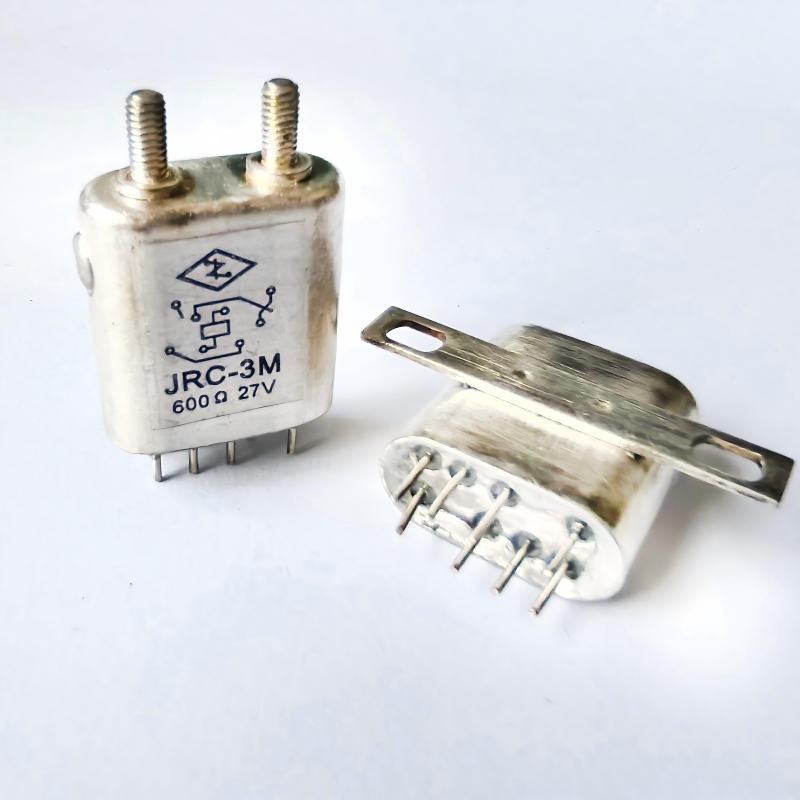
Military Aviation Contactors are heavy-duty switches designed to connect and disconnect high-current primary power sources (e.g., generator to bus). Their integration focuses on arc suppression, thermal management, and status feedback. Aircraft Relays, often polarized or solid-state, handle lower-power control signals and secondary circuit switching. Their integration requires precise coil drive compatibility and consideration of back-EMF from inductive loads. The coordination between a master Aviation Contactor and downstream aviation relays is fundamental for sequenced power-up and load shedding.
2. Protection: Aviation Fuses and Circuit Breakers
Aviation Fuses provide critical overcurrent protection. Their integration involves careful selection based on time-current characteristics to coordinate with upstream and downstream devices, ensuring the fuse closest to a fault clears first. This selective coordination prevents unnecessary loss of system segments. Fuse holders and panels must provide secure connections and environmental sealing.
3. Monitoring & Feedback: Sensors and Meters
Aviation Sensors (current, voltage, temperature) and Aviation Meters provide the system's "sight." Their integration involves signal conditioning, accurate placement for measurement, and secure data transmission to central computers or cockpit displays. For instance, a current sensor integrated with a military Aviation Relay can enable smart load monitoring and predictive fault detection in aviation systems for drones.

Latest Industry Technology Dynamics: The Shift to More-Electric and Intelligent Systems
Aircraft power systems are undergoing a profound transformation, driven by the More-Electric Aircraft (MEA) initiative and digitalization.
- High-Voltage DC (HVDC) Architectures: Moving towards 270V DC or ±270V DC systems to reduce weight and increase efficiency for next-generation plane and urban air mobility. This demands new generations of aviation contactors and protection devices rated for higher voltages and DC arc interruption.
- Solid-State Power Controllers (SSPCs): Replacing traditional aviation relays and circuit breakers with semiconductor-based devices. SSPCs offer programmable protection, soft-start capabilities, and real-time health data, revolutionizing power distribution unit (PDU) design.
- Integrated Modular Avionics (IMA) & Smart Components: Components are becoming "smart nodes" on data networks (like AFDX or CAN). An aviation meter or sensor is no longer just a gauge but a data source feeding a centralized computer, enabling condition-based maintenance for the high quality aviation engine and all subsystems.
- Advanced Thermal Management Integration: As power density increases, the integration of cooling solutions—from advanced heat sinks for aviation contactors to liquid-cooled electronics—becomes a critical co-design parameter.
Procurement Focus: 5 Key Integration Concerns for Russian & CIS Market Buyers
For procurement specialists in regions with stringent certification and harsh environments, successful integration is the ultimate benchmark. Their evaluation extends beyond individual component specs to system-level concerns:
- System-Wide Certification and Interface Compliance: Demand for components that not only have individual GOST or international approvals but are also proven to work together as a system. Suppliers who provide pre-validated component suites or integration guidelines (e.g., contactor-relay-fuse coordination curves) have a distinct advantage.
- Electromagnetic Compatibility (EMC) at the System Level: Guarantees that the integrated components will not cause or suffer from interference in the final installation. This requires component-level EMC testing (to DO-160) and clear guidance on grounding, shielding, and wiring separation for integration.
- Environmental Hardening Consistency Across the Supply Chain: Assurance that all components in the power chain—from the military aviation relay to the Aviation Fuse holder—are rated for the same extreme temperature, vibration, and humidity profiles, ensuring no weak link in the system.
- Technical Documentation for Integration (Schematics, Wiring Diagrams): Comprehensive, clear, and available documentation in Russian that covers not just installation but integration specifics: recommended wire gauges between components, termination methods, and communication protocol setup for smart devices.
- Single-Point Responsibility and Lifecycle Support: Strong preference for suppliers who can provide a wide range of the core components (contactors, relays, fuses, sensors) and assume responsibility for their interoperability. Long-term support for the integrated system, including spare parts and firmware updates for smart components, is crucial.

YM's Systems Integration Capability and Vertical Manufacturing Strength
Addressing these integration challenges requires both broad component expertise and deep manufacturing control. YM's power systems division operates from our 200,000 square meter integrated industrial campus, which houses dedicated production lines for each core component family. This vertical integration—from machining aviation contactor housings to assembling Aviation Sensor MEMS elements—allows for unparalleled control over quality and interface specifications. Our systems integration R&D team, comprising electrical, software, and aerospace engineers, focuses on interoperability. A key innovation is our common digital interface protocol for smart components, which simplifies wiring, configuration, and data aggregation, reducing integration time and complexity for OEM/ODM customers.
Best Practices for Integration, Testing, and Maintenance
Successful integration in the field or during manufacturing follows a disciplined process. Here is a step-by-step overview:
- System Design & Component Selection:
- Create a detailed load analysis and single-line diagram.
- Select components with compatible ratings, ensuring voltage, current, and interrupting capacities are coordinated. Use manufacturer-provided coordination charts for aviation fuses and circuit breakers.
- Define all physical and data interfaces between components.
- Pre-Integration Verification:
- Verify the specifications and calibration certificates of all incoming components (relays, contactors, sensors).
- Perform incoming inspection for physical damage.
- Mechanical & Electrical Integration:
- Mount components securely, following torque specs and considering heat dissipation paths.
- Use proper wire types, gauges, and shielding. Employ correct crimping and termination techniques.
- Implement a clear and consistent grounding scheme.
- Route wiring to minimize EMI coupling and physical damage risk.
- System-Level Testing & Commissioning:
- Continuity and Insulation Resistance Testing: Check for wiring errors and insulation integrity.
- Functional Testing: Sequence power application, verify relay/contactor operation, and confirm sensor/meter readings.
- Protection Coordination Test: Validate that the correct aviation fuse or breaker operates under simulated fault conditions.
- System EMC Scan (if possible): Check for unacceptable emissions or susceptibility.
- Documentation & Ongoing Maintenance:
- Update as-built schematics and wiring diagrams.
- Establish a baseline of system performance data (normal sensor readings, voltages).
- For maintenance, use system diagnostics to isolate faults to the component level before replacing parts like an aviation relay or sensor.
Governance by Systems-Level Aerospace Standards
Integration is governed by standards that ensure safety, reliability, and interoperability at the system level.
- RTCA/DO-160: The foundational environmental test standard for airborne equipment. System integration must ensure all components meet the relevant categories for the same installation location.
- SAE ARP4754A & ARP4761: Guidelines for the development of civil aircraft and systems, focusing on the safety assessment process (FHA, FMEA, FTA) that is critical when integrating safety-related components like power switches and protection devices.
- MIL-STD-704: Defines the characteristics of aircraft electrical power, setting the standard that all integrated components must be compatible with (voltage, frequency, power quality).
- AS9100 & NADCAP: YM's system-wide quality management is AS9100 certified. Our systems integration and testing processes are developed to meet the rigorous demands of these standards, providing confidence that our component suites will perform reliably together in the final aircraft, train, or drone application.
Frequently Asked Questions (FAQ)
Q1: What is the key difference in integration between a standard aviation relay and a Solid-State Power Controller (SSPC)?
A: The integration differs significantly. A traditional aviation relay requires an external circuit breaker or fuse for protection and provides only binary (on/off) control. An SSPC integrates the switching and protection functions, requires a digital control signal (often from a central computer), and provides detailed telemetry (current, fault status). Integrating an SSPC involves software configuration and data network integration, whereas a relay involves discrete wiring and external protection coordination.
Q2: How do we ensure proper thermal management when integrating high-power components like contactors in a confined panel?
A: Thermal management is a co-design effort. Key steps include:
• Component Selection: Choose aviation contactors with low static contact resistance and adequate current rating for the ambient temperature.
• Layout & Spacing: Allow for air circulation and avoid clustering heat-producing components. Use thermally conductive mounting pads.
• Heat Sinking: Implement shared or individual heat sinks as specified in the component's data sheet.
• Verification: Perform thermal imaging or thermocouple testing on the integrated panel under worst-case load conditions. YM provides thermal integration guidance as part of our technical support.
Q3: As an OEM, can YM supply pre-integrated power distribution modules or custom wire harnesses?
A: Absolutely. Beyond supplying individual components, YM offers value-added integration services. We design and manufacture custom power distribution panels, integrated LRUs (Line Replaceable Units), and complete wire harnesses that bundle aviation sensors, power wiring, and data cables. This "plug-and-play" approach reduces your integration risk, saves time, and ensures optimal performance of the component ecosystem for your specific high quality aviation engine or vehicle platform.


