
Aviation Control System Component Selection: A Strategic Guide for Procurement and Integration
The reliability and performance of an aircraft's control systems—encompassing flight control, engine management, and environmental control—are directly determined by the quality and suitability of their constituent components. For B2B procurement managers and engineering teams at distributors, OEM/ODM manufacturers, and integrators, the selection process is a critical juncture that impacts safety, certification, and lifecycle costs. This guide provides a structured framework for selecting key components such as military Aviation Contactors, aviation relays, aviation fuses, sensors, and meters, with a focus on aligning technical specifications with operational demands and global procurement realities.
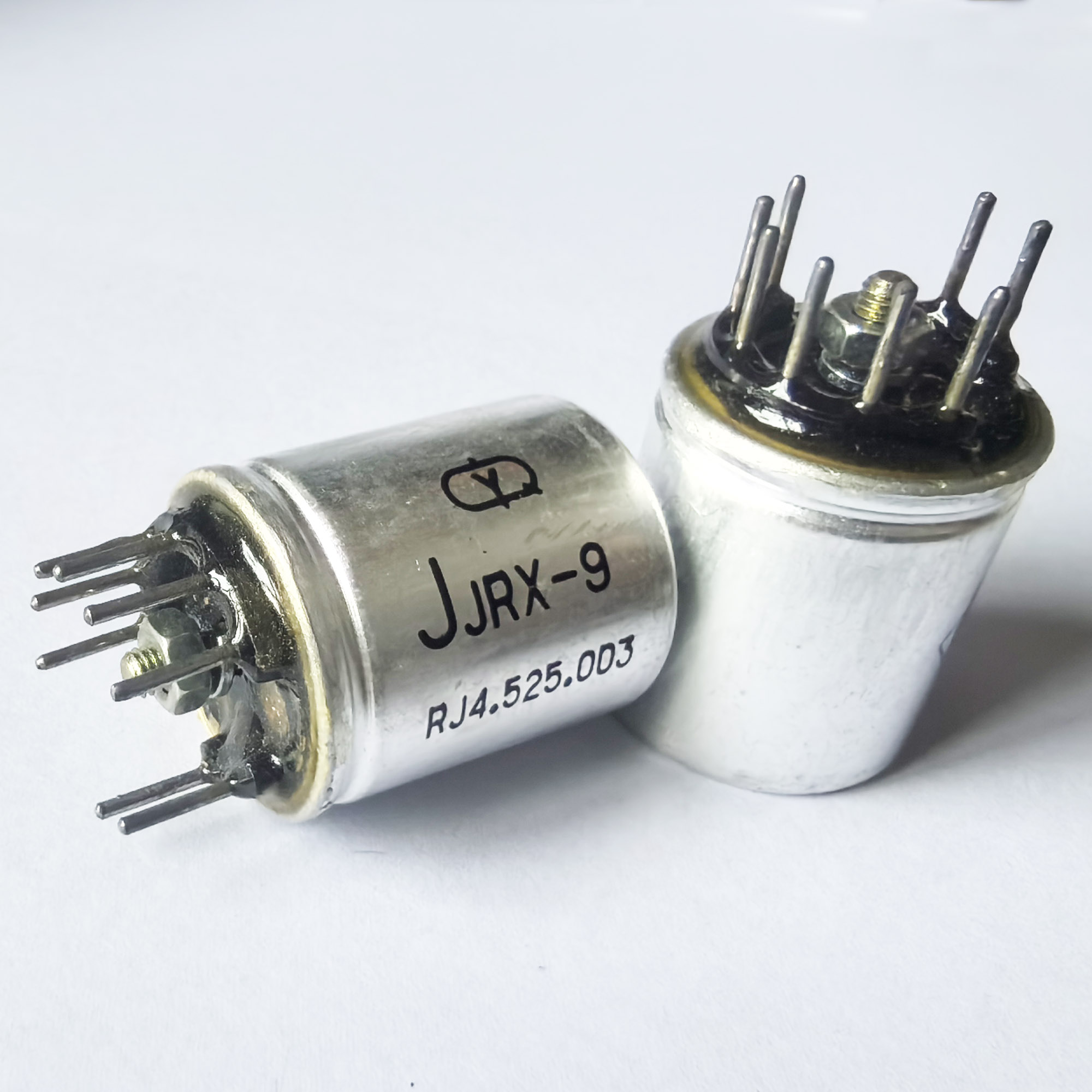
A Hierarchical Approach to Component Selection
Effective selection moves from system-level requirements down to detailed component specifications, ensuring every choice supports the overall system integrity.
1. Defining the Application and Failure Criticality
The selection process begins by categorizing the control function. Is it flight-critical (e.g., primary flight control actuator power), essential (e.g., engine fuel control), or non-essential (e.g., cabin lighting control)? This determines the Design Assurance Level (DAL) per ARP4754, which cascades into required component reliability, documentation, and certification level. A military Aviation Contactor for a primary flight control bus will have far more stringent selection criteria than one for a galley power circuit.
2. Environmental and Operational Profile Analysis
Each component must be qualified for its specific installed environment. This involves defining:
• Physical Environment: Temperature range, altitude, shock/vibration profiles (per RTCA/DO-160 or MIL-STD-810 sections), exposure to fluids (hydraulic fluid, jet fuel, de-icing fluid).
• Electrical Environment: Voltage spikes (per MIL-STD-704 or DO-160 Section 16), power quality, electromagnetic compatibility (EMC) requirements.
For example, an Aviation Sensor mounted on a high quality aviation engine must withstand extreme temperatures and high vibration, while a sensor in the cabin has a very different profile.
3. Performance Specification and Interface Matching
With the environment defined, precise performance parameters are set:
• Switching Components (Contactors/Relays): Coil voltage, pull-in/drop-out voltages, continuous & inrush current ratings, contact material (e.g., gold for low-level signals, silver-cadmium for high power), expected mechanical/electrical life (cycle count).
• Protection Devices (Fuses): Current rating, voltage rating, time-current characteristic (fast-blow, slow-blow), interrupt rating, and physical form factor (e.g., MIL-PRF-23419).
• Monitoring Devices (Sensors/Meters): Measurement range, accuracy, response time, output signal type (e.g., 4-20mA, 0-5V, ARINC 429), and power supply requirements.

Latest Industry Technology Dynamics Influencing Selection
Staying abreast of technological trends is essential for making future-proof selections that offer long-term support and upgrade paths.
- More-Electric Aircraft (MEA) and High-Voltage DC: The shift from pneumatic/hydraulic to electrical actuation increases power demands. Selecting components now may require future-proofing for higher voltage (270V DC) systems, favoring aviation contactors and relays with designs scalable to higher voltages.
- Smart Components and Integrated Health Monitoring: The line between simple components and intelligent systems is blurring. Selecting a "smart" Aviation Relay with embedded health monitoring can reduce wiring and provide predictive maintenance data, but adds software toolchain considerations.
- Additive Manufacturing and Advanced Materials: Suppliers are using 3D printing for complex, lightweight heat sinks or enclosures. New contact materials offer longer life. When selecting, inquire about the supplier's manufacturing technology roadmap and its impact on performance and lead times.
- Cybersecurity in Component Firmware: For any component with configurable firmware or a digital communication interface (e.g., a smart meter), the supplier's cybersecurity development practices (per DO-326A/ED-202) become a selection criterion to prevent vulnerabilities in the aircraft's network.
Procurement Focus: 5 Key Selection Criteria for Russian & CIS Aviation Programs
Selection for projects in the Russian and CIS markets requires navigating a distinct set of regulatory, technical, and commercial factors.
- Mandatory Certification to IAC AR and GOST Standards: The paramount criterion. Components must have a valid certification of conformity to the Interstate Aviation Committee (IAC) Aviation Rules and the relevant GOST standards (e.g., GOST R 54073 for environmental testing). Documentation must be provided in Russian. "Equivalent" Western certifications (like an ETSO) are not sufficient without the formal GOST mark.
- Proven Performance in Extreme Cold and Rapid Temperature Cycling: Components must have test reports validating operation across the full Russian operational spectrum, typically -60°C to +70°C. Special attention is paid to the performance of seals, lubricants, and electronic components at cold start. This often disqualifies components only tested to standard commercial aviation ranges.
- Compatibility with Indigenous Systems and Documentation: The component must physically and electrically interface with Russian-designed control systems, which may use specific connector types, mounting patterns, or communication protocols. Availability of all technical documentation—datasheets, manuals, drawings—in Russian is a non-negotiable requirement for integration and maintenance.
- Supply Chain Resilience and Localization Potential: Given geopolitical factors, there is a strong preference for suppliers with a stable, diversified supply chain not reliant on single sources from certain regions. Suppliers who can discuss phased localization (e.g., final assembly, testing, or boxing in-country) have a distinct advantage in major tenders.
- Long-Term Product Support and Lifecycle Guarantees: The selected component must be guaranteed to be in production with stable specifications for the life of the aircraft program (25-30 years). Suppliers must provide a formal product lifecycle management plan, including obsolescence management strategies and a commitment to long-term spare parts availability.

YM's Value Proposition: More Than a Supplier, a Selection Partner
YM simplifies the complex selection process by offering not just parts, but application engineering support. Our avionics application engineering team, backed by our 250,000 square meter vertically integrated manufacturing campus, works with customers from the conceptual design phase. We help translate system requirements into optimal component specifications, whether for a drone flight controller or a train propulsion management system. Our dedicated materials and process laboratory allows us to validate component performance under unique conditions. A key differentiator is our guaranteed lifecycle management program, which provides a binding commitment to support every aviation contactor, relay, or sensor we supply for the duration of your program, including proactive obsolescence management.
Step-by-Step Selection and Validation Checklist
Use this disciplined checklist to ensure no critical factor is overlooked during component selection.
- Establish Selection Team and Requirements Baseline:
- Form a cross-functional team (engineering, procurement, quality).
- Create and freeze the Component Requirements Specification (CRS) document.
- Supplier Identification and Pre-Qualification:
- Identify potential suppliers with relevant aerospace experience and quality certifications (AS9100 minimum).
- Evaluate their financial stability, production capacity, and past performance on similar programs.
- Technical Evaluation and Comparative Analysis:
- Obtain detailed datasheets and perform a gap analysis against your CRS.
- Request and review certification packages (DO-160, MIL-STD, GOST test reports).
- Compare key parameters: weight, power consumption, footprint, lifecycle cost.
- Sample Acquisition and Testing:
- Procure engineering samples for evaluation.
- Perform incoming inspection and functional testing in your lab.
- Subject samples to application-specific stress tests if needed (e.g., thermal cycling, vibration).
- Commercial and Logistical Assessment:
- Analyze total cost of ownership (unit cost, maintenance, expected life).
- Evaluate lead times, minimum order quantities, and flexibility.
- Review contract terms, warranty, and intellectual property provisions.
- Final Selection and Documentation:
- Make the final selection based on a weighted scorecard of technical, commercial, and risk factors.
- Formalize the selection in the approved parts list (APL) and ensure all documentation is archived.

Governance by Airworthiness and Quality Standards
Every selection decision must be traceable back to compliance with governing standards, which serve as the objective basis for airworthiness.
- RTCA/DO-160: The environmental test standard. Verify the component is tested to the correct category for its installation (e.g., Category B for equipment bay, Category A for unpressurized areas).
- SAE/ARP Standards: Relevant ARPs provide component-specific guidance (e.g., ARP9013 for relays, ARP1790 for sensors).
- MIL Specifications: For military programs, components often must meet specific MIL-PRF or MIL-DTL standards (e.g., MIL-PRF-6106 for relays, MIL-DTL-38999 for connectors).
- FAA TSO / EASA ETSO: For certain critical components, a Technical Standard Order authorization is evidence of a pre-approved design.
- AS9100 & NADCAP: A supplier's AS9100 certification is the baseline. For special processes (heat treating, plating, welding), NADCAP accreditation provides the highest assurance of consistency. YM's adherence to these standards is embedded in our quality management system, ensuring that every component we offer for selection is manufactured under a system recognized and trusted by aviation authorities worldwide.
Frequently Asked Questions (FAQ)
Q1: How do I choose between an electromechanical relay and a solid-state relay (SSR) for a control function?
A: Consider this trade-off matrix:
Electromechanical Relay (EMR):
• Pros: Lower cost, can switch AC/DC with same part, simple to use, provides physical isolation, handles high inrush currents.
• Cons: Limited cycle life (mechanical wear), slower switching, generates electrical noise (EMI), sensitive to vibration.
Solid-State Relay (SSR):
• Pros: Very high cycle life, silent operation, fast switching, immune to vibration, often includes advanced protection.
• Cons: Higher cost, generates heat (requires heatsink), may have leakage current, can fail shorted (a critical failure mode).
Selection Tip: Use EMRs for infrequent switching or high-power loads. Use SSRs for high-frequency switching (e.g., PWM control) or in high-vibration environments.
Q2: What are the most common pitfalls in aviation sensor selection?
A: Common pitfalls include:
1. Over-specifying Accuracy: Paying for 0.1% accuracy when 1% is sufficient adds cost with no benefit.
2. Ignoring Dynamic Response: A sensor may have good static accuracy but be too slow for the control loop, causing instability.
3. Forgetting the Installation Effect: Specifying a sensor without considering how mounting, thermal conduction, or wiring will affect its reading.
4. Underestimating Environmental Stress: Selecting an industrial-grade sensor for a location near a high quality aviation engine, where it will experience extreme temperatures and shock.


