
Military Component Preventive Maintenance Guide: Maximizing Readiness and Lifecycle Value
For military fleet managers, procurement officers, and maintenance depots, preventive maintenance (PM) is not merely a cost center—it's a strategic imperative for mission readiness and total cost of ownership. Effective PM extends far beyond basic inspections, requiring a deep understanding of component behavior and failure modes. This guide provides a comprehensive framework for the preventive maintenance of critical electrical components like military Aviation Contactors, aviation relays, aviation fuses, sensors, and meters, focusing on practical strategies to prevent failures before they compromise operations on aircraft, ground vehicles, and naval vessels.

Foundations of an Effective Preventive Maintenance Program
A successful PM program is built on data, discipline, and a clear understanding of component-specific wear mechanisms.
1. From Time-Based to Condition-Based Maintenance (CBM)
The traditional model of fixed-interval replacement (e.g., replace every 2,000 flight hours) is evolving. Condition-Based Maintenance (CBM) uses real-time data from Aviation Sensors and meters to trigger maintenance only when needed. For example, monitoring the increasing coil resistance of a military Aviation Relay or the rising operating temperature of a contactor can predict winding degradation long before failure. This approach maximizes component life and reduces unnecessary downtime.
2. Critical Failure Mode Analysis for Key Components
Understanding how components fail informs what to check. Common failure modes include:
• Contactors & Relays: Contact erosion/welding, coil insulation breakdown, mechanical spring fatigue, seal degradation leading to corrosion.
• Fuses: Thermal aging of the fusible element, which can alter its time-current characteristic even if it hasn't blown.
• Sensors: Drift in calibration, contamination of sensing elements (e.g., pitot tubes), connector corrosion.
• Meters: Display failures, internal reference voltage drift, input circuit damage from surges.
3. The Role of Environmental and Operational Data
PM intervals should be adjusted based on actual usage severity. A component on a high quality aviation engine operating in desert conditions (high heat, sand) will degrade faster than one in a temperate climate. Similarly, a relay on a frequently cycled system (like a drone's payload release) requires more attention than one on a rarely used circuit. Logging operational environment data is crucial for intelligent PM scheduling.

Latest Industry Technology Dynamics: Predictive Analytics and Digital Twins
The frontier of maintenance is being reshaped by digital technologies that enable true prediction rather than simple prevention.
- Predictive Analytics and Machine Learning: Algorithms analyze historical sensor data, maintenance records, and failure reports to identify subtle patterns preceding a failure. This can predict the remaining useful life (RUL) of a specific Aviation Contactor with surprising accuracy, enabling just-in-time parts ordering and maintenance scheduling.
- Digital Twin Technology: A virtual model of a physical component or system is fed with real-time operational data. Maintenance teams can simulate stress, predict wear, and test the impact of repair strategies on the digital twin before touching the actual hardware, optimizing procedures for complex LRUs.
- Augmented Reality (AR) for Maintenance Execution: AR glasses can overlay schematics, torque values, and inspection checklists directly onto a technician's field of view while working on a power distribution panel, reducing errors and speeding up complex PM tasks.
- Blockchain for Parts Traceability and History: Immutable digital records for every component—from manufacture through every maintenance event—ensure authentic, traceable parts and a complete lifecycle history, crucial for safety and audit compliance.
Procurement Focus: 5 Key PM Concerns for Russian & CIS Military Maintainers
Maintenance philosophy and constraints in the Russian and CIS military sphere create specific PM priorities that influence both operations and procurement.
- Alignment with Strict Regulatory Maintenance Intervals (РЭ / Руководство по Эксплуатации): All PM must be performed in strict accordance with the officially approved "Руководство по Эксплуатации" (Operating Manual). Procurement must ensure that components and their documentation support these prescribed intervals and procedures. Suppliers who can provide maintenance task cards aligned with these manuals add significant value.
- Access to OEM-Calibrated Test Equipment and Special Tools: Effective PM often requires specialized tools (e.g., contact resistance testers for relays, calibration rigs for sensors). There is a strong preference for suppliers who can provide or certify locally available test equipment, or who design components to be maintainable with common depot tools.
- Availability of Genuine Spare Parts Kits and Repair Consumables: Procuring not just the component, but the authorized PM kits—containing correct seal kits, contact sets, lubricants, and hardware—is vital. The supply chain for these consumables must be as robust as for the components themselves to avoid PM being halted for lack of a $5 O-ring.
- Cold-Weather and Contamination-Specific PM Procedures: PM procedures must include explicit checks for cold-weather damage (brittle seals, congealed lubricants) and contamination from sand, dust, or salt spray, which are prevalent operational environments. Component designs that facilitate easy cleaning and inspection are favored.
- Training and Technical Data in Russian for Depot Personnel: Beyond manuals, there is a critical need for hands-on training programs and detailed technical bulletins in Russian for maintenance crews. Suppliers who invest in localized training build trust and ensure their components are maintained correctly, protecting warranty and performance claims.
YM's Support for Proactive Maintenance Programs
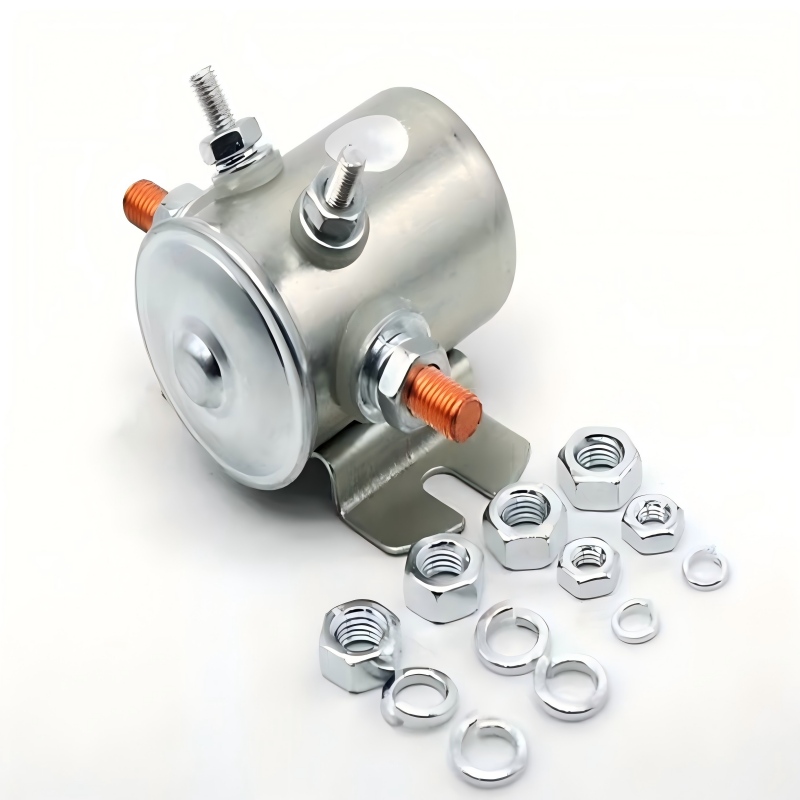
YM builds maintainability into our products from the ground up. Our product support and sustainment division works from a dedicated 50,000 square meter logistics and repair center. We design components like our aviation contactors with modular designs, allowing easy replacement of contact cartridges without replacing the entire coil assembly. For our aviation sensors, we provide NIST-traceable calibration services and data. A key innovation is our embedded digital data matrix on every major component, which links directly to an online portal containing the full maintenance history, interactive manuals, and recommended spare parts for that specific serial number.
Step-by-Step Preventive Maintenance Procedures for Key Components
Follow these detailed, component-specific procedures as part of a systematic PM program.
For Electromechanical Switches (Contactors & Relays):
- Visual Inspection: Check for signs of overheating (discoloration), corrosion, physical damage, or loose terminals.
- Mechanical Operation Check: Manually actuate (if possible) to ensure smooth movement. Listen for abnormal sounds.
- Electrical Testing:
- Measure coil resistance and compare to spec (indicates winding health).
- Measure contact resistance in the closed state using a low-ohm meter. A rising trend indicates wear.
- Verify pick-up and drop-out voltages.
- Cleaning and Preservation: Use approved cleaners to remove dust and contaminants. Apply designated contact lubricant if specified by the OEM.
For Sensors and Meters:
- Functional Verification: Compare the sensor/meter reading against a known good source under controlled conditions (e.g., apply a known temperature to a temp sensor).
- Connector and Wiring Inspection: Check for pin corrosion, loose connections, and integrity of shielding. This is a leading cause of sensor fault indications.
- Calibration Check: Perform against a calibrated master according to the recommended interval. Record any drift.
- Physical Inspection: For exposed sensors (e.g., on an aircraft engine), check for physical damage, blockage, or contamination of the sensing element.
For Fuses and Protection Devices:
- Visual Inspection: Check for discolored or distorted fuse bodies/windows, which indicate overheating.
- Continuity Check: Verify continuity. However, a "good" reading doesn't guarantee the time-current characteristic is intact.
- Replace Per Interval or Condition: Adhere to calendar-based replacement for critical fuses, as thermal aging is not always visible. Replace any fuse that has experienced a fault, even if it appears intact.

Governance by Maintenance and Reliability Standards
A disciplined PM program is guided by international standards that ensure consistency and effectiveness.
- MIL-STD-721 / MIL-HDBK-217: Definitions of terms and reliability prediction methods, respectively. Inform the statistical basis for setting PM intervals.
- SAE JA1011 / JA1012: Evaluation criteria for Reliability-Centered Maintenance (RCM) processes. RCM is the systematic methodology for determining what PM tasks are truly necessary.
- ISO 55000: Asset management standard. Provides a framework for managing physical assets (like component inventories) to achieve value from them, which PM directly supports.
- NAVAIR 01-1A-509 / TO 00-20-1: U.S. Navy and Air Force specific cleaning and corrosion control manuals. Essential references for the preservation aspect of PM.
- AS9110: The quality management standard for Aerospace Maintenance Organizations. YM's own repair and overhaul services are certified to AS9110, ensuring that our component maintenance, repair, and overhaul (MRO) processes meet the same rigorous standards as original manufacture, providing a certified and reliable source for component refurbishment and life extension.
Frequently Asked Questions (FAQ)
Q1: What is the single most important data point to track for predicting electromechanical component failure?
A: For contactors and relays, contact resistance trend data is paramount. A gradual increase in milliohms indicates contact erosion and oxidation. A sudden increase may signal a cracked contact or loose terminal. For coils, insulation resistance trend data (measured in megohms) is critical for predicting winding failure. Regularly logging these parameters during PM creates a powerful predictive tool.
Q2: Should we replace all fuses during a major overhaul as a preventive measure?
A: This is a common practice known as "hard-time replacement" and is recommended for safety-critical and difficult-to-access fuses. For fuses in accessible locations and non-critical circuits, a visual inspection and continuity check may suffice. Always refer to the platform's specific maintenance planning document (MPD). The trend, however, is toward using more robust circuit breakers or SSPCs in critical locations to eliminate this wholesale replacement cost.
Q3: How can YM help us transition from a time-based to a condition-based maintenance program?
A: YM offers a structured CBM adoption program. We can:
1. Retrofit Kits: Provide sensor kits to monitor key parameters on existing contactors or relays.
2. Data Integration Support: Help format and integrate component health data into your existing health management system.
3. Baseline Data & Thresholds: Provide OEM-recommended baseline performance data and failure threshold values for our components.
4. Training: Train your personnel on data interpretation and decision-making based on condition indicators. This partnership approach de-risks your transition to smarter maintenance.


