
Aviation Electronics Corrective Maintenance: A Systematic Approach to Fault Isolation and Repair
When preventive measures fall short, efficient and effective corrective maintenance becomes critical to restoring aircraft availability. For maintenance managers, procurement officers, and repair depots across the B2B spectrum—from distributors to OEM/ODM manufacturers—mastering corrective maintenance for core components like military Aviation Contactors, aviation relays, aviation fuses, sensors, and meters is essential for minimizing aircraft-on-ground (AOG) time. This guide outlines a disciplined methodology for diagnosing, repairing, and verifying these components, ensuring safe and reliable return-to-service while controlling lifecycle costs.

The Disciplined Corrective Maintenance Workflow
Ad-hoc troubleshooting leads to extended downtime and repeat failures. A structured, repeatable process is the cornerstone of professional aviation maintenance.
1. Fault Reporting and Initial Verification
The process begins with a clear, actionable fault report (e.g., "Right generator offline," "Engine temperature gauge erratic"). The technician's first task is verification: is the reported symptom reproducible? This step often involves checking cockpit indications, using built-in test equipment (BITE), or performing a basic operational check. A reported "blown Aviation Fuse" should be visually confirmed before replacement, but the investigation must continue to find the root cause.
2. Systematic Fault Isolation and Diagnosis
This is the critical phase. Using wiring diagrams, schematics, and troubleshooting manuals, technicians employ a logical process to isolate the faulty component.
Key Techniques:
• Half-Splitting: In a series circuit, test at the midpoint to determine if the fault is upstream or downstream.
• Signal Tracing: Follow a signal (voltage, data) from source to destination to find where it is lost or corrupted.
• Substitution: Swap a suspected component (like an Aviation Relay) with a known-good unit from the same aircraft or bench stock.
• Measurement and Analysis: Use multimeters, oscilloscopes, and specialized testers to measure coil resistance, contact resistance, sensor output, and signal integrity.
3. Component-Level Repair vs. Replacement Decision
Once isolated, a decision must be made: repair the faulty component or replace it as a unit (LRU - Line Replaceable Unit).
Repair (Shop Visit): Often applied to high-value items like a military Aviation Contactor where a contact set or coil can be replaced. Requires specialized tools, clean environment, and certified repair procedures.
Replacement (Swap): The standard for most line maintenance. The faulty LRU is removed and sent to a repair shop, and a serviceable unit is installed. This decision hinges on cost, time, available spares, and maintenance-level authorization.
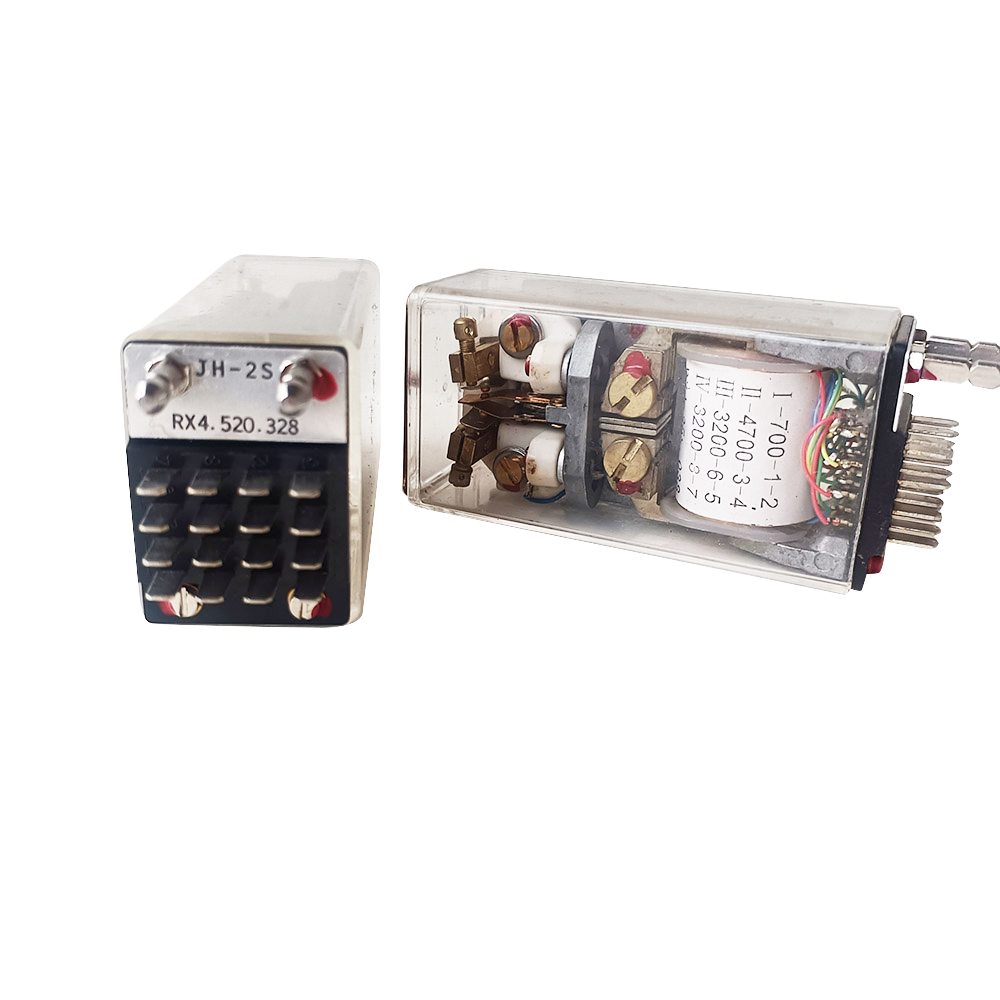
Latest Industry Technology Dynamics: Enabling Smarter Corrective Actions
Technological advancements are transforming corrective maintenance from a reactive art to a data-driven science.
- Augmented Reality (AR) Guided Repair: AR headsets can overlay repair procedures, highlight test points on a complex aviation meter, and provide real-time expert guidance to less-experienced technicians, reducing diagnostic time and errors.
- Predictive Diagnostics and Fault Code Analytics: Modern systems log detailed fault codes. Advanced analytics platforms can cross-reference these codes with historical repair data to suggest the most probable failed component (e.g., "Code XYZ-123 correlates with a failed Aviation Sensor in 85% of cases").
- 3D Printing of Repair Tools and Obsolete Parts: For legacy aircraft, obtaining a specific tool or a simple plastic bracket for a component can cause long delays. On-site 3D printing of non-critical repair aids and interim parts is becoming a viable solution to keep assets operational.
- Blockchain for Immutable Repair History: Recording every repair action, part serial number, and technician certification on a blockchain creates a tamper-proof lifecycle record. This builds trust in the repair process and is invaluable for resale or lease-return inspections.
Procurement Focus: 5 Key Corrective Maintenance Concerns for Russian & CIS Aviation
The execution and support of corrective maintenance in this region are influenced by specific operational protocols and supply chain considerations.
- Strict Adherence to Approved Repair Manuals and Technical Documentation (РЭ / ТЭ): Any corrective action, especially repair, must follow the officially approved "Руководство по Эксплуатации" (Operating Manual) and "Техническое Описание" (Technical Description). Procurement must ensure that replacement components come with documentation that validates their use within these approved procedures. Illegitimate or poorly documented parts can void certifications.
- Availability of Certified Test Equipment and Calibration Services: Accurate diagnosis requires calibrated tools. There is a chronic need for access to OEM-approved or certified test sets for components like aviation contactors and sensors. Suppliers who can provide or support the calibration of this equipment locally are highly valued.
- Turnaround Time (TAT) for LRU Repair and Overhaul: For high-value LRUs, the speed of the repair loop is critical. Suppliers with in-region or dedicated fast-track repair depots that guarantee a short TAT provide a strategic advantage by reducing spares inventory holding costs.
- "No Fault Found" (NFF) Rate and Root Cause Analysis Support: A high percentage of components sent for repair are found to be operational (NFF). This is costly and indicates poor line diagnosis. Suppliers who provide deep technical support, advanced troubleshooting guides, and even training to reduce NFF rates directly impact operational efficiency and cost.
- Traceability and Certification for Repaired/Overhauled Components: Every repaired component must return with a full certification package (Form 8130-3 equivalent, repair tag, test report) in Russian, detailing what was done, parts used, and tests passed. This paperwork is as important as the physical part for returning the aircraft to service.

YM's Integrated Support for Efficient Corrective Maintenance
YM's commitment extends beyond the sale to supporting the entire repair cycle. Our global network of certified repair stations, backed by our central 80,000 square meter technical support and logistics hub, ensures rapid response. We maintain extensive stocks of commonly replaced sub-components—like contact kits for our aviation relays and sensing elements for our sensors—to expedite repairs. Our R&D in diagnostic interfaces has led to innovations like our embedded diagnostic port on key components. This allows technicians to plug a standard tester directly into a contactor or smart meter to retrieve operational history, run self-tests, and verify health without full removal, drastically reducing diagnostic time for systems on drones and manned aircraft alike.
Step-by-Step Corrective Maintenance Procedures for Common Failures
Follow these targeted procedures for frequent failure scenarios. Always consult the official aircraft maintenance manual (AMM) first.
Scenario 1: Suspected Failed Contactor (e.g., Generator Control)
- Safety: Ensure the aircraft is in a safe configuration (power off, tags applied).
- Visual Inspection: Look for signs of arcing, overheating, or physical damage.
- Control Circuit Check: Verify control voltage is present at the coil terminals when commanded.
- Contactor Functional Test (In-Situ):
- If control voltage is present but contactor doesn't operate, suspect coil or mechanical binding.
- If it operates but power doesn't transfer, measure main contact resistance (should be < a few milliohms).
- Removal and Bench Test: If faulty, remove and perform detailed coil resistance and contact resistance tests per the component manual.
Scenario 2: Erratic or Incorrect Sensor Reading (e.g., Engine Temp)
- Compare with Redundant Sources: Check other temperature indications for the same engine or system.
- Check Sensor Wiring: Inspect the sensor connector for corrosion, bent pins, or loose connections—the most common cause.
- Measure Sensor Output: Disconnect the sensor and measure its output (resistance, voltage) at a known temperature using a calibrated meter. Compare to the sensor's specification chart.
- Simulate and Test: If possible, simulate a known input (e.g., apply a precise resistance) to the aircraft's measuring unit to verify the downstream circuitry is functional.
- Replace and Verify: If the sensor output is out of spec, replace it. Immediately verify the new reading is correct before closing up panels.
Scenario 3: Blown Fuse or Tripped Circuit Breaker
- Document and Remove: Note the fuse rating and location. Safely remove the blown fuse.
- Root Cause Investigation - DO NOT JUST REPLACE:
- Visually inspect the circuit for chafed wires, pinched insulation, or signs of water ingress.
- Disconnect the downstream load(s).
- Use a megohmmeter (megger) to check for a short circuit to ground or between wires.
- Test the Load: If the wiring is intact, test the suspected load (e.g., a motor, heater) for internal shorts.
- Controlled Re-energization: Only after finding and correcting the fault should a new fuse of the exact same rating and type be installed. Consider using a current-limited power supply for the first power-up to test.

Governance by Repair and Return-to-Service Standards
Corrective maintenance, especially repair, is governed by strict standards to ensure airworthiness is restored.
- FAA AC 43.13-1B / EASA AMC to Part-M: Acceptable methods, techniques, and practices for aircraft inspection and repair. The foundational guide for many standard repairs.
- FAA AC 00-56 / EASA Part 145: Governs the approval and operation of aviation repair stations.
- ISO 9001 & AS9110: While AS9100 is for manufacturing, AS9110 is the specific quality standard for aerospace maintenance organizations. It ensures repair processes are controlled and reproducible.
- MIL-STD-4158 / NAVAIR 17-15-125: Military standards for the repair and testing of specific electronic components and assemblies.
- OEM Service Bulletins (SBs) and Component Maintenance Manuals (CMMs): The ultimate authority for specific component repair. YM provides comprehensive, clear CMMs for our products and ensures our global repair network operates in full compliance with these and all relevant standards, giving customers confidence that a component repaired by YM is functionally and legally equivalent to new for military aviation and commercial fleets.
Frequently Asked Questions (FAQ)
Q1: What is the most common root cause of intermittent failures in aviation electronics, and how is it diagnosed?
A: The most common culprit is intermittent connections—loose terminals, corroded pins, or cracked solder joints. Diagnosis is challenging as the fault may not be present during testing. Techniques include:
• Wiggle Testing: Gently manipulate wires and connectors while monitoring the signal.
• Thermal Cycling: Use a heat gun or cold spray to induce expansion/contraction that may reveal the fault.
• Vibration Testing: Apply controlled vibration to the assembly or component.
• Time-domain Reflectometry (TDR): For complex data buses, TDR can locate the exact distance to an impedance mismatch (like a bad connector).
Q2: When is it more economical to repair a component like a contactor rather than replace it?
A: Repair is typically more economical when:
• The component is high-value (e.g., a large power contactor or smart meter).
• The failure is confined to a known, replaceable sub-assembly (e.g., contacts, a specific circuit board).
• The repair turn-around time (TAT) is shorter than the lead time for a new unit.


