
Aviation Fuse Technologies Analysis: A Comprehensive Guide for Aerospace Procurement
For B2B procurement managers in aerospace, defense, and heavy machinery sectors, selecting the correct Aviation Fuse technology is a critical safety and reliability decision. Far more than simple circuit protection devices, modern aviation fuses are sophisticated components engineered to operate flawlessly in extreme environments while providing precise protection for valuable systems—from sensitive Aviation Sensor arrays to multi-million dollar Aircraft Engine controllers. This technical analysis examines fuse technologies, selection criteria, and industry trends essential for protecting systems in commercial aircraft, military platforms, Aviation Meter for Drone stations, and next-generation High quality Aviation Engine test facilities.

Core Aviation Fuse Technologies: Operational Principles
Understanding the fundamental operating principles of each fuse type is essential for proper application in aerospace electrical systems.
1. Cartridge Fuses (Fast-Acting & Time-Delay)
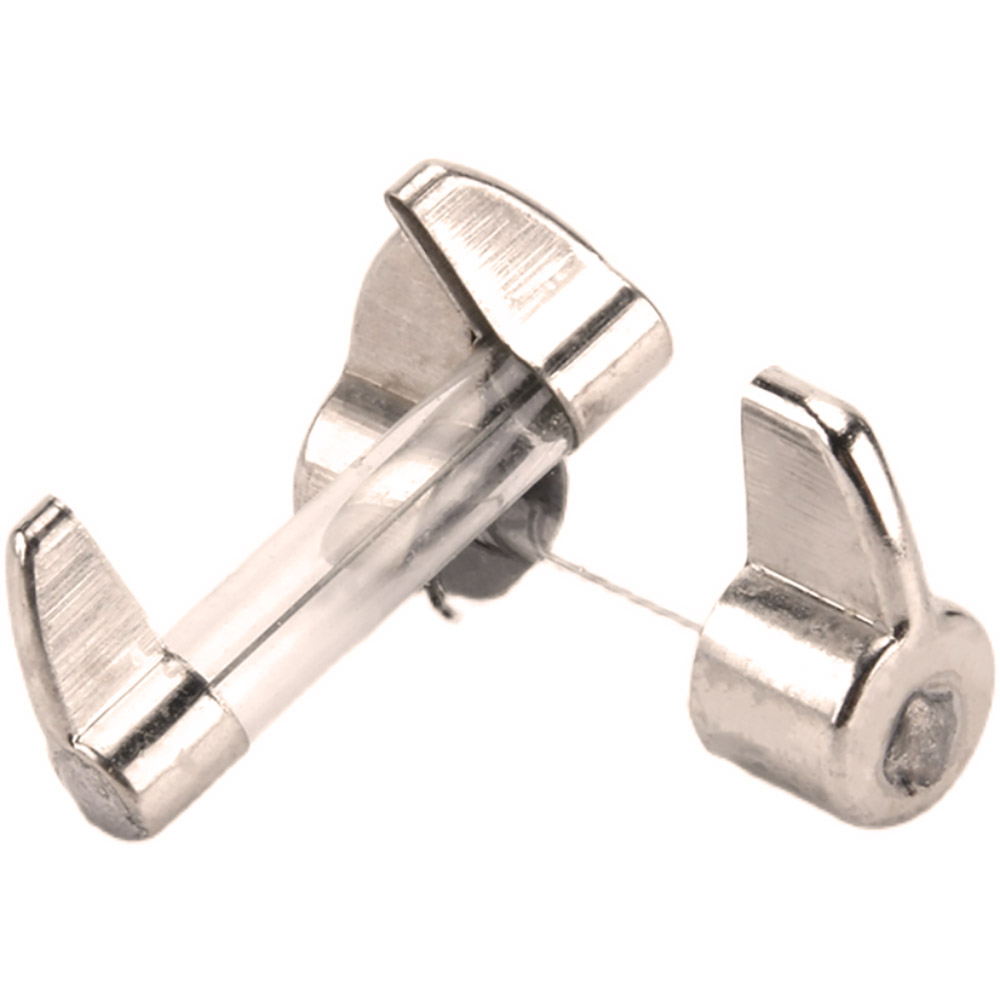
The traditional, widely used technology with a calibrated fusible element sealed in a ceramic or glass body.
- Operating Principle: A metallic element melts when current exceeds its rating for a specified time, breaking the circuit.
- Fast-Acting (FF): Designed to open quickly on overcurrent, protecting sensitive semiconductors and electronics in Aviation Meter for Drone control units.
- Time-Delay (MT/AMT): Withstands temporary inrush currents (from motors, transformers) while providing protection against sustained overloads. Critical for circuits powering Military Aviation Contactor coils or actuator motors.
- Key Standards: MIL-PRF-23419, MS24518, MS24519 series.
2. Current-Limiting Fuses (High Interrupting Rating)
Engineered to interrupt very high fault currents safely, limiting let-through energy to protect downstream equipment.
- Operating Principle: Contains a fusible element embedded in arc-quenching material (silica sand). During a high fault, multiple points vaporize simultaneously, creating high resistance to limit current peak and duration.
- Critical Advantage: Extremely high interrupting rating (up to 200kA), essential for protecting main power distribution panels and bus bars in large aircraft and ground power units.
- Applications: Primary power feeders, generator output circuits, and locations where fault current potential is high.
3. Smart Solid-State Circuit Protectors (SSPCs)
The emerging technology representing the future of aircraft circuit protection.
- Operating Principle: Uses semiconductor switches (MOSFETs) controlled by intelligent circuitry to monitor current. Can be programmed for precise I²t trip curves, provide status feedback, and be reset remotely.
- Advantages: Precise protection, programmable characteristics, status monitoring, remote control/reset, and extremely fast response. Integrates well with digital bus systems for smart power management.
- Considerations: Higher initial cost, generates heat, requires control power. Often used in conjunction with traditional fuses for branch protection.
Procurement Selection Framework: 8 Critical Evaluation Factors
Choosing the right fuse involves more than matching current ratings. Use this systematic framework for specification and supplier evaluation.
- Voltage Rating & System Architecture: Must exceed the system's maximum operating voltage (e.g., 28VDC, 115VAC 400Hz, 230VAC). Consider whether the system is AC or DC, and if DC, note polarity-sensitive applications.
- Current Rating & Derating for Environment: Select based on continuous load current, then apply derating factors for ambient temperature (per MIL-STD-704). A fuse in a hot engine bay may require a higher nominal rating.
- Interrupting Rating (AIC): Must be higher than the maximum available fault current at the installation point. This is non-negotiable for safety; an under-rated fuse can violently fail.
- Time-Current Characteristic (Trip Curve): Match the fuse's melting curve to the protected equipment's withstand capability. Protect wires without nuisance tripping during legitimate inrush from devices like an Aircraft Contractor.
- Physical Form Factor & Mounting: Match to existing panel layouts (clip-in, bolt-on, PCB mount). Consider size/weight constraints, especially in airborne applications.
- Environmental Qualifications: Verify compliance with MIL-STD-810 for vibration, shock, altitude, and temperature cycling. Sealing may be required to prevent contamination.
- Visual Indicating & Remote Status: Does the fuse provide a blown indicator? For critical systems, consider fuses with auxiliary contacts or smart protectors that signal status to the cockpit or ground crew.
- Approvals & Traceability: Require proof of compliance with relevant standards (MIL-PRF, DO-160, FAA TSO) and full material traceability for defense contracts.
Latest Industry Trends & Technology Advancements
Innovations in Circuit Protection
- Hybrid Fuse-SSPC Solutions: Combining a traditional fuse (for high-fault current interruption) with a parallel solid-state switch (for precise overload protection and remote switching). This provides both safety and smart functionality.
- Arc-Fault Circuit Protection (AFCP): Advanced fuses and circuit breakers that can detect the unique signature of a series or parallel arc fault—a leading cause of aircraft electrical fires—and interrupt the circuit before a fire starts.
- Miniaturization & High-Density Packaging: Development of sub-miniature fuses with high interrupting ratings for densely packed avionics bays and UAV systems, where saving every gram and cubic centimeter counts.
- Materials Science Advances: New fusible alloys and arc-quenching composites that provide more predictable melting characteristics and better performance under vibration and thermal cycling.
- Integration with Vehicle Health Management: Smart protectors that not only trip but also log fault data (magnitude, duration) and communicate it over data buses for predictive maintenance analysis.

Focus: Russian & CIS Market Procurement Requirements
Sourcing for this region involves specific technical standards and documentation needs.
- GOST Standards Compliance: Fuses must meet relevant GOST standards (e.g., GOST R 50339.0 for low-voltage fuses) in addition to, or as an alternative to, Western MIL-SPECs. Dual-certified products are highly valued.
- Documentation in Russian Language: All technical data sheets, certificates of conformity, manuals, and packaging must be provided in precise, technical Russian.
- Demonstrated operational reliability and storage capability at temperatures down to -70°C, including material brittleness testing.
- Compatibility with Legacy Soviet-era Systems: Form-fit-function replacements for fuses used in legacy platforms, often with unique physical dimensions and mounting styles.
- Robustness to Voltage Fluctuations: Ability to maintain stable trip characteristics despite wider voltage and frequency variations sometimes present in regional ground power infrastructure.
Industry Standards & Certification Landscape
Navigating the complex regulatory environment is essential for global market access and safety.
- MIL-PRF-23419: Performance specification for cartridge fuses, aerospace type.
- MIL-STD-704: Defines aircraft electrical power characteristics; fuses must perform correctly within these voltage and frequency limits.
- RTCA/DO-160: Environmental test conditions and procedures for airborne equipment, including sections on temperature, altitude, vibration, and flammability.
- SAE AS5692: Standard for time-current test methods for aerospace circuit protective devices.
- FAA TSO-C73/C118: Technical Standard Orders for certain types of fuses and circuit breakers used in certified aircraft.
- EUROCAE ED-14/DO-160: European equivalent environmental test standard.
YM's Aviation Fuse Engineering & Manufacturing Expertise
At YM, we approach fuse manufacturing as a critical safety discipline. Our dedicated 5,000 sqm circuit protection facility features a Class 100,000 cleanroom for precise element assembly, automated laser welding for hermetic sealing of high-reliability units, and proprietary calibration ovens that ensure every fuse's time-current curve falls within the tightest specified tolerances. Our final test stations perform 100% testing of current rating and interrupting capacity on statistically sampled lots.
Our R&D team, with specialists in electro-thermal dynamics and materials science, focuses on solving real-world protection challenges. A significant achievement is our patented Stable-Arc™ Quenching Matrix, a nano-engineered silica compound used in our current-limiting fuses. This material provides 30% faster arc extinction and more consistent interrupting performance across the full military temperature range (-55°C to +125°C), offering superior protection for sensitive avionics downstream of a Military Aviation Relay or power distribution panel.

Fuse Selection, Installation & Maintenance Protocol
5-Step Selection & Installation Procedure:
- System Analysis: Calculate the continuous load current, inrush current profile, and available fault current at the installation point. Review the protected wire's ampacity.
- Fuse Specification: Select fuse type and rating using the derated current. Choose a time-current curve that coordinates with upstream/downstream devices. Ensure voltage and AIC ratings are sufficient.
- Pre-Installation Verification: Visually inspect for damage. Verify rating markings match specification. For critical systems, measure the resistance of an unfused unit as a baseline if practical.
- Proper Installation: Ensure clean, tight connections using the correct hardware. Avoid stressing the fuse body. Follow torque specifications for bolted connections. In panels subject to vibration, use positive-locking holders.
- Labeling & Documentation: Clearly label the fuse location and rating on the panel. Update the aircraft or system wiring diagram and maintenance manual.
Maintenance, Inspection & Troubleshooting:
- Regular Visual Inspection: Check for signs of overheating (discolored holder, melted solder), corrosion, or physical damage. For indicating fuses, verify the indicator is intact.
- Never "Uprate" a Fuse: If a fuse blows repeatedly, diagnose and fix the root cause (overload, short circuit, faulty equipment like a sticking Military Aviation Contactor). Replacing with a higher-rated fuse creates a fire hazard.
- Use Proper Replacement Parts: Always replace with an identical type and rating from a certified supplier. "Field-expedient" fixes with improvised elements are unacceptable and dangerous.
- Investigate Nuisance Tripping: If a time-delay fuse trips on normal inrush, verify the inrush current duration and magnitude. The equipment or the fuse selection may need review.
- Keep Records: Log fuse replacements as part of the system's maintenance history to identify recurring issues.
FAQ: Aviation Fuse Technologies & Applications
Q: What is the key difference between a "fuse" and a "circuit breaker" in aviation?
A: Both protect against overcurrent. A fuse is a one-time-use device; it sacrifices itself by melting to break the circuit. It must be replaced after operating. A circuit breaker is a resettable mechanical device. Fuses are often simpler, more reliable for very high fault currents, and used for final branch protection. Breakers are used where reset capability is needed (cockpit controls) or for overload protection of larger circuits. They are often used in coordination.


