Aviation IoT Components Development: Engineering the Connected Aircraft of Tomorrow
The Aviation Internet of Things (IoT) is transforming aircraft from isolated vehicles into intelligent, data-rich nodes in a global aerospace network. For procurement managers, this evolution requires a fundamental shift in component selection—from standalone parts to intelligent, connected systems. This guide explores the development of Aviation IoT components, focusing on how traditional aviation hardware like Military Aviation Relays, Aviation Sensors, and power management units are evolving into smart, data-generating assets that enable predictive maintenance, operational efficiency, and enhanced safety for both High Quality Aviation Engines and entire fleets.
From Components to Data Nodes: The Core Paradigm Shift
Aviation IoT is not about adding internet connectivity to existing parts. It's about re-engineering components from the ground up to be self-aware, communicative, and integral to a larger data-driven ecosystem. A simple Aviation Fuse becomes a smart circuit guardian that reports its health; a traditional Military Aviation Contactor evolves into a networked power switch that logs every operation and monitors its own contact integrity.
Defining Characteristics of Aviation IoT Components:
- Embedded Sensing & Intelligence: The component has built-in ability to measure its own state (temperature, vibration, electrical parameters) and/or its environment.
- Local Processing & Edge Analytics: Basic data processing occurs at the component level to reduce bandwidth needs, detect anomalies, and make simple decisions (e.g., a sensor filtering out noise).
- Secure, Standardized Communication: The component can transmit data via secure, lightweight protocols (often over aircraft data buses like ARINC 664/AFDX or wireless links) to onboard aggregators or directly to the cloud.
- Unique Digital Identity & Traceability: Each component has a globally unique identifier (e.g., serial number, digital twin ID) linked to its full lifecycle data.
Key Aviation IoT Component Categories and Development Focus
IoT transformation is impacting all major subsystems, creating new product development opportunities.
1. Intelligent Power & Electromechanical Components
These are the workhorses gaining a digital voice.
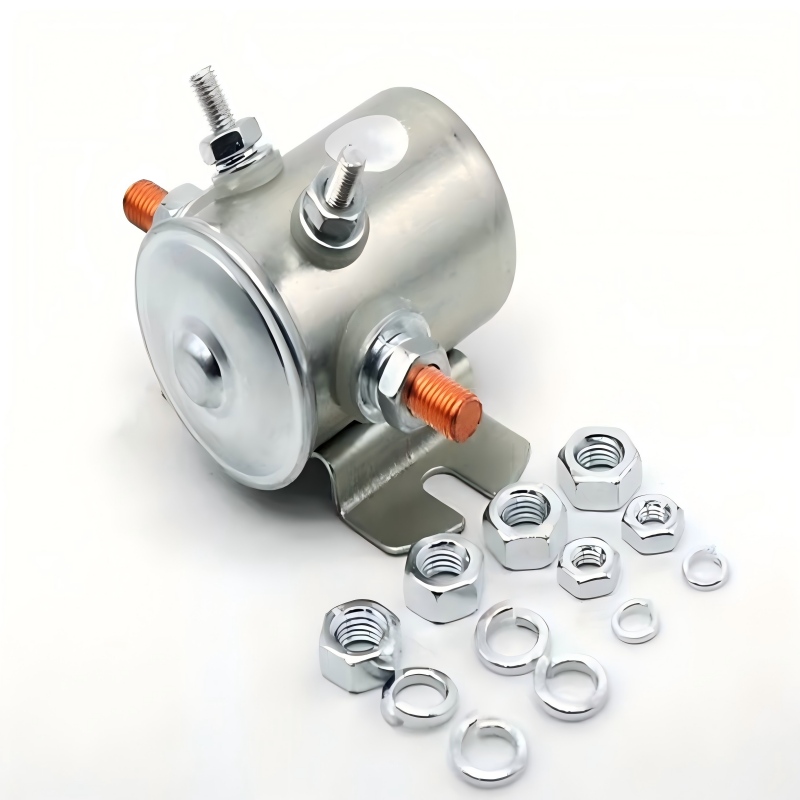
- Smart Contactors & Relays: Next-generation Military Aviation Relays embed micro-sensors to monitor coil current, contact resistance, and housing temperature. They can predict welding or contact wear, and report arc events, transforming them from simple switches into health-monitored assets.
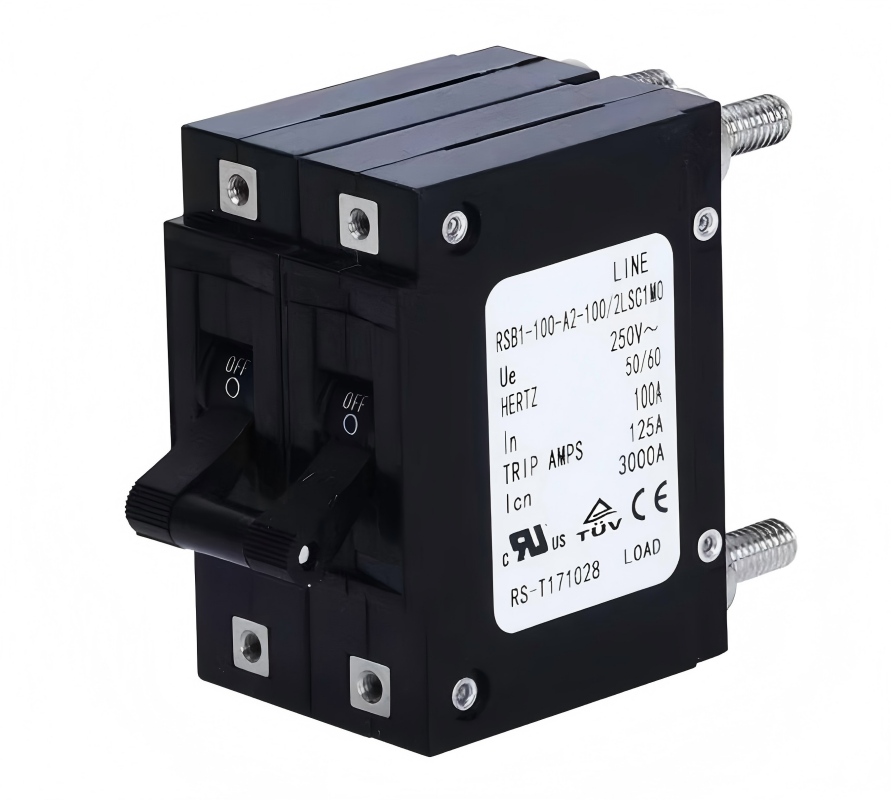
- IoT-Enabled Circuit Protection: Aviation Fuses and circuit breakers with embedded current and temperature sensing can provide real-time load profiles, predict nuisance trips, and instantly report a blown status to maintenance systems.
2. Advanced Sensing and Metering Platforms
Sensors are the primary data sources of the IoT ecosystem.
- Smart Sensor Nodes: Modern Aviation Sensors integrate the sensing element, signal conditioning, a microprocessor, and a digital transceiver in one package. They can perform self-calibration, diagnose faults, and communicate directly on the aircraft network.
- Connected Metering & Displays: Aviation Meters for Drones and cockpit instruments evolve into data hubs, logging and streaming performance trends for fuel flow, electrical loads, and Aircraft Engine parameters to ground-based analytics platforms.
3. Gateway and Data Concentration Hardware
The "translators" and "traffic managers" for IoT data.
- IoT Gateways: Ruggedized modules that aggregate data from legacy analog components and new smart sensors, convert protocols, and manage secure uplink via SATCOM or ground networks.
- Wireless Sensor Network (WSN) Nodes: For hard-to-wire locations, these battery-powered nodes collect data from local sensors and transmit it wirelessly to a central gateway, reducing installation complexity.
Industry Drivers, Standards, and Regional Dynamics
New Technology R&D and Application Dynamics
Development is driven by miniaturization, low-power electronics, and evolving connectivity standards.
- Low-Power Wide-Area Networks (LPWAN) for Aviation: Technologies like LoRaWAN and MIOTY are being adapted for within-airframe or airport tarmac sensor networks, enabling long-battery-life monitoring of non-critical parameters.
- Time-Sensitive Networking (TSN) over Ethernet: TSN standards enable deterministic, real-time data delivery over standard Ethernet, crucial for integrating safety-critical IoT data (e.g., from flight control sensors) with other network traffic.
- AI at the Edge for Anomaly Detection: Deploying tinyML (machine learning on microcontrollers) on smart components to detect complex failure patterns locally without constant cloud connectivity.
Insight: Top 5 Development & Procurement Priorities for Russian & CIS Aviation IoT
The Russian market approaches Aviation IoT with a focus on sovereignty and operational control:
- Development on Sovereign Avionics Data Buses & Protocols: IoT components must interface primarily with Russian aircraft data networks (e.g., КЛС-М, adaptations of MIL-STD-1553) and use domestically developed or approved communication protocols, not Western IoT standards like MQTT-SN by default.
- Integration with National Fleet Management & GLONASS Systems: IoT data streams must be designed to feed into Russian state or operator-owned fleet health management platforms and leverage GLONASS for geotagging of maintenance events.
- Extreme Environmental Hardening for Arctic & Continental Operations: IoT components (especially batteries and wireless modules) must be developed and tested to operate and transmit reliably from -60°C to +70°C, and withstand high vibration levels.
- Cybersecurity Certification as per National Standards (e.g., ФСТЭК): Any connected component requires rigorous certification by Russian security agencies (ФСТЭК, ФСБ). This mandates the use of specific cryptographic modules and limits foreign software/content in firmware.
- Focus on Retrofit Kits for Legacy Fleet Digitization: High demand for developed "bolt-on" IoT kits that can add smart sensing and connectivity to existing aircraft (Il-76, Su-27/30 families, Mi-8/17 helicopters) without major rewiring, creating a large market for gateway and adapter solutions.
A Framework for Developing and Procuring Aviation IoT Components
A structured approach is essential for managing the complexity of IoT component development and integration:
- Define the Use Case and Data Value Proposition:
- Start with the operational problem: Is it predictive maintenance for an engine? Real-time cargo monitoring? The use case dictates the required sensors, data frequency, and latency.
- Architect for Security and Data Integrity from Day One:
- Implement hardware-based security (secure element chips), encrypted communications, and secure boot. Follow standards like DO-326A. Data integrity is non-negotiable.
- Select Appropriate Connectivity and Power Architecture:
- Wired (AFDX, CAN) vs. Wireless (Bluetooth 5.1, LPWAN)? Mains-powered vs. energy-harvesting/battery? This decision impacts component size, cost, and maintenance cycles.
- Partner with Developers Having Dual Expertise:
- Choose suppliers who deeply understand both aviation-grade reliability (MIL-STD-810/DO-160) AND IoT systems (connectivity, embedded software). The intersection is where successful components are born.
- Validate in a Representative Aviation Environment:
- Test components not just on a bench, but in environments simulating aircraft EMI, vibration, and temperature cycles. Test the entire data pipeline from sensor to cloud.

YM's Approach to Aviation IoT: Building on a Foundation of Trust
YM is leveraging decades of experience in reliable aviation hardware to develop a new generation of intelligent, connected components. We believe IoT intelligence must be built on a foundation of proven physical reliability.
Manufacturing Scale and Facilities: Precision Meets Digital Traceability
Our production of IoT-enabled components, such as smart sensors, occurs in ESD-protected cleanrooms with automated optical inspection for the embedded electronics. Critically, our Manufacturing Execution System (MES) automatically generates and associates a digital twin for each smart component as it's built. This twin includes not only the physical manufacturing data but also the initial calibration constants and the cryptographic identity of the device, creating a secure, born-digital asset.
R&D and Innovation: The YM "AeroSense" Platform
Our core IoT development is centered on the "AeroSense" Modular IoT Platform. This is a family of miniaturized, ruggedized circuit boards that serve as the common "brain" for various smart components. For example:
- An AeroSense Power module turns a standard contactor into a smart one by adding contact monitoring, temperature sensing, and CAN bus communication.
- An AeroSense Meter module provides the processing and connectivity core for next-generation Aviation Meters.
This platform approach accelerates development, ensures cybersecurity consistency, and simplifies fleet-wide software updates.
Core Standards and Regulations Shaping Aviation IoT
Compliance is more complex, spanning traditional aviation and new digital domains:
- DO-160 (Environmental Conditions): The baseline for physical reliability. IoT components must still pass vibration, temperature, and EMI tests.
- DO-326A/ED-202A (Airworthiness Security): The foundational security process standard for all connected aircraft systems, applicable to IoT components.
- ARINC Standards (e.g., ARINC 661, 664, 826): Define data formats and communication protocols for avionics networks, which IoT components must use for onboard integration.
- IEEE 802.1 Time-Sensitive Networking (TSN) Standards: For deterministic data delivery over Ethernet.
- IEC 62443 (Industrial Cybersecurity): Increasingly referenced for securing the component-to-cloud supply chain.
- ФСТЭК Orders & GOST R Standards: The mandatory Russian regulatory framework for information security and technical compliance for any IoT device used in Russian aviation.
Frequently Asked Questions (FAQ)
Q: What is the biggest technical challenge in developing wireless IoT components for aircraft?
A: Ensuring reliable, secure communication in a highly reflective and EMI-hostile environment. The metal airframe causes signal multipath and shadowing. The aircraft is also full of other transmitters (radar, comms) that can cause interference. Solutions involve careful frequency selection, robust error-correction protocols, and potentially the use of leaky feeder cables or multiple antennas. Security must be designed to prevent jamming or spoofing of wireless signals.
Q: How do aviation IoT components handle software updates and cybersecurity patches over a 30-year lifecycle?
A: This requires forward-thinking design. Components must have secure, over-the-air (OTA) update capabilities with rollback features. The software architecture should be modular to allow patching of specific vulnerabilities without full recertification. Crucially, the supply chain must commit to providing security patches for the component's entire supported life, which may necessitate new, long-term service agreements (LTSA) that include software support.
Q: Are aviation IoT components only relevant for new aircraft designs, or can they benefit existing fleets?
A: They offer tremendous value for existing fleets (retrofit). Retrofitting IoT components like smart Aviation Sensors or wireless vibration monitors on High Quality Aviation Engines can enable predictive maintenance, reduce unscheduled downtime, and extend operational life. The key is developing retrofit-friendly components that minimize installation complexity, often using wireless connectivity or existing spare wiring.