XI'AN YUMU ELECTRONICS TECHNOLOGY CO.,LTD
Home> NEWS> Aviation Safety Procedures Training

Aviation Safety Procedures Training

2025,12,11

Aviation Safety Procedures Training: A Procurement-Focused Framework for Component Selection & Risk Mitigation

For B2B procurement managers in aviation and defense, safety isn't just a regulatory requirement—it's the foundation of supply chain integrity and brand reputation. Understanding Aviation Safety Procedures Training principles enables you to select components like Military Aviation Contactors and Aircraft Engine sensors that are designed, manufactured, and supported with safety as a core attribute. This guide translates safety protocols into practical procurement criteria, helping you mitigate risk, ensure compliance, and deliver reliable platforms to your customers.

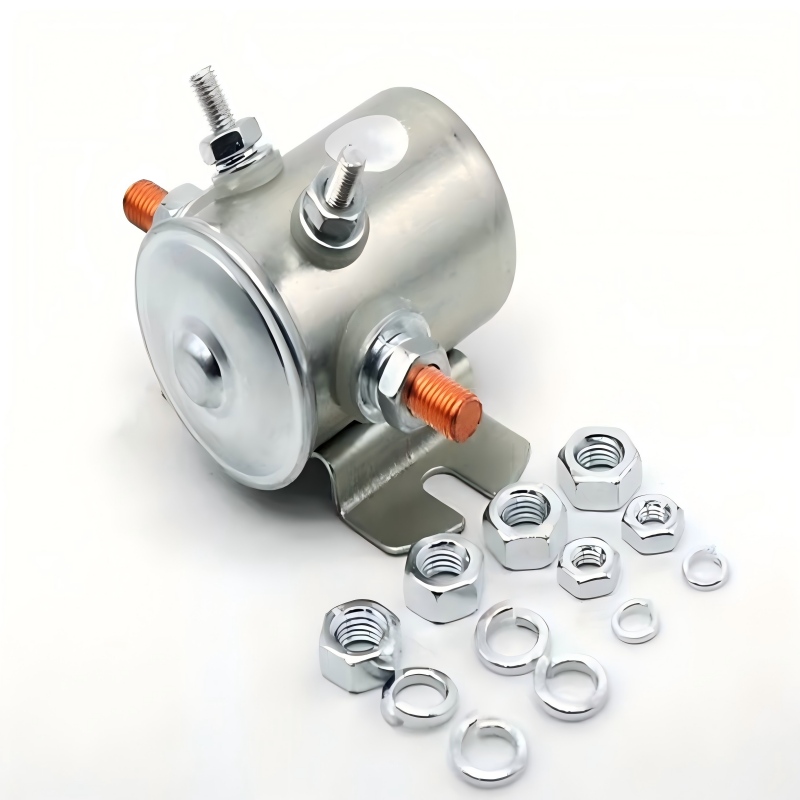
Winch starting relay 12V 24V 36V 48V

Why Safety Procedures Knowledge is Critical for Procurement Decisions

A component's safety pedigree begins long before installation. Procurement decisions directly influence the safety ecosystem by determining which suppliers' design philosophies, manufacturing controls, and failure mode analyses are built into the aircraft. Specifying components without understanding their associated safety procedures can introduce latent risks that manifest as costly incidents, grounding, or certification delays.

Safety-Centric Analysis of Critical Aviation Components

1. Electrical Power System Components: Failure Modes & Mitigations

Components like Military Aviation Contactors and Aviation Fuses are first-line safety devices.

  • Contactor "Weld-Shut" Failure: A severe fault can cause contacts to weld closed, creating an uncontrolled "live" circuit. Safety-focused design includes magnetic blow-out coils to quench arcs and materials resistant to welding.
  • Fuse "Nuisance Blowing" vs. Protective Coordination: An Aviation Fuse must blow only during a true fault. Training covers coordination studies to ensure fuses protect wiring without interrupting operations during benign transients.
  • Single Point of Failure (SPOF) Analysis: For critical circuits, procurement must demand redundancy or monitorable contactors that alert to pre-failure conditions.

2. Sensors & Instruments: Ensuring Data Integrity

An incorrect signal from an Aviation Sensor or Aviation Meter for Drone can lead to catastrophic pilot error or system malfunction.

  1. Signal Validation & Voting: Safety procedures for critical parameters (e.g., engine temperature) often require triple-redundant sensors with mid-value selection or consensus algorithms.
  2. Built-In Test (BIT) Requirements: Components should have continuous or initiated BIT capabilities to detect internal faults (e.g., open coil in a Military Aviation Relay) before they affect system performance.
  3. Environmental Hardening: Procedures mandate testing sensors for resistance to EMI, vibration, and icing—common causes of erroneous data.
P3C52 Picture

3. High Quality Aviation Engine Components: The Fire & Over-Speed Scenario

Engine control is the epitome of safety-critical design.

  • Firewall Penetration Seals: Any component (wiring, sensor leads) passing through the firewall must have certified fireproof seals to prevent fire propagation.
  • Overspeed Protection: Independent mechanical and electronic overspeed trips are standard safety procedures. Procurement must verify that any electronic governing system has a failsafe mechanical backup.

Industry Trends & Technology Reshaping Safety Protocols

System-Theoretic Process Analysis (STPA) & Modern Hazard Analysis

Moving beyond traditional Failure Modes and Effects Analysis (FMEA), STPA focuses on identifying unsafe control actions and component interactions in complex systems. This affects how safety is designed into integrated modules. For procurement, it means evaluating whether a supplier's safety case considers complex software-hardware interactions, especially for smart Aviation Meters for Drones.

Digital Safety Assurance & Data-Driven Procedures

The rise of connected aircraft generates terabytes of operational data. Safety procedures now involve analyzing this data to predict component degradation before it becomes a hazard. This shifts training from purely reactive checklists to proactive data interpretation.

YM's R&D team, which includes systems safety engineers certified in STPA methodologies, applies these principles from the component level. For example, our latest generation of intelligent power contactors includes embedded sensors that monitor contact wear and coil health, providing predictive data that feeds directly into modern Condition-Based Maintenance safety procedures.

ZZK2-1 20A 28V 6P

Russian Market Procurement: 5 Safety Procedure Priorities

Sourcing for the Russian market involves nuanced safety protocol expectations:

  1. Alignment with GOST Safety Certification Frameworks: Components must be certifiable not just to functional specs, but to the holistic safety assessment processes mandated by Russian aviation authorities (e.g., AP-25 equivalents). Documentation must support this.
  2. Extreme Weather & Icing Procedures Validation: Safety cases and maintenance procedures must be explicitly validated for the severe and prolonged icing conditions common in Russian operations, beyond standard certifications.
  3. Documentation for Pilot & Crew "Abnormal Procedures" Manuals: Suppliers must provide detailed failure mode effects data to enable OEMs to write accurate emergency procedures for pilots and crew.
  4. Secrecy & Information Security in Safety Documentation: Handling of safety-related documentation, especially for military platforms, requires strict protocols agreed upon for transfer and storage.
  5. Local Spare Parts & Repair Kits with Safety Seals: Safety procedures often mandate the use of genuine, traceable parts with tamper-evident seals. The supply chain for these certified spare parts within Russia is a key evaluation point.

Core Safety Standards & Airworthiness Directives

Procurement must be fluent in the regulatory language of safety:

  • FAA Part 25 / EASA CS-25: The foundational airworthiness standards for transport category aircraft. Every component's safety justification traces back to these.
  • RTCA DO-178C & DO-254: The safety standards for airborne software (DO-178C) and complex electronic hardware (DO-254). Critical for any "smart" component.
  • SAE ARP4754A & ARP4761: Guidelines for the development of civil aircraft systems and for conducting safety assessments (FHA, FMEA, FTA).
  • MIL-STD-882E: The standard practice for System Safety in U.S. defense acquisitions. Governs the safety process for all military components, including Military Aviation Relays and flight control systems.

Our manufacturing infrastructure is designed to support these stringent standards. YM's facility features dedicated ESD-protected and cleanroom assembly lines for sensitive avionics, and our quality management system is built to generate the objective evidence required for DO-254 and similar certifications, providing a transparent safety pedigree for every unit shipped.

JCQD200E12EA02 12 Vdc-7

Step-by-Step: Integrating Safety into Your Supplier Qualification Process

Procurement can actively manage safety risk with this checklist:

  1. Request the Functional Hazard Assessment (FHA) Contribution: Ask how the component contributes to system-level hazards and what mitigation features are designed in.
  2. Review the Component Safety Case: A mature supplier will have a summary document outlining the safety argument, referencing analyses like FMEA.
  3. Audit Manufacturing Process Controls: Visit facilities to verify controls that prevent manufacturing defects (a major safety risk), such as automated optical inspection (AOI) and traceability systems.
  4. Verify Test Coverage: Ensure environmental and life-cycle testing (per MIL-STD-810, etc.) covers the intended safety-critical functions.
  5. Assess Continued Airworthiness Support: Evaluate the supplier's process for issuing Service Bulletins or supporting Airworthiness Directives related to their components.

Frequently Asked Questions (FAQ)

Q1: What's the difference between a component being "safe" and being "certifiable"?

A: A safe component performs reliably without causing harm. A certifiable component comes with the extensive documentation, process evidence, and design justification that regulatory authorities (FAA, EASA) require to prove it is safe for a specific application. Procurement must prioritize suppliers who deliver certifiability, not just claimed safety.

Q2: How do safety procedures for a commercial Aviation Meter for Drone differ from those for a manned aircraft altimeter?

A: The core physics and failure modes are similar, but the certification basis and system integration level differ. Drone avionics may be certified under standards like DO-178C (Design Assurance Level D) or specific civil aviation rules for UAS. The safety procedures focus more on ensuring fail-safe or fail-operational behavior within the drone's automated flight control system, rather than direct pilot interpretation.

Q3: Can a supplier claim MIL-STD-810 compliance but still not meet our safety needs for an Aircraft Engine sensor?

A: Yes. MIL-STD-810 proves environmental robustness. Safety for an engine sensor also requires analyses of failure modes (e.g., failing high vs. low), diagnostic coverage (can the fault be detected?), and installation effects (vibration-induced signal error). You need evidence beyond environmental testing.

Q4: What should a procurement manager look for in a supplier's "Safety Culture"?

A: Look for: 1) Top-down management commitment to safety metrics, 2) Transparent reporting of non-conformances and near-misses, 3) Investment in safety engineering talent and training, and 4) A willingness to openly discuss potential failure scenarios and limitations of their products during the RFQ process.

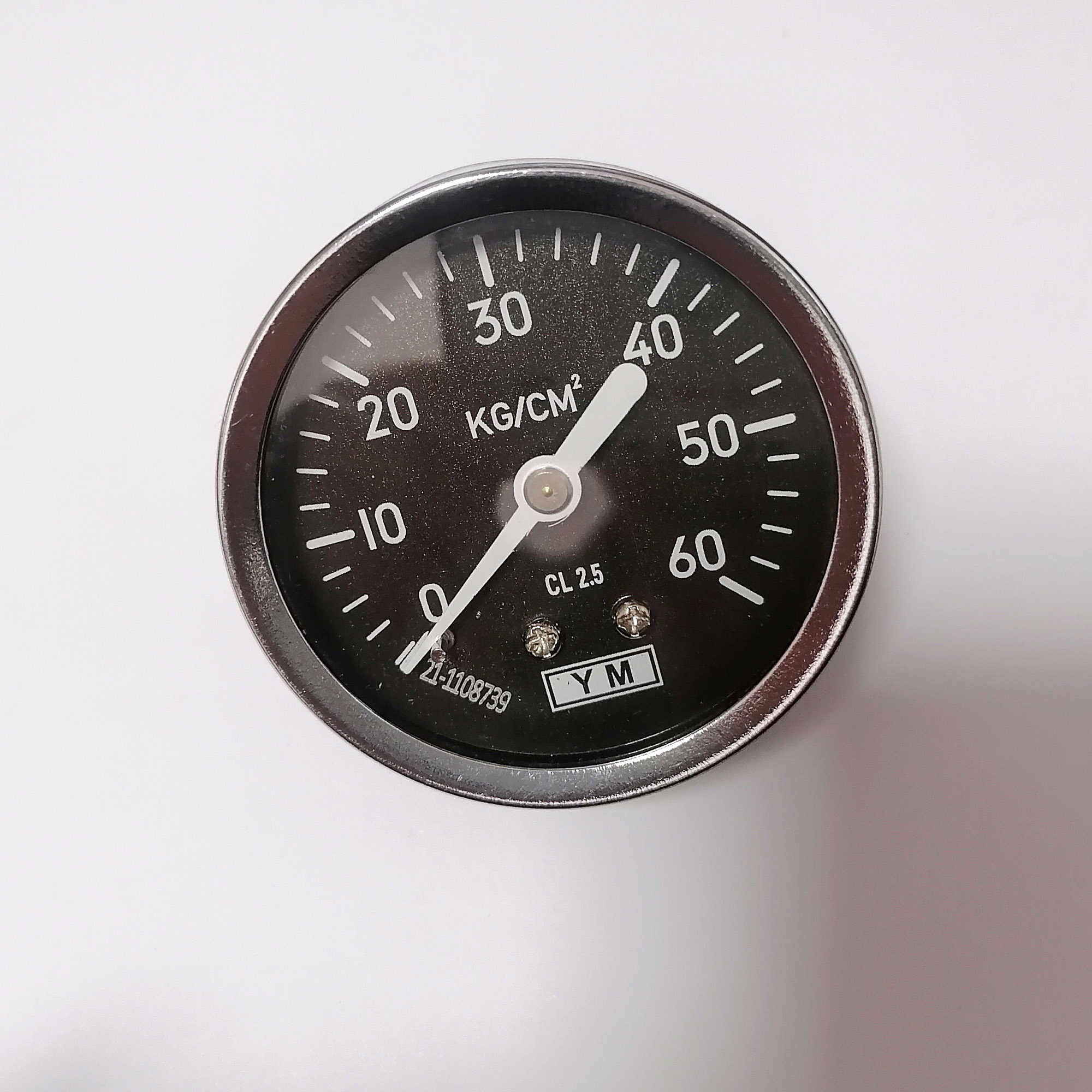
0~60kgs pressure Gage

References & Regulatory Sources

  • Federal Aviation Administration. (2024). Title 14 Code of Federal Regulations, Part 25 - Airworthiness Standards: Transport Category Airplanes. Washington, D.C.: FAA.
  • European Union Aviation Safety Agency. (2023). Certification Specifications and Acceptable Means of Compliance for Large Aeroplanes (CS-25). Cologne: EASA.
  • RTCA, Inc. (2011). DO-178C: Software Considerations in Airborne Systems and Equipment Certification. Washington, D.C.: RTCA.
  • SAE International. (2010). ARP4761: Guidelines and Methods for Conducting the Safety Assessment Process on Civil Airborne Systems and Equipment. Warrendale, PA: SAE.
  • Leveson, N. G. (2011). Engineering a Safer World: Systems Thinking Applied to Safety. Cambridge, MA: MIT Press. (STPA Methodology).
  • Aviation Safety Network Database. (2024). "Analysis of Incident Data Related to Component Failures." [Online Data Repository]. Retrieved from https://aviation-safety.net.
Contact Us

Author:

Ms. Linda Deng

Phone/WhatsApp:

+86 13759943660

Popular Products
You may also like
Related Categories

Email to this supplier

Subject:
Email:
Message:

Your message must be between 20-8000 characters

Contact Us

Author:

Ms. Linda Deng

Phone/WhatsApp:

+86 13759943660

Popular Products

Contact

Send Inquiry

We will contact you immediately

Fill in more information so that we can get in touch with you faster

Privacy statement: Your privacy is very important to Us. Our company promises not to disclose your personal information to any external company with out your explicit permission.

Send