
Aviation Valve Technologies Review: A Procurement Guide for Aerospace Fluid Control Systems
For B2B procurement managers in aerospace, defense, and heavy machinery sectors, selecting the correct aviation valve technology is a critical decision impacting system performance, safety, and operational costs. Valves are the vital organs of aircraft systems—controlling fuel, hydraulic fluid, air, and lubrication. This comprehensive review examines key aviation valve technologies, from traditional solenoid valves in a Military Aviation Contactor control circuit to complex fuel metering valves in a High quality Aviation Engine, providing the insights needed to make informed sourcing decisions for commercial, military, and UAV applications like Aviation Meter for Drone fuel systems.

Core Aviation Valve Technologies: Principles and Applications
Understanding the fundamental operating principles and optimal applications of each valve type is essential for system design and component specification.
1. Solenoid Valves (Electromechanical)
The workhorse for on/off control of fluids and gases using an electrical signal.
- Operating Principle: An electromagnetic coil generates a magnetic field that moves a plunger, opening or closing the valve orifice.
- Key Types: Direct-acting (for low pressure/flow), pilot-operated (for high pressure/flow), and latching (power only required to change state).
- Military Standards: Often qualified to MIL-V-16528 or designed to meet environmental requirements of MIL-STD-810.
- Typical Applications: Fuel shut-off, hydraulic system control, bleed air management, and as actuators within larger Aircraft Contractor systems for environmental control.
- Procurement Focus: Coil voltage (28VDC common), pressure rating, response time, and compatibility with fluid media (Skydrol, Jet A, etc.).

2. Pneumatic & Hydraulic Control Valves
Used to regulate pressure, flow, and direction in aircraft pneumatic (air) and hydraulic (fluid) power systems.
- Operating Principle: Use system fluid pressure, often modulated by a smaller pilot valve (solenoid or manual), to position a spool or poppet and control a larger flow.
- Key Types: Pressure relief valves, sequence valves, flow control valves, and directional control valves.
- Critical Characteristics: Leakage rates (internal and external), pressure drop, and response speed. Critical for landing gear, flight control, and brake systems.
- Integration: Often work in concert with Aviation Sensor feedback (pressure, position) for closed-loop control in fly-by-wire systems.
3. Fuel Metering & Control Valves
High-precision valves critical for engine performance, efficiency, and safety.
- Operating Principle: Precisely regulate fuel flow to the engine combustor. Can be mechanically linked to the throttle or electronically controlled (FADEC - Full Authority Digital Engine Control).
- Technology: Often use a servo valve or stepper motor to position a metering sleeve or pintle with extreme accuracy.
- Application: The heart of the fuel control unit (FCU) in both turbine and piston Aircraft Engines.
- Procurement Criticality: Zero-leak tolerance, precision over wide temperature ranges, and exceptional reliability are non-negotiable. Suppliers require deep expertise in fluid dynamics and materials.
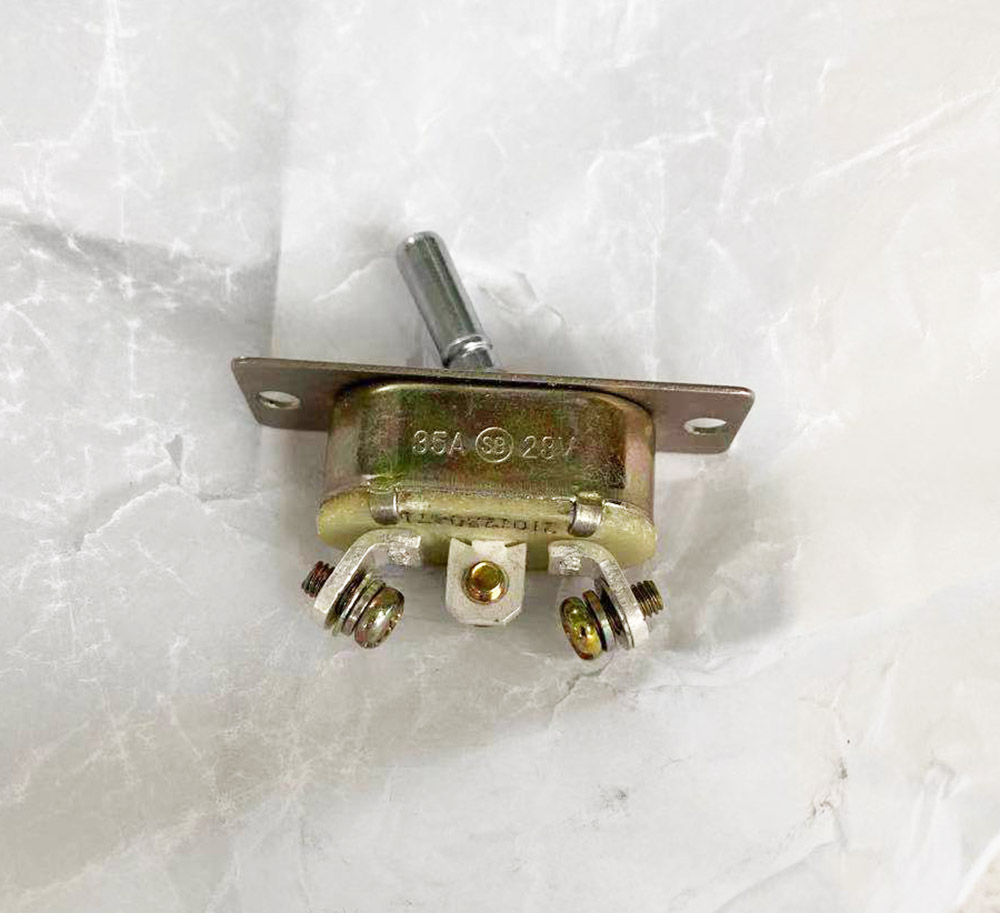
4. Check Valves & Pressure Relief Valves
Passive valves essential for system safety and preventing reverse flow.
- Check Valves: Allow flow in one direction only, preventing backflow that could damage pumps or cause system contamination.
- Pressure Relief Valves: Safety devices that open at a preset pressure to prevent over-pressurization of lines, tanks, or components.
- Design Variants: Spring-loaded, swing, or diaphragm types. Materials must be compatible with aggressive fluids like phosphate ester hydraulic fluid (Skydrol).
Procurement Evaluation Framework: 7 Key Decision Factors
Selecting an aviation valve involves a multi-dimensional analysis beyond basic function.
- Fluid Compatibility & Material Selection: Valve materials (seals, body, internal parts) must be chemically compatible with the specific fluid (fuel type, hydraulic fluid, oxygen, etc.) over the full operational temperature range to prevent swelling, degradation, or corrosion.
- Pressure & Flow Ratings: Specify Maximum Operating Pressure (MOP) and proof/burst pressures. Ensure the valve's flow coefficient (Cv) meets system requirements without excessive pressure drop.
- Environmental Qualification (MIL-STD-810/DO-160): Verify performance across temperature extremes, vibration, shock, and altitude. For solenoid valves, verify coil performance after humidity and salt fog exposure.
- Leakage Class & Sealing Technology: Define acceptable internal (through the valve when closed) and external (to atmosphere) leakage rates. Evaluate seal materials (Viton, Kalrez, PTFE) and sealing methods (elastomeric, metal-to-metal).
- Actuation Method & Control Interface: Electrical (solenoid voltage, current draw, response time), pneumatic (pilot pressure required), or manual. For smart valves, define communication protocol (discrete, ARINC 429, CAN bus).
- Weight & Envelope Constraints (SWaP): Critical for aerospace. Evaluate lightweight materials (aluminum, titanium) and compact designs, especially for UAVs and Aviation Meter for Drone systems.
- Life Cycle Cost & Maintainability: Consider Mean Time Between Failure (MTBF), ease of inspection, rebuild kits availability, and the total cost of ownership over the platform's life.
Latest Industry Trends & Technology Advancements
Innovations in Valve Design and Integration
- Additive Manufacturing (3D Printing): Enables complex internal flow paths, integrated manifolds, and lightweight, topology-optimized valve bodies impossible to cast or machine traditionally. Used for rapid prototyping and production of custom valves.
- Smart Valves with Embedded Intelligence: Valves incorporating Aviation sensors (position, pressure, temperature) and a microcontroller. They provide real-time health data, enable predictive maintenance, and simplify wiring by communicating over digital data buses.
- Wide-Temperature Sealing Solutions: Development of advanced elastomers and composite seals that maintain integrity from -65°C to +250°C, eliminating the need for heater pads on valves in extreme environments.
- Electro-Hydrostatic Actuators (EHAs): Self-contained units combining a motor, pump, and hydraulic valve/cylinder, replacing centralized hydraulic systems for secondary flight controls. This represents a shift towards "more electric aircraft" architecture.
- Surface Treatments & Coatings: Advanced coatings like Diamond-Like Carbon (DLC) or nitriding are applied to spools and bores to reduce friction, wear, and sticking—common failure modes in hydraulic valves.

Focus: Russian & CIS Market Procurement Priorities
Sourcing valves for this region involves specific technical and regulatory requirements.
- GOST Standards Compliance: Valves must meet relevant GOST standards (e.g., GOST R 52931 for general requirements, specific GOSTs for solenoid valves). Dual certification with MIL or ARINC specs is a strong advantage.
- Extreme Cold Performance Certification: Demonstrated operational capability and sealing integrity from -70°C, including material brittleness tests and verification that lubricants and seals do not fail.
- Compatibility with Russian Fluids: Must be compatible with Russian-specification hydraulic fluids (like AMG-10) and fuels, which can have different additive packages and material compatibility profiles than Western equivalents.
- Full Russian Language Documentation: All manuals, technical data sheets, installation instructions, and material safety data sheets (MSDS) must be provided in precise technical Russian.
- Robustness to Contamination: Higher tolerance specifications for particle contamination in fluid systems, reflecting different maintenance practices and operational environments in some legacy fleets.
Industry Standards & Certification Landscape
Adherence to recognized standards is paramount for safety and airworthiness.
- MIL-V-16528 / MIL-PRF-16528: Performance specification for solenoid valves (aircraft, general purpose).
- SAE AS Standards: Numerous standards cover design and testing (e.g., AS1994 for check valves, AS1995 for relief valves).
- RTCA/DO-160 / EUROCAE ED-14: Environmental test conditions for airborne equipment (Sections include temperature, vibration, humidity).
- FAA TSO-C73 / EASA ETSO: Technical Standard Order approvals for certain critical valve types.
- AS9100: The aerospace quality management system standard, essential for any qualified valve manufacturer.
- Nadcap Accreditation: For special processes like non-destructive testing (NDT), welding, and heat treatment used in valve manufacturing.
YM's Precision Valve Engineering & Manufacturing Capabilities
At YM, we engineer fluid control solutions that meet the most demanding aerospace requirements. Our dedicated Fluid Systems Division, housed within a 12,000 sqm facility, features a Class 10,000 cleanroom for servo-valve assembly, ultra-precision CNC machining centers for spool and sleeve manufacturing, and fully automated test stands that validate performance against MIL-STD-810 profiles and customer-specific functional requirements.
Our R&D team, which includes specialists in fluid dynamics, magnetics, and tribology, focuses on solving endemic valve challenges. A key innovation is our Zero-Stick™ Spool Technology, which uses a proprietary combination of spool geometry, surface polishing to mirror finish, and a molecular-thin diamond coating. This technology virtually eliminates the risk of hydraulic spool valve sticking—a common cause of failure—especially after cold soaks, thereby significantly improving the reliability of systems controlling landing gear or flight controls. This technology is also being adapted for critical fuel metering applications in next-generation Aircraft Engines.

Valve Selection, Installation & Maintenance Protocol
5-Step Selection and Installation Best Practices:
- System Analysis & Specification: Define all operational parameters: fluid type, pressure ranges (operating, peak, burst), flow rates, temperature range, required response time, and actuation method.
- Supplier Qualification & Document Review: Select suppliers with relevant aerospace experience. Review compliance matrices, material certifications, and test reports for the specific valve model.
- Pre-Installation Handling: Keep valves in original packaging until installation. Protect ports from contamination. For hydraulic valves, ensure they are filled with clean preservation fluid if not installed immediately.
- Proper Installation: Follow torque specifications for fittings and mounts precisely. Use correct sealants or thread tapes (if allowed). Ensure proper alignment to avoid piping strain. For solenoid valves, verify coil voltage and install correctly oriented.
- Commissioning & Functional Test: Slowly bring the system online. Cycle the valve multiple times. Check for external leaks, verify actuation times, and monitor for abnormal temperatures or sounds.
Predictive Maintenance & Troubleshooting Guide:
- Regular Visual & Operational Checks: Look for external leaks, damaged solenoids, or corrosion. During system operation, listen for abnormal chatter or humming from solenoid valves.
- Monitor Response Times: A slowing solenoid valve can indicate coil issues, contamination, or mechanical binding.
- Check for Internal Leakage: For critical shut-off valves, internal leakage can be indicated by temperature rise downstream when the valve is commanded closed.
- Fluid Analysis: Regular analysis of hydraulic fluid or fuel can reveal wear metals from valve internals, providing early warning of impending failure.
- Maintain Spare Parts & Rebuild Kits: For high-wear items like seal kits on critical valves, maintain strategic spares to minimize aircraft on-ground (AOG) time.


