
BGDC 12X37 Glass Cartridge Fuse Specifications: A Technical Guide for Aerospace Circuit Protection
In the critical electrical systems of modern aircraft, precise and reliable circuit protection is non-negotiable. The BGDC 12X37 Glass Cartridge Fuse represents a standard in aerospace-grade overcurrent protection, safeguarding vital avionics, high quality aviation engine controls, and lighting systems. This comprehensive guide decodes its specifications, explores its role within broader military aviation fuses & fuse holders and commercial systems, and provides essential insights for B2B procurement managers sourcing components for aircraft aviation fuses & fuse holders, drone platforms, and industrial applications.
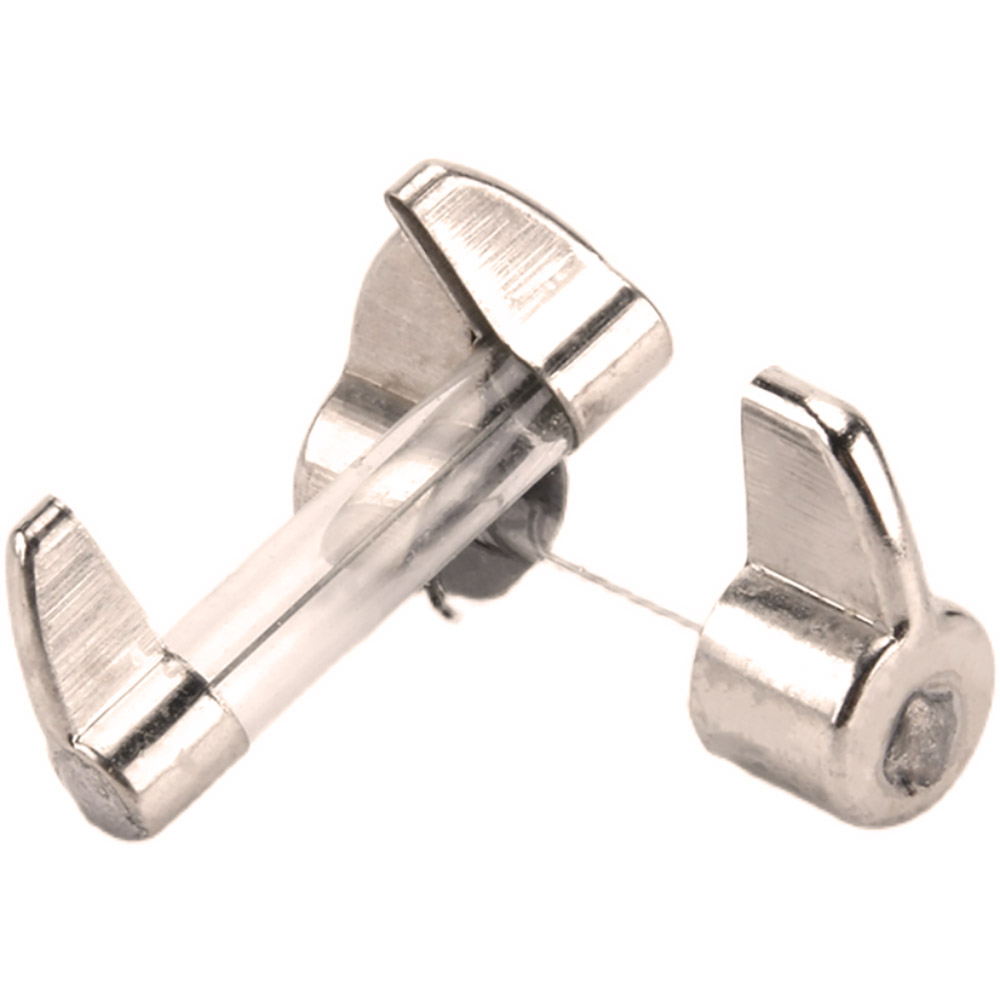
Decoding the BGDC 12X37 Specification: Anatomy of an Aerospace Fuse
The designation "BGDC 12X37" follows a standardized aerospace coding system that reveals its key characteristics:
- B: Body Style - Indicative of a glass tube cartridge design, allowing visual inspection of the fusible element.
- G: Performance Characteristic - Typically denotes a "fast-acting" or "quick-blow" fuse, designed to interrupt overcurrent rapidly to protect sensitive electronics.
- DC: Likely denotes specific electrical ratings or a manufacturer/variant code within the standard family.
- 12: Ampere Rating - The rated current in amperes at which the fuse will carry current indefinitely without opening. This is a critical parameter for system design.
- X37: Physical Dimensions - The "37" often refers to the length in eighths of an inch (37/8" or 4.625 inches). The "X" may denote a specific diameter or other dimensional attribute.
Critical Electrical and Performance Parameters
Beyond the basic code, a full specification includes:
- Voltage Rating: The maximum system voltage the fuse can safely interrupt (e.g., 32V DC, 250V AC). Exceeding this during a fault can cause dangerous arcing.
- Interrupting Rating (AIC): The maximum fault current the fuse can safely interrupt. In aerospace, this must be high enough to handle potential short-circuit currents from aircraft generators or batteries.
- Time-Current Characteristic (TCC) Curve: Defines the precise relationship between current and melt time. A "fast-acting" fuse like the BGDC 12X37 will have a curve that shows it opens very quickly at currents only slightly above its rating, essential for protecting semiconductor-based devices in aviation fuses & fuse holders for drone flight controllers.
- Cold Resistance: The nominal resistance of the fuse element at 25°C. A low, stable resistance is vital to minimize voltage drop and power loss in the circuit.

Primary Applications in Aerospace Systems
The BGDC 12X37 and its variants are deployed in areas where visual verification and fast protection are key:
Avionics and Instrumentation Bays
Protecting navigation, communication, and flight instrument power supplies where a clear view of a blown fuse aids in rapid troubleshooting.
Engine Control and Monitoring Units (ECU/EMU)
Safeguarding the sensitive wiring and sensors associated with aircraft engine digital controls, where precise overcurrent protection is critical to prevent catastrophic damage.
Lighting Systems
Used in circuit protection for external and internal aircraft lighting, including high-intensity landing and taxi lights.
Ground Support and Test Equipment
Commonly found in power distribution units (PDUs) and test rigs for Train, Plane, and aerospace manufacturing facilities.
Unmanned Aerial Systems (UAS)
The glass cartridge design offers a good balance of protection and cost-effectiveness for various power circuits in high quality aviation drone platforms, from gimbal power to telemetry radios.
Industry Trends and Technological Evolution in Circuit Protection
New Technology R&D: Smart Fusing and Solid-State Alternatives
While passive fuses remain vital, R&D is focused on "smart" protection. This includes electronic circuit protectors (ECPs) that offer resettable functionality, precise current limiting, and digital status reporting via data buses. For traditional fuse form factors, innovations include fuses with built-in LED indicators that illuminate when blown, even if not powered.
Industry Trend Analysis: Miniaturization and Higher Density
The relentless push for weight and space savings drives the development of smaller fuse packages with equal or higher performance. This includes micro-fuses and surface-mount fuses for densely packed avionics. The trend towards More-Electric Aircraft (MEA) also increases the demand for fuses with higher voltage ratings (270V DC) and faster clearing times to protect advanced power electronics. This evolution influences the specifications of next-generation cartridge fuses.

Procurement Perspective: 5 Critical Concerns for Russian Aerospace Buyers
Sourcing fuses for CIS aerospace and defense applications involves a rigorous technical and compliance assessment:
- Certification to GOST and Military Standards: Absolute requirement for certification against relevant Russian standards (e.g., GOST R 53323 for fuses, OST 1 standards) and equivalence/acceptance against Western specifications (MIL-PRF-23419, MS FC). Documentation must be in Russian and include full test reports.
- Verification of Temperature Performance: Detailed validation of the fuse's time-current characteristics across the full operational temperature range, especially at extreme low temperatures (-65°C), where element behavior can differ from room temperature specs.
- Traceability and Lot Control: Full material traceability for the fusible element (alloy composition), glass tube, and end caps. Russian buyers often require strict lot acceptance testing and the ability to trace any component back to its production batch.
- Compatibility with Legacy Military Aviation Fuses & Fuse Holders Systems: Assurance of mechanical and electrical interchangeability with existing fuse panels and holders in Russian-made aircraft. This includes precise dimensional tolerances and contact resistance properties.
- Supply Chain Security and Long-Term Availability: Guarantees of long-term production for the specific part number (often 15-20 years), with a transparent and resilient supply chain. Preference for suppliers who offer obsolescence management programs and the possibility of establishing local buffer stock.
Installation, Selection, and Maintenance Best Practices
Correct Selection Procedure
Selecting the wrong fuse can lead to nuisance blows or, worse, failure to protect. Follow this logic:
- Determine Normal Operating Current: Measure or calculate the steady-state current of the protected circuit.
- Account for Inrush Current: Select a fuse with a TCC curve that can withstand the circuit's startup/inrush current without opening (e.g., motor, transformer start).
- Select Ampere Rating: Typically choose a rating 125-150% of the normal operating current, adjusted for ambient temperature if high.
- Verify Voltage and Interrupt Rating: Ensure both ratings exceed the maximum possible system voltage and available fault current.
- Choose the Correct Speed: "Fast-acting" (like BGDC) for semiconductors and sensitive loads; "Slow-blow" for circuits with high inrush.
Installation and Handling Guidelines
- Always use the correct, approved fuse holder designed for the fuse's physical size and electrical rating.
- Ensure firm, clean contact between the fuse end caps and the holder terminals to prevent heating due to high resistance.
- Never replace a fuse with one of a higher rating ("up-fusing") without a formal engineering review. Always investigate the root cause of a blown fuse.
- Inspect glass fuses visually during routine maintenance for signs of element degradation, discoloration of the glass, or end cap integrity.

Governing Industry Standards
Design and qualification are framed by key standards:
MIL-PRF-23419: Performance Specification for Fuses, Cartridge, General Purpose (for military applications).
SAE AS 21711: Specification for Fuses, Cartridge, General Purpose for Aerospace Applications.
UL 248-14 / IEC 60127-2: International standards for miniature fuse dimensions and performance.
RTCA/DO-160: Environmental testing (vibration, shock, temperature) for airborne equipment.
YM Precision Manufacturing: Reliability in Every Element
Dedicated Component Production Facilities
Manufacturing a fuse that performs predictably to its TCC curve requires extreme consistency. Our specialized electrical component division, part of our expansive 60,000 sq. meter campus, operates in controlled environments. We utilize laser welding for end cap attachment to ensure consistent, low-resistance connections, and automated calibration ovens to "age" and stabilize the fusible element's characteristics, guaranteeing that every BGDC 12X37 fuse from a lot performs identically—a non-negotiable requirement for aircraft aviation fuses & fuse holders.

R&D Focus: Advanced Alloys and Predictive Modeling
Our R&D team, which includes metallurgists and electrical engineers, focuses on material science. We have developed proprietary silver-based alloy formulations for our fusible elements that offer exceptionally stable resistance and predictable melting characteristics over a wide temperature range. This research, supported by computational modeling of thermal dynamics, allows us to design fuses with tighter performance tolerances and greater resistance to fatigue from thermal cycling—critical for the demanding environment near an aircraft engine.
Frequently Asked Questions (FAQ)
Q1: Can a BGDC 12X37 12A fuse be replaced with a standard commercial 12A glass fuse from an electronics store?
A: Absolutely not. Aerospace fuses are manufactured to vastly higher standards for materials, construction, performance predictability, and environmental ruggedness (vibration, altitude, temperature). A commercial fuse may have an unspecified interrupting rating, unreliable time-current characteristics, and may fail dangerously (explode, sustain arc) in an aerospace fault condition. Always use certified aerospace-grade fuses.
Q2: Why does the fuse sometimes have a slight discoloration on the glass but is not blown? Is it still safe?
A: Slight discoloration (often a hazy film or light brown tint) can occur from outgassing of internal materials over time or from exposure to high ambient temperature. While it may not indicate immediate failure, it suggests the fuse has been thermally stressed. For critical flight systems, it is a best practice to replace a discolored fuse during scheduled maintenance as a precaution, as its TCC may have shifted.
Q3: How do we properly size a fuse for an inductive load like a motor or solenoid in an aviation fuses & fuse holders for drone landing gear system?
A: Inductive loads require special consideration due to high inrush current. You must consult the motor/solenoid's inrush current specification and duration. Then, select a fuse (often a "slow-blow" or "time-delay" type) whose TCC curve shows the fuse will not melt during the inrush period but will still provide protection against a sustained overload or short circuit. Our application engineering team can assist with these calculations.
References and Further Reading
1. Society of Automotive Engineers (SAE). (2015). AS21711B: Fuses, Cartridge, General Purpose for Aerospace Applications. Warrendale, PA: SAE International.
2. U.S. Department of Defense. (2005). MIL-PRF-23419/9: Performance Specification Fuse, Cartridge, General Purpose, 1/4 x 1-1/4 Inch, 12 Ampere. Washington, D.C.: DODSSP.
3. Littelfuse, Inc. (2021). Fuseology: Selecting the Right Fuse [Technical Application Guide]. Chicago, IL: Littelfuse.
4. Aviation Electronics Europe (Avionics Expo) Technical Forum. (2023, June). Thread: "Case Studies in Fuse Failure Analysis: Root Causes in UAV Power Systems." [Online Professional Forum].


