
BGXC 8X37 Glass Cartridge Fuse Applications Guide: Optimizing Circuit Protection for Aerospace Systems
Selecting the correct fuse for a specific application is a critical engineering decision that impacts system safety, reliability, and maintenance costs. The BGXC 8X37 Glass Cartridge Fuse is a specialized component within the aerospace circuit protection ecosystem. This guide provides a detailed analysis of its ideal applications, explains how its specifications align with various system requirements, and offers strategic insights for B2B procurement managers sourcing aviation fuses & fuse holders for commercial, military aviation, and unmanned platforms. Understanding the "where and why" behind component selection is key to optimizing your supply chain for high quality aviation engine controls and avionics systems.
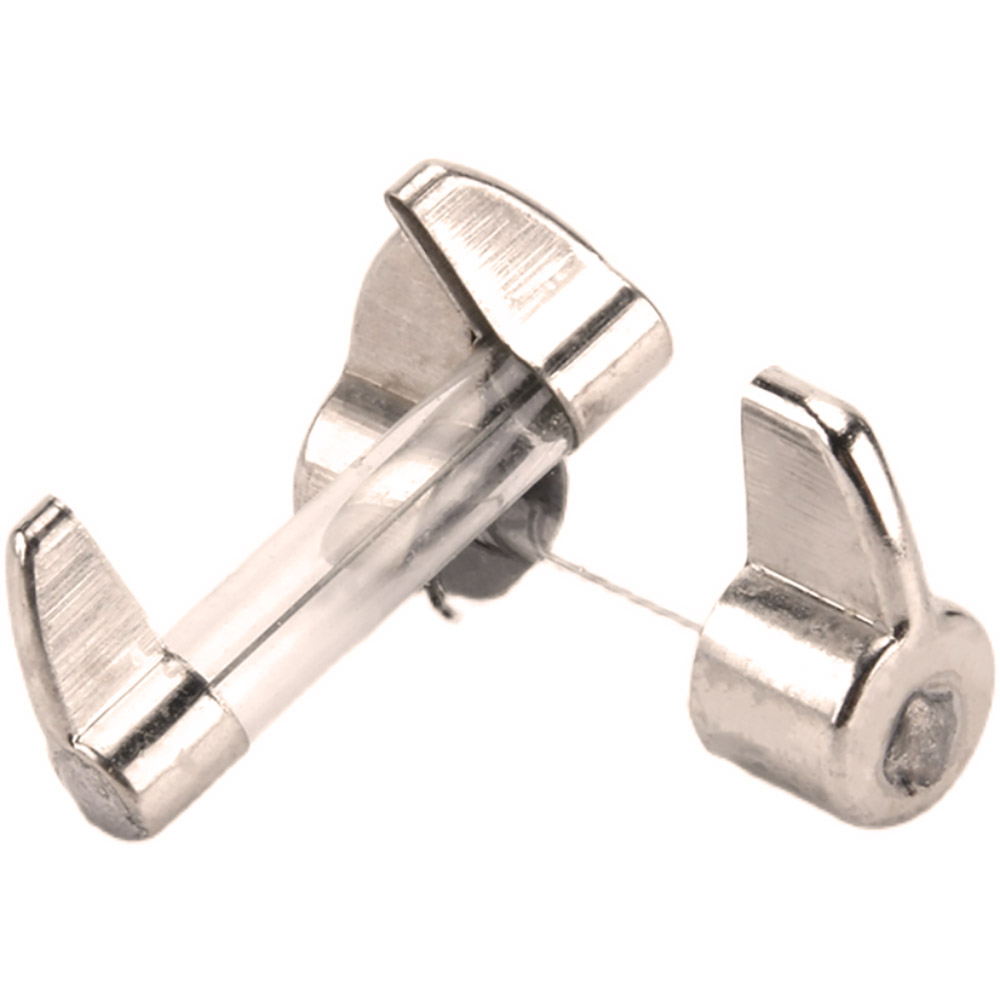
Decoding the BGXC 8X37: Specification Analysis
The part number "BGXC 8X37" provides the first layer of application insight through its standardized aerospace coding:
- B: Body Style - Glass cartridge tube, enabling visual fault confirmation.
- GX: Performance Characteristic - The "GX" suffix often indicates a fast-acting, high-performance fuse with very quick response to overcurrent, typically used for protecting sensitive semiconductor circuits. It may have a higher interrupting rating than standard "G" types.
- C: May denote a specific terminal style, voltage rating, or a manufacturer's internal series code for enhanced reliability.
- 8: Ampere Rating - 8 Amperes. This relatively low current rating targets specific, sensitive low-power circuits.
- X37: Physical Dimensions - 37/8 inches in length (4.625"), a common standard size ensuring compatibility with a wide range of existing panel-mounted fuse holders in legacy and modern aircraft.
Key Electrical Properties Driving Application Suitability
- Low Current Rating (8A): Targets secondary power distribution, sensor circuits, and low-power electronic modules rather than primary power feeders.
- Fast-Acting (Quick-Blow) Characteristic: Features a time-current curve designed to open extremely quickly on overcurrent, minimizing let-through energy (I²t) to protect delicate components.
- High Interrupting Rating: Capable of safely breaking high fault currents, ensuring safety even in low-amperage circuits connected to high-capacity aircraft buses.
- Low Voltage Drop & Stable Cold Resistance: Essential for precision circuits where even a small unwanted voltage drop can affect sensor accuracy or digital logic levels.

Primary and Recommended Applications
The BGXC 8X37's specifications make it the protector of choice for several critical, low-power aerospace circuits:
1. Avionics and Digital Flight Instrumentation
Ideal For: Individual circuit protection for Air Data Computers, Flight Management Systems (FMS), multi-function displays, and navigation radios. The fast-acting characteristic is crucial for preventing transient spikes from damaging expensive LRUs (Line Replaceable Units).
2. Sensor and Data Acquisition Circuits
Ideal For: Protecting wiring for temperature, pressure, and position sensors feeding into an aircraft engine monitoring unit (EMU) or air data system. An 8A rating is typical for these low-current signal/power hybrid circuits.
3. Communication and Navigation Systems
Ideal For: Dedicated protection of VHF COMM, GPS, TCAS, and DME transceiver power inputs. The fuse safeguards against internal faults that could take a critical communication channel offline.
4. Low-Power Actuator and Solenoid Control
Ideal For: Circuits controlling small valves, indicator lights, or latching mechanisms where the control coil draws under 8A. Protects the driving transistor or relay output in the control module.
5. Unmanned Aerial Vehicle (UAV) Avionics
Ideal For: The compact size and reliable protection make the BGXC 8X37 perfect for aviation fuses & fuse holders for drone applications, such as protecting the autopilot, camera gimbal controllers, and telemetry systems—all critical to mission success for high quality aviation drone platforms.
Industry Trends and Technological Context
New Technology R&D: Arc-Quenching and Visual Status Enhancement
Even for glass cartridge fuses, innovation continues. R&D focuses on improving internal arc-quenching media (sand fill) to ensure cleaner interruption at higher DC voltages, a key factor for More-Electric Aircraft. Additionally, some advanced variants incorporate a microscopic indicator wire that visibly changes color when the fuse blows, providing an even clearer visual cue than a simply broken element, enhancing maintenance efficiency for Train, Plane, and ground support equipment.
Industry Trend Analysis: The Integration Challenge and Smart Distribution
The trend is moving towards centralized "Smart Power Distribution Units" (SPDUs). While these often use solid-state power controllers, traditional fuses like the BGXC 8X37 remain vital at the sub-module or "final leg" level for cost-effectiveness and simplicity. The focus is on ensuring fuse characteristics are perfectly coordinated with upstream electronic protectors to maintain selective tripping and minimize the "black box" effect during troubleshooting.
Procurement Deep Dive: 5 Key Concerns for Russian Buyers
Sourcing specialized fuses like the BGXC 8X37 for the CIS aerospace sector requires addressing these specific priorities:
- Precise Equivalency Certification to GOST/OST Standards: Documentation must not only state compliance but provide a cross-reference table proving the BGXC 8X37's electrical characteristics (TCC curve, interrupting rating) are equivalent or superior to the Russian-specified fuse type (e.g., a particular ПН series fuse) it is intended to replace.
- Batch-to-Batch Consistency Verification: Due to the critical nature of fast-acting protection, Russian QC often requires sample testing from each production lot to verify the actual time-current curve falls within the specified narrow tolerance band, ensuring predictable performance across thousands of units.
- Long-Term Archival of Test Certificates: The supplier must have a system to retain and provide, upon request, the original factory test certificate for any specific fuse lot, even years after purchase, to support continued airworthiness documentation.
- Environmental Sealing and Contamination Resistance: For fuses used in certain military or external applications, buyers may require evidence that the fuse's glass-to-end-cap seal is hermetic and resistant to moisture, fungus, and sand/dust per relevant MIL-STD or GOST test methods.
- Local Technical Support for Fuse Coordination Studies: Access to engineering support, either locally or from the OEM, to assist in designing or validating the fuse's application within a specific Russian platform's electrical system, ensuring proper coordination with other protective devices.
Installation, Maintenance, and Standards Compliance
Correct Installation and Handling Procedures
- Verify Fuse and Holder Compatibility: Ensure the fuse holder is rated for the correct physical size (8X37), current, and voltage. Inspect holder contacts for wear or corrosion.
- Clean Connections: Before insertion, ensure fuse end caps and holder contacts are clean to minimize contact resistance and heating.
- Secure Installation: Insert the fuse firmly until it seats completely. For panel-mounted holders, ensure the retaining cap is tightened to the specified torque.
- Never "Test" or "Bridge": Absolutely never use a higher-rated fuse, a piece of wire, or any other makeshift device to replace a blown fuse for testing purposes.
Routine Maintenance and Failure Analysis
Visual Inspection Checklist (During Scheduled Maintenance):
- Element intact and not sagging or corroded.
- Glass tube is clear, not discolored or hazy.
- End caps are secure, with no signs of overheating (discoloration, melting of solder).
- If a fuse is found blown, document its location and initiate a root cause investigation—was it a random component failure, a sustained overload, or a short circuit?
Root Cause Analysis (RCA): A blown fuse is a symptom. Investigate the protected circuit for wiring chafing, connector issues, water ingress, or component failure. Simply replacing the fuse without RCA often leads to repeat failures.

Governing Industry Standards
Design, manufacture, and application are governed by:
SAE AS 21711: The overarching standard for general-purpose cartridge fuses in aerospace.
MIL-PRF-23419: The military performance specification detailing environmental, electrical, and construction requirements.
RTCA/DO-160: For environmental qualification (vibration, shock, temperature, humidity).
ISO 8820: Road vehicles – Fuse-links, a related standard sometimes referenced for form-factor and test methods.
YM Manufacturing Excellence: Precision in Protection
State-of-the-Art Fuse Production Line
Producing a fuse with a reliable and repeatable fast-acting characteristic demands precision manufacturing. Our dedicated fuse manufacturing cell features automated element forming machines that shape the fusible alloy with micron-level consistency, and controlled-atmosphere filling stations for the arc-quenching medium. Each production batch undergoes destructive and non-destructive sample testing, including full TCC curve verification, to ensure every BGXC 8X37 fuse performs exactly as specified—a critical factor for the safety of military aviation fuses & fuse holders systems and commercial aircraft aviation fuses & fuse holders.

R&D Focus: Predictive Life Modeling and Material Science
Our R&D efforts extend beyond initial performance to long-term reliability. We utilize accelerated life testing and computational modeling to predict how the fuse's TCC curve may shift over decades of service under thermal cycling and vibration. This research has led to a patented end-cap sealing technology that virtually eliminates the internal oxidation that can slowly alter a fuse's resistance and response time over extreme long-term storage—a key concern for military stockpiling and the long service life of Train, Plane assets.
Frequently Asked Questions (FAQ)
Q1: Can the BGXC 8X37 (8A fast-acting) be used as a direct replacement for a standard 8A "G" type fuse in an existing panel?
A: Electrically, it is often an upgrade, but compatibility must be verified. The BGXC "GX" type will provide faster protection. However, you must confirm that the faster clearing time does not cause nuisance trips on circuits with acceptable inrush current (e.g., a small motor). Always consult the equipment's wiring diagram or our technical support for substitution guidance.
Q2: What does a "clearly blown" vs. a "subtle failure" look like in a glass fuse, and how should each be treated?
A: A clear failure shows a broken, melted, or severed element. A subtle failure might show only a small gap, element discoloration, or a "whisker" re-fusion. Any fuse that has operated, even subtly, must be replaced. The cause of the operation should be investigated, as a subtle failure could indicate an intermittent fault or an overload near the fuse's rating.
Q3: How does altitude affect the performance of a glass cartridge fuse like the BGXC 8X37?
A: At high altitude, reduced air density and pressure can affect the arc-quenching capability during interruption. Aerospace-grade fuses like the BGXC 8X37 are specifically designed and tested (per standards like DO-160, Section 4 – Temperature and Altitude) to maintain their interrupting rating and safely clear faults at operational altitudes up to 70,000 feet or more. Commercial-grade fuses are not.
References and Further Reading
1. SAE International. (2015). AS21711B: Fuses, Cartridge, General Purpose for Aerospace Applications. Warrendale, PA: SAE International.
2. U.S. Department of Defense. (2005). MIL-PRF-23419: Performance Specification Fuse, Cartridge, General Purpose. Washington, D.C.: DODSSP.


