XI'AN YUMU ELECTRONICS TECHNOLOGY CO.,LTD
Home> NEWS> D3JZ301 Hours Timer Technical Specifications - Aviation Hours Timer D3JZ301

D3JZ301 Hours Timer Technical Specifications - Aviation Hours Timer D3JZ301

2025,12,09

D3JZ301 Hours Timer Technical Specifications: Precision Timekeeping for Aviation Maintenance

In the rigorous world of aviation and defense, accurate tracking of equipment operational hours is not merely administrative—it is a critical safety and maintenance requirement. The D3JZ301 Hours Timer represents a specialized class of electromechanical instruments designed to provide reliable, tamper-resistant time accumulation for engines, systems, and components. This technical analysis decodes the specifications of the D3JZ301, explains their significance for airworthiness management, and provides B2B采购 managers and maintenance engineers with the knowledge to specify and integrate this vital aviation hours timer into their maintenance tracking programs.

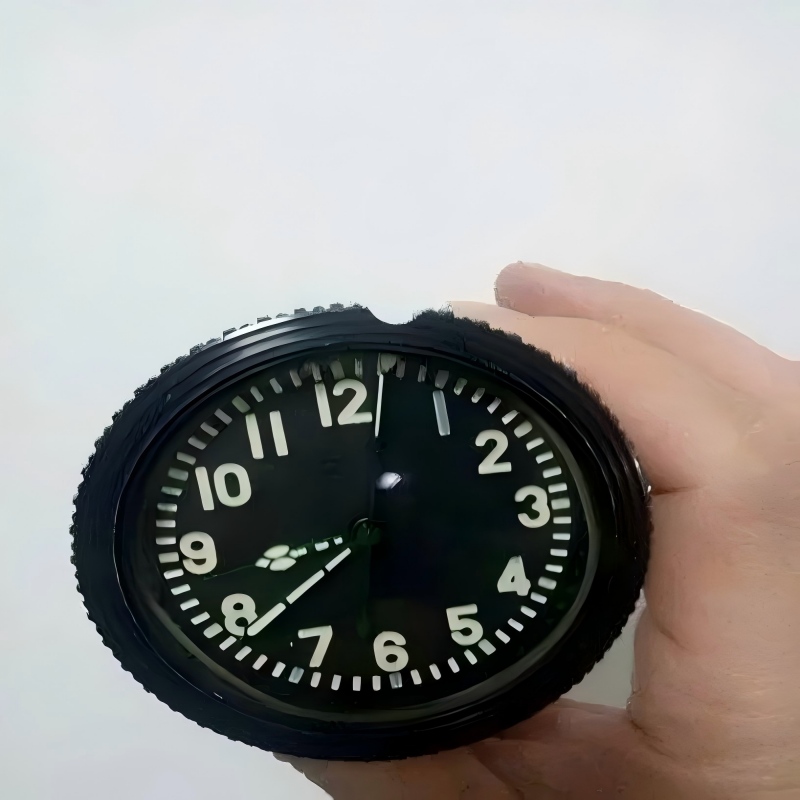
Aviation Hours Timer D3JZ301

Core Function and Principle of Operation

Understanding what an "hours timer" does is fundamental to appreciating its specifications.

  • Primary Function: To continuously accumulate and display the total operating time of the system to which it is connected (e.g., an Aircraft Engine, APU, hydraulic pump).
  • Operating Principle: Typically an electromechanical counter driven by a synchronous motor. The motor is powered whenever the monitored system is energized (e.g., when the engine master switch is ON). Each revolution of the motor advances the counter mechanism by a precise increment (e.g., 1/10th of an hour or 6 minutes).
  • Key Distinction from Clocks: It measures accumulated operational duration, not time of day. Its reading is irreversible under normal operation, forming a legal record for maintenance.

Detailed Technical Specification Breakdown

Each parameter on the D3JZ301 datasheet ensures compatibility, accuracy, and reliability in the target application.

Electrical Specifications

  • Supply Voltage & Frequency: Designed for standard Aircraft Electrical Systems (e.g., 28V DC, or 115V AC, 400Hz). The specification defines the operating range (e.g., 18-32V DC) within which accuracy is guaranteed. This is critical for integration into both legacy and modern avionics power networks.
  • Power Consumption: The current draw of the internal synchronous motor. A low value is desirable to minimize load on the aircraft's electrical system.
  • Start Voltage: The minimum voltage at which the timer is guaranteed to begin operation. Must be below the minimum system voltage under all expected conditions.

Mechanical & Display Specifications

  • Display Type & Digits: Typically a mechanical odometer-style display with 5, 6, or 7 digits (e.g., 99999.9 hours). Provides a clear, non-volatile readout without need for backup power.
  • Counting Rate/Increment: Specifies the time unit per motor revolution (e.g., 0.1 hour). Defines the timer's resolution.
  • Accuracy: Expressed as a percentage (e.g., ±0.1% of reading) over the specified voltage and temperature range. This is a key performance metric for a Military Aviation Aviation Instruments & Timers component, as maintenance schedules depend on it.
  • Reset Mechanism: Most aviation hours timers are non-resettable in the field to prevent fraud. Authorized reset requires special tools or returning to a certified repair station. This is a crucial safety and compliance feature.
Aviation Hours Timer D3JZ301(4)

Environmental & Durability Specifications

  • Operating Temperature Range: Wide range (e.g., -40°C to +70°C) to function in unpressurized equipment bays or external pods.
  • Vibration & Shock Resistance: Meets or exceeds MIL-STD-810 profiles to ensure the delicate gear train does not jam or miscount in the high-vibration environment of an aircraft or Aviation Aviation Instruments & Timers for Drone.
  • Ingress Protection (IP Rating): Sealed against dust and moisture (e.g., IP65) to withstand wash-downs and harsh environments.
  • Operational Life: Rated for a minimum number of hours of counting (e.g., 50,000 hours) and a number of mechanical life cycles, ensuring it will outlast the components it monitors.

Primary Applications and Integration

The D3JZ301's specs make it suitable for a range of time-keeping tasks:

1. Engine and APU Time Recording (Tach Time/Hobbs Time)

The classic application. The timer is wired to activate with the engine master or oil pressure switch, providing the definitive Time Since New or Time Since Overhaul (TSO) for powerplant maintenance.

2. System and Component Usage Tracking

  • Hydraulic pump cumulative run time.
  • Landing gear cycle counting (if equipped with a cycle counter function).
  • Avionics cooling fan or equipment rack operational hours.

3. Maintenance and Inspection Scheduling

Provides the hard data for condition-based maintenance (CBM) programs, triggering inspections at 100-hour, 500-hour, or other scheduled intervals for High quality Aviation Engine, Train, Plane assets and industrial machinery.

Industry Trends: The Evolution of Time and Usage Recording

Transition to Solid-State and Digital Data Integration

While electromechanical timers like the D3JZ301 remain valued for their simplicity and non-volatility, the trend is towards solid-state elapsed time indicators (ETIs). These offer digital output (e.g., ARINC 429, CAN bus), allowing for easy data download to maintenance computers and integration with aircraft health monitoring systems. YM's product roadmap includes hybrid and fully digital variants.

Increased Demand for Data Security and Tamper Evidence

With maintenance records having legal and financial implications, preventing unauthorized reset is paramount. New designs incorporate cryptographic seals, audit trails, and physical mechanisms that provide clear evidence of tampering, aligning with stricter regulations.

Miniaturization and Reduced Power Draw

For UAVs and small aircraft, space and power are at a premium. The industry is driving development of smaller timers with ultra-low power consumption, often using stepper motors or micro-stepping drive circuits developed in YM's advanced electronics R&D lab.

Comparison of a traditional electromechanical hours timer and a modern solid-state digital timer module

YM's Precision Instrument Manufacturing

Manufacturing a component where mechanical precision directly translates to legal and maintenance accuracy requires a unique discipline. YM's instrument division features cleanroom assembly areas for gear train assembly, specialized test stands that run timers for hundreds of hours to calibrate and verify accuracy against atomic clock references, and laser marking systems for permanent serialization. Our 15,000 sq.m. facility dedicated to instruments ensures that every D3JZ301 meets its stringent accuracy claim.

R&D Focus: Enhancing Long-Term Accuracy and Reliability

The core challenge for an electromechanical timer is maintaining accuracy over tens of thousands of hours and decades of service. YM's R&D focuses on tribology (the science of wear) for gear materials, advanced lubrication formulas that remain stable across extreme temperatures, and magnetic circuit design for synchronous motors that minimizes torque variation with input voltage fluctuations. A recent patent covers a self-compensating gear mesh design that reduces wear-induced error over time.

5 Critical Specification Review Points for Russian Procurement

For Russian aviation and industrial buyers, evaluating a timer like the D3JZ301 involves these specific checks:

  1. Certification of Accuracy Traceability to GOST R 8.xxx Standards: Formal calibration certificates showing the timer's accuracy is verified against measurement standards recognized within the Russian metrology system.
  2. Detailed Low-Temperature Start and Performance Data: Guaranteed operation and accuracy at temperatures below -40°C (down to -55°C or -60°C), where lubricant viscosity and material contraction can affect the mechanism.
  3. Resistance to Specific Vibration Profiles: Test data proving performance under vibration profiles characteristic of Russian-manufactured helicopters, turboprops, or ground vehicles, not just generic MIL-STD profiles.
  4. Material Compliance Documentation: Full disclosure of materials used in gears, housing, and lubricants to ensure compliance with local environmental and safety regulations, and to assess compatibility with local maintenance chemicals.
  5. Long-Term Support for Calibration and Repair: Clear roadmap for the product's lifecycle, including availability of calibration services and repair kits within the CIS region for the foreseeable future.
D3JZ301 timers mounted on a multi-channel calibration test stand, comparing to a reference standard

Installation, Configuration, and Maintenance Guidelines

Recommended Installation Steps

  1. Power Source Selection: Connect to a switched power line that is active only when the monitored system is in operation (e.g., via a relay controlled by oil pressure or a master switch). Avoid unswitched "hot" buses.
  2. Wiring: Use appropriate gauge wire. Ensure connections are secure and protected against chafing. For AC timers, observe correct phase/neutral connections if applicable.
  3. Mounting: Mount in a visible, accessible location per the aircraft or equipment manual. Ensure the mounting surface is rigid to prevent vibration transmission that could affect the mechanism.
  4. Initialization: For new installations, the timer may need to be set to an initial value (e.g., engine TSO). This must be done by authorized personnel following strict procedures to maintain record integrity.

Routine Checks and Maintenance

  • Visual Inspection: During regular maintenance, check for physical damage, moisture ingress, and ensure the display is legible.
  • Functional Verification: Periodically (e.g., during annual inspection), verify the timer is advancing when the system is powered. Compare its rate of increase against a known accurate clock over a short period.
  • Calibration Interval: While very stable, electromechanical timers may have a recommended calibration interval (e.g., every 5 years or 10,000 hours) to ensure ongoing accuracy. This service is provided by YM's certified calibration centers.

Relevant Standards and Certifications

Hours timers for aviation are governed by several key standards:

  • MIL-PRF-39030: Specification for Elapsed Time Indicators (Mechanical).
  • RTCA DO-160: Environmental test procedures for airborne equipment.
  • FAA TSO-C73/C73a: Technical Standard Order for elapsed time recorders, providing a path to FAA approval for installation in certified aircraft.
  • ISO 9001 & AS9100: YM's quality management system certifications ensure the processes behind the D3JZ301's specifications are consistently controlled and auditable, a prerequisite for supply to major OEMs.

Frequently Asked Questions (FAQ)

Q1: Can the D3JZ301 hours timer be reset in the field for an engine overhaul?

A: Typically, NO. Aviation hours timers are designed as sealed, non-resettable units to maintain an incontrovertible record of total time. Resetting is considered a major alteration. After an engine overhaul, the timer is either replaced with a new unit (marked as "0 since overhaul"), or sent to an authorized repair station where the reset is performed under controlled conditions, documented, and the case is often resealed with a new tamper-evident seal. Never attempt a field reset.

Q2: What happens if the timer's power is interrupted? Does it lose its count?

A: No, the count is not lost. The D3JZ301, as a mechanical counter, retains its displayed value without any power. It is a non-volatile memory device. When power is restored, it simply resumes counting from where it left off. This is a key advantage over volatile electronic memory that requires a backup battery.

Q3: How does the accuracy specification (e.g., ±0.1%) translate into real-world error over time?

A: The error is cumulative and proportional to the total time. For a ±0.1% timer after 10,000 hours of operation, the potential error is 10,000 hours * 0.001 = ±10 hours. This means the actual engine time could be between 9,990 and 10,010 hours. For maintenance planning, this level of accuracy is generally acceptable. Higher-accuracy timers (e.g., ±0.05%) are available for more critical applications.

D3JZ301 hours timer installed in an aircraft engine bay or instrument panel, showing clear visibility


Contact Us

Author:

Ms. Linda Deng

Phone/WhatsApp:

+86 13759943660

Popular Products
You may also like
Related Categories

Email to this supplier

Subject:
Email:
Message:

Your message must be between 20-8000 characters

Contact Us

Author:

Ms. Linda Deng

Phone/WhatsApp:

+86 13759943660

Popular Products

Contact

Send Inquiry

We will contact you immediately

Fill in more information so that we can get in touch with you faster

Privacy statement: Your privacy is very important to Us. Our company promises not to disclose your personal information to any external company with out your explicit permission.

Send