
GY-100 Sensor Technology Analysis: Advancing Precision in Modern Aviation Systems
In the exacting world of aerospace and industrial applications, sensor accuracy directly correlates with system performance, safety, and operational efficiency. The GY-100 sensor represents a critical class of instrumentation designed to deliver uncompromising data fidelity under extreme conditions. This technical analysis is crafted for B2B procurement specialists, from global distributors to OEM/ODM manufacturers, who source critical components for military aviation, commercial aircraft, and advanced industrial platforms. We will dissect the GY-100's core technology, explore its market relevance, and address the key evaluation criteria for global supply chain integration.

Core Technology Breakdown of the GY-100 Aviation Sensor
The GY-100 is engineered as a high-performance inertial or environmental sensor, often utilized for vibration monitoring, tilt sensing, or pressure measurement. Its design embodies a fusion of precision microelectronics and rugged packaging.
1. Advanced Sensing Element & MEMS Technology
At its heart, the GY-100 typically employs a sophisticated Micro-Electro-Mechanical Systems (MEMS) element or precision piezoelectric crystal. This core is designed for exceptional sensitivity and low noise, providing accurate data crucial for aircraft engine health monitoring and flight control stability in Aviation Sensors for drones.
2. Ruggedized Packaging and Environmental Hardening
The delicate sensing element is housed within a hermetic, stainless-steel or titanium casing. This packaging protects against moisture, corrosive fluids (like jet fuel or de-icing compounds), and particulate contamination. It is engineered to survive the high shock and vibration profiles common in military aviation sensor applications and railway environments.
3. Integrated Signal Conditioning & Digital Output
Modern variants of sensors like the GY-100 feature onboard Application-Specific Integrated Circuits (ASICs). These chips perform critical signal conditioning—amplification, filtering, and temperature compensation—directly within the sensor package. Output is often provided via industry-standard digital protocols (e.g., CAN bus, RS-485, or SPI), simplifying integration into the avionics data network of a plane or control system of a train.

Latest Industry Technology Dynamics & Emerging Trends
The aerospace sensor market is being reshaped by several convergent innovations that influence products like the GY-100:
- Multi-Parameter & Smart Sensors: Convergence of sensing functions (e.g., vibration + temperature + pressure) into a single, compact package, reducing system weight and complexity for high quality aviation engine monitoring.
- Edge Computing Integration: Sensors with embedded microprocessors capable of performing initial data analysis and diagnostics at the "edge," reducing data bandwidth needs and enabling faster response times.
- Wireless & Energy-Harvesting Designs: Development of self-powered or low-energy wireless sensor nodes for hard-to-wire locations on aircraft structures, facilitating Structural Health Monitoring (SHM).
- Enhanced Cybersecurity for Data Integrity: As sensors become more connected, implementing hardware-level security features to protect data streams from tampering is a growing priority, especially for military aviation systems.
Key Procurement Considerations: Focus on Russian & CIS Market Requirements
Procurement managers in markets with stringent validation processes, such as Russia, evaluate critical components through a multifaceted lens. Here are five primary concerns for sensors like the GY-100:
- Certification for Harsh Climates & GOST Standards: Demonstrated compliance with GOST (particularly for EMC and environmental testing) and validated performance across extreme temperature ranges (-60°C to +85°C operational) is a fundamental entry requirement.
- Long-Term Calibration Stability & Traceability: Suppliers must provide detailed calibration certificates from accredited labs, with clear statements on calibration intervals and long-term drift specifications. Full metrological traceability is mandatory.
- Technical Documentation & Local Support: Comprehensive documentation (datasheets, interface manuals, installation guides) available in Russian, coupled with access to local or responsive remote technical engineering support.
- Supply Chain Sovereignty & Risk Mitigation: Preference for manufacturers with demonstrably diversified, resilient supply chains for critical components (e.g., ASICs, rare-earth elements) and transparency regarding origin of materials.
- Lifecycle Support & Obsolescence Management: Guaranteed long-term product support (15+ years), clear roadmap communication, and well-managed end-of-life (EOL) processes to protect investments in long-lifecycle platforms like aircraft and rolling stock.
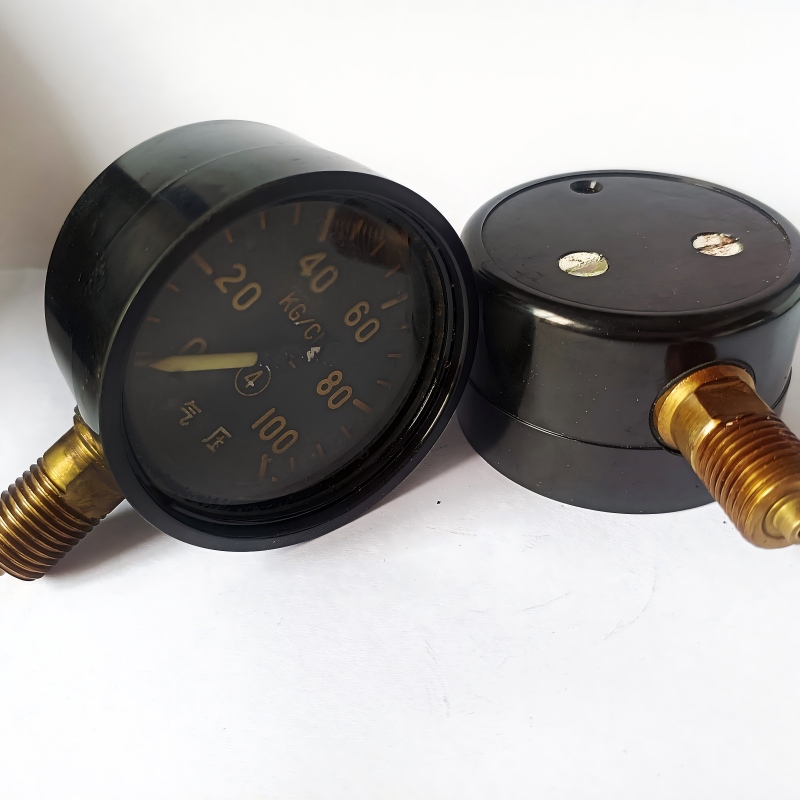
YM's Foundation for Precision Manufacturing: Infrastructure and Innovation
Delivering sensor technology that meets these rigorous global standards requires world-class infrastructure. At YM, our dedicated sensor production wing operates within a controlled ecosystem featuring Class 1000/100 cleanrooms, precision wafer bonding systems, and laser welding stations. Our 70,000 square meter main facility allows for vertical integration of key processes. Our R&D team, led by PhDs in materials science and microelectronics, focuses on core innovations. A recent breakthrough includes a patented hermetic encapsulation technique for MEMS elements that dramatically improves long-term reliability in high-humidity environments, a critical advancement for aviation sensor applications exposed to atmospheric extremes.
Optimal Installation, Use, and Maintenance Protocols
To ensure the GY-100 sensor performs to its specified accuracy throughout its service life, adherence to proper procedures is essential. Follow this step-by-step guide for critical installations:
- Pre-Installation Verification: Check the sensor's model number and calibration certificate against the system requirements. Inspect the housing and connector for any shipping damage.
- Mounting Surface Preparation: The mounting surface must be clean, flat, and free of paint, rust, or debris. Ensure the surface provides a solid mechanical ground to the host structure (e.g., engine casing).
- Correct Mounting & Torque: Use the specified mounting hardware (often stainless steel). Tighten bolts to the exact torque value stated in the manual using a calibrated torque wrench to avoid base strain that can affect readings.
- Cabling & Connection: Route sensor cables away from high-power lines to minimize EMI. Secure the cable with strain relief near the connector. Ensure the electrical connector is fully mated and locked.
- Post-Installation Verification & Baseline Recording: Power up the system and verify sensor output is within expected "at-rest" parameters. Record this baseline reading for future comparison during predictive maintenance.
- Periodic Health Checks: As part of scheduled maintenance, visually inspect for corrosion or physical damage, check connector integrity, and verify output against the baseline. Plan for recalibration at the interval recommended by the manufacturer or regulatory guidelines.

Governance by Standards: Quality and Safety Frameworks
The design, manufacture, and qualification of aviation-grade sensors like the GY-100 are governed by a rigorous international standards ecosystem. Key frameworks include:
- RTCA/DO-160: The definitive standard for environmental testing of airborne equipment, covering sections on vibration, shock, temperature, humidity, and power input.
- ISO/IEC 17025: Accreditation for testing and calibration laboratories. YM's in-house metrology lab is accredited to this standard, ensuring the validity of all calibration data provided with our high quality sensors.
- MIL-PRF-28800 / MIL-STD-810: U.S. military performance specifications and test methods for filters and test equipment, often referenced for ruggedized sensor design.
- AS9100 & NADCAP: YM's quality management system is AS9100 certified. Additionally, we hold NADCAP accreditation for specific non-destructive testing and chemical processing, underscoring our commitment to the highest aerospace industry requirements for aircraft sensor manufacturing.
Frequently Asked Questions (FAQ)
Q1: What is the typical Mean Time Between Failures (MTBF) for the GY-100 in a high-vibration environment?
A: The calculated MTBF for the GY-100 series, based on field data and MIL-HDBK-217F models in a ground fixed (high vibration) environment, typically exceeds 150,000 hours. Actual field life is often longer, contingent upon proper installation and adherence to environmental limits. Detailed reliability reports are available under NDA.
Q2: Can the GY-100 output be customized or scaled for our specific application?
A: Absolutely. As a solutions-oriented OEM/ODM manufacturer, YM offers extensive customization. This can include custom measurement ranges, output scaling (Volts/g, mA/psi, etc.), specialized connector types, and firmware modifications to output pre-processed data. Our engineering team collaborates directly with clients to develop tailored sensor solutions for unique aviation engine or structural monitoring needs.
Q3: How does YM manage component obsolescence, especially for the embedded ASIC?
A: Proactive lifecycle management is a cornerstone of our supply strategy. For critical components like ASICs, we engage in long-term stocking agreements (LTAs) with foundries, maintain strategic inventory buffers, and, when necessary, design and qualify pin-compatible replacement components. We provide customers with advance obsolescence notices (typically 5+ years) and migration plans to ensure uninterrupted support.

References & Authoritative Sources
This technical analysis synthesizes information from industry best practices and the following credible sources:
- European Union Aviation Safety Agency (EASA). (2023). Certification Specifications and Acceptable Means of Compliance for Large Aeroplanes (CS-25), Amendment 27. Cologne, Germany. [Specifically, sections pertaining to equipment, instruments, and installation].
- SAE International. (2022). AIR6327: A Guide to Aircraft Sensor Technology and Applications. Warrendale, PA.
- IEEE Sensors Journal. (2023, March 15). Special Issue: MEMS and Sensor Technologies for Harsh Environments. Vol. 23, No. 6.
- Aviation Maintenance Forum on Reddit. (2024, January 10). "Discussion: Real-world failure modes of vibration sensors on turboprop engines." u/PropellerTech. Retrieved from Reddit.com/r/aviationmaintenance.
- Wikipedia contributors. (2024, February 1). Microelectromechanical systems. In Wikipedia, The Free Encyclopedia. Retrieved from https://en.wikipedia.org/wiki/Microelectromechanical_systems
- Federal Aviation Administration (FAA). (2022). Advisory Circular 43-216: Vibration and Buildup Analysis of Aircraft Propellers. U.S. Department of Transportation.


