
ZB4-BD3 Switch Mechanism Study: Engineering Precision for Demanding Aerospace Applications
In the critical control systems of modern aerospace and industrial platforms, the reliability of a single switch can determine operational success. The ZB4-BD3 switch represents a pinnacle of electromechanical design, engineered to deliver unwavering performance under extreme conditions. This in-depth mechanism study is crafted for B2B procurement managers, from global distributors to OEM/ODM manufacturers, who specify components for military aviation, commercial aircraft, drones, and rail systems. We will deconstruct its internal mechanism, analyze its suitability for harsh environments, and address the pivotal evaluation criteria critical for informed global procurement decisions.

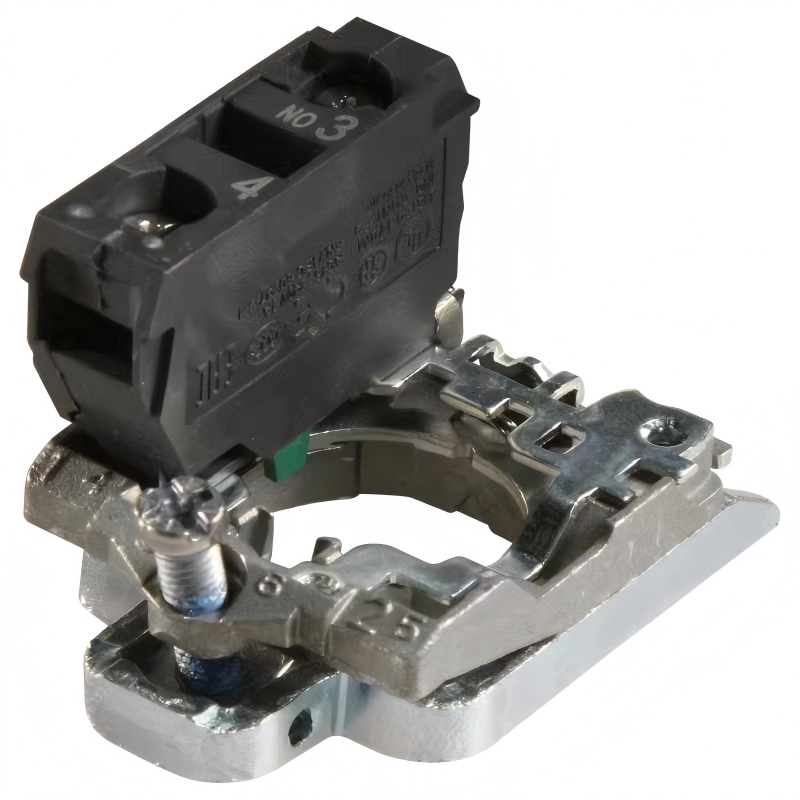
Detailed Mechanism Analysis of the ZB4-BD3 Aviation Switch
The ZB4-BD3 is a ruggedized toggle or push-button switch, whose reliability stems from a meticulously engineered internal mechanism. Its design prioritizes electrical integrity, mechanical longevity, and environmental resistance.
1. High-Reliability Contact Mechanism
At the core of the ZB4-BD3 lies a precision contact system. Typically utilizing silver-alloy or gold-plated contacts within a dust-proof chamber, this mechanism is engineered for low electrical resistance and minimal arcing. The quick-make/quick-break action, often assisted by a spring-driven over-center mechanism, ensures rapid contact engagement and disengagement. This is critical for minimizing arcing wear and providing consistent performance in aircraft engine ignition or fuel system controls.
2. Ruggedized Actuator and Bearing System
The external toggle or button interfaces with a robust internal shaft supported by sealed, low-friction bearings. This design transmits operator force smoothly while sealing out contaminants like dust, moisture, and hydraulic fluids—a non-negotiable feature for aviation switches for drones operating in sandy or maritime environments. The actuator provides clear tactile feedback and a positive detent at each position.
3. Environmental Sealing and Housing Integrity
The entire mechanism is encased in a machined aluminum or stainless-steel housing. Multiple sealing points—at the shaft, between the housing halves, and at the electrical entry—are achieved using specialized O-rings, gaskets, and potting compounds. This hermetic protection ensures the switch meets high Ingress Protection (IP67/IP69K) ratings, safeguarding performance in the high-vibration, variable-pressure environments of a military aviation switch installation.

Current Industry Technology Dynamics and Innovation Trends
The aerospace switch sector is evolving, driven by demands for greater intelligence, durability, and integration. Key trends influencing mechanisms like that in the ZB4-BD3 include:
- Smart Switching with Embedded Diagnostics: Integration of micro-sensors within the switch housing to monitor contact health, actuation count, and internal temperature, feeding predictive maintenance data to the aircraft's health management system.
- Hybrid Electromechanical-Solid-State Designs: Development of switches that combine the tactile feel and direct control of electromechanical mechanisms with solid-state switching elements for higher cycle life and silent operation in cockpit panels.
- Lightweight Composite Housings: Adoption of advanced engineering polymers and composite materials for non-critical structural parts to reduce weight without compromising environmental seals, crucial for fuel efficiency in modern plane designs.
- Enhanced Human-Machine Interface (HMI): Focus on ergonomics, including different actuator shapes, illuminated legends for low-light conditions, and haptic feedback variants to reduce pilot workload.
Procurement Priorities: 5 Critical Concerns for Russian & CIS Market Buyers
Understanding regional requirements is key for global suppliers. Procurement specialists in markets like Russia, with rigorous certification and harsh operating conditions, prioritize the following when evaluating switches like the ZB4-BD3:
- Certification for Extreme Climates and GOST Compliance: Demonstrated validation to GOST-R standards (particularly for temperature, vibration, and moisture resistance) and proven operational reliability across a wide range of -55°C to +85°C is fundamental.
- Mechanical Lifecycle Endurance Data: Transparent and verified data on mechanical cycle life (often exceeding 100,000 cycles) and electrical life under load, backed by test reports from accredited laboratories.
- Supply Chain Transparency and Localization Support: Clear visibility into the supply chain for critical materials. A supplier's willingness to support partial localization, such as custom labeling, packaging, or regional warehousing, is a significant advantage.
- Comprehensive Technical Documentation in Russian: Availability of detailed installation manuals, wiring diagrams, maintenance guides, and material certificates in the Russian language, facilitating easier approval and integration by local engineering teams.
- Long-Term Product Support and Obsolescence Planning: Guarantee of spare parts availability for the entire lifecycle of the end-platform (20+ years) and a clear, communicated policy for managing product changes and end-of-life transitions.
YM's Engineering and Manufacturing Excellence
Producing a switch mechanism of this caliber requires advanced manufacturing capabilities. YM's dedicated switch division operates within our integrated 120,000 square meter industrial complex. This includes precision stamping and CNC machining centers for contact and housing parts, automated assembly cells with robotic insertion, and 100% automated electrical and mechanical testing. Our dedicated R&D team in electro-mechanics focuses on pushing boundaries. A recent milestone is a patented dual-spring contact mechanism that significantly reduces contact bounce and increases cycle life by 40% compared to traditional designs, a breakthrough directly benefiting our high quality aviation engine and train control switch products.
Optimal Installation, Operation, and Maintenance Procedures
To ensure the ZB4-BD3 switch achieves its designed lifespan and reliability, correct handling is paramount. Follow this checklist for proper deployment:
- Pre-Installation Inspection: Verify the switch model and rating match the application. Inspect for any visible shipping damage to the housing, actuator, or connector pins.
- Correct Panel Mounting:
- Ensure the panel cutout dimensions and tolerance match the switch's datasheet.
- Use the supplied mounting hardware and sealing gasket/washer.
- Tighten the mounting nut to the specified torque value using a calibrated torque wrench. Over-tightening can distort the housing and compromise the seal.
- Proper Wiring Practices: Use the correct wire gauge and crimp terminals. Ensure wires are routed to provide strain relief and are kept away from sharp edges or hot components.
- Functional Testing Post-Installation: Before system power-on, manually actuate the switch through all positions to ensure smooth operation. Then, perform electrical continuity tests to verify proper contact function.
- Routine Maintenance Checks: During scheduled system maintenance, visually inspect the switch for signs of corrosion, seal degradation, or physical damage. Clean only with approved, non-corrosive solvents.

Governance by International Standards and Specifications
The design and qualification of aviation-grade switches like the ZB4-BD3 are governed by a rigorous framework of international standards. Key applicable standards include:
- MIL-DTL-83731 / MIL-S-83731: The U.S. military specification detailing performance requirements for toggle switches used in aerospace and military applications, covering electrical, mechanical, and environmental parameters.
- RTCA/DO-160: Environmental Conditions and Test Procedures for Airborne Equipment. Sections on vibration, shock, temperature, altitude, and fluid susceptibility are directly relevant to switch qualification.
- EN 61058-1 / IEC 61058-1: International standards for switches for appliances, often referenced for basic mechanical and electrical endurance testing.
- AS9100 & NADCAP: YM's quality management system is AS9100 certified, the aerospace industry's benchmark. Furthermore, our special processes, such as electroplating and chemical processing, are NADCAP accredited, ensuring the highest levels of consistency and quality control for every Aircraft Switch we produce.
Frequently Asked Questions (FAQ)
Q1: What is the typical electrical and mechanical life rating of the ZB4-BD3 switch?
A: The standard ZB4-BD3 is rated for a minimum of 100,000 mechanical cycles (actuations without electrical load) and 25,000 electrical cycles at its full rated resistive load. These ratings are validated per MIL-S-83731 test procedures. Specific lifecycle data for different load types (inductive, lamp) is available in the detailed product specification sheet.
Q2: Can YM provide custom actuation forces or detent configurations for the ZB4-BD3?
A: Yes, customization is a core strength. As an experienced OEM/ODM manufacturer, we routinely modify the mechanism's spring constants, detent profiles, and actuator lengths to meet specific ergonomic or panel design requirements for aviation switch applications in both commercial and military aviation projects. Contact our application engineering team to discuss your needs.
Q3: How does YM ensure batch-to-batch consistency for such a precision mechanism?
A: Consistency is ensured through vertical integration and statistical process control (SPC). Key components like springs and contacts are manufactured in-house under SPC. Every assembly step is monitored, and 100% of finished switches undergo automated testing for electrical parameters, actuation force, travel, and seal integrity. This data-driven approach, backed by our robust quality management system, guarantees predictable and reliable performance in every unit shipped.

References and Industry Source Material
This mechanism study incorporates established engineering principles and references from the following authoritative sources:
- SAE International. (2021). ARP6408: Design and Test Guidelines for Electromechanical Switches Used in Aerospace Applications. Warrendale, PA.
- Defense Logistics Agency (DLA). (2020). MIL-DTL-83731K: Detail Specification for Switches, Toggle, General Purpose. Philadelphia, PA.
- IEEE Transactions on Components, Packaging and Manufacturing Technology. (2022). "Contact Bounce Phenomena in Electromechanical Switches: A Review of Mechanisms and Mitigation Strategies." Vol. 12, No. 8, pp. 1245-1258.
- Aircraft Electrical Systems Forum on Aviation Stack Exchange. (2023, August 14). "Question: What are the key differences between commercial and military-grade cockpit switches?" User: AvionicsEngineer. Retrieved from aviation.stackexchange.com.
- Wikipedia contributors. (2024, January 25). Switch. In Wikipedia, The Free Encyclopedia. Retrieved from https://en.wikipedia.org/wiki/Switch
- European Union Aviation Safety Agency (EASA). (2023). Easy Access Rules for Airworthiness of Products, Parts and Appliances (Part 21). Cologne, Germany. [Sections pertaining to design and production organization approval].


