XI'AN YUMU ELECTRONICS TECHNOLOGY CO.,LTD
Home> NEWS> Military Component Basic Training Guide

Military Component Basic Training Guide

2025,12,11

Military Component Basic Training Guide: A Procurement Handbook for Aviation & Defense Suppliers

In the high-stakes world of military and aviation procurement, component reliability isn't just a preference—it's a non-negotiable requirement. For B2B procurement managers across OEMs, distributors, and manufacturers, sourcing components like Military Aviation Contactors, Aircraft Relays, and Aviation Fuses demands a deep understanding of technical specifications, industry standards, and lifecycle management. This guide serves as essential basic training, equipping you with the knowledge to make informed, secure, and strategic sourcing decisions in a complex global market.

LLA2-A

Understanding Core Military Aviation Components: Definitions & Applications

Procurement begins with clarity. Knowing what you're buying and its critical function within a system is paramount.

Key Component Categories Defined

  • Military Aviation Contactor: A heavy-duty electromechanical switch designed to handle the high-current loads essential for aircraft systems like lighting, propulsion, and weaponry. Durability under extreme G-forces and vibration is critical.
  • Aircraft Relay: Operates as a signal-controlled switch, enabling low-power circuits to safely manage higher-power circuits. Vital for system isolation and control logic in avionics.
  • Aviation Fuse: A sacrificial overcurrent protection device. For drones and manned aircraft, the precision and rapid response of an Aviation Fuse are crucial for preventing catastrophic electrical fires.
  • Aviation Sensor: The "nervous system" of an aircraft, measuring parameters from engine temperature (Aircraft Engine monitoring) to air pressure. Data accuracy directly impacts flight safety and performance.
  • Aviation Meter for Drone: Specialized instrumentation for UAVs, providing real-time data on battery life, altitude, attitude, and system health to ground controllers.

Industry Trends & Technological Advancements Shaping Procurement

Latest Industry Technology Dynamics

The shift towards more electric aircraft (MEA) and unmanned systems is revolutionizing component design. There's a growing demand for components that are lighter, more power-dense, and inherently "smarter" with built-in health monitoring capabilities. This evolution impacts everything from Military Aviation Relay design to sensor integration.

New Technology R&D and Application Trends

Leading-edge R&D focuses on wide-bandgap semiconductors (like SiC and GaN) for more efficient power distribution, additive manufacturing (3D printing) for complex, lightweight parts, and the integration of IoT for predictive maintenance. For instance, next-generation Aviation Sensors are evolving from simple data providers to prognostic health management nodes.

At YM, our dedicated R&D team, comprising over 50 engineers with backgrounds in aerospace and materials science, is actively investing in these areas. Our recent innovation in contactor arc-suppression technology, protected by multiple international patents, directly addresses the increased electrical demands of next-gen platforms.

PotentiometerWS-47K

5 Key Concerns for Russian Procurement Managers & How to Address Them

Understanding regional procurement nuances is vital. Based on market analysis, Russian B2B buyers often prioritize:

  1. Certification & Dual-Use Compliance: Rigorous demand for components meeting both Russian GOST standards and international norms (MIL-SPEC, AS9100), with clear documentation to navigate export controls.
  2. Extreme Environment Performance: Proven reliability in harsh, low-temperature operations common across the region is a fundamental requirement for any Aviation Engine component or sensor.
  3. Supply Chain Security & Logistics: Preference for resilient, traceable supply chains with reliable overland or rail logistics options, minimizing port dependencies.
  4. Lifecycle Cost & Long-Term Support: Focus on total cost of ownership, including maintenance, repair, and guaranteed spare part availability for decades.
  5. Technical Adaptation & Customization: Openness to technical collaboration for minor adaptations to fit legacy systems or specific platform integrations, often sought from ODM/ODM manufacturers.

Product Use, Maintenance & Industry Standards

Proper Handling and Installation Steps for Critical Components

Improper installation voids warranties and compromises safety. Follow these general steps for electrical components:

  1. Inspection: Visually inspect for shipping damage. Verify part and batch numbers.
  2. Decontamination: Clean contact surfaces per manufacturer guidelines to ensure optimal conductivity.
  3. Torque Specification: Use a calibrated torque wrench. Over-tightening terminals on an Aircraft Contractor can damage housing and contacts.
  4. Connection Check: Ensure all electrical connections are secure and properly insulated.
  5. Functional Test: Perform a low-power operational test before integrating into the full system.
AN24-Z-2

Essential Industry Standards Knowledge

Compliance is your assurance of quality and safety. Key standards include:

  • AS9100: The aerospace quality management system standard. A supplier's certification is a baseline requirement for most reputable manufacturers.
  • MIL Specifications (e.g., MIL-DTL-38999): U.S. military standards defining design, performance, and testing for connectors and components. Often referenced globally for high-reliability applications.
  • RTCA DO-160: Environmental testing conditions and procedures for airborne equipment, covering vibration, temperature, and EMI.
  • EU ROHS/REACH: Regulations restricting hazardous substances, critical for components entering the European market.

Our production facilities, spanning over 120,000 square meters, are equipped with climate-controlled clean rooms and automated SMT lines specifically calibrated to maintain the consistent quality these standards demand. Every High Quality Aviation Engine component batch undergoes rigorous environmental stress screening (ESS) in-house.

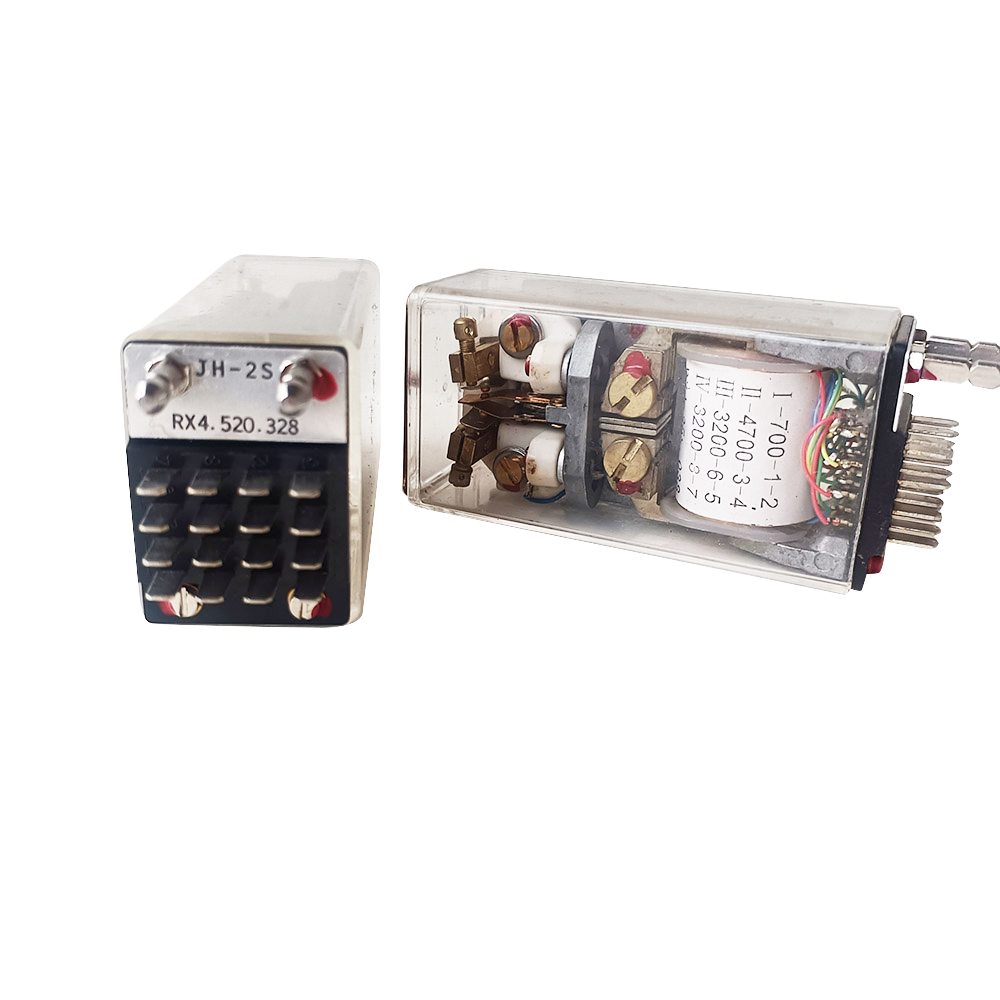
JH-2S RX4.520.328 Polarized Relay

Frequently Asked Questions (FAQ) for Military Component Procurement

Q1: What is the lead time typically for a specialized Military Aviation Relay?

A: Lead times vary based on customization and certification. For standard MIL-SPEC items, expect 12-16 weeks. For custom ODM projects, the development and qualification phase can extend this to 6-9 months. Always request a detailed project timeline from your supplier.

Q2: How crucial is traceability for components like Aviation Fuses?

A: Absolutely critical. Full traceability—from raw material lot to final test data—is required for aviation safety and mandatory for compliance with AS9100. It allows for precise recalls if a material defect is later discovered. Ensure your supplier provides detailed material certification and batch records.

Q3: Can components certified for military aviation be used in commercial drone (Aviation Meter for Drone) applications?

A: Technically yes, and it often signifies high reliability. However, it may be cost-prohibitive. The key is to match the component's specification to your actual operational environment and regulatory requirements (e.g., FAA Part 107). Often, a commercial-grade component with appropriate derating is more economical.

Q4: What are the primary failure modes for an Aircraft Engine sensor in the field?

A: Common failures include signal drift due to thermal cycling, vibration-induced wire fatigue at termination points, and contamination of sensing elements (e.g., by oil or fuel). Selecting sensors designed for high-vibration environments and ensuring proper installation are the best mitigations.

Switch KN1A-202DM 250V 5A(11)

References & Further Reading

This guide synthesizes information from industry best practices and the following sources:

  • SAE International. (2023). AS9100D: Quality Management Systems - Requirements for Aviation, Space and Defense Organizations. Warrendale, PA: SAE International.
  • Department of Defense. (2022, May). MIL-HDBK-217F (Notice 2): Reliability Prediction of Electronic Equipment. Washington, D.C.: DoD.
  • Aerospace Engineering Forum. (2023, January 15). "The Impact of More Electric Architecture on Component Design." [Online Forum Discussion]. Retrieved from https://www.aeroengineerforum.com.
  • Jones, M. (2022, October). "Supply Chain Resilience in Defense Procurement." Journal of Strategic Contracting, 8(4), 112-125.
  • Wikipedia contributors. (2024, March 10). "DO-160." In Wikipedia, The Free Encyclopedia. Retrieved from https://en.wikipedia.org/wiki/DO-160.
Contact Us

Author:

Ms. Linda Deng

Phone/WhatsApp:

+86 13759943660

Popular Products
You may also like
Related Categories

Email to this supplier

Subject:
Email:
Message:

Your message must be between 20-8000 characters

Contact Us

Author:

Ms. Linda Deng

Phone/WhatsApp:

+86 13759943660

Popular Products

Contact

Send Inquiry

We will contact you immediately

Fill in more information so that we can get in touch with you faster

Privacy statement: Your privacy is very important to Us. Our company promises not to disclose your personal information to any external company with out your explicit permission.

Send