Military Component Cybersecurity: Securing the Hardware Foundation of Modern Defense Systems
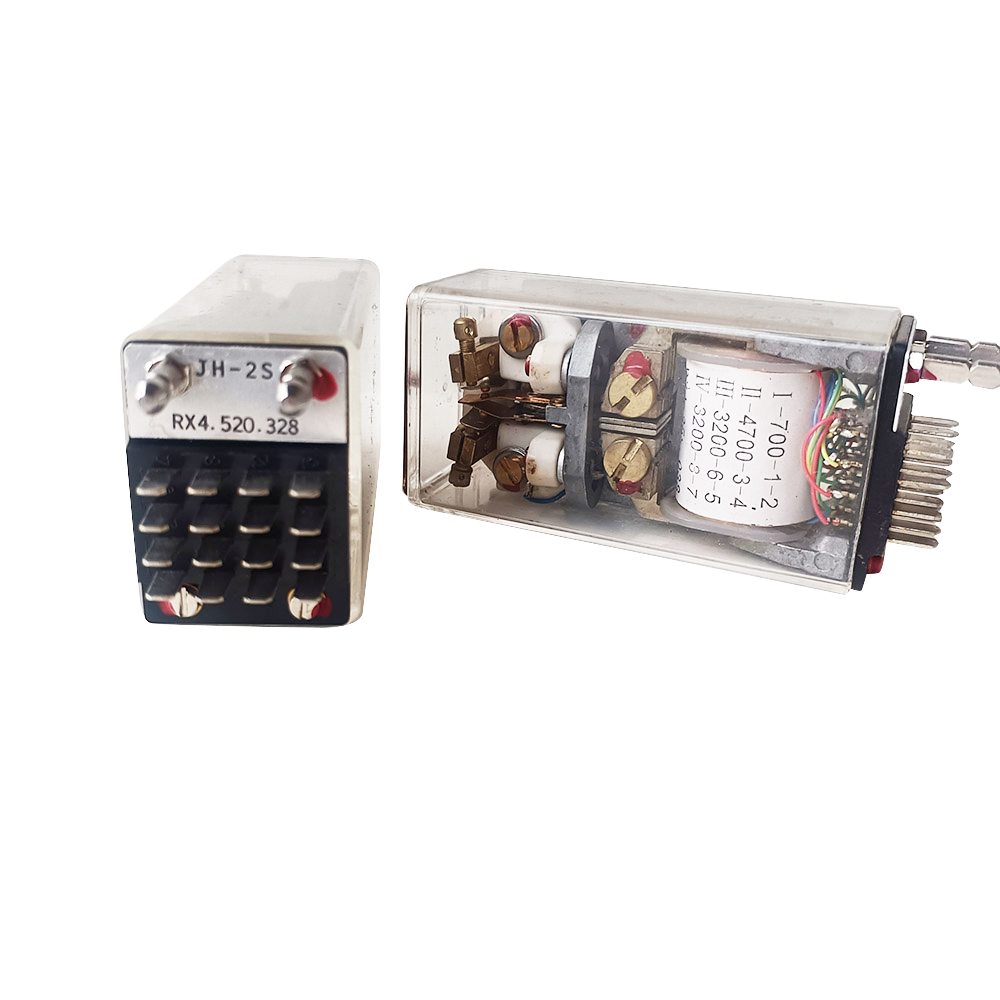
As military systems become more connected and intelligent, cybersecurity threats have expanded beyond traditional IT networks to target the physical hardware that controls critical functions. For procurement managers, securing components like Military Aviation Relays, Aviation Sensors, and power controllers is no longer an optional feature—it's a fundamental requirement for system integrity and operational safety. This guide examines the unique cybersecurity challenges at the component level, outlining strategies to mitigate risks for everything from a High Quality Aviation Engine control unit to a simple Aviation Fuse with embedded electronics.
The Expanding Attack Surface: From Network to Component
The convergence of operational technology (OT) and information technology (IT) means that a vulnerability in a single smart component can be exploited to compromise an entire platform. An attack could manipulate data from a sensor to cause system malfunctions, issue unauthorized commands to a Military Aviation Contactor to disable power, or implant malware in a firmware update that lies dormant for years.
Unique Cybersecurity Challenges at the Component Level:
- Long Lifecycles & Legacy Systems: Components may remain in service for decades, often with limited capacity for security updates, making them "low and slow" targets.
- Supply Chain Compromise: Threats can be introduced at any point—design, manufacturing, distribution, or maintenance—through counterfeit parts, malicious implants, or compromised firmware.
- Resource Constraints: Many embedded components have limited processing power and memory, making implementation of robust cryptographic defenses challenging.
- Physical Access & Side-Channel Attacks: Adversaries with physical access to a component can probe it to extract cryptographic keys or reverse-engineer its design.
Critical Cybersecurity Requirements for Modern Military Components
Procurement specifications must evolve to mandate built-in security for all components with digital interfaces or programmability.
1. Secure Identity and Authentication
Every component must prove it is genuine and authorized.
- Hardware Root of Trust (HRoT): A dedicated, immutable security chip (e.g., Trusted Platform Module) embedded in components like smart Aviation Sensors or power controllers to store cryptographic keys and perform secure boot.
- Unique Cryptographic Identifiers: Each component should have a factory-programmed, unclonable identity (e.g., using PUF - Physically Unclonable Function technology) to prevent counterfeiting and enable secure network join.
2. Secure Communications and Data Integrity
Data in transit must be protected from eavesdropping and tampering.
- Encryption: Mandating strong, standards-based encryption (e.g., AES-256) for any data transmitted by the component, whether over a data bus or wireless link.
- Message Authentication Codes (MACs): Ensuring that commands sent to a Military Aviation Relay or data from a meter (Aviation Meter for Drone) have not been altered in transit.
3. Secure Firmware and Software
The component's internal code must be protected and verifiable.
- Secure Boot & Firmware Validation: The component must cryptographically verify the integrity and authenticity of its firmware before execution, preventing the loading of malicious code.
- Secure & Authenticated Updates: Over-the-air (OTA) or wired firmware update processes must be encrypted, signed, and rollback-protected to prevent downgrade attacks.
- Software Bill of Materials (SBOM): Suppliers should provide a detailed list of all software/firmware components (including open-source libraries) and their versions for vulnerability tracking.
Industry Trends and the Russian Security Paradigm
New Technology R&D and Application Dynamics
Innovation is focused on hardening hardware against sophisticated threats and managing supply chain risks.
- Quantum-Resistant Cryptography (PQC): Preparing for future threats by developing and testing cryptographic algorithms that are secure against attacks from quantum computers.
- Hardware Security Testing & Certification: Rise of specialized labs offering penetration testing and certification (e.g., following ISO 21434, Common Criteria) for electronic components.
- Zero-Trust Architecture for Embedded Systems: Applying zero-trust principles ("never trust, always verify") at the component level, requiring continuous authentication and micro-segmentation of internal component networks.
Insight: Top 5 Cybersecurity Priorities for Russian & CIS Military Components
Russia's approach is characterized by technological sovereignty, strict control, and a focus on offensive/defensive parity.
- Sovereign Cryptographic Standards and Algorithms (ГОСТ): Mandatory use of Russian-developed and certified cryptographic algorithms (e.g., ГОСТ 28147-89, ГОСТ Р 34.11-2012) and hardware, rejecting Western standards (AES, RSA) for sensitive applications.
- Full Domestic Design and Production for Critical Path Items: For components in command, control, and weapons systems, the goal is complete in-country design and fabrication to eliminate foreign backdoors and supply chain interdiction.
- Integration with National Cyber Defense and Monitoring Systems: Components must be capable of integrating with Russian military cyber defense suites and reporting anomalies to centralized monitoring systems as per doctrine.
- Rigorous State Certification by FSTEC/FSB: Any component with cybersecurity relevance requires mandatory certification by the Federal Service for Technical and Export Control (ФСТЭК) or the FSB, a lengthy process that validates compliance with national standards.
- Focus on Electronic Warfare (EW) and EMP Resilience: Cybersecurity extends to the physical layer: components must be hardened to resist disruption or damage from directed electromagnetic energy (EW) and electromagnetic pulses (EMP), which are seen as integral to cyber-physical attacks.
A Framework for Procuring Cyber-Secure Components
Procurement teams must adopt a rigorous, security-first evaluation process:
- Incorporate Security into the Request for Proposal (RFP):
- Explicitly require compliance with standards like NIST SP 800-171, ISO/SAE 21434, or relevant GOST standards. Demand a detailed cybersecurity features matrix.
- Conduct Deep Supplier Vetting and Audits:
- Audit the supplier's own cybersecurity practices, secure development lifecycle (SDL), and supply chain security controls. Are their firmware build servers isolated?
- Require Detailed Security Documentation:
- Demand a Security Target or Protection Profile, a Software Bill of Materials (SBOM), and threat analysis reports for the component.
- Mandate Independent Testing and Certification:
- Require components to be tested by an accredited third-party lab for vulnerabilities (penetration testing, side-channel analysis) and hold relevant certifications.
- Establish Secure Lifecycle Support Agreements:
- Contractually bind the supplier to provide security patches for the component's entire supported lifecycle and to have a defined process for vulnerability disclosure and management.
YM's Approach to Cyber-Secure Component Design
At YM, we design security into our components from the silicon up, understanding that our products form the trusted foundation of complex, networked platforms.
Manufacturing Scale and Facilities: A Controlled and Auditable Environment
Our production of security-sensitive components takes place in access-controlled areas. We implement hardware security modules (HSMs) to manage the injection of cryptographic keys during manufacturing. Our supply chain for programmable chips is tightly controlled and audited to prevent tampering. Crucially, we maintain a secure, air-gapped network for our firmware development and signing infrastructure, ensuring the integrity of the code loaded onto every smart contactor or sensor.
R&D and Innovation: The "Y-SHIELD" Security Core
Our central cybersecurity innovation is the "Y-SHIELD" embedded security core. This is a proprietary, self-contained semiconductor module we design into our intelligent components. The Y-SHIELD provides:
- A hardware root of trust with a factory-provisioned unique identity.
- A dedicated cryptographic accelerator for GOST and AES algorithms.
- Secure storage for keys and certificates.
- A tamper-detection mesh that zeroizes keys if the component housing is physically breached.
This allows even our smallest smart sensors to have enterprise-grade security without taxing the main processor.
Key Standards and Regulations
Compliance with these frameworks is essential for market access and risk mitigation:
- ISO/SAE 21434: Road vehicles — Cybersecurity engineering: While automotive-focused, its risk management framework is increasingly adopted for military ground vehicle components.
- NIST SP 800-171: Protecting Controlled Unclassified Information in Nonfederal Systems: Mandatory for U.S. DoD suppliers and a benchmark for handling sensitive data.
- DO-326A/ED-202A: Airworthiness Security Process Specification: The aviation-specific standard for ensuring security throughout an aircraft system's lifecycle.
- Common Criteria (ISO/IEC 15408): An international framework for evaluating security features of IT products, applicable to secure components.
- ФСТЭК Orders & GOST Standards (e.g., ГОСТ Р 57580): The mandatory Russian regulatory framework for information security of critical infrastructure components.
- DFARS 252.204-7012 (U.S.): Requires implementation of NIST SP 800-171 and reporting of cyber incidents.
Frequently Asked Questions (FAQ)
Q: Can a "dumb" component like a basic electromechanical relay or an Aviation Fuse be a cybersecurity risk?
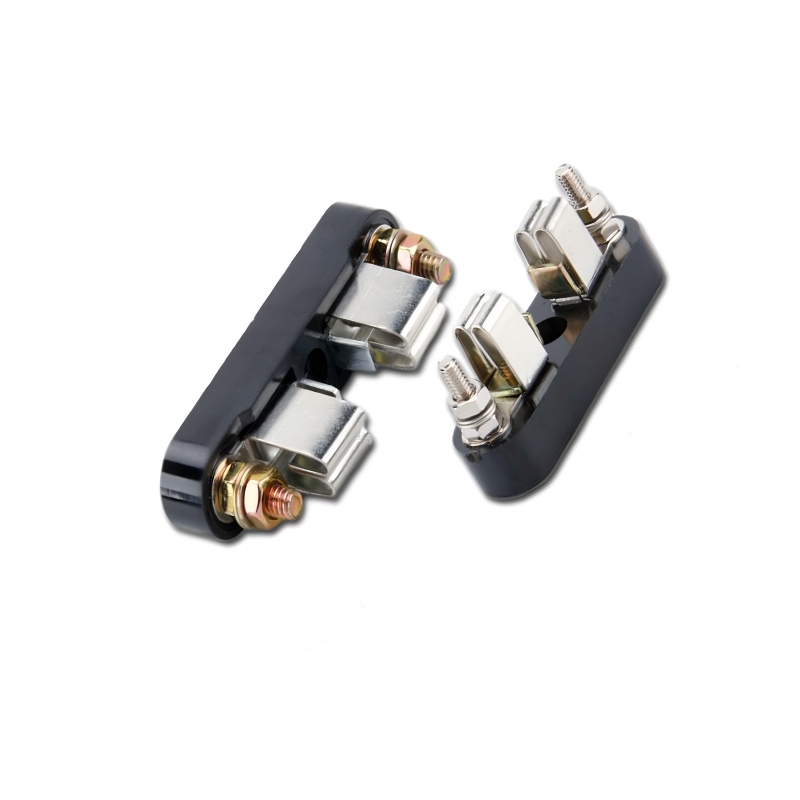
A: Yes, indirectly. While the component itself may have no digital logic, it can be part of a cyber-physical attack. For example, a corrupted control system could send continuous switch commands to a Military Aviation Relay until it fails thermally. Or, a counterfeit Aviation Fuse with incorrect ratings could be substituted during maintenance, causing it to fail to protect a circuit during a fault induced by a cyber attack. Cybersecurity for "dumb" components focuses on supply chain integrity (anti-counterfeit measures) and system-level design to limit damage from malicious control signals.
Q: How do we manage firmware updates and security patches for components deployed in remote or airborne platforms with limited connectivity?
A: This requires a robust, staged update strategy.
- Golden Copy & Secure Storage: Maintain a cryptographically signed "golden copy" of the current and previous firmware version on the platform.
- Delta Updates: Transmit only the differences between firmware versions to save bandwidth.
- Maintenance Window Updates: Schedule updates for when the platform is in a maintenance bay with a direct, wired connection—the most secure method.
- Rollback Capability: Ensure the component can safely revert to the previous version if an update fails or causes issues.