
Military Component Testing Equipment Guide: Ensuring Compliance and Reliability
For B2B procurement managers in defense, aerospace, and heavy industry, verifying the performance and reliability of military components like Military Aviation Contactors, Aviation Fuses, and Aviation Sensors is paramount. The right testing equipment is not just a quality assurance tool—it's a risk mitigation strategy that ensures compliance, predicts field performance, and protects multi-million dollar platforms. This guide categorizes essential testing equipment, outlines procurement considerations, and explains how rigorous testing underpins the value of every component, from a simple Aircraft Contractor to a complex High quality Aviation Engine control module.
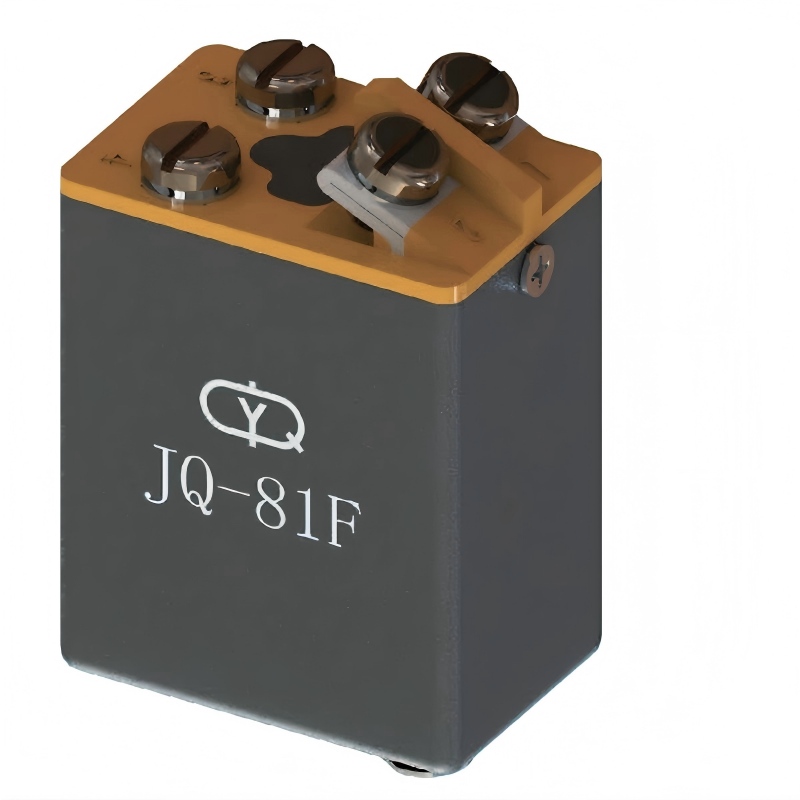
Essential Testing Equipment Categories
A comprehensive test strategy requires equipment to validate electrical, mechanical, and environmental performance against military standards.
1. Electrical Performance Testers
These verify the core electrical functionality of components.
- High-Precision Multimeters & Data Acquisition Systems (DAQs): Measure voltage, current, resistance, and continuity with traceable accuracy. Critical for verifying coil resistance of a Military Aviation Relay or output signals from an Aviation Sensor.
- High-Potential (Hipot) / Dielectric Withstand Testers: Apply high voltage (AC or DC) between conductors and ground to verify insulation integrity. A mandatory test for components like Aviation Fuses and connector assemblies per MIL-STD-202.
- Contact Resistance Testers (Micro-ohmmeters): Measure the very low resistance of closed contacts in relays and contactors. A rising resistance indicates contact wear or contamination.
- Programmable Power Supplies & Load Banks: Simulate real-world electrical conditions—varying voltage (MIL-STD-704 tests), applying inrush currents, and providing adjustable loads to test components under stress.

2. Environmental Stress Test Chambers
These simulate the harsh conditions components must survive.
- Thermal Shock & Temperature Cycling Chambers: Rapidly transition components between extreme high and low temperatures (e.g., -55°C to +125°C) per MIL-STD-810 to uncover material fatigue and solder joint failures.
- Vibration and Shock Test Systems: Electrodynamic shakers and shock machines that reproduce the vibration profiles (sine, random) and shock pulses experienced in aircraft, vehicles, and munitions.
- Salt Spray (Fog) Chambers: Create a corrosive salt atmosphere per MIL-STD-810, Method 509, to test the corrosion resistance of finishes and seals—critical for naval aviation components.
- Altitude / Low-Pressure Chambers: Simulate high-altitude conditions to test for arcing, corona discharge, and outgassing of materials.
3. Specialized Functional Testers
Equipment designed for specific component types.
- Relay & Contactor Cycle Testers: Automate the repetitive switching of relays and contactors for life testing (e.g., 100,000 cycles) while monitoring contact timing, bounce, and state.
- Sensor Simulators & Calibration Rigs: Generate precise physical stimuli (pressure, temperature, displacement) to calibrate and verify the output of Aviation sensors and meters like an Aviation Meter for Drone.
- Time-Current Characteristic (TCC) Testers for Fuses: Precisely measure the melting time of fuses at various overload currents to verify they match published curves (per SAE AS5692).

Procurement Guide: Selecting Test Equipment for Your Needs
Whether setting up an in-house lab or evaluating a supplier's capabilities, consider these factors.
5-Step Selection Framework:
- Define Your Test Requirements:
- List the specific MIL-STDs (e.g., 810, 461, 704) or internal specs you must meet.
- Identify the component types (relays, sensors, connectors) and their key parameters.
- Determine test throughput needs (R&D, production sampling, 100% testing).
- Prioritize Accuracy and Traceability:
- Equipment must have calibrations traceable to national standards (NIST, UKAS).
- For chambers, validate uniformity and stability of the environmental condition.
- Evaluate Automation and Software:
- Can tests be programmed and results logged automatically? This reduces human error and creates auditable records.
- Look for equipment with interfaces (LAN, USB) for easy data extraction.
- Consider Total Cost of Ownership (TCO):
- Include cost of calibration, maintenance, fixturing, and operator training.
- Modular systems may offer better long-term flexibility than monolithic ones.
- Assess Vendor Support and Training:
- Choose vendors known for strong technical support, application engineering, and comprehensive operator training.
Latest Trends in Component Testing Technology
Innovations Driving Efficiency and Insight
- Integrated "Smart" Test Platforms: Systems that combine multiple test functions (electrical, thermal, vibration) into one coordinated platform, reducing handling time and providing correlated data for failure analysis.
- Non-Destructive Testing (NDT) Advances: Wider use of automated X-ray inspection (AXI) to see internal solder joints in PCBs, and phased-array ultrasonics to detect voids in potting or bonding of critical Aviation sensor assemblies.
- Predictive Analytics and AI in Testing: Using machine learning algorithms on test data to predict component lifespan, identify subtle failure precursors, and optimize test parameters, moving from pass/fail to health forecasting.
- Portable and Ruggedized Field Test Kits: Development of compact, battery-operated testers for depot-level or forward maintenance of systems like Aircraft Engine controllers, enabling verification without removing the unit.
- Digital Twins for Virtual Testing: Creating a high-fidelity digital model of a component to simulate its performance under various stresses before physical prototypes are built, accelerating development.

Focus: Russian & CIS Market Testing and Certification Expectations
Supplying to this region involves specific validation and documentation requirements.
- GOST Testing Standards Equivalence: Test equipment and procedures must often be capable of meeting GOST environmental test standards (like GOST 28196 for climate), which can have different profiles than MIL-STD-810.
- Certification by Russian Authorities: Test equipment used for product certification may itself need to be registered or verified by Russian metrology institutes (like VNIIMS).
- Russian-Language Calibration Certificates: All calibration certificates for test equipment must be officially translated into Russian and follow GOST R 8.xxx formats for legal acceptance.
- Focus on Extreme Cold Testing: A greater emphasis on deep cold testing capabilities (down to -70°C) and testing of cold-start performance for electromechanical devices.
- On-Site Audit of Test Capabilities: Russian procurement agencies often conduct physical audits of a supplier's test facilities and equipment as part of the qualification process.
Key Military Testing Standards
Understanding the relevant standards dictates equipment requirements.
- MIL-STD-810: Environmental Engineering Considerations and Laboratory Tests. The bible for environmental testing.
- MIL-STD-202: Test Method Standard for Electronic and Electrical Component Parts. Covers basic environmental and physical tests like vibration, shock, and solderability.
- MIL-STD-461: Requirements for the Control of Electromagnetic Interference Characteristics. Requires specialized EMI test chambers and receivers.
- MIL-STD-704: Aircraft Electric Power Characteristics. Requires power supplies that can simulate abnormal aircraft power conditions.
- MIL-PRF-xxx Series: Each performance spec (e.g., MIL-PRF-6106 for relays) contains its own qualification and acceptance test requirements.
YM's Investment in Test Infrastructure and Data Integrity
At YM, we consider our test laboratories a core component of our product offering. Our on-site, accredited test facility spans over 3,000 sqm and includes a multi-axis vibration system capable of testing full rack-mounted assemblies, a large walk-in thermal chamber for testing Aircraft Engine sub-systems, and a dedicated, shielded chamber for MIL-STD-461 EMI/EMC testing. This allows us to conduct full qualification and production acceptance testing in-house, ensuring control and speed.
Our Quality and R&D teams have developed proprietary AutoTest™ Sequencing Software that orchestrates tests across different equipment. For example, when life-cycling a Military Aviation Contactor, it simultaneously commands the cycle tester, monitors contact resistance with a micro-ohmmeter, and logs temperature from thermal cameras—all correlated in time. This holistic view allows our engineers to identify failure modes that isolated testing would miss, directly feeding improvements back into our designs and manufacturing processes.

Practical Guide: Setting Up a Component Test Protocol
Steps to Develop a Test Plan:
- Identify Critical-to-Function Parameters: For a Military Aviation Relay, this includes pull-in/drop-out voltage, contact resistance, insulation resistance, and operate/release time.
- Map Parameters to Test Methods: Determine which equipment and standard test method (e.g., MIL-STD-202 Method 307 for insulation resistance) will be used for each.
- Define Pass/Fail Criteria: Set explicit, numeric limits for each measurement based on the component specification (e.g., contact resistance < 50 milliohms).
- Design Test Fixtures: Create safe, repeatable fixtures that properly interface the component with the test equipment without influencing the results.
- Document the Procedure: Create a detailed, step-by-step test procedure document that any trained technician can follow. Include safety warnings.
- Validate and Correlate: Run the procedure on known-good and known-bad samples to ensure it correctly identifies both.
Common Testing Pitfalls to Avoid:
- Inadequate Fixturing: A poorly designed fixture can add resistance, capacitance, or stress, invalidating results.
- Ignoring Grounding in Measurements: Improper grounding leads to noisy signals and inaccurate readings, especially in low-voltage sensor circuits.
- Test Condition Drift: Not monitoring chamber temperature or supply voltage stability during a long test can lead to non-compliant conditions.
- Lack of Calibration: Using equipment outside its calibration interval voids all test data and any certifications based on it.

FAQ: Military Component Testing Equipment
Q: What's the difference between qualification testing and production acceptance testing?
A: Qualification Testing is a rigorous, one-time (or periodic) battery of tests on a small sample to prove the design meets all requirements of the MIL-SPEC. It's destructive and comprehensive. Production Acceptance Testing is a streamlined set of non-destructive tests (e.g., continuity, hipot, functional check) performed on 100% of production units to catch manufacturing defects. YM performs both in our facilities.
Q: Do I need MIL-STD-461 testing for a simple passive component like a fuse?
A: Possibly, depending on the application. While the fuse itself may not emit EMI, its installation in a sensitive avionics bay requires it not to be susceptible to radiated fields which could cause unintended heating. The system integrator's EMI control plan will specify requirements for all components. It's best to consult the applicable system specification.
Q: Can I use commercial environmental chambers for MIL-STD-810 testing?
A: You can, but they must be capable of achieving and controlling the specific profiles called out in the standard (rapid temperature transition rates, specific vibration spectra). Many commercial chambers are not designed for the extreme rates or controller fidelity required. The chamber's performance must be validated, not just its brochure specs.


