
Military Electronics Environmental Testing Guide: Ensuring Resilience from Lab to Battlefield
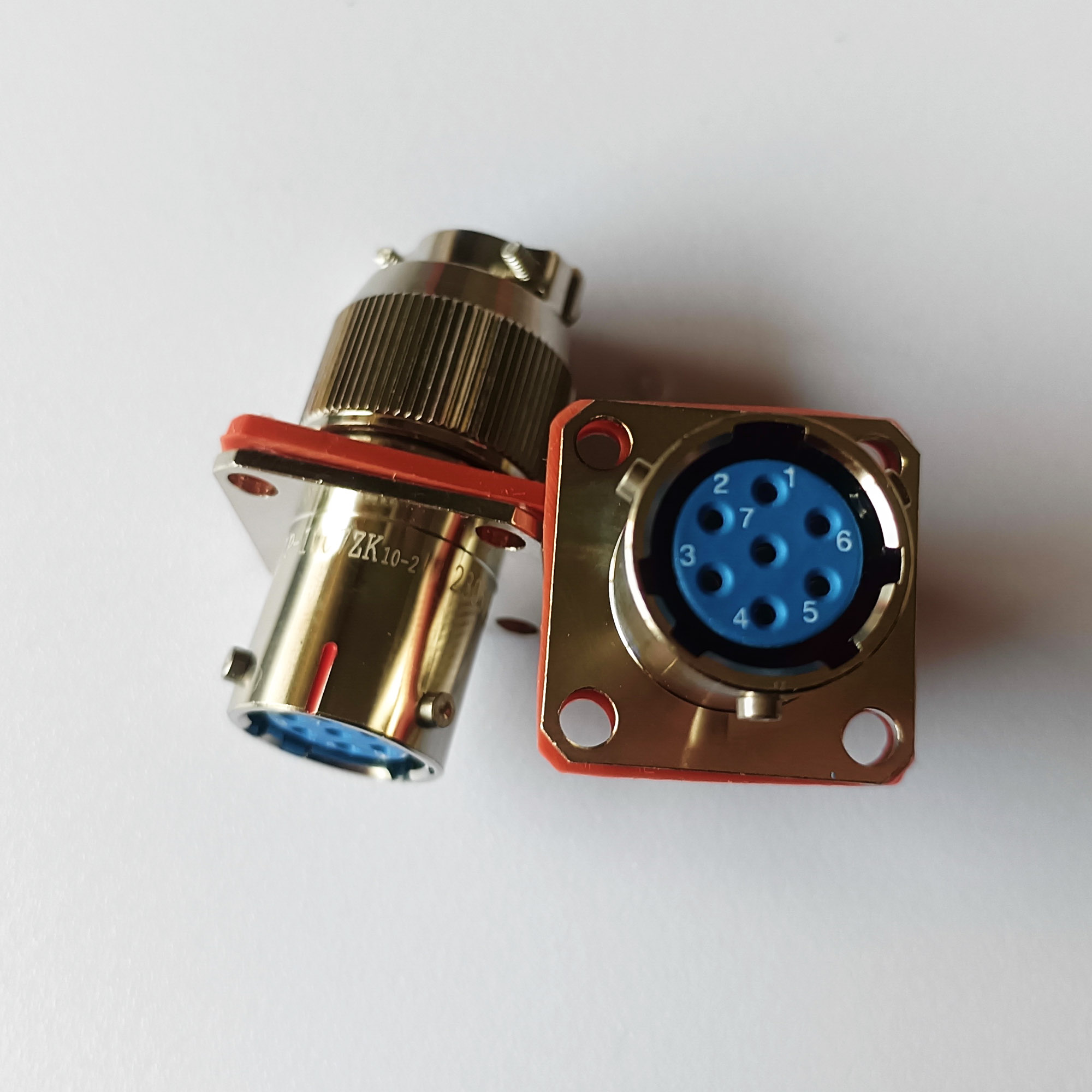
For procurement managers and design engineers in the defense aerospace sector, environmental testing is the definitive proving ground for component reliability. It transforms a theoretical specification into demonstrated performance under the harshest conditions imaginable. This comprehensive guide explores the methodologies, standards, and strategic importance of environmental testing for military electronics such as military Aviation Contactors, relays, fuses, sensors, and meters. Understanding this process is crucial for evaluating suppliers, mitigating program risk, and ensuring that components for high quality aviation engine controls, UAVs, and next-generation platforms will survive and operate as intended in real-world operational environments.
The Philosophy and Purpose of Military Environmental Testing
Military testing goes far beyond commercial qualification. Its core philosophy is to uncover failure modes before deployment by simulating a lifetime of operational stress in an accelerated, controlled laboratory setting. The goal is not just to see if a component works, but to understand how and when it might fail.
Core Objectives of the Testing Regime
- Validate Design Margins: Prove that the component can withstand conditions beyond its specified operational limits.
- Screen for Manufacturing Defects: Use stresses like thermal cycling and vibration to precipitate early-life failures (infant mortality) in production units.
- Assess Long-Term Reliability: Simulate years of wear and environmental exposure to predict mean time between failures (MTBF).
- Verify Interoperability: Ensure components like an aircraft contractor or Aviation Sensor function correctly when subjected to the same environmental stresses as the system around them.
Key Test Standards and Methodologies: A Deep Dive
The cornerstone of military environmental testing is MIL-STD-810, "Environmental Engineering Considerations and Laboratory Tests." Its "tailored testing" approach focuses on replicating the life-cycle environmental profile of the specific platform.
1. Climatic Environmental Tests
These tests verify performance across global extremes.
- Low Pressure (Altitude) - Method 500: Tests for dielectric breakdown, arcing, and outgassing at altitudes up to 100,000+ feet. Critical for aviation meters and avionics.
- Temperature Extremes - Methods 501 (High) & 502 (Low): Storage and operational tests from -65°C to +125°C+ for components like Military Aviation Relays to ensure materials don't embrittle, seals don't fail, and electrical parameters remain stable.
- Temperature Shock - Method 503: Rapid transitions between extreme temperatures to test for solder joint cracks, delamination, and seal integrity.
- Humidity - Method 507: Cyclic humidity exposure to provoke corrosion, fungal growth, and insulation degradation.
2. Dynamic (Mechanical) Environmental Tests
These simulate the intense physical forces of military operation.
- Vibration - Method 514: Applies broadband random vibration profiles simulating jet engine noise, turbulent airflow, and track/travel vibration. This is the most critical test for aviation fuses and connectors to prevent fatigue failure and contact chatter.
- Shock - Method 516: Simulates explosive shocks (munitions firing), crash impacts, or transportation drops. Verifies structural integrity of aircraft engine sensor mounts and relay housings.
- Acceleration (Steady-State) - Method 513: Tests for performance under sustained high-G forces.
3. Natural and Induced Environmental Tests
Tests for specific climatic and battlefield threats.
- Salt Fog - Method 509: Assesses corrosion resistance of materials and finishes, vital for naval aviation and coastal operations.
- Sand & Dust - Method 510: Validates sealing effectiveness for components used in desert environments or on aviation sensor for drone platforms operating in arid regions.
- Fluid Contamination - Method 504: Tests resistance to fuels, lubricants, and cleaning solvents.
- Solar Radiation (Sunshine) - Method 505: Evaluates UV degradation of plastics and coatings.
4. Electrical and Electromagnetic Tests (MIL-STD-461/464)
While separate from MIL-STD-810, these are integral to the environmental suite, ensuring components don't emit harmful interference and are immune to the platform's electromagnetic environment (lightning, radar, comms).
Industry Trends and Evolving Test Paradigms
New Technology and Application Dynamics: Digital Twins and HALT/HASS
Advanced testing now incorporates Digital Twin simulation to predict failure modes before physical prototypes are built. Furthermore, Highly Accelerated Life Testing (HALT) and Highly Accelerated Stress Screening (HASS) are used proactively during design and production. These methods apply stresses far beyond specification limits (e.g., extreme rapid thermal cycling, multi-axis vibration) to find design weaknesses and screen production units, building in extraordinary reliability for components like next-generation high quality aviation power contactors.
Industry Trend Analysis: Multi-Domain and Combined Environment Testing
The frontier of testing is applying multiple stresses simultaneously. Real-world conditions are not sequential. A component may experience vibration while at high temperature and low pressure. Modern test chambers and methodologies are evolving to combine temperature, vibration, humidity, and electrical bias concurrently, providing a much more accurate and punishing assessment of a component's true resilience for applications on Train, Plane, and hypersonic platforms.

Procurement Perspective: The Russian Defense Sector's Testing Mandates
For Russian military procurement, environmental testing is a matter of national standard compliance and deep technical validation:
- Mandatory GOST Equivalency and Certification: Components must be tested and certified to the relevant Russian GOST standards (e.g., GOST R 54073 for Aviation Equipment tests, GOST 30630 for vibration). A test report showing only MIL-STD-810 compliance is insufficient without formal cross-certification by a Russian state-accredited laboratory.
- Extended "Northern" and "Arctic" Test Profiles: Requires specific, prolonged testing at extreme cold temperatures (below -65°C) with operational cycles, focusing on material brittleness, lubricant solidification, and battery/display performance for aviation meters and controls.
- Witnessed Testing and Source Data Review: Contractual right for Russian military representatives to witness critical tests (e.g., vibration, temperature shock) at the supplier's facility and to review all raw test data, not just summary reports.
- Emphasis on Mechanical Robustness and Maintenance: High priority on tests simulating rough handling during field maintenance (shock, drop tests) and resistance to contamination from specific fluids used in Russian platforms.
- Full "Test-To-Failure" Data for Critical Components: For items like a military Aviation Contactor, buyers may require HALT-style testing to establish the actual operational limits and safety margins, providing deeper insight into the component's robustness than a simple pass/fail against a standard.
The Testing Workflow: From Plan to Report
Step-by-Step Testing Process
- Test Plan Development: Based on the system's environmental lifecycle profile, defining which methods, severities, and pass/fail criteria apply.
- Pretest Inspection and Functional Test: Document the unit's baseline condition and performance.
- Test Execution: Conduct tests in a logical sequence (often climatic before dynamic). Monitor performance during stress where possible.
- Intermediate and Post-Test Functional Tests: Verify the unit still operates to specification after each major test segment and at the conclusion of the entire sequence.
- Failure Analysis and Reporting: If a failure occurs, perform root cause analysis. The final test report must detail procedures, equipment calibration, results, and any anomalies.
Interpreting Test Results for Procurement
A "pass" is the minimum. Savvy procurement managers look deeper:
Margin Analysis: How close were the performance parameters to their limits during test?
Failure Mode: If a sample failed, was it a random component or a design weakness?
Test Laboratory Accreditation: Was testing done by an accredited, independent lab or the supplier's in-house facility? Accreditation (e.g., A2LA to ISO/IEC 17025) adds credibility.
Suppliers like YM provide transparent, comprehensive test reports as part of their technical compliance dossier.
YM's Integrated Test and Validation Infrastructure
In-House, Accredited Environmental Test Laboratory
To guarantee control and speed, YM operates a dedicated on-site environmental test laboratory within our defense production campus. Equipped with state-of-the-art chambers for temperature, humidity, altitude, and salt fog, as well as multi-axis electrodynamic shakers, we can perform the full suite of MIL-STD-810 and GOST tests. This allows for iterative design validation and 100% production screening of critical components like military aviation relays and Aviation Sensors, ensuring every shipped unit has proven its resilience.

R&D Focus: Predictive Testing and Material Validation
Our R&D partnership with material science institutes focuses on pre-emptive validation. We subject new material formulations and sealing technologies to accelerated aging tests equivalent to decades of service. This research has led to patented connector sealing techniques and high-temperature insulator materials that consistently outperform standard requirements in prolonged humidity and thermal cycling tests—directly contributing to the legendary reliability of our aircraft contractor products in the most challenging aircraft engine bay environments.
Frequently Asked Questions (FAQ)
Q1: What is the difference between qualification testing and acceptance testing?
A: Qualification Testing is performed on a small sample of units from the first production batch to verify that the design meets all requirements. It is typically more comprehensive and severe. Acceptance Testing (or Lot Acceptance Testing) is performed on a statistical sample from every production lot to verify that the manufacturing process remains consistent and the lot is free of defects. Both are required for military components.
Q2: How long does a full MIL-STD-810 qualification test program typically take?
A: The duration varies dramatically based on the component's complexity and the number of applicable test methods. A comprehensive test program for a critical aviation sensor or Aviation Fuse can take anywhere from 8 to 20 weeks of actual chamber and rig time, not including planning, fixturing, and reporting. This underscores the importance of selecting suppliers with a proven, efficient test infrastructure.
Q3: Can a component pass all individual environmental tests but fail in real operation?
A: Yes, if the test profile does not accurately simulate the real operational environment (e.g., missing a key stress or sequence) or if interactions between stresses (a combined environment effect) are not considered. This is why the trend towards tailored and combined environment testing, based on actual platform data, is so critical. It's also why procurement should favor suppliers with deep application experience in similar platforms.
References and Further Reading
1. U.S. Department of Defense. (2019). MIL-STD-810H: Environmental Engineering Considerations and Laboratory Tests. Washington, D.C.: DODSSP.
2. U.S. Department of Defense. (2020). MIL-STD-461G: Requirements for the Control of Electromagnetic Interference Characteristics of Subsystems and Equipment. Washington, D.C.: DODSSP.


