
Military Fuse Safety Standards Overview: Ensuring Mission-Critical Reliability in Harsh Environments
In military aerospace applications, circuit protection is not just about preventing wire damage—it's about ensuring mission success, platform survivability, and crew safety in the world's most demanding conditions. Compliance with Military Fuse Safety Standards is the non-negotiable foundation for any component integrated into military aviation fuses & fuse holders systems. This guide provides a comprehensive overview of key military standards, explains their stringent requirements, and translates their implications for B2B procurement managers sourcing components for defense platforms, next-generation aircraft engine controls, and ruggedized aviation fuses & fuse holders for drone systems.
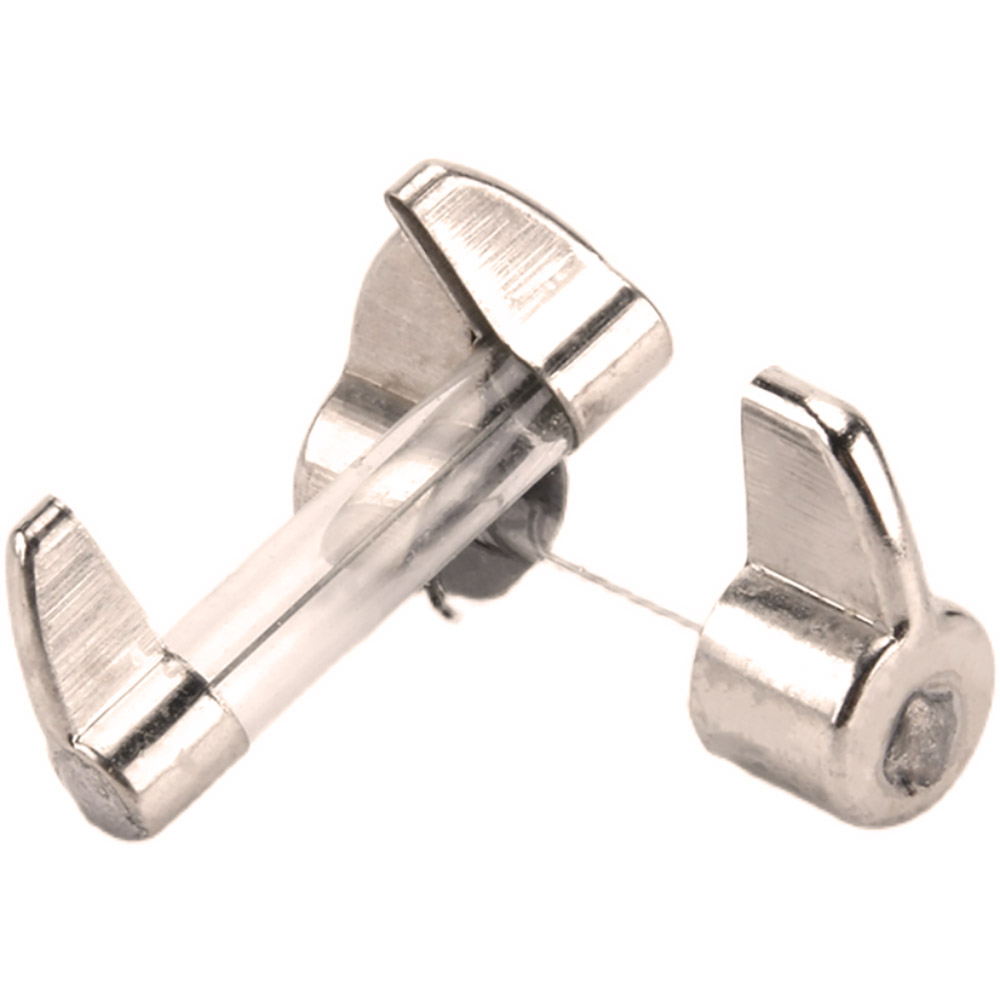
The Philosophy Behind Military Safety Standards
Military standards are built on a foundation of extreme reliability, environmental ruggedness, and full traceability. They assume operation in conditions far beyond commercial aviation norms: extended temperature ranges, severe vibration, shock from weapons fire or hard landings, sand/dust, salt fog, and high-altitude operation.
Core Objectives of Military Fuse Standards
- Predictable Failure Mode: Ensure the fuse fails in a safe, contained manner under all fault conditions, preventing fire or shrapnel.
- Environmental Survivability: Guarantee performance before, during, and after exposure to extreme operational and storage environments.
- Zero Defect Mentality: Eliminate infant mortality failures through rigorous screening and testing protocols.
- Full Lifecycle Traceability: Every component must be traceable from raw material to installed unit, supporting maintenance and accident investigation.
Key Military Standards and Their Specific Mandates
1. MIL-PRF-23419: The Performance Specification Cornerstone
This is the primary performance specification for cartridge fuses in military applications. It doesn't just state requirements—it defines how to test them.
- Electrical Performance: Detailed requirements for current rating accuracy, time-current characteristics, cold resistance, and dielectric withstand voltage.
- Interrupting Rating Test: Mandates that sample fuses must successfully interrupt a specified high-fault current at both minimum and maximum rated voltages, proving they can safely handle worst-case short circuits.
- Construction and Materials: Specifies materials for elements, end caps, and tubes. Prohibits materials that could degrade or outgas in a way that affects performance.
- Lot Acceptance Testing: Requires destructive and non-destructive tests on samples from each production lot before release.
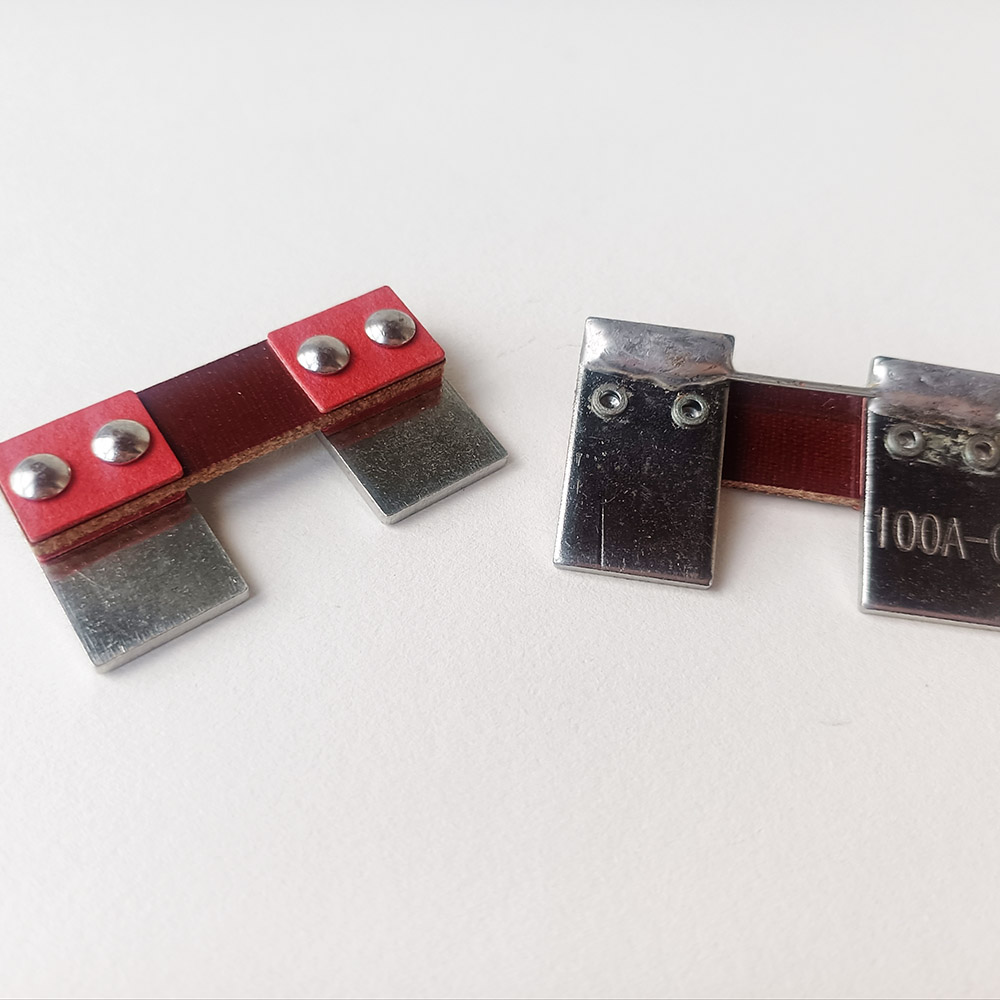
2. MIL-STD-810: Environmental Engineering Considerations
This overarching standard subjects fuses to conditions simulating a military lifecycle. Relevant methods include:
- Method 500 - Low Pressure (Altitude): Tests performance and safe interruption at altitudes up to 70,000+ feet.
- Method 514 - Vibration: Applies broadband random vibration profiles simulating aircraft engine and airframe environments to ensure internal elements don't fatigue or shift.
- Method 507 - Humidity & Method 509 - Salt Fog: Validate that corrosion or moisture ingress does not affect electrical characteristics or cause premature failure.
- Method 501/502 - High/Low Temperature: Tests storage and operational performance at extreme temperatures (e.g., -65°C to +125°C).
3. MIL-STD-202 & MIL-STD-750: Test Methods for Electronic Components
These provide additional test methods for environmental and physical durability, such as terminal strength, solderability, and resistance to solvent exposure.
4. MIL-STD-881 and Traceability Requirements
Emphasizes the work breakdown structure and the absolute necessity of configuration management and traceability. A fuse without a complete certificate of conformance (C of C) tracing it back to its material batches is unusable in a military system.
Industry Trends and Evolving Safety Paradigms
New Technology R&D: Beyond Passive Components
The future of military circuit protection includes Hybrid Fuse-SSPC Modules. These combine a traditional fuse (for ultimate fault backup) with a solid-state switch and intelligent controller. They offer arc-less, resettable operation for most faults, while the fuse provides failsafe protection. This satisfies the safety standard's requirement for reliable interruption while adding smart functionality for vehicle health management.
Industry Trend Analysis: Prognostics and Counter-Countermeasures
Modern military standards are beginning to address new threats and capabilities. This includes:
Electromagnetic Pulse (EMP) Hardening: Ensuring fuses don't falsely trigger or degrade during an EMP event.
Cybersecurity of Smart Protectors: For intelligent devices, standards are evolving to ensure their digital interfaces cannot be hacked to disable protection.
PHM Integration: The ability for protection devices to report their health and status is becoming a valuable asset, feeding into platform-wide Prognostic Health Management systems for high quality aviation assets.

Procurement Implications: The Russian Defense Sector's Rigorous Lens
For Russian military procurement, standards compliance is viewed through a stringent, practical, and bureaucratic filter:
- Formal Equivalency Certification to GOST/OST Standards: MIL-PRF-23419 compliance alone is insufficient. Suppliers must provide a formal certification from a recognized Russian state testing center (e.g., a part of Rosaviatsiya or the Ministry of Defense) stating the fuse's equivalence to the relevant Russian military standard (e.g., ГОСТ Р 53323, ОСТ 1, etc.). This process is lengthy and mandatory.
- Witnessed Testing and Source Inspection: Russian procurement contracts frequently include clauses for on-site witness testing at the supplier's facility. Their QA representatives will observe production lot tests to verify procedures match the submitted documentation.
- Extended Environmental Profile Validation: Requires test data for environmental conditions specific to Russian operational doctrines, which may exceed standard MIL-STD-810 profiles (e.g., longer duration cold soak at -65°C, specific combined environments like vibration at low temperature).
- Complete "As-Built" Documentation Package: Upon delivery of each batch, a complete dossier is required, including: C of C, material certs for all wetted parts, full test reports for that specific lot, and a statement of conformity to both the MIL and GOST standards.
- Supply Chain Sovereignty and Obsolescence Management: High priority on understanding the origin of critical raw materials (e.g., copper, silver for elements) and legally binding guarantees from the supplier to manage obsolescence, provide lifetime buy options, or offer form-fit-function replacements for the platform's entire service life (40+ years).
Operational Safety, Maintenance, and Standards Coordination
Safety-Critical Installation and Handling Practices
Standards dictate not just the component, but its use:
- Correct Holder Pairing: Fuses must be installed in holders certified to a complementary standard (e.g., MIL-F-23484). Mismatches can cause overheating.
- Torque Specifications: Terminal connections must be torqued to specified values to ensure low resistance and prevent loosening under vibration—a direct contributor to failures.
- No Substitutions: The practice of "up-fusing" or using a commercial substitute is strictly prohibited and constitutes a major safety violation.
Understanding the Hierarchy of Standards
In practice, standards work in a hierarchy:
1. System/Platform Specification: Defines the specific requirements for the aircraft or vehicle.
2. Component Performance Spec (MIL-PRF-23419): Defines how the fuse must perform.
3. Environmental Test Standard (MIL-STD-810): Defines how to prove it can survive.
4. Quality Management Standard (AS9100): Defines the processes to make it consistently.
Suppliers like YM, integrated into this hierarchy, provide a turnkey solution for compliant military aviation fuses & fuse holders.
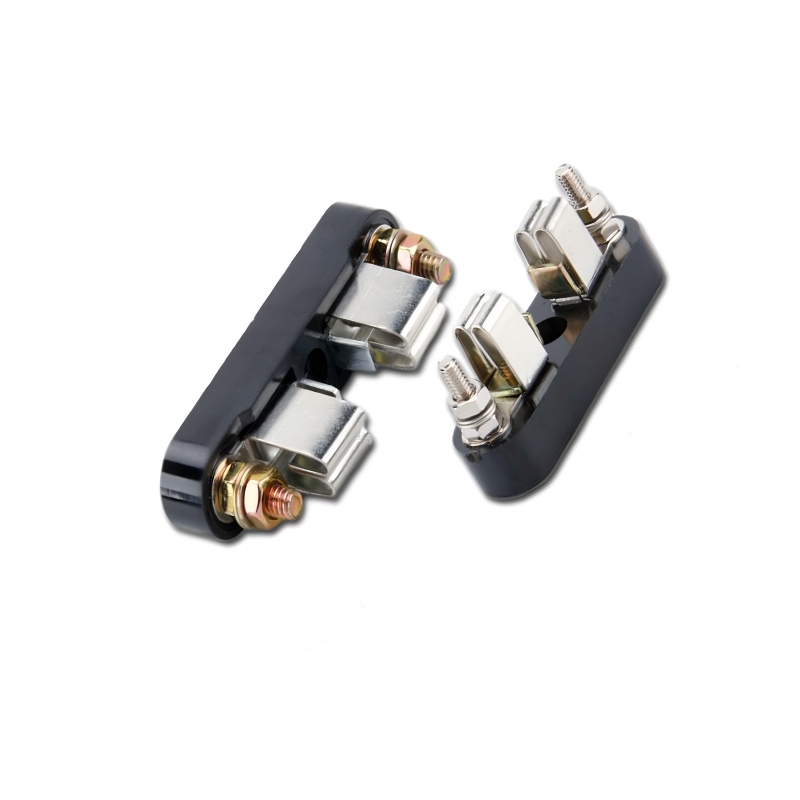
YM's Commitment to Military-Grade Excellence
Dedicated Defense Production Facility
Meeting these standards requires segregated, controlled manufacturing. Our Defense & Aerospace Division facility operates under ITAR-controlled and AS9100-certified processes. It features dedicated, calibrated test equipment for MIL-PRF-23419 lot acceptance tests, environmental chambers capable of MIL-STD-810 profiles, and a secure material handling system ensuring traceability from ingot to shipped fuse for aircraft aviation fuses & fuse holders in critical applications.

R&D for Extreme Environments and Predictive Reliability
Our military-focused R&D collaborates with defense agencies on next-gen challenges. One significant achievement is a patented "Hermetic Glass-to-Metal Seal" process used in our high-reliability fuse series. This process, proven under MIL-STD-202 Method 112 (Seal), guarantees no moisture ingress over decades, preventing internal corrosion that could alter the fuse's tripping characteristic—a critical safety factor for fuses stored for long periods in naval or arctic environments before use on Train, Plane, or missile systems.
Frequently Asked Questions (FAQ)
Q1: What is the fundamental difference between a fuse meeting MIL-PRF-23419 and a commercial fuse meeting SAE AS 21711?
A: While both are for aerospace, the military performance specification is significantly more rigorous. It mandates more severe environmental testing (broader temperature, more vibration), stricter lot acceptance testing, destructive sample testing on every lot, tighter tolerances on electrical characteristics, and full military-grade traceability. A commercial fuse may pass basic function tests but fail under the prolonged harsh conditioning required by MIL-STD-810.
Q2: Are military fuses required to be "fireproof" or contain an arc?
A: Yes, a core safety requirement. MIL-PRF-23419 requires the fuse design to safely contain the arc energy and hot gases during interruption without expelling flame or molten metal. The interrupting rating test validates this. The casing and filler material are specifically designed for this containment, which is why military fuses often have a more robust construction than commercial counterparts.
Q3: How does a procurement manager verify a supplier's claimed compliance with these standards?
A: Demand and scrutinize the following:
1. Qualification Test Report: A report from an accredited lab showing the fuse design passed all tests in the standard.
2. Lot-Specific C of C and Test Data: For the batch you are buying.
3. Supplier's Quality System Certificate: Valid AS9100 certificate.
4. Material Certifications: For the key materials used.
The absence of any of these is a red flag. Reputable suppliers like YM provide this as a standard compliance package.
References and Further Reading
1. U.S. Department of Defense. (2005). MIL-PRF-23419: Performance Specification Fuse, Cartridge, General Purpose. Washington, D.C.: DODSSP.
2. U.S. Department of Defense. (2019). MIL-STD-810H: Environmental Engineering Considerations and Laboratory Tests. Washington, D.C.: DODSSP.
3. SAE International. (2015). AS21711B: Fuses, Cartridge, General Purpose for Aerospace Applications. Warrendale, PA: SAE International. [Useful for comparison].
4. Defense Systems Information Analysis Center (DSIAC). (2021). Technical Report on Circuit Protection Technologies for Next-Generation Military Platforms.
5. Russian Federation, Ministry of Defense. (2010). ОСТ 1 00525-80: Предохранители плавкие. Общие технические условия (OST 1 00525-80: Fuses. General Specifications). [Example of a core Russian military standard].


