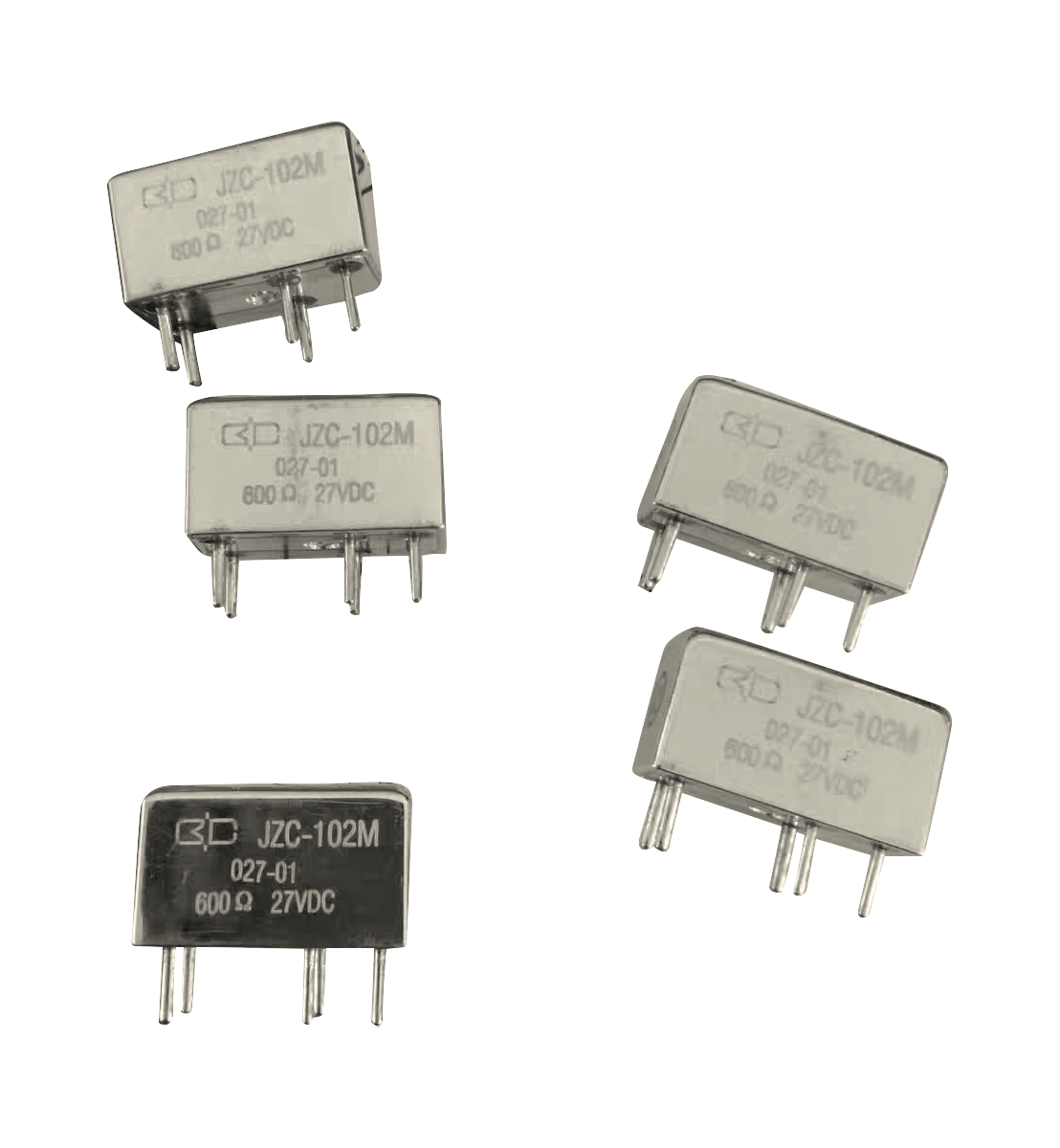
Military Polarized Relay Testing Procedures: Verifying Performance for Mission-Critical Applications
In the realm of military aviation, aerospace, and high-reliability industrial systems, component verification is not merely a quality check—it is a rigorous forensic process that builds confidence in every deployed unit. For Military Polarized Relays, specialized testing procedures go beyond standard relay tests to validate their unique sensitivity, latching behavior, and stability in extreme environments. This guide details the critical testing methodologies defined by military standards, explains their purpose, and provides B2B采购 managers and quality assurance professionals with the knowledge to evaluate supplier test reports and ensure the polarized relays in their systems are proven to perform.
The Testing Philosophy: Qualification, Acceptance, and Screening
Military testing is structured in distinct tiers, each serving a specific purpose in the product lifecycle.
- Qualification Testing: Performed on a representative sample to validate that the design meets all requirements of the governing specification (e.g., MIL-PRF-6106). This is a one-time, extensive suite of tests.
- Lot Acceptance Testing (LAT): Performed on a statistical sample from each production lot to verify that manufacturing processes remain in control and the lot is consistent with the qualified design.
- 100% Screening: Certain critical tests (e.g., seal, functional) are performed on every single unit to weed out latent defects before shipment. This is common for high-reliability Aircraft Polarized Relays.
- Destructive Physical Analysis (DPA): Periodic dissection of samples to inspect internal workmanship, materials, and construction against design intent.
Core Electrical & Functional Test Procedures
These tests validate the fundamental switching performance and sensitivity of the polarized relay.
1. Coil Parameters and Sensitivity Tests
- Must Operate/Release Voltage (Pick-Up/Drop-Out):
- The coil is energized with a slowly ramping voltage of the correct polarity until the contacts transfer. This voltage is recorded as the "Must Operate" value.
- For latching types, "Must Release" is the opposite polarity pulse energy required to reset. For non-latching polarized types, the voltage is reduced until release.
- Purpose: Ensures the relay will function with weak signals and defines the operational voltage window for the drive circuit.
- Coil Resistance: Measured with a precision ohmmeter at a specified temperature (usually 25°C). Must be within the specified tolerance band.
- Operate and Release Time: High-speed recording equipment measures the delay between the application/removal (or reversal) of the coil pulse and the stable contact transfer. Critical for timing-sensitive logic circuits in Aviation Polarized Relays for Drone systems.
2. Contact Performance Tests
- Contact Resistance (Initial & After Life): Measured with a low-resistance ohmmeter (4-wire Kelvin method) under low power ("dry circuit") and sometimes at rated load. Must be below a strict maximum (e.g., 100 milliohms).
- Dielectric Withstanding Voltage (Hi-Pot): High voltage (e.g., 1000V RMS) applied between all connected contacts and the relay frame/coil. Tests insulation integrity and clearance.
- Insulation Resistance: Measures leakage current (and thus resistance, typically >1000 MΩ) between electrically isolated parts under a high DC voltage (e.g., 500V DC).
These tests are conducted in YM's certified electrical test lab, where equipment calibration is traceable to national standards.
Environmental and Mechanical Stress Testing
These procedures simulate the harsh conditions of military operation, with added scrutiny for the permanent magnet's stability.
1. Vibration and Shock Testing (per MIL-STD-202/810)
- Procedure: The relay is mounted on a vibration fixture and subjected to specified frequency sweeps (sinusoidal) and random vibration profiles. During testing, contacts are monitored for any momentary discontinuity ("chatter") exceeding a time limit (e.g., 10 µs).
- Polarized Relay Specific Concern: The test verifies that vibration does not cause the armature to move due to the permanent magnet's bias alone, nor does it cause the latching mechanism to unintentionally release.
- Shock: Subjected to high-G, short-duration shocks to simulate handling, transportation, or battlefield impacts.
2. Temperature Extremes and Thermal Shock
- High & Low Temperature Operational: The relay is placed in a thermal chamber and powered at the temperature extremes (e.g., -65°C, +125°C). All key parameters (operate voltage, contact resistance) are measured to ensure functionality.
- Thermal Shock: Rapidly cycled between extreme hot and cold chambers. This stresses materials, seals, and can reveal weaknesses in solder joints or magnetic bond adhesives critical for Military Aviation Polarized Relays.
- Polarized Relay Specific Concern: The strength of the permanent magnet varies with temperature. Testing ensures the magnetic circuit design compensates sufficiently to keep operate/release voltages within allowable limits across the range.
3. Humidity, Salt Fog, and Sealing Tests
- Humidity (Steady State & Cycling): Exposes the relay to high humidity (e.g., 95% RH) at elevated temperature for days or weeks to accelerate corrosion and test seal integrity.
- Salt Fog (Mist): For naval or marine applications, verifies resistance to salt corrosion.
- Fine/Liquid Seal (Hermeticity): For hermetically sealed relays, a helium mass spectrometer test or radioactive tracer test is used to detect leaks at a microscopic level. Gross leak tests use fluorocarbon fluids.
Lifecycle and Endurance Testing
These tests simulate long-term wear and operational stress.
- Mechanical Life (No Load): The relay is cycled at a high rate with no electrical load to verify the mechanical integrity of the armature, springs, and bearings.
- Electrical Life (At Load): The relay switches its rated load for tens or hundreds of thousands of cycles. Contact resistance is monitored periodically. This validates contact material and arc management design.
- High-Intensity Life Test: A more severe subset of units may undergo life testing at elevated temperature or voltage to accelerate failure modes and provide reliability (MTBF) data.
Industry Trends: Smarter, Faster, More Predictive Testing
Automated Test Equipment (ATE) and Data Analytics
Modern test systems not only pass/fail but capture rich parametric data (exact operate voltage, contact resistance trend) for every unit. This data is fed into Statistical Process Control (SPC) systems to detect manufacturing drifts before they cause a failure. YM's advanced ATE stations perform multiple tests in sequence, creating a digital fingerprint for each relay that is stored for traceability.
Condition Monitoring During Environmental Testing
The gold standard is in-situ monitoring of contact continuity during vibration and temperature tests, not just before and after. This captures intermittent failures that would otherwise be missed. YM employs continuous monitoring systems for all critical environmental tests, providing customers with incontrovertible proof of performance under stress.
Non-Destructive Evaluation (NDE) Techniques
X-ray imaging and scanning acoustic microscopy (SAM) are increasingly used for DPA and screening to inspect internal solder joints, coil winding integrity, and magnet placement without destroying the relay. This provides another layer of quality assurance for High quality Aviation Engine, Train, Plane components.
YM's Testing Infrastructure: A Foundation of Trust
Executing these procedures requires significant investment. YM's dedicated Reliability Center houses over 50 specialized test chambers (thermal, thermal shock, humidity, salt fog), multiple electrodynamic shakers, and a fully equipped hermeticity test lab. Crucially, our test engineers are trained to the stringent requirements of Nadcap-accredited processes for electrical and mechanical testing, ensuring our methods and documentation meet the highest aerospace industry scrutiny.
R&D Focus: Developing Accelerated Test Correlations
A key R&D challenge is correlating accelerated lab test results with real-world field life. Our reliability engineering team conducts ongoing studies, comparing data from HALT (Highly Accelerated Life Test) on new designs with data from extended life testing and field returns. This allows us to refine test parameters, ensuring that a relay passing our qualification tests will have a predictable and long service life in your Aircraft Engine monitoring system or flight control unit.
5 Critical Testing Verification Points for Russian Military Procurement
Russian QA and procurement agencies scrutinize test evidence with particular rigor:
- Traceability to GOST Equivalent Standards: While accepting MIL-STD data, they require a clear cross-reference or justification showing how the test parameters and acceptance criteria map to relevant GOST standards (e.g., GOST 28205 for temperature, GOST 30630.99 for vibration).
- Validation of "No Chatter" During Vibration: Insistence on seeing the actual oscilloscope or data logger traces proving contact continuity was maintained during the specific vibration profiles relevant to their platforms (e.g., low-frequency helicopter profiles).
- Long-Term Magnetic Stability Test Data: Require evidence from extended high-temperature exposure tests (e.g., 1000 hours at 125°C) that demonstrate the permanent magnet's flux density decay is within acceptable limits for the product's intended service life.
- Witness Testing and Source Inspection Rights: Contractual provision for their inspectors to witness key tests (LAT, DPA) at the manufacturer's facility or an accredited third-party lab.
- Full Raw Data Disclosure from Life Tests: Not just summary pass/fail reports, but access to trend graphs of contact resistance over thousands of cycles and individual failure logs from life testing to assess failure mode patterns.
Interpreting a Military Test Report: A Procurement Checklist
When reviewing a supplier's test report, ensure it clearly addresses:
- Test Standard & Revision: Exact standard (e.g., MIL-PRF-6106J, Method XXX).
- Sample Size & Lot Identification: Were enough units tested? Is the tested lot clearly linked to the product being supplied?
- Test Conditions: Were the temperature, humidity, vibration profiles, etc., exactly as required for your application?
- Monitoring Methodology: Was contact continuity monitored *during* environmental tests?
- Calibration Dates: Are all test equipment calibration certificates current and traceable?
- Results & Exceptions: Are all results explicitly passed? Are any deviations documented and justified?
Key Governing Standards and Specifications
The testing universe for military polarized relays is defined by several key documents:
- MIL-PRF-6106: The overarching performance specification for relays, including detailed test methods for sensitive/polarized types.
- MIL-STD-202: Test Methods for Electronic and Electrical Component Parts. The go-to for fundamental environmental and physical tests.
- MIL-STD-810: Environmental Engineering Considerations and Laboratory Tests. Used for broader equipment-level testing, but its methods are often invoked.
- MIL-STD-750: Test Methods for Semiconductor Devices. Occasionally referenced for aspects of solid-state or hybrid drives.
- MIL-STD-883: Test Method Standards for Microcircuits. Relevant if the relay incorporates microelectronics.
- YM's compliance documentation explicitly details adherence to these and customer-specific standards.