QDF-42A Aviation Sensor Installation Manual: Technical Guide for System Integrators
For procurement managers and engineering teams in aerospace manufacturing and maintenance, proper component installation is as critical as the component's specifications. This comprehensive guide provides detailed installation procedures, technical insights, and industry context for the QDF-42A Aviation Sensor. Designed for demanding environments from military aviation to commercial fleets, understanding its correct integration is essential for ensuring system reliability, safety, and compliance with stringent aerospace standards.
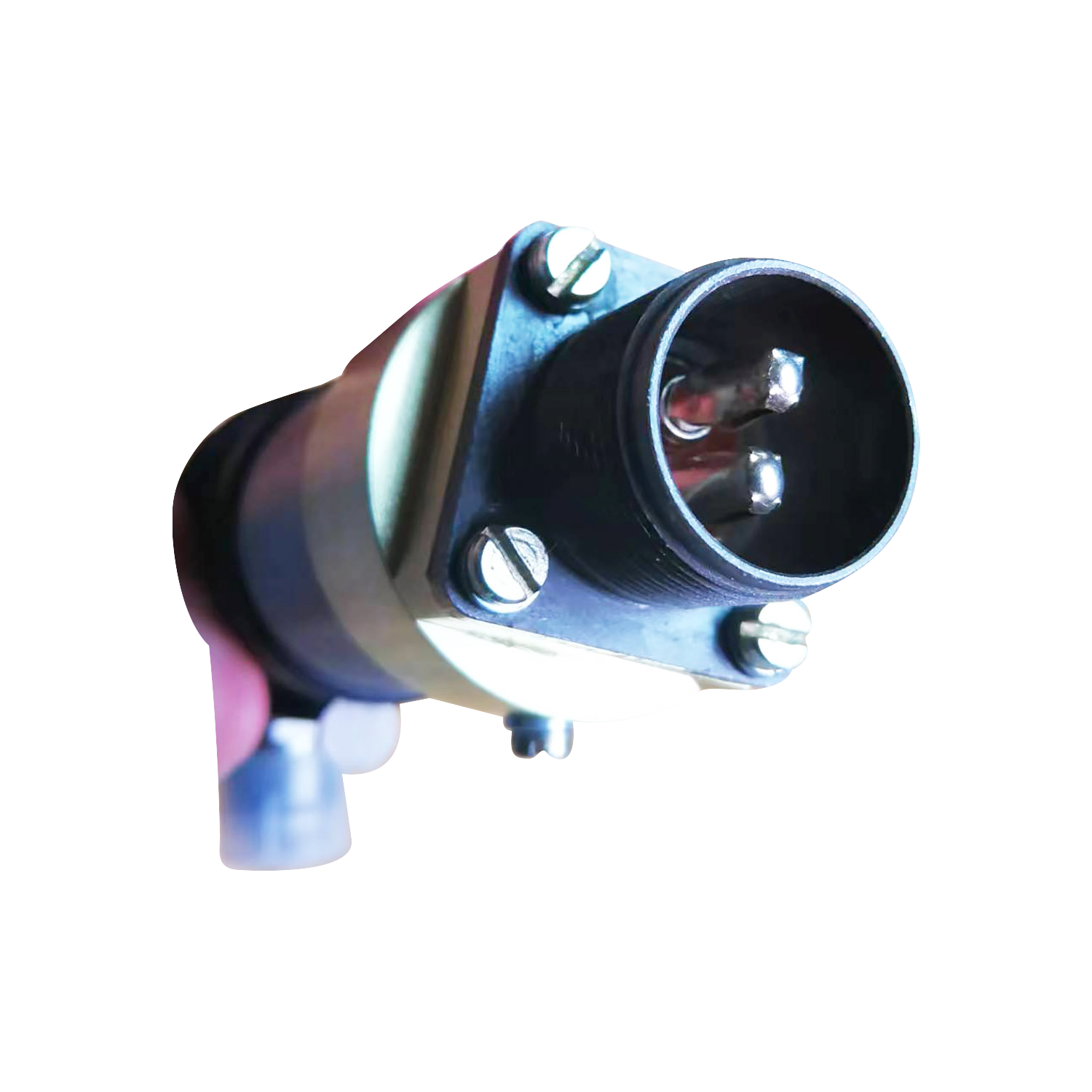
Product Overview: QDF-42A Technical Specifications
The YM QDF-42A Aviation Sensor is a high-precision differential pressure/flow sensor designed for critical monitoring applications in aircraft engine bleed air systems, environmental control systems (ECS), and fuel flow measurement. Its robust design makes it equally suitable for aviation sensor for drone applications and high-quality aviation systems in commercial planes and trains.
Key Pre-Installation Specifications
- Measurement Type: Differential Pressure / Mass Flow
- Pressure Ports: Dual G1/4" or MS33656-4 Aviation Connectors, clearly marked High (H) and Low (L) pressure.
- Electrical Interface: 4-pin MIL-DTL-38999 series connector, providing power (9-32 VDC), ground, and analog output (0-5V/4-20mA).
- Operating Range: -40°C to +125°C ambient; calibrated for a specific differential pressure range (e.g., 0-50 psi).
- Output Signal: Linear analog output corresponding to the measured differential pressure.
- Housing Material: Anodized aluminum alloy with corrosion-resistant coating.
Industry Context & Technological Standards
Latest Industry Technology Trends
The trend in aerospace sensing is towards smart, networked sensors with digital outputs (e.g., IEEE 1451, ARINC 825) and integrated health monitoring. While the QDF-42A is a robust analog sensor, its design principles of accuracy and durability are foundational for these next-generation systems. Additionally, the push for additive manufacturing (3D printing) of sensor housings and mounting brackets is changing integration approaches, allowing for more optimized, lightweight installations in tight spaces.
Relevant Industry Standards
Installation and performance of the QDF-42A are governed by key aerospace standards:
- RTCA DO-160: Environmental Conditions and Test Procedures for Airborne Equipment. The sensor is qualified to relevant sections (Temperature, Vibration, Humidity).
- SAE AS478: Procedure for Installation of Fluid System Pressure and Temperature Indicating Systems.
- MIL-STD-881: Work Breakdown Structures for Defense Materiel Items (relevant for system integration planning in military aviation).
- EASA/FAA Regulations: Advisory Circulars (ACs) and Certification Memorandums (CMs) provide guidelines for installation of equipment on certified aircraft.
Compliance with these standards is verified in YM's state-of-the-art factory facilities, which include environmental test chambers and fluid flow calibration rigs traceable to national standards.
Strategic Procurement Insights
5 Key Concerns for Russian & CIS Region Procurement
- Documentation & Certification Completeness: Full technical documentation (in Russian/English), including EAC (Eurasian Conformity) declarations of conformity to TR CU/EAEU regulations, and detailed calibration certificates are mandatory.
- Compatibility with Legacy & Current Platforms: Sensors must interface with both Soviet-era aircraft systems (using specific protocols/connectors) and modern Western-origin platforms operated in the region.
- Extreme Cold-Start Reliability: Proven performance data showing the sensor maintains accuracy and does not suffer from icing or seal failure during cold-soak conditions down to -50°C.
- Local Technical Support & Training: Availability of installation manuals, training materials, and potential on-site support for MRO (Maintenance, Repair, Overhaul) facilities within the region.
- Supply Chain Transparency for Dual-Use Items: Clear understanding of origin of components and adherence to export control regulations (e.g., Wassenaar Arrangement) for items that may be classified as dual-use.
YM's R&D and Innovation in Sensor Integration
Our R&D team focuses not only on sensor design but also on simplifying integration. An innovation achievement relevant to the QDF-42A is our patented "Quick-Fit" mounting bracket design (optional accessory), which reduces installation time by 40% and minimizes stress on the sensor body. Furthermore, our team is developing digital communication add-on modules that can be paired with analog sensors like the QDF-42A to enable retrofit smart capabilities, extending the lifecycle of existing aircraft fleets.
Comprehensive Installation Procedure
Step-by-Step Installation Guide
- Pre-Installation Verification:
- Verify the sensor part number (QDF-42A-XXX) matches the engineering order.
- Inspect the sensor and its aviation connectors for any shipping damage.
- Check the calibration certificate is current and valid.
- Mounting:
- Identify the planned mounting location per the system schematic. Ensure it is free from excessive vibration, heat sources, and provides access for future maintenance.
- Using the provided template, drill and tap mounting holes. Deburr all holes thoroughly.
- Secure the sensor using the specified mounting hardware and torque to **2.5 Nm (22 in-lb)**. Do not overtighten.
- Pressure Line Connection:
- Connect the HIGH (H) pressure port to the upstream/system pressure line.
- Connect the LOW (L) pressure port to the downstream/reference pressure line.
- Use approved sealing compound (e.g., Loctite 577) on thread fittings as specified. Torque fittings to **15 Nm (133 in-lb)**.
- Ensure tubing/piping is properly supported to avoid mechanical stress on the sensor ports.
- Electrical Connection:
- Route the aircraft/ship harness to the sensor location.
- Mate the electrical connector to the sensor's MIL-DTL-38999 receptacle. Align the key and keyway, then rotate the coupling nut until a positive click is felt and the nut is hand-tight.
- Secure the backshell to the aircraft structure per standard wiring practices to provide strain relief.
- Post-Installation Checks:
- Perform a visual inspection of all connections.
- Conduct a leak check of the pressure connections per the platform's standard procedure (e.g., using a bubble solution or pressure decay test).
- Apply system power and verify the sensor's output signal with a known reference (e.g., at zero differential pressure) before placing the system into operational service.
Operation, Maintenance & Troubleshooting
Routine Maintenance & Calibration Schedule
- Visual Inspection: Perform during routine platform maintenance. Look for signs of fluid leaks, corrosion, cracked paint, or loose fittings.
- Functional Check: Verify the sensor's zero-point output with the system depressurized. Compare to the value recorded during installation.
- Calibration Interval: Recommended recalibration every 24 months or as specified by the platform's maintenance program. Calibration must be performed using equipment traceable to NIST or equivalent standards.
Common Troubleshooting Guide
- Zero Output or No Signal: Check power supply voltage at the connector pins. Verify electrical connector is fully mated and secure.
- Erratic or Unstable Reading: Likely caused by air bubbles or blockage in the pressure lines. Isolate the sensor and purge the lines according to system procedures.
- Constant High/Low Reading: Suspect crossed pressure lines (High and Low ports reversed). Depressurize, disconnect, and reconnect lines correctly.
- Physical Damage or Leak: Do not attempt field repair of the sensor body. Replace the unit with a serviceable item and return the damaged sensor to YM or an authorized service center.
Frequently Asked Questions (FAQ)
Q1: Can the QDF-42A be installed in any orientation, or does it have a specific mounting requirement?
A: For optimal performance, especially in liquid flow applications, the QDF-42A should be mounted with its pressure ports oriented horizontally to prevent fluid trapping. The sensor body itself can be mounted in any orientation relative to gravity without affecting its pressure measurement accuracy. The installation manual provides specific diagrams.
Q2: What is the lead time for a custom-calibrated version of the QDF-42A for a specific pressure range needed for our OEM/ODM engine program?
A: Custom calibration is a core service. Lead times typically add 2-3 weeks to the standard production schedule. Our R&D team and calibration lab work closely with OEM/ODM clients to define exact requirements and provide sensors that drop directly into your assembly line, supported by full documentation packs.
Q3: How does YM ensure the consistency and quality of sensors like the QDF-42A across high-volume production runs?
A: Consistency is guaranteed by our automated factory facilities. Key processes—from SMT assembly of the PCBA to laser-welding of housings and final calibration—are performed by precision machinery with minimal manual intervention. Every single QDF-42A undergoes 100% functional testing and a sample from each batch undergoes full environmental qualification, ensuring every unit delivered meets our high-quality aviation standard.
YM Enterprise Capabilities: Precision at Scale
The reliability of the QDF-42A Aviation Sensor is a product of YM's integrated approach. Our factory facilities encompass dedicated cleanrooms for sensor assembly, fully automated calibration stations, and a massive logistics center capable of handling global OEM and distributor orders. This physical scale is powered by our R&D team, whose innovation achievements in areas like low-drift sensing elements and ruggedized signal conditioning directly translate to the product's field performance. This synergy allows us to be a strategic partner, not just a supplier, for aircraft engine manufacturers, drone integrators, and rail system builders worldwide.
References & Further Reading
- RTCA, Inc. (2010). DO-160G, Environmental Conditions and Test Procedures for Airborne Equipment. Washington, DC.
- SAE International. (2019). AS478C, Installation of Fluid System Pressure and Temperature Indicating Systems. Warrendale, PA.
- Federal Aviation Administration (FAA). (2017). Advisory Circular 43.13-1B, Acceptable Methods, Techniques, and Practices – Aircraft Inspection and Repair. Chapter 11: Tanks and Plumbing.
- Aviation Stack Exchange. (2023, June). Thread: "Best practices for installing pressure sensors in aircraft bleed air systems." [Online Technical Forum].
- Wikipedia contributors. (2024, January 20). Pressure measurement. In Wikipedia, The Free Encyclopedia. Retrieved from https://en.wikipedia.org/wiki/Pressure_measurement
- Quora, Aerospace Engineering Space. (2023, September). Answer by [Senior Systems Integrator]: "What are the most common mistakes made during sensor installation on aircraft, and how to avoid them?"
- Parker Hannifin. (2022). Aerospace Fluid System Connector Installation Guide. Catalog HY10-3501.