
QXF-4A Single Valve Applications: Versatile Control Solutions for Modern Aerospace Systems
In the complex ecosystem of aerospace fluid control, versatility and reliability are paramount. The QXF-4A Single Valve emerges as a critical component, engineered to deliver precise control across diverse media—from hydraulic fluid and fuel to pneumatic systems. This comprehensive guide explores the wide-ranging applications of the QXF-4A, analyzes the key technical and commercial factors that influence B2B procurement decisions, and examines how this component integrates into next-generation aircraft Aviation Valves & regulator systems, military aviation valves, and emerging unmanned platforms.
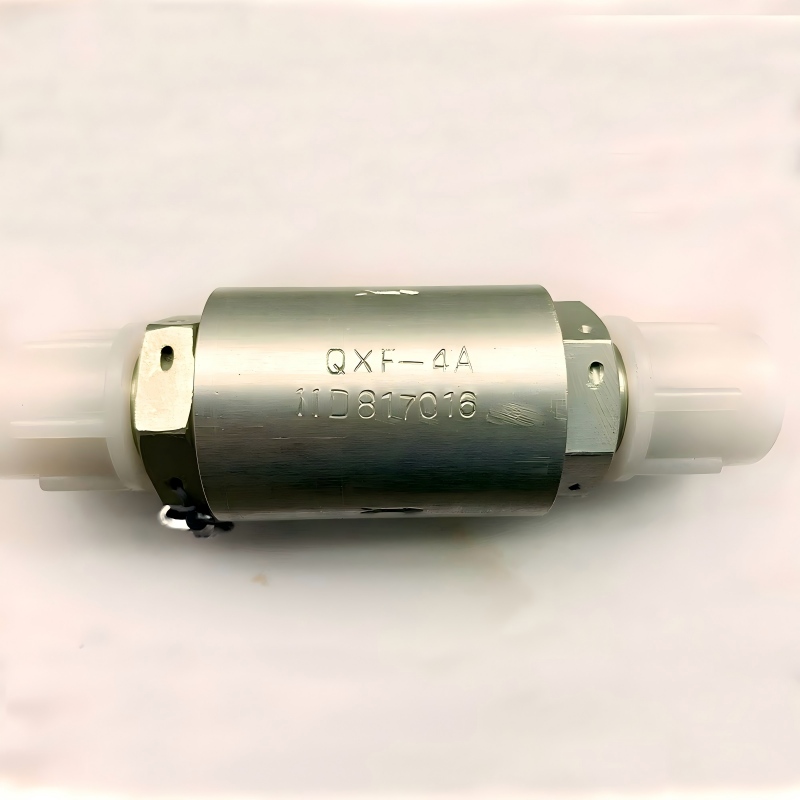

Core Technology: Understanding the QXF-4A Platform
The QXF-4A is a compact, solenoid-operated, 2-position or 3-position directional control valve. Its "single" designation refers to a unified, self-contained actuator and body assembly designed for straightforward integration. Key to its versatility is its configurable design for various fluid services.
Defining Technical Characteristics
- Multi-Service Capability: Can be configured with appropriate seals and materials for hydraulic oil, Skydrol, jet fuel (JP-8, Jet A), or pneumatic service, making it a versatile choice for different subsystems on the same high quality aviation engine or airframe.
- High-Speed Solenoid Actuation: Features a fast-response, low-power solenoid designed for millions of cycles, with response times typically under 15 milliseconds—critical for flight control and engine management functions.
- Robust Poppet or Spool Design: Utilizes a hardened poppet or precision spool mechanism that ensures leak-tight sealing in the closed position and low pressure drop in the open position.
- Compact, Lightweight Housing: Manufactured from high-strength aluminum alloy or stainless steel, the housing is designed to minimize weight and envelope, a crucial factor for all aerospace applications, especially for aviation valves & regulator for drone systems.
- Integrated Sensor Readiness (Optional): Certain variants are designed to accept position feedback sensors, such as micro-switches or Hall-effect sensors, providing confirmation of valve state to the aircraft's health monitoring system.

Primary Application Domains: Where the QXF-4A Excels
1. Fuel System Management
Used as a shut-off valve for APU (Auxiliary Power Unit) fuel feed, crossfeed control between wing tanks, or as a selector valve for fuel boost pumps. Its leak-tight seal is essential for safety and efficiency in high quality aviation fuel systems.
2. Hydraulic System Control
Acts as a control valve for landing gear door sequencing, brake deboost systems, or to isolate subsystems for maintenance. Its reliability under high pressure (up to 3000 PSI) makes it suitable for primary and secondary flight control ancillary functions.
3. Pneumatic & Environmental Control Systems (ECS)
Manages the flow of bleed air for wing anti-ice systems, cabin pressure control valves, or avionics cooling air shut-off. Its rapid response is key to managing dynamic pneumatic loads.
4. Engine and Auxiliary System Control
Integral to aircraft engine start systems, oil cooling circuit control, or as a control valve for hydraulic motor-driven generators (HMDGs).
5. Unmanned & Next-Generation Platforms
The valve's small size, low weight, and electrical interface make it ideal for UAV applications, such as controlling parachute deployment systems, payload release mechanisms, or fuel management on heavy-lift drones. It also finds use in Train, Plane ground support equipment for test and servicing functions.

Industry Trends and Technological Evolution
New Technology R&D: Towards Smarter, Lighter Actuators
R&D is focused on enhancing the valve's "intelligence" and efficiency. This includes the development of "coil-on-chip" driver electronics that reduce power consumption and heat generation. Furthermore, research into shape-memory alloy (SMA) actuators as an alternative to solenoids promises even lighter, more compact valves for future aviation valves & regulator for drone and satellite applications.
Industry Trend Analysis: Modularity and System Integration
A key trend is the move away from discrete, scattered valves toward integrated, modular fluid control units. The QXF-4A, with its standardized footprint and electrical interface, is designed to be a building block in such modular manifold assemblies. This approach simplifies system design, reduces installation time and potential leak points, and facilitates easier troubleshooting and replacement.
Procurement Perspective: 5 Critical Concerns for Russian Aerospace Buyers
When sourcing components like the QXF-4A for the CIS market, procurement managers conduct a multi-faceted assessment:
- Certification Stack and Regulatory Alignment: Demonstrated compliance with both the technical requirements of international standards (e.g., DO-160 for environmental testing) and the formal certification processes of Russian authorities (Rosaviatsiya, FSTEC for certain aspects). Documentation must be complete, traceable, and available in Russian.
- Extreme Environment Provenance and Testing Data: Beyond standard ratings, buyers demand validated test reports showing reliable operation after prolonged exposure to extreme cold (below -54°C), rapid temperature cycling, and specific humidity conditions prevalent in operational theaters.
- Fluid Compatibility and Material Documentation: Certified documentation for every wetted material (seals, body, spring), proving long-term compatibility with the exact fluids used in their fleets (e.g., Russian-grade hydraulic fluids like AMG-10, fuels like T-1, TS-1).
- Supply Chain Resilience and Local Partnership: A strong preference for suppliers with transparent, dual-sourced supply chains for critical components (e.g., solenoids, seals) and a proven willingness to establish local technical stockholding or assembly agreements to guarantee availability and reduce lead times.
- Lifecycle Support and Total Cost of Ownership (TCO): Evaluation includes the cost and availability of exchange units or overhaul kits, the supplier's capability for repair and recertification, and the projected maintenance burden over the platform's lifetime.

Installation, Operation, and Maintenance Guidelines
Recommended Installation Procedure
- Pre-Installation Inspection: Verify part number, check for shipping damage, and ensure port protectors are intact.
- System Cleanliness: Ensure the fluid system is flushed and clean to the required standard (e.g., NAS 1638 Class 6 or SAE AS4059).
- Mechanical Mounting: Mount the valve securely using the specified hardware and torque values. Avoid using the valve body as a leverage point for tightening fittings.
- Electrical Connection: Connect using the appropriate gauge wire. For sensors, ensure proper shielding and grounding to prevent signal interference.
- Functional Check: Slowly pressurize the system. Cycle the valve several times while checking for external leaks and verifying correct operation (and sensor feedback if equipped).
Common Maintenance Scenarios and Troubleshooting
Symptom: Valve fails to actuate.
Check: Power supply to coil, coil resistance for open/short circuit, and for mechanical binding due to contamination.
Symptom: External leakage.
Check: Seal integrity at port connections and stem seal. Replace using a genuine YM seal kit.
Symptom: Internal leakage (passing).
Check: For contamination on the seat or poppet, or wear on the sealing surfaces. May require cleaning or valve replacement/overhaul.

Governing Industry Standards
Design, manufacture, and testing are framed by critical standards:
SAE AS 1938: General specification for solenoid valves in aircraft fluid systems.
RTCA/DO-160: Environmental Conditions and Test Procedures for Airborne Equipment (Sections for Temperature, Vibration, Humidity).
MIL-V-8806/ MIL-V-25771: Relevant military specifications for aircraft solenoid valves.
ISO 15407-1: Pneumatic fluid power - Five-port directional control valves.
YM Precision Engineering: Manufacturing Versatility and Reliability
Scalable, Advanced Manufacturing Infrastructure
The ability to produce the configurable QXF-4A platform at scale with consistent quality requires advanced infrastructure. Our dedicated solenoid valve production line, part of our 80,000 sq. meter campus, features automated coil winding and impregnation systems, robotic leak testing stations using helium mass spectrometry, and final functional test stands that simulate real-world pressure and electrical conditions. This ensures every valve, whether destined for a military aviation valves & regulator system or a commercial Train, Plane application, meets its rigorous specifications.

R&D Focus: Enhancing Durability and Cycle Life
Our R&D team, which includes tribology specialists, has developed a proprietary surface treatment for the QXF-4A's critical sealing components. This treatment, protected by international patents, dramatically reduces wear during high-frequency cycling and improves resistance to corrosion from aggressive fluids. This directly translates to a longer service life and higher reliability, particularly in demanding applications like rapid-cycle test rigs or military systems, justifying its designation as a component for high quality aviation engine support systems.
Frequently Asked Questions (FAQ)
Q1: Can the same QXF-4A valve be used for both hydraulic and fuel service by just changing the seals?
A: Not automatically. While the mechanical platform may be similar, valves for fuel service often undergo additional processes, such as special cleaning, passivation, and have specific material certifications for all wetted parts to prevent fuel contamination and ensure fire safety. It is crucial to order the valve configured for the specific service (e.g., "QXF-4A-H" for hydraulic, "QXF-4A-F" for fuel). Always consult the configuration guide or our application engineers.
Q2: What is the typical lead time for a custom-configured QXF-4A batch (e.g., with specific porting or voltage)?
A: For standard options within the QXF-4A platform (e.g., different voltage coils, port types), lead times are typically 8-12 weeks. For fully custom configurations involving non-standard materials or interfaces, the lead time may extend to 14-18 weeks for initial batches. Our rapid prototyping service can provide initial samples for development projects on a faster timeline.
Q3: How does the QXF-4A's "single valve" design benefit system designers compared to manifold solutions?
A: The standalone "single valve" design offers superior flexibility. It allows for distributed control points closer to the actuator, potentially reducing hydraulic line lengths and weight. It simplifies system upgrades or modifications, as individual valves can be replaced without disturbing an entire manifold. This modularity is particularly valuable for retrofit programs, prototype development, and systems where future reconfiguration is anticipated.


