
Y11P-1007ZK10-Z Connector Applications: Optimizing High-Density Interconnects for Advanced Systems
For procurement managers and design engineers working on next-generation aerospace, defense, and industrial platforms, connector selection directly impacts system performance, reliability, and maintainability. The Y11P-1007ZK10-Z Aviation Connector represents a specialized, high-density solution within the broader Y11P series. This detailed application guide decodes its specific configuration and explores its optimal deployment scenarios, empowering B2B professionals to leverage its capabilities for complex systems in Aircraft Engine monitoring, sophisticated UAV payloads, and mission-critical control networks.
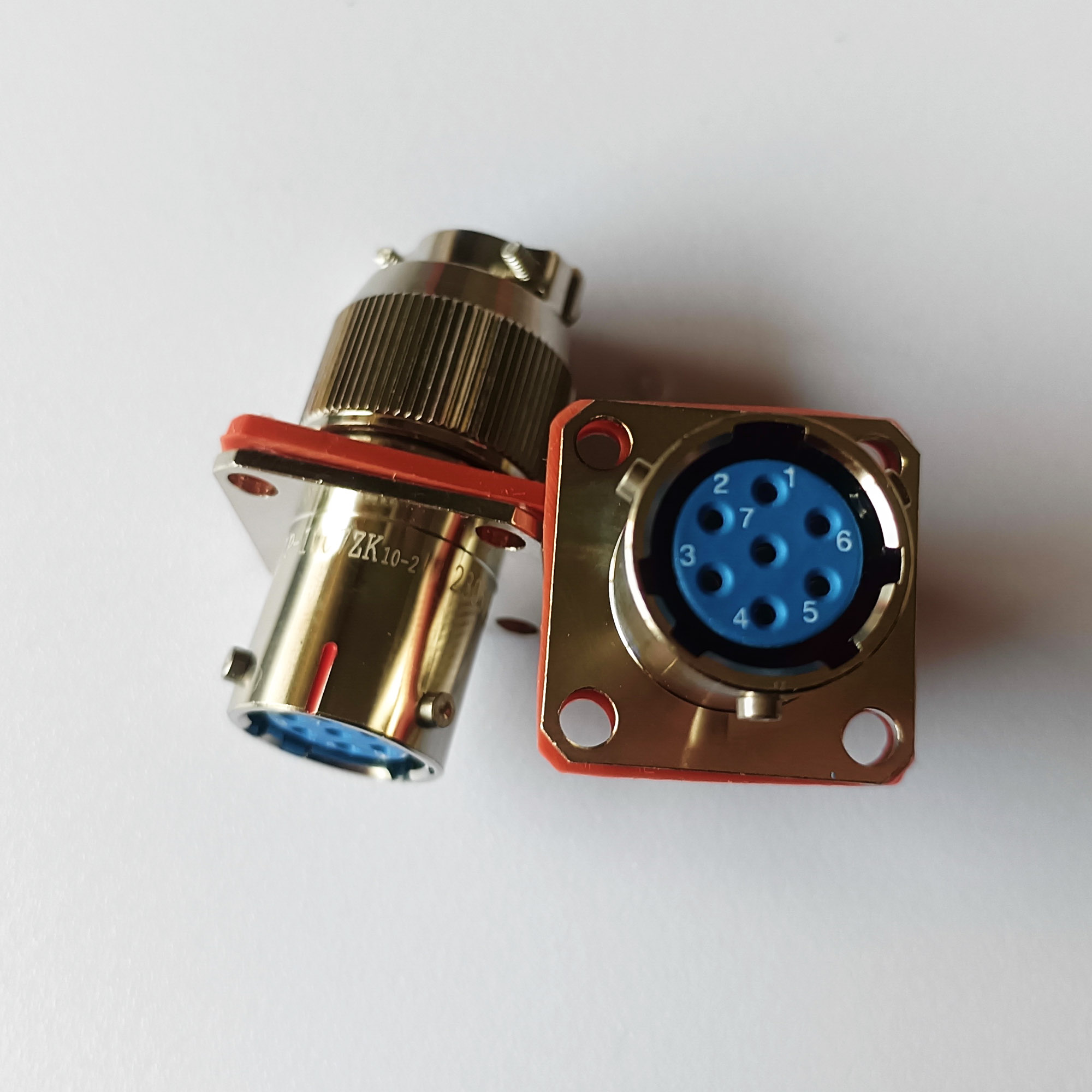
Decoding the Y11P-1007ZK10-Z Part Number
Understanding the part number reveals the connector's key physical and electrical characteristics, which guide its application suitability.
- Series (Y11P): Indicates the product family—a versatile, high-performance circular connector series known for modularity and environmental resilience.
- Shell Size & Style (1007): Likely specifies a particular shell size (e.g., 10-12) and potentially the coupling mechanism (e.g., push-pull or threaded).
- Insert Configuration (ZK10): This critical code defines the insert arrangement—the number, type, and layout of contacts. "ZK10" typically indicates a specific, high-density mix of signal and possibly power contacts.
- Finish & Accessories (-Z): The suffix often denotes a specific plating finish (e.g., zinc-nickel), special sealing, or included accessories like protective caps or a specific backshell.
This configuration suggests a connector optimized for applications requiring a substantial number of reliable signal paths in a compact, sealed package—a hallmark of advanced Military Aviation Connector designs.
The Procurement Lens: Matching Configuration to Need
Specifying a detailed part number like Y11P-1007ZK10-Z eliminates guesswork. For procurement, it ensures you receive the exact physical and electrical interface required, preventing compatibility issues during integration. This precision is vital for maintaining the supply chain integrity of complex systems like those found in a High quality Aviation Engine test facility or a modern Train control unit.
Core Technical Profile and Strengths
Inferred Performance from Series Standards
Based on the Y11P series pedigree, the Y11P-1007ZK10-Z inherits key performance attributes:
- High-Density Contact Layout: The "ZK10" insert likely supports 10 or more contacts in a compact arrangement, enabling the consolidation of multiple signal and low-current power circuits into a single connector footprint.
- Environmental Sealing: Expected to meet IP67 or IP68 standards, with robust interface and rear seals protecting against moisture, dust, and fluids—essential for operation in unpressurized bays or external panels.
- Durability: Designed for hundreds of mating cycles, with contacts featuring gold-over-nickel plating for low resistance and high corrosion resistance.
- EMI Shielding: The metal shell provides effective electromagnetic interference shielding, protecting sensitive signals from noise in electrically noisy environments like those near engines or power systems.

Primary Application Sectors and Use Cases
1. Avionics & Flight Control Data Concentration
Ideal for aggregating multiple sensor and data feeds within modern aircraft.
- Remote Data Concentrator (RDC) Units: Connecting an RDC in the wing or tail to a central flight computer, consolidating data from numerous proximity sensors, temperature probes, and control surface position sensors.
- Glass Cockpit Display Interfaces: Providing the dense signal interface between a primary flight display unit and its associated avionics bus or computer.
- Aircraft Engine Health Monitoring Unit (HMU): Interfacing the HMU with the array of vibration, temperature, and pressure sensors on the engine, where high-density and reliability are critical.
2. Unmanned Aerial Systems (UAS) & Payload Integration
Where size, weight, and signal integrity are paramount.
- Multi-Sensor Payload Pods: Serving as the primary Aviation Connector for Drone interface for gimbals carrying EO/IR cameras, laser designators, and SIGINT packages, requiring power, control, and high-speed video/data links.
- Flight Controller I/O Hub: Connecting the core flight controller to peripheral systems like servos, telemetry radios, and landing gear actuators in high-performance UAVs.
3. Ground Vehicle & C4ISR Systems
For complex electronic systems in mobile, harsh environments.
- Command, Control, and Communications (C3) Racks: Inter-unit connections within mobile command posts or communications vehicles, where many signal lines must be routed reliably.
- Turret & Weapon System Electronics: Connecting fire control computers to sensors, displays, and stabilization systems in armored vehicles.
4. Industrial Automation & Test Equipment
Bringing aerospace reliability to precision ground applications.
- Automated Test Equipment (ATE) for Aerospace: As an interface between the test console and a Unit Under Test (UUT), such as an LRU (Line Replaceable Unit) from an aircraft, where a single connector must handle all test stimuli and measurement signals.
- Robotic Control Cabinets: Dense I/O connections for complex robotic arms used in manufacturing or inspection.
- Railway Control Systems: Within a Train's central control unit, aggregating signals from various subsystems (doors, brakes, diagnostics).
Industry Trends Driving Demand for This Configuration
The need for connectors like the Y11P-1007ZK10-Z is amplified by several key trends:
- Sensor Proliferation & Data Fusion: Modern systems embed more sensors, each requiring a data path. High-density connectors reduce the number of physical connectors needed, saving space and weight.
- Modular "Lego-Brick" Architecture: Platforms are increasingly built with swappable modules. A standardized, dense connector like this allows for quick reconfiguration of payloads or subsystems.
- Convergence of Digital and Power: While primarily for signals, such inserts can be configured with a mix of signal and lower-power contacts, supporting the trend of integrated smart sensors that require both data and power (Power-over-Ethernet concepts in ruggedized form).
5 Critical Procurement Verification Points for Russian Technical Buyers
When evaluating this specific connector for CIS markets, procurement focuses on:
- GOST Certification for the Exact Part Number: Demand for a certificate of conformity specifically for Y11P-1007ZK10-Z from an accredited Russian body, proving compliance with relevant GOST standards (e.g., GOST 22613).
- Complete Technical Data Package (TDP) in Russian: A full set of Russian-language drawings, specifications, wiring diagrams, and test reports for this exact configuration, not just the generic Y11P series.
- Verification of Contact Plating and Material Origins: Documentation confirming the gold/nickel plating thickness and the source of the copper alloy for the contacts, often requiring certificates from approved suppliers within the Eurasian Economic Union.
- Interoperability with Existing Test Adapters and Harnesses: Proof that this connector's pinout and shell interface are compatible with—or can be adapted to—existing Russian test station adapters and legacy harness designs to avoid costly retooling.
- Scalability and Long-Term Availability of the ZK10 Configuration: Guarantees that the specific "ZK10" insert and its contacts will remain in production and available for spare parts procurement for the lifecycle of the end-user's platform (15+ years).
Integration Guidelines and Best Practices
Designing-In the Y11P-1007ZK10-Z: Key Considerations
- Pin-Out Management: Meticulously map each signal to a specific pin number and document it in a controlled wiring table to prevent errors during harness fabrication.
- Harness Routing and Strain Relief: Due to the high number of wires, proper bundling, routing, and the use of the correct strain relief backshell are critical to prevent stress on individual contacts.
- EMC Planning: Ensure the panel or chassis provides a low-impedance ground path for the connector shell to maintain its shielding effectiveness. Use shielded cables where necessary.
- Access for Mating/Unmating: Ensure the installation location provides adequate clearance for the coupling mechanism (whether push-pull or threaded) to be operated properly.
YM's Capability: Delivering Precision and Consistency
The Y11P-1007ZK10-Z is produced in YM's state-of-the-art connector division, where precision machining and automated optical inspection (AOI) ensure every shell and contact meets exacting tolerances. Our vertical integration allows us to control the quality of the critical "ZK10" insert from molding through final assembly. For clients requiring complete solutions, our custom harness assembly service can deliver ready-to-install cables terminated with this exact connector, tested and documented to meet stringent standards. This end-to-end control is why our connectors are trusted in applications where failure is not an option. Our R&D team is also exploring versions of this high-density platform with integrated filtered contacts for advanced EMI suppression, directly addressing emerging needs in sensitive electronic warfare and communication systems.

Frequently Asked Questions (FAQ)
Q1: What is the typical current rating for the signal contacts in the ZK10 insert?
A: While the exact rating depends on the specific contact size used within the ZK10 layout, signal contacts in high-density configurations like this are typically rated for 3 to 7.5 Amps. It is essential to consult the specific datasheet for the Y11P-1007ZK10-Z to confirm the rating for each contact position. For higher power needs, a different insert configuration within the Y11P series might be more appropriate.
Q2: Can the Y11P-1007ZK10-Z be used in a mixed signal environment (e.g., analog sensors and digital communication lines)?
A: Yes, it is well-suited for this. Proper pin-out planning is key. Separate sensitive analog signals (e.g., low-voltage sensor outputs) from higher-speed digital lines or power feeds within the connector layout. Utilizing shielded internal wires for the most sensitive signals and grounding the shield appropriately at the connector backshell will help maintain signal integrity. The connector's own shielding protects against external EMI.
Q3: Is this connector available with different coupling styles (e.g., if we need a threaded version instead of push-pull)?
A: Likely, yes. The Y11P series is modular. The "1007" code in the part number may define the coupling style. You should consult with YM's sales engineering team to identify the equivalent part number with a threaded coupling mechanism that uses the same "ZK10" insert configuration, ensuring electrical compatibility while changing the mechanical interface.
Q4: How does YM ensure the correctness of complex pin-outs for custom orders involving this connector?
A: For custom harnesses or bulk connector orders, YM employs a rigorous First Article Inspection (FAI) process. Before full production, a sample unit is built to your exact pin-out specification and subjected to full electrical and mechanical testing. A detailed report, including continuity and hi-pot test results, is provided for your approval, ensuring the delivered product matches your design intent perfectly.
Relevant Standards and Compliance
The Y11P-1007ZK10-Z is designed to align with major international and regional standards:
- MIL-DTL-38999 Series III Concepts: For performance and environmental requirements.
- EN 3645 / EN 2997: European aerospace standards for circular connectors.
- RTCA/DO-160: Environmental test conditions for airborne equipment.
- IEC 60529: IP Code for ingress protection.
- GOST 22613: Russian standard for electrical connectors for Aviation Equipment.


