ZWH-2 Thermometer Applications Guide: Precision Temperature Sensing for Critical Systems
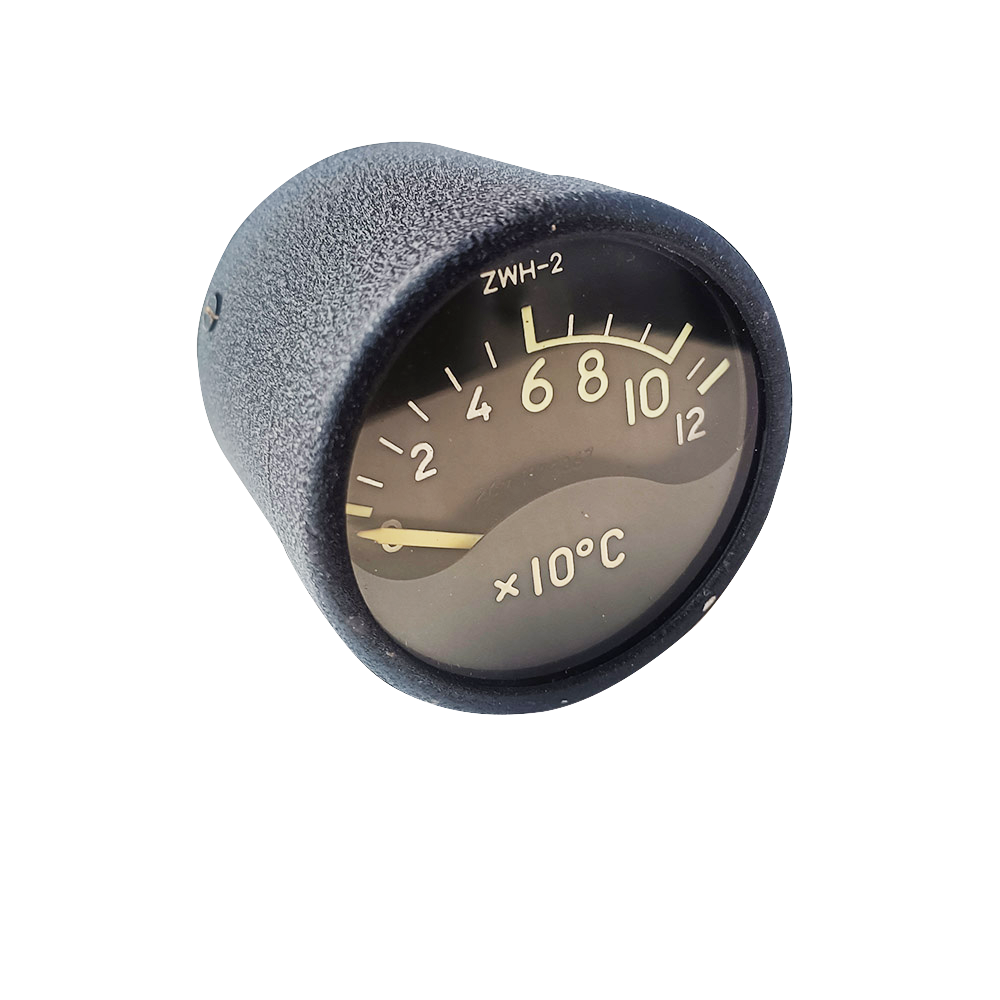
Accurate temperature measurement is a fundamental requirement across aviation, defense, and industrial sectors, impacting safety, efficiency, and system longevity. The ZWH-2 Thermometer represents a specialized class of aviation temperature sensor designed for reliable, high-accuracy monitoring in demanding environments. This comprehensive applications guide explores the diverse implementation scenarios, integration methodologies, and system-level benefits of the ZWH-2, providing B2B采购 managers and systems engineers with the insights to deploy this critical aviation sensor effectively within their Aircraft Engine monitoring, environmental control, and predictive maintenance strategies.
Understanding the ZWH-2: A Sensor, Not Just a Gauge
It's crucial to distinguish the ZWH-2 as a temperature transducer. Its primary function is to convert temperature into a precise electrical signal for remote monitoring and control.
- Core Technology: Typically utilizes a Resistance Temperature Detector (RTD) (e.g., Pt100) or a Thermocouple sensing element, chosen for stability, accuracy, and range suitability.
- Key Outputs: Provides standardized analog (4-20mA, 0-5V) or digital (RS-485, CAN bus) signals, enabling direct integration into data acquisition systems, engine control units (ECUs), and cockpit displays.
- Advantage over Dials: Enables centralized data logging, alarm triggering, and participation in automated control loops—essential for modern Aviation Aviation Instruments & Timers for Drone and manned aircraft systems.
Primary Application Areas and System Integration
1. Propulsion System Health Monitoring
This is one of the most critical and demanding applications.
- Engine Oil Temperature: Monitoring oil inlet/outlet temperature is vital for assessing lubrication system performance, detecting cooling issues, and preventing bearing failure. The ZWH-2's fast response and accuracy are crucial here.
- Engine Cylinder Head/Exhaust Gas Temperature (EGT): For piston and turbine engines, respectively. Critical for optimizing fuel mixture, detecting hot spots, and preventing thermal overload. Requires sensors with high-temperature capabilities and rapid response.
- Fuel Temperature: Monitoring fuel temperature entering the engine for performance calculations and to prevent fuel icing or vapor lock.
Integration involves connecting the ZWH-2 signal directly to the Engine Monitoring Unit (EMU) or Full Authority Digital Engine Control (FADEC).
2. Airframe and Environmental Control Systems (ECS)
- Cabin & Avionics Bay Temperature: For passenger comfort and ensuring critical electronics operate within their specified temperature ranges.
- Hydraulic Fluid Temperature: High fluid temperature can indicate overwork or cooling system failure, leading to reduced fluid life and potential system degradation.
- Bleed Air Temperature: Monitoring the temperature of air tapped from the engine for cabin pressurization and anti-icing systems.
3. Ground Support, Testing, and Industrial Processes
The principles of reliable temperature measurement translate to support equipment and other high-reliability sectors.
- Test Cell Instrumentation: Precise temperature measurement during Aircraft Engine performance runs and certification testing.
- Component Testing: Monitoring temperatures of brakes, bearings, or other components during qualification testing.
- Industrial Machinery: In applications requiring High quality Aviation Engine, Train, Plane grade reliability, such as in critical process control loops for manufacturing or energy generation.
Step-by-Step: Integrating the ZWH-2 into a Monitoring System
A practical guide for a common analog integration scenario.
System Design and Pre-Installation
- Sensor Selection: Choose the correct ZWH-2 variant: RTD for high stability and accuracy in moderate ranges (e.g., -50°C to +250°C), Thermocouple for very high temperatures (e.g., EGT up to 1000°C+).
- Mounting Location: Select a location that provides a representative measurement of the medium (e.g., in a well-mixed fluid stream, directly on the component surface with thermal grease). Ensure the location is accessible for installation and future maintenance.
- Interface Specification: Define the required signal (e.g., 4-20mA output) and ensure the receiving device (PLC, display) is correctly configured to interpret it.
Installation and Wiring Best Practices
- Mechanical Installation:
- For immersion probes, use the correct thread sealant and torque to ensure a leak-proof seal without damaging the sensor sheath.
- For surface mounts, ensure clean, flat contact and use high-temperature thermal compound to minimize thermal resistance.
- Electrical Connection:
- Use the correct wire type: For RTDs, use 3-wire or 4-wire configuration to compensate for lead wire resistance. For thermocouples, use matching thermocouple extension wire of the same type (e.g., Type K).
- Run sensor wires in shielded conduit, away from high-current power cables and sources of electromagnetic interference (EMI) like motors or radio transmitters.
- Connect the cable shield to ground at the receiving instrument end only to prevent ground loops.
- Power and Calibration:
- Provide clean, regulated power to the ZWH-2 transmitter if it's a 4-wire type. For 2-wire 4-20mA loops, ensure the loop power supply is correctly sized.
- After installation, perform a system calibration check by comparing the ZWH-2 reading against a trusted portable standard at a known temperature point (e.g., ice bath for 0°C).
YM provides detailed installation and wiring guides for each ZWH-2 model to ensure optimal performance.
Industry Trends: Smarter, More Integrated Temperature Sensing
Digitalization and In-Sensor Computing
The trend is moving from simple analog transmitters to smart digital sensors. Future iterations of sensors like the ZWH-2 may include onboard microprocessors that perform linearization, provide digital communication (e.g., IEEE 1451 TEDS), and even run basic diagnostics, sending pre-processed, error-corrected data directly to the network.
Wireless and Energy-Harvesting Sensors
For rotating components (e.g., engine shafts) or hard-to-wire locations in complex airframes, wireless temperature sensors powered by energy harvesting (vibration, thermal differential) are under development. This reduces installation complexity and weight, a key advantage for Military Aviation Aviation Instruments & Timers upgrades and new UAV designs.
Advanced Materials for Extreme Environments
For hypersonic flight, deep-space applications, or next-generation turbine engines, sensor materials must withstand extreme temperatures and radiation. Research into ceramic-based sensors, diamond film RTDs, and advanced thermocouple alloys is ongoing in YM's advanced materials research division.
YM's Manufacturing Excellence for Reliable Sensing
Producing a temperature sensor that must deliver consistent accuracy from arctic cold to engine-bay heat requires rigorous process control. YM's temperature sensor line features automated welding of thermocouple junctions, precision winding of platinum RTD elements in cleanroom conditions, and 100% testing in multi-point calibration baths (from -80°C to +600°C). This ensures every ZWH-2 sensor shipped meets its specified tolerance, whether it's destined for a commercial airliner or a High quality Aviation Engine, Train, Plane test stand.
R&D Focus: Enhancing Response Time and Long-Term Stability
Two critical performance parameters for aviation are response time (to detect rapid temperature changes) and long-term stability (to maintain calibration over years of thermal cycling). Our R&D team works on miniaturizing sensing elements to improve response time and on perfecting the sealing and annealing processes for RTD wires to eliminate strain-induced drift, ensuring the ZWH-2 provides trustworthy data throughout its service life.
5 Key Application-Specific Requirements for Russian Technical Teams
When planning the deployment of temperature sensors like the ZWH-2, Russian system integrators emphasize:
- Full Temperature Performance Validation Across GOST Ranges: Requirement for sensor performance data (accuracy, response time) specifically validated at the extreme low temperatures mandated by Russian operating standards (e.g., -60°C certification) and at high temperatures relevant to their engine designs.
- Compatibility with Legacy and New Domestic Display/Control Systems: Need for output signals that interface seamlessly with common Russian-made avionics displays, PLCs, or data loggers, or availability of signal conditioners for legacy millivolt thermocouple outputs.
- Robustness in High-Vibration, High-Shock Environments: Specific demand for sensors proven to withstand the vibration spectra of Russian-made helicopters, turbines, and ground vehicles without signal noise or mechanical failure.
- Material Compatibility with CIS-Specific Fluids and Gases: Certification that sensor wetted materials are compatible with commonly used Russian hydraulic fluids, lubricants, and fuels, which may have different additive packages.
- Localized Technical Support for System Integration: Access to application engineering support, either locally or remotely, to assist with sensor selection, installation planning, and troubleshooting for complex integration projects.
Operation, Maintenance, and Troubleshooting
Routine Operational Checks
- Pre-Flight/Start-Up: During system checks, verify that temperature readings are plausible for ambient conditions (e.g., oil temperature should be near ambient before engine start).
- In-Flight Trend Monitoring: Watch for abnormal rate-of-change in temperatures or readings that deviate from established norms for a given power setting.
Common Failure Modes and Diagnostic Steps
| Symptom | Potential Cause | Investigation/Action |
| Reading is stuck at one value (e.g., max or min) | Open circuit in sensor or wiring, failed transmitter electronics. | Check continuity of sensor and wires. For RTD, measure resistance. For 4-20mA, check if loop current is at 0mA (open) or >20mA (fault). |
| Reading is erratic or noisy | Poor electrical connection, EMI interference, failing sensor element. | Check and tighten all terminals. Inspect wire shield grounding. Use an oscilloscope to check for noise on the signal. |
| Reading is consistently inaccurate (shifted) | Sensor calibration drift, incorrect sensor type selected for range, installation error (poor thermal contact). | Perform a calibration check with a portable standard. Verify sensor type and range. Re-install surface mount sensor with proper thermal compound. |
| Slow response to temperature changes | Sensor installed in a thermowell with poor thermal contact, sensor element degraded, excessive thermal mass at installation point. | Check thermowell fill (use high-conductivity grease). Replace sensor if degraded. Re-evaluate mounting location. |
Relevant Standards and Certifications
Design, manufacturing, and application are governed by key standards:
- IEC 60751: Industrial platinum resistance thermometers (RTDs).
- ANSI/ASTM E230: Standard Specification and Temperature-Electromotive Force (EMF) Tables for Standardized Thermocouples.
- MIL-PRF-39000 (for transducer styles): Military performance specification.
- RTCA DO-160: Environmental testing for airborne equipment.
- GOST 6651-2009: State standard for resistance thermometric converters (RTDs) in Russia.
- YM's products and processes are designed to comply with these standards, supported by our comprehensive quality certifications.