ZYH-2 Pressure Meter Technical Details: Advanced Sensing for Precision Aviation Measurement
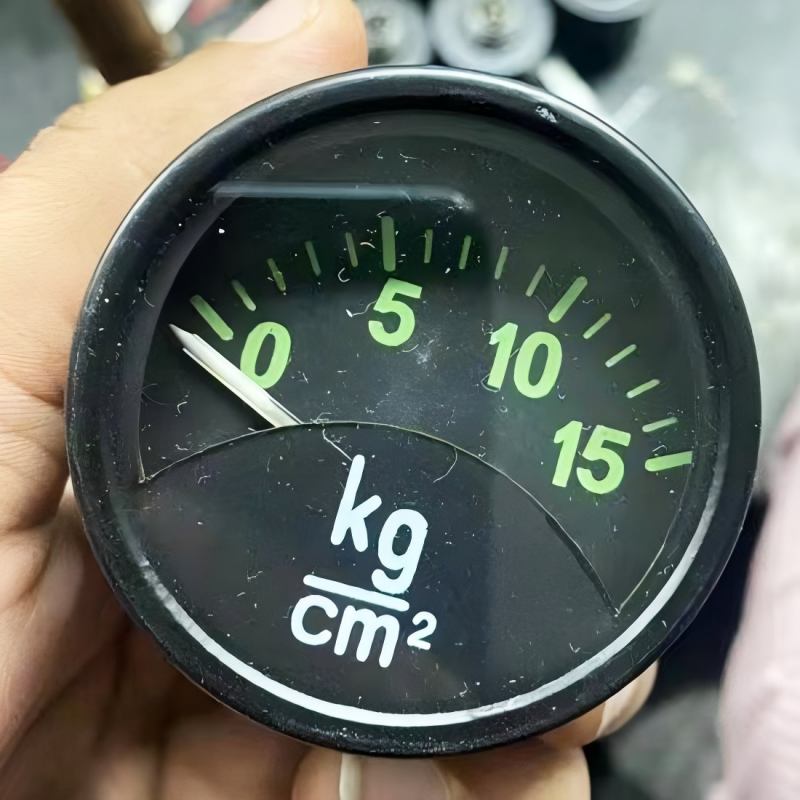
In the data-driven ecosystems of modern aviation, defense, and industrial automation, accurate pressure measurement transcends simple monitoring—it becomes a critical input for control systems, performance optimization, and predictive maintenance. The ZYH-2 Pressure Meter represents a sophisticated class of Aviation Sensor designed to deliver precise, reliable, and often digitally integrated pressure data. This technical deep-dive explores the core architecture, performance parameters, and integration considerations of the ZYH-2, providing B2B采购 managers and systems engineers with the insights needed to leverage its capabilities in demanding applications such as Aircraft Engine monitoring, flight control, and hydraulic system management.

Defining the "Pressure Meter": Beyond a Simple Gauge
The ZYH-2 is categorized as a Pressure Transducer or Transmitter, not a passive dial gauge. This distinction is fundamental.
- Core Function: It converts a physical pressure input into a standardized, high-fidelity electrical output signal (e.g., 4-20mA, 0-5V, or digital).
- Key Advantage: Enables remote monitoring, data logging, and direct integration into Flight Control Computers (FCC), Engine Control Units (ECU), and Health Usage Monitoring Systems (HUMS). This is essential for Aviation Aviation Instruments & Timers for Drone and next-generation manned aircraft.
- Component Ecosystem: Typically consists of a pressure port, an isolation diaphragm, a sensing element (e.g., silicon piezoresistive, thin-film strain gauge), signal conditioning electronics, and an output connector.
Core Technical Architecture and Sensing Technology
The performance of the ZYH-2 is rooted in its internal design and the physics of its sensing element.
Sensing Element Technology
- Silicon Piezoresistive (MEMS): A common, high-performance choice. A micromachined silicon diaphragm with implanted resistors changes resistance when strained by applied pressure. Offers excellent sensitivity, linearity, and fast response.
- Thin-Film Strain Gauge: A metallic strain gauge bonded to a stainless steel diaphragm. Known for exceptional long-term stability, high-temperature capability, and robustness, often used in Military Aviation Aviation Instruments & Timers for harsh environments.
- Capacitive Sensing: Measures the change in capacitance between a fixed plate and a diaphragm that moves with pressure. Offers high resolution and low power consumption.
- The selection directly impacts performance characteristics like accuracy, thermal stability, and media compatibility.
Signal Conditioning and Output
Raw sensor output is weak and temperature-sensitive. The ZYH-2's onboard electronics perform critical functions:
- Amplification: Boosts the microvolt/millivolt signal from the sensing element.
- Temperature Compensation: Uses integrated temperature sensors and algorithms to nullify the effect of ambient temperature changes on the pressure reading—a critical feature for external or Aircraft Engine bay mounting.
- Linearization: Corrects any inherent non-linearity of the sensing element to produce a perfectly linear output signal across the pressure range.
- Output Standardization: Provides a clean, robust output:
- Analog: 4-20mA (current loop, noise-immune for long runs) or 0-5/0-10V DC.
- Digital: RS-485 (Modbus), CAN bus, or ARINC 429 for direct avionics integration. Digital outputs facilitate networked sensor architectures.

Critical Performance Specifications Decoded
Evaluating the ZYH-2 requires understanding these key datasheet parameters.
Pressure Specifications
- Pressure Range: The span of pressures the sensor is designed to measure (e.g., 0-100 psi, 0-400 bar). The ZYH-2 is part of a family with various ranges.
- Full Scale Output (FSO): The electrical output at the maximum pressure (e.g., 20mA at 100 psi).
- Accuracy: Expressed as a percentage of Full Scale (%FS) or of Reading (%RDG). A typical high-accuracy aviation sensor might be ±0.1% FS. This includes combined effects of nonlinearity, hysteresis, and non-repeatability.
- Proof Pressure & Burst Pressure: The maximum pressure that can be applied without causing a permanent shift in performance (proof) and the pressure that may cause mechanical failure (burst). Safety margins are critical.
Electrical & Environmental Specifications
- Excitation Voltage: The supply voltage required (e.g., 12-30V DC for a 4-20mA loop).
- Response Time: How quickly the output reflects a step change in pressure (e.g., < 5ms). Vital for dynamic pressure monitoring.
- Operating Temperature Range: Must encompass the extreme conditions of the installation location (e.g., -55°C to +125°C).
- EMI/RFI Immunity: Compliance with standards like MIL-STD-461 ensures reliable operation in electrically noisy environments near radars, comms, or power inverters.
- Ingress Protection (IP) or Sealing: IP67 or hermetically sealed versions for exposure to fluids, dust, or corrosive agents.
Primary Applications in Aviation and High-Reliability Sectors
1. Propulsion System Monitoring
- Engine Oil Pressure: Critical for bearing lubrication and engine health.
- Fuel Pressure: Monitoring supply pressure to the fuel control unit.
- Bleed Air/Manifold Pressure: For turbine engine control and cabin pressurization systems.
2. Flight Control and Air Data Systems
- Pitot-Static System (Differential Pressure): For indicated airspeed and altitude calculation.
- Hydraulic System Pressure: For landing gear, flight control actuators, and braking systems. Redundancy is often required here.
3. Industrial and Test Bench Applications
Where High quality Aviation Engine, Train, Plane standards are demanded:
- Test Cell Instrumentation: For precise pressure measurement during Aircraft Engine testing and calibration.
- Industrial Hydraulic & Pneumatic Control: In machinery where reliability and accuracy are paramount.
Industry Trends: The Smart, Connected, and Miniaturized Sensor
Integration of Diagnostics and Health Monitoring
Next-generation sensors like those in YM's development pipeline go beyond measuring pressure. They incorporate self-diagnostic features to detect faults like open wires, short circuits, or internal degradation, reporting a "health status" alongside the pressure data via a digital bus. This is a cornerstone of Condition-Based Maintenance (CBM+) strategies.
Wireless Sensor Networks (WSN) for Retrofit and UAVs
For applications where wiring is impractical (e.g., rotor blade pressure monitoring, certain UAV structures) or for retrofitting older platforms, low-power wireless pressure sensors are emerging. These devices transmit data via secure protocols, simplifying installation and reducing weight.
Advanced Packaging for Harsh Media
Measuring aggressive fluids (hydraulic fluid, fuel, de-icing agents) requires specialized isolation techniques. Trends include advanced thin-film coatings, welded isolation diaphragms, and fill fluids that are stable across wide temperature ranges—technologies perfected in YM's media compatibility testing lab.
YM's Precision Sensor Manufacturing Ecosystem
Producing a sensor with metrology-grade performance requires a fusion of cleanroom micro-fabrication and precision mechatronics. YM's sensor production facility features Class 1000 cleanrooms for MEMS wafer handling, automated laser welding stations for hermetic sealing, and fully automated test stations. Each ZYH-2 unit undergoes a multi-point calibration across its pressure and temperature range, with compensation coefficients stored in its onboard memory, ensuring the specified accuracy is delivered to every customer.
R&D Focus: Pushing the Boundaries of Stability and Accuracy
Our R&D efforts concentrate on the most challenging aspects of high-end pressure sensing: long-term drift and thermal transient error. We employ Finite Element Analysis (FEA) to optimize diaphragm and housing stress profiles, and we're developing novel sensor fusion algorithms that use additional on-chip sensors to compensate for rapid temperature shocks, a common error source in dynamic aerospace environments.
5 Key Technical Evaluation Points for Russian Aerospace & Defense
Russian engineering teams conducting deep technical evaluations of sensors like the ZYH-2 focus on:
- Detailed Temperature Error Budget Across the Full Range: Request for a full error breakdown (Zero TC, Span TC, Thermal Hysteresis) at multiple temperature setpoints from -60°C to +125°C, not just a single "operating temperature" specification.
- Long-Term Stability (Drift) Data per GOST 8.009: Quantified drift specifications (e.g., ±0.1% FS/year) and supporting accelerated life test data, validated according to Russian metrological norms for measuring instruments.
- EMC Immunity Test Reports Against GOST RV 20.39.308-98 (or similar): Specific test reports demonstrating immunity to conducted and radiated interference levels typical of Russian-made avionics and communication systems.
- Material Certifications and Compatibility with Russian Fluids: Full material disclosure for wetted parts and certification of compatibility with standard Russian hydraulic fluids (e.g., AMG-10), fuels, and de-icing agents.
- Digital Interface Options Compatible with Domestic Avionics: Availability of digital output versions (e.g., specific serial protocol) that can interface directly with Russian-designed data acquisition systems or flight control computers without complex protocol converters.
System Integration and Installation Best Practices
Mounting and Connection Guidelines
- Port Installation: Use proper thread sealant (e.g., Teflon tape for dry seal, threadlocker for port adapters) as specified. Avoid overtightening, which can distort the sensor diaphragm.
- Electrical Connection: For analog outputs, use shielded, twisted pair cables. Connect the shield to ground at the controller end only to avoid ground loops. Provide clean, regulated power as per datasheet.
- Vibration Isolation: If mounting in high-vibration areas, use a small mounting bracket or isolator to prevent vibration from affecting the sensor's output or lifespan.
- Bleeding/Purging: For liquid systems, ensure the sensor port is oriented to allow air bubbles to escape and not become trapped against the diaphragm.
Configuration and Commissioning
- Scale Mapping: For programmable transmitters, correctly map the electrical output range (e.g., 4-20mA) to the engineering units (e.g., 0-100 psi) in the receiving PLC or display.
- Power-Up and Warm-Up: Allow the sensor to stabilize after power application, especially in extreme temperatures, before taking critical measurements.
- System Diagnostics: Utilize built-in diagnostic features if available (e.g., monitoring the 4mA "live zero" for breaks in a 4-20mA loop).
Relevant Standards and Certifications
Design and qualification are guided by a suite of demanding standards:
- MIL-PRF-39000 (for transducer styles): Military performance specification.
- RTCA DO-160: Environmental testing for airborne equipment.
- SAE AS8006: Aerospace pressure transducer specification guidelines.
- ATEX / IECEx: For sensors used in potentially explosive atmospheres (e.g., fuel tanks).
- ISO 17025: Accreditation for YM's in-house calibration labs that verify each sensor. Our compliance with aerospace quality systems like AS9100 ensures process rigor.
Frequently Asked Questions (FAQ)
Q1: What is the difference between "Gauge Pressure," "Absolute Pressure," and "Differential Pressure" measurement, and which does the ZYH-2 provide?
A: This is a fundamental selection criterion.
- Gauge Pressure: Measures pressure relative to atmospheric pressure. A tire pressure gauge reads gauge pressure. Common for hydraulic and oil systems.


