Aircraft Control Systems Component Selection: A Strategic Guide for Procurement Professionals
Selecting components for aircraft control systems is a decision that directly impacts flight safety, operational reliability, and lifecycle costs. For procurement managers, this process requires balancing rigorous technical specifications with strategic supply chain considerations. This guide provides a comprehensive framework for evaluating and selecting critical components like Military Aviation Relays, Aviation Sensors, and High Quality Aviation Engine control accessories, ensuring performance, compliance, and value.
The Critical Role of Component Selection in System Integrity
Control system components form the central nervous system of an aircraft. A poorly selected Aviation Fuse or Aircraft Contactor can lead to system degradation, increased maintenance, or catastrophic failure. Strategic selection mitigates these risks by ensuring every part is purpose-built for its specific operational, environmental, and safety role.
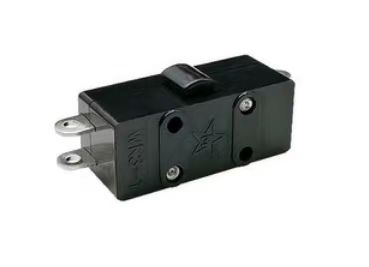
Key Procurement Objectives in Control System Selection:
- Functional Performance: The component must meet or exceed all electrical, mechanical, and response-time parameters of the system design.
- Certification & Airworthiness: Components must hold valid certifications (MIL-SPEC, FAA/PMA, EASA, GOST) for their intended application.
- Reliability & Mean Time Between Failures (MTBF): Demonstrated longevity and predictable failure modes are essential for maintenance planning and safety.
- Lifecycle Cost Optimization: Evaluating total cost of ownership (TCO), including purchase price, installation, maintenance, and replacement costs.
A Step-by-Step Framework for Component Selection
Follow this systematic approach to de-risk the selection process:
- Define the Operational & Environmental Profile:
- Where will the component be used? (E.g., Aircraft Engine bay - high vibration, temperature; cockpit panel - moderate environment).
- What are the peak and continuous electrical loads, switching frequencies, and duty cycles?
- Establish the Compliance & Certification Mandate:
- List all applicable standards (e.g., MIL-STD-810 for environment, MIL-STD-704 for power quality, DO-160 for civil avionics).
- Determine if dual certification (e.g., MIL and GOST) is required for target markets.
- Create a Detailed Supplier Evaluation Matrix:
- Score potential suppliers on technical capability, quality certifications (AS9100), testing facilities, production capacity, and supply chain stability.
- Request and Analyze Technical Data & Test Reports:
- For a Military Aviation Contactor, demand contact life cycle test data under load.
- For an Aviation Sensor, review accuracy, response time, and EMI susceptibility reports.
- Conduct a Total Cost of Ownership (TCO) Analysis:
- Factor in unit price, expected lifespan, maintenance requirements, and the cost of downtime.
- Prototype & First Article Inspection (FAI):
- For new or custom designs, test a prototype in the actual system and conduct a rigorous FAI per AS9102 before full-scale procurement.
Industry Trends & Technological Drivers in Component Selection
New Technology R&D and Application Dynamics
The shift towards More Electric Aircraft (MEA) and Distributed Integrated Modular Avionics (DIMA) architectures is fundamentally changing component needs. This increases demand for:
- High-power, lightweight Military Aviation Contactors and solid-state power controllers.
- Smart, networked Aviation Sensors with embedded diagnostics that communicate via data buses (e.g., ARINC 825, AFDX).
- Components designed for predictive maintenance, enabling condition-based monitoring rather than scheduled replacement.
Additionally, additive manufacturing (3D printing) is enabling rapid prototyping and the production of complex, lightweight custom enclosures for components like bespoke Aviation Meters for Drones.
Insight: Top 5 Selection Criteria for Russian & CIS Procurement Managers
Selection priorities in this region are shaped by operational doctrine and industrial policy:
- Dual Certification as a Non-Negotiable Baseline: Components must have valid certification to both the relevant MIL-STD/DO standard and the corresponding Russian GOST/OST standard, with certificates from recognized institutes.
- Proven Interoperability with Legacy Platforms: For upgrades or MRO, components must have documented compatibility and interface seamlessly with existing Soviet/Russian-designed control systems (e.g., specific voltage levels, connector types).
- Extended Temperature Range Validation: Demonstrated performance across the extreme low temperatures (below -55°C) specified in Russian operational requirements for all components, especially external Aviation Sensors and actuators.
- Localized Technical Support & Documentation: Availability of technical data sheets, manuals, and engineering support in Russian is critical for integration and maintenance.
- Supply Chain Sovereignty & Independence: A strong preference for suppliers who can demonstrate a resilient, non-western supply chain for raw materials and critical sub-components, ensuring uninterrupted supply.
Product Knowledge: Ensuring Optimal Performance Post-Selection
Correct application and handling are vital to realizing the designed performance of selected components.
- Proper Derating: Always apply manufacturer-recommended derating curves. For example, a Military Aviation Relay rated for 30A at 25°C may only be suitable for 20A at 100°C ambient temperature.
- Installation Best Practices: Ensure correct mounting torque, proper wire gauge, and adequate cooling airflow. A High Quality Aviation Engine pressure sensor will fail prematurely if installed with incorrect thread sealant or excessive torque.
- Environmental Protection: Verify that the selected IP or sealing rating of a connector or sensor housing matches the actual environment (e.g., spray, dust, humidity).
YM: Your Partner in Strategic Component Selection
At YM, we understand that component selection is a partnership. We provide not just parts, but the engineering data and support to make informed decisions.
Manufacturing Scale and Facilities: Capacity Meets Precision
Our integrated 75,000 sq.m. manufacturing campus allows us to control the entire production process for key control system components. From the precision stamping of contacts for our Aircraft Contactors to the calibration of final Aviation Meters, we maintain vertical integration. This gives us unmatched control over quality, consistency, and the ability to provide full material traceability—a key selection criterion for major OEMs and MROs.
R&D and Innovation: Developing the Components of Tomorrow
Our R&D team collaborates directly with clients on selection challenges. A recent joint project focused on reducing electromagnetic interference from a power distribution unit. Our solution was a redesigned Military Aviation Relay with a proprietary internal shielding geometry and a novel contact material that minimized arc generation. This custom component, now patented, solved a system-level EMI problem and became a standard selectable option in our catalog, demonstrating our commitment to solving real-world selection dilemmas through innovation.
Core Standards Governing Control System Component Selection
Your selection checklist must reference these standards:
- MIL-STD-704: Defines aircraft electrical power characteristics. Any component interfacing with the aircraft power bus (contactors, relays, meters) must be selected to operate within these parameters.
- MIL-STD-810: The environmental test standard. Selection requires matching the component's tested category (e.g., vibration Category 24 for engine-mounted) to your application.
- RTCA DO-160: The environmental and EMC standard for civil avionics. Essential for components destined for certified civil aircraft.
- MIL-DTL-38999 / AS39029: Standards for high-performance electrical connectors. Selection involves choosing the correct series, shell size, insert arrangement, and sealing class.
- SAE AS5692: A standard for electric contactors and relays, providing common performance requirements and test methods to facilitate objective comparison during selection.
Frequently Asked Questions (FAQ)
Q: Should we always select the component with the highest MTBF rating?
A: Not necessarily. While a high MTBF is desirable, it must be balanced against cost, weight, and functional suitability. A ultra-high-reliability component for a flight-critical system is justified. For a non-essential system, a standard reliability part may offer a better TCO. Always correlate the MTBF claim with the test conditions under which it was derived.
Q: How important is supplier auditability in the selection process?
A: Extremely important. For control system components, the ability to audit the supplier's design, manufacturing, and quality processes is a significant risk mitigator. It verifies their compliance claims firsthand. A supplier like YM, with an open-audit policy and AS9100 certification, provides transparency that reduces procurement risk and builds long-term trust.
Q: What are the key questions to ask about a component's test history?
A: Ask:
- Is the test performed on production samples or just prototypes?
- What was the sample size and failure criteria?
- Can we see the raw test data or a summary report from the last qualification?
- For a critical item like an Aircraft Engine sensor, was the testing done by an independent, accredited lab?
Comprehensive answers differentiate true manufacturers from mere distributors.
References & Further Reading
- SAE International. (2015). AS5692: Electric Contactors and Relays, Aircraft, General Specification For. Warrendale, PA: SAE.
- Department of Defense (DoD). (2015). MIL-STD-704F: Aircraft Electric Power Characteristics. Washington, D.C.: U.S. DoD.
- RTCA, Inc. (2010). DO-160G: Environmental Conditions and Test Procedures for Airborne Equipment. Washington, D.C.: RTCA.
- Moir, I., & Seabridge, A. (2021). Design and Development of Aircraft Systems, 3rd Edition. Bognor Regis: Wiley.
- Wikipedia contributors. (2024, June 10). More Electric Aircraft. In Wikipedia, The Free Encyclopedia. Retrieved from https://en.wikipedia.org/wiki/More_electric_aircraft
- Industry Forum. (2023). "Challenges in Sourcing Dual-Certified Components for CIS Markets." Aviation Week Network Procurement Summit Notes.