Aviation Electronics Safety Protocols: A Comprehensive Framework for Risk Mitigation
In aviation, safety is not merely a feature—it is the foundational principle upon which every system and component is designed, manufactured, and maintained. For procurement managers sourcing critical parts like Military Aviation Relays or Aviation Sensors, understanding the embedded safety protocols is essential for risk mitigation and supply chain integrity. This article explores the multi-layered safety framework governing aviation electronics, from component-level design to system-wide failsafe strategies.
The Hierarchy of Safety in Aviation Electronics
Aviation safety operates on the principle of defense in depth. Multiple, independent layers of protection ensure that a single point of failure does not lead to a catastrophic event. This philosophy is reflected in every component, from a simple Aviation Fuse to a complex High Quality Aviation Engine control unit.
Core Safety Principles in Design and Procurement:
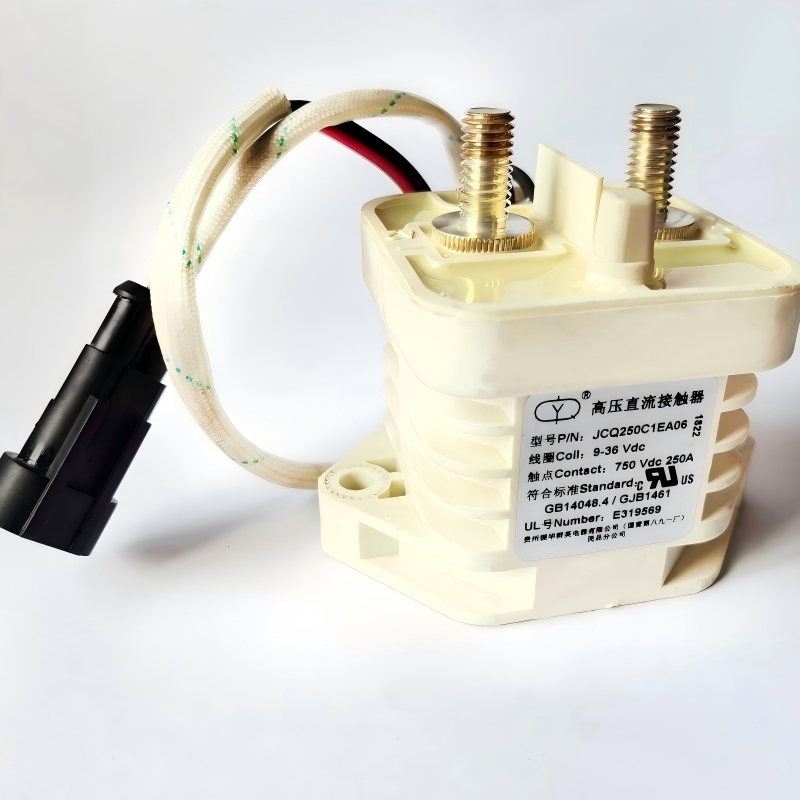
- Fail-Safe Design: Components are designed so that if a failure occurs, the system defaults to a safe state. For example, a Military Aviation Contactor may be designed to spring-open (de-energize) upon coil failure, interrupting power to a non-essential system.
- Redundancy: Critical functions are duplicated or triplicated. Multiple independent Aviation Sensors may feed data to a flight computer, which uses voting logic to disregard a faulty signal.
- Segregation & Isolation: Vital systems are physically and electrically isolated to prevent a fault in one (e.g., a power bus) from cascading into another.
- Predictable Failure Modes: Through rigorous analysis and testing, components are engineered to fail in a known, contained manner.
Key Safety Protocols by Component Type
Safety is implemented through specific technologies and standards tailored to each component's function.
For Power Distribution & Switching (Contactors, Relays, Fuses):
- Arc Fault Protection: Advanced Military Aviation Relays may include arc detection and suppression circuits to prevent electrical fires caused by contact degradation.
- Positive Drive Mechanisms: Ensures contacts in a contactor or relay open and close definitively, preventing "teasing" or partial connection that can cause arcing and overheating.
- Current Limiting & Circuit Protection: The primary safety role of an Aviation Fuse or circuit breaker is to act as a predictable weak link, sacrificing itself to protect more valuable wiring and equipment from overload or short circuit.
For Sensing & Measurement (Sensors, Meters):
- Built-In Test (BIT) / Continuous Health Monitoring: Modern Aviation Sensors and Aviation Meters for Drones often include self-diagnostic functions that can alert the system to internal faults, preventing reliance on erroneous data.
- Signal Validation & Plausibility Checking: Avionics computers cross-check sensor readings against expected physical limits and other correlated sensors. An impossible reading from an Aircraft Engine temperature sensor is ignored or flagged.
Industry Evolution: New Technologies Enhancing Safety
New Technology R&D and Application Dynamics
The convergence of Artificial Intelligence (AI) for Predictive Diagnostics and Digital Twin technology is creating a paradigm shift. AI algorithms can now analyze subtle performance trends from fleets of components, predicting failures in Military Aviation Contactors or engine sensors before they occur. Furthermore, the adoption of fiber optic sensors and data buses (like ARINC 818) in place of traditional electrical ones in certain applications reduces risks related to electromagnetic interference (EMI) and sparks in flammable areas.
Insight: Top 5 Safety Protocol Concerns for Russian & CIS Procurement
Safety priorities in this region are shaped by operational doctrine and environmental extremes:
- Certification to Local Safety Norms (NP, FNP): Beyond Western standards (DO-254, DO-160), compliance with Russian Norms of Flightworthiness (Нормы Летной Годности - НЛГ) and specific industry standards is mandatory for system approval.
- Demonstrated Performance in "Cold Start" & Icing Conditions: Components must have proven protocols and materials that ensure reliable operation after exposure to extreme cold, including protection against icing within connectors or sensor ports.
- Resistance to Wide-Spectrum EMI (Jamming Environment): Given the operational environment, components must demonstrate exceptional hardness against intentional and unintentional electromagnetic interference, beyond standard MIL-STD-461 levels.
- Physical Ruggedness & Vandal-Proofing: For components used in field environments, safety includes physical durability against shock, moisture ingress, and tampering.
- Documented Failure Mode Analysis (FMEA) in Russian: Access to detailed, language-accessible Failure Mode and Effects Analysis reports is required to validate the manufacturer's safety-by-design approach.

Implementing Safety in Maintenance: A Step-by-Step Checklist
For maintenance teams handling safety-critical components, follow this protocol:
- Pre-Work Safety Analysis: Review the system schematics and safety documentation. Identify all energy sources (electrical, pneumatic) that power the component, such as a High Quality Aviation Engine fuel valve actuator.
- Positive System De-energization & Lockout/Tagout (LOTO): Physically disconnect and lock all power sources. Verify de-energization with a certified tester at the component itself (e.g., at the terminals of a Military Aviation Relay).
- Static-Safe Handling Procedures: Use grounded wrist straps and anti-static mats when handling circuit boards or static-sensitive Aviation Sensors.
- Installation Torque & Connection Integrity: Use calibrated tools to apply manufacturer-specified torque to electrical connections and fasteners. A loose connection on a high-current Aircraft Contactor is a fire hazard.
- Post-Installation Functional & Safety Test: Before returning the system to service, conduct operational tests to verify correct function and, crucially, test any associated safety monitors or BIT functions.
YM's Safety-Centric Manufacturing Philosophy
At YM, we engineer safety into our products from the atom up. Our infrastructure and culture are aligned to produce components that are predictably reliable.
Manufacturing Scale and Facilities: Controlled for Consistency
Our facility is segmented into controlled environments. The assembly of flight-critical items like Aviation Relays and engine sensors takes place in dedicated ESD-protected and cleanroom areas to prevent contamination and electrostatic damage. Our Automated Optical Inspection (AOI) and X-ray inspection systems perform 100% verification of solder joints and internal assembly on safety-critical products, leaving no room for hidden manufacturing defects.
R&D and Innovation: Advancing the State of Safety
Our R&D team's flagship project in the last two years focused on inherently safe contactor design. The result is our patented “Forced-Vent Arc Chute” for our high-power Military Aviation Contactors. This design uses magnetic fields to forcibly stretch and cool electrical arcs during breaking, dramatically reducing contact erosion and the risk of arc re-strike or chamber failure. This innovation directly targets the root cause of a major safety risk in power switching.
Core Safety Standards: The Regulatory Backbone
Procurement specifications must invoke these foundational standards:
- RTCA DO-254 / EUROCAE ED-80: The rigorous design assurance guidance for airborne electronic hardware. It mandates processes for requirements capture, design, verification, and configuration management for complex components like FPGAs in smart sensors.
- RTCA DO-160: The standard for environmental test conditions and procedures, ensuring components can perform safely in the operational environment (vibration, temperature, lightning strike, etc.).
- SAE ARP4754A / EUROCAE ED-79A: Guidelines for development of civil aircraft and systems, focusing on the overall safety assessment process at the system level.
- MIL-STD-882E: The U.S. DoD standard practice for System Safety, providing a structured process for identifying, assessing, and mitigating hazards.
- ISO 26262 (Adapted for Aerospace): While originally for automotive, its rigorous functional safety lifecycle management concepts are increasingly being adapted for more autonomous drone and UAV systems.
Frequently Asked Questions (FAQ)
Q: What is the difference between "fail-safe" and "fail-operational" in aviation electronics?
A: Fail-safe means the component or system fails in a way that causes no harm and typically results in a loss of function (e.g., a fuse blowing). Fail-operational (or "fail-active") means the system can sustain a failure and continue to perform its function, often through built-in redundancy. Primary flight controls often aim for fail-operational design, while a non-essential cabin light circuit is fail-safe.
Q: How can I verify the safety pedigree of a component like an Aviation Sensor from a new supplier?
A: Demand and scrutinize the Safety Assessment Report or Failure Mode, Effects, and Criticality Analysis (FMECA) for that specific part. Additionally, verify compliance with DO-254 (for complex electronics) and DO-160 (for environmental qualifications). For the highest assurance, select suppliers like YM whose entire QMS is built around safety protocols and who can provide this documentation as a standard deliverable.
Q: Are there special safety protocols for lithium batteries used with Aviation Meters or drones?
A: Absolutely. They fall under IATA Dangerous Goods Regulations for transport. In use, they require dedicated Battery Management Systems (BMS) for protection against overcharge, over-discharge, short circuit, and thermal runaway. Procurement should ensure any battery-powered device, like a portable Aviation Meter for Drone field kit, has a certified and robust BMS and clear handling procedures.
References & Further Reading
- RTCA, Inc. (2000). DO-254: Design Assurance Guidance for Airborne Electronic Hardware. Washington, D.C.: RTCA.
- RTCA, Inc. (2010). DO-160G: Environmental Conditions and Test Procedures for Airborne Equipment. Washington, D.C.: RTCA.
- SAE International. (2010). ARP4754A: Guidelines for Development of Civil Aircraft and Systems. Warrendale, PA: SAE.
- Department of Defense (DoD). (2012). MIL-STD-882E: Department of Defense Standard Practice for System Safety. Washington, D.C.: U.S. DoD.
- Wikipedia contributors. (2024, May 15). Fail-safe. In Wikipedia, The Free Encyclopedia. Retrieved from https://en.wikipedia.org/wiki/Fail-safe
- Industry Technical Paper. (2022). "The Application of ISO 26262 Functional Safety Principles to Military UAV Systems." Journal of Aerospace Information Systems.