
Aviation Fuse Selection Criteria Guide: A Strategic Framework for B2B Procurement and System Design
Selecting the correct aviation fuse is a critical engineering decision that directly impacts system safety, reliability, maintenance costs, and regulatory compliance. For procurement managers and design engineers across the aerospace supply chain, from OEMs integrating high quality aviation engine controls to MROs sourcing parts for legacy fleets, a methodical selection process is non-negotiable. This comprehensive guide provides a step-by-step framework for evaluating and selecting fuses for military aviation fuses & fuse holders, commercial aircraft aviation fuses & fuse holders, and next-generation aviation fuses & fuse holders for drone platforms.
The Core Selection Criteria: A Seven-Step Framework
Avoid selecting fuses based solely on amperage rating. A holistic approach considering all interdependent parameters is required for optimal performance and safety.
Step 1: Define Normal Operating Parameters
- Steady-State Current (Iop): The continuous current the circuit carries under normal operation. Accurate measurement or calculation is essential.
- System Voltage (Vsys): The maximum operating voltage of the circuit (e.g., 28V DC, 115V AC 400Hz, 270V DC for More-Electric Aircraft).
- Ambient Temperature: The temperature surrounding the fuse in its installed location (e.g., a hot engine bay vs. a cooled avionics rack). Fuse ratings are typically derated at high temperatures.
Step 2: Analyze Circuit Characteristics & Transients
This step determines the required fuse type (speed).
- Inrush/Surge Current: Identify any high, short-duration startup currents (motors, transformers, lamp filaments). Quantify magnitude (Iinrush) and duration (tinrush).
- Pulse/Transient Tolerance: Assess if the circuit experiences recurring short pulses (e.g., from solenoid actuation).
- Load Type: Is it a purely resistive load, inductive (motors, relays), or capacitive (power supplies)?
Selection Outcome: Choose Fast-Acting (e.g., BGDC/BGXC) for semiconductor and sensitive electronic protection. Choose Time-Delay/Slow-Blow for circuits with high inrush currents.
Step 3: Determine Ampere Rating with Derating
The fuse rating must be higher than the normal operating current but lower than the wire's ampacity. A standard practice is:
Initial Rating ≈ 125-150% of Iop
Then, apply a temperature derating factor (consult manufacturer's charts). For example, at 100°C ambient, a fuse may only carry 80% of its 25°C rating. The final selected rating must withstand Iinrush/pulses (Step 2) without nuisance opening.
Step 4: Verify Voltage and Interrupting Ratings
- Voltage Rating: The fuse's voltage rating must exceed Vsys. Using a lower voltage-rated fuse in a higher voltage circuit can prevent safe arc extinction, leading to fire.
- Interrupting Rating (AIC): This is the maximum fault current the fuse can safely interrupt. It must be greater than the available short-circuit current at the fuse's location in the system. In aerospace, this can be tens of thousands of amperes.
Step 5: Select Physical Form Factor and Fuse Holder
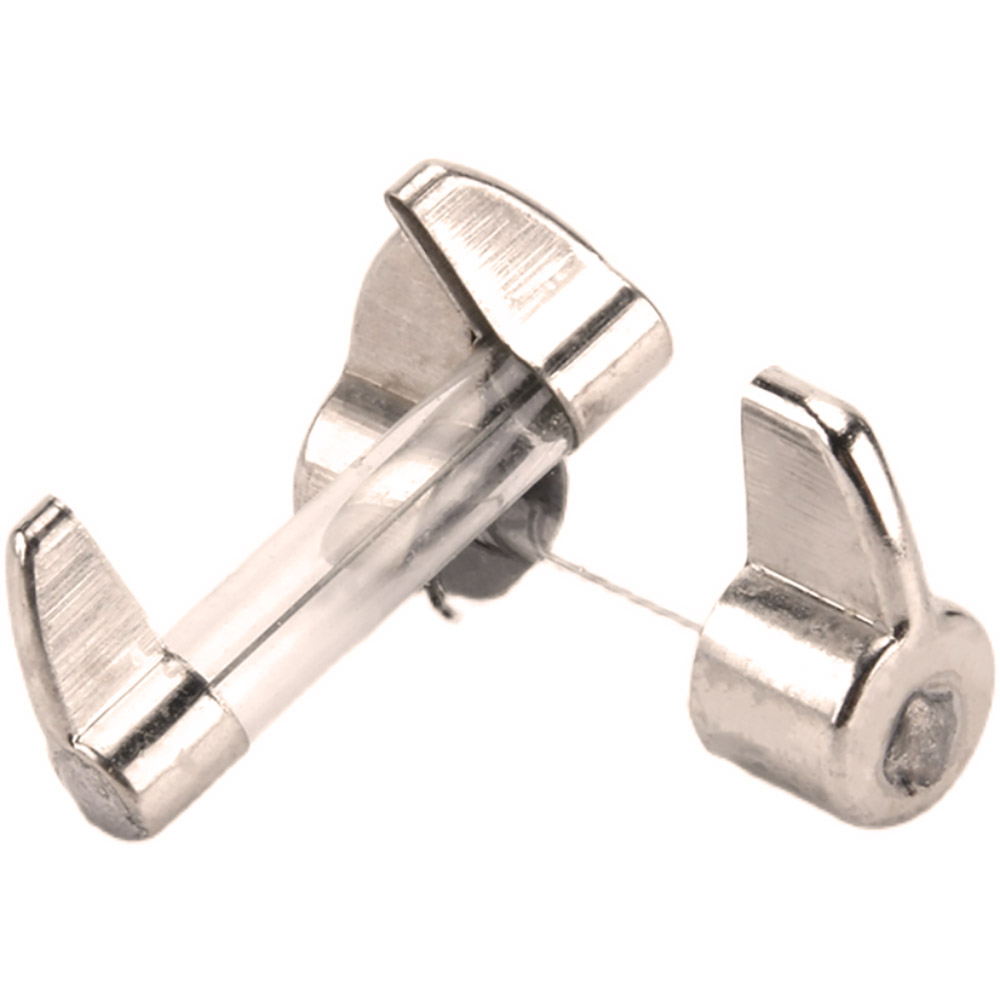
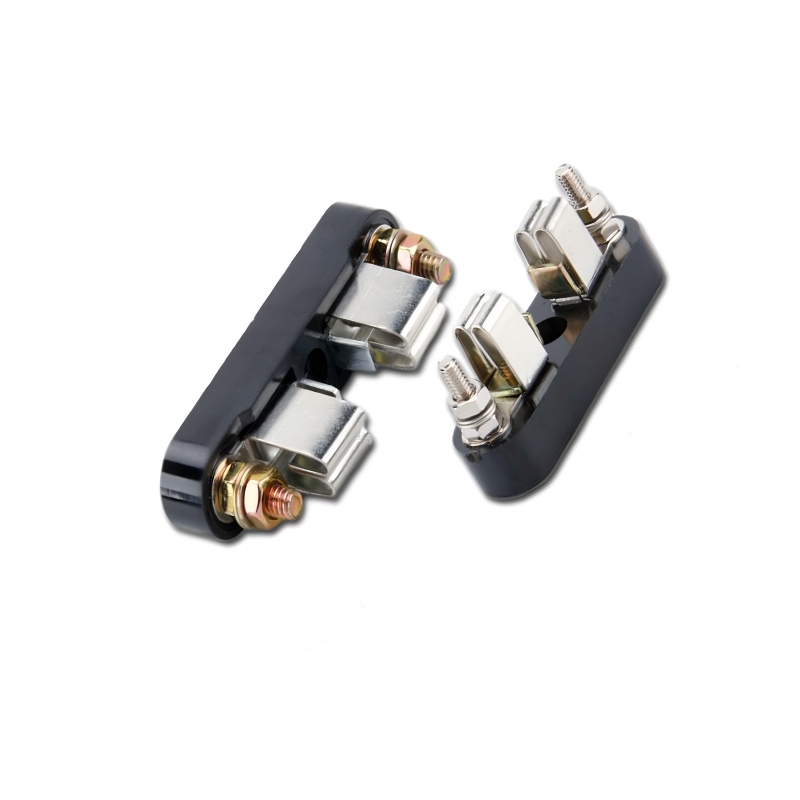
The electrical selection must be paired with a mechanical one. Ensure compatibility with existing or specified fuse holders or panels. Key dimensions include length (e.g., 1/4" x 1-1/4", 8X37), diameter, and terminal style.
Step 6: Evaluate Agency Approvals and Standards
The fuse must carry the necessary approvals for the target market and application:
Military: MIL-PRF-23419 compliance.
Commercial Aviation: SAE AS 21711 compliance, often with specific OEM (Boeing, Airbus) approvals or TSO authorization.
Regional (e.g., Russia): Equivalence to GOST/OST standards is mandatory for procurement.
Step 7: Assess Quality, Traceability, and Supplier Reliability
For B2B procurement, the supplier's quality system (AS9100), component traceability, and long-term product support are part of the selection. A fuse from a manufacturer like YM, with full material certifications and a lifecycle management program, reduces supply chain risk.
Industry Trends and Technological Evolution
New Technology R&D: Solid-State and Smart Fuse Modules
The frontier of circuit protection lies in Solid-State Power Controllers (SSPCs) and hybrid "smart fuse" modules. These devices offer precise, programmable trip curves, resettable functionality, and digital health and status reporting via data buses (ARINC 825, CAN). While not replacing traditional fuses everywhere, they are becoming standard in new aircraft engine and flight control system power distribution.
Industry Trend Analysis: The Data-Driven, Prognostic Approach
There is a shift from viewing fuses as simple sacrificial components to integrating them into Prognostic Health Management (PHM) systems. Fuses with built-in blown indicators that send a signal or holders with current monitoring enable predictive maintenance. This trend is especially valuable for aviation fuses & fuse holders for drone operators, where minimizing unscheduled maintenance is crucial for operational efficiency.

Procurement Deep Dive: The Russian Market's Technical-Commercial Checklist
Russian aerospace procurement adds layers of technical and bureaucratic scrutiny to the standard selection criteria:
- Formal Equivalency Certification (GOST/OST): The selected fuse must have a formal, documented certification from a recognized Russian institute proving its electrical and physical equivalence to the specified Russian type (e.g., ПН-2, ПС). This is often more important than MIL or SAE approvals.
- Extreme Low-Temperature Performance Validation: Requires specific test data, beyond standard derating charts, proving the fuse's time-current characteristic remains stable and predictable at temperatures below -55°C, including its mechanical integrity (glass, seals).
- Detailed Constructional Approval: Russian QA may require approval not just of the performance, but of the specific internal construction (element material, filler type, end cap welding method) used by the manufacturer.
- Integrated Logistics Support (ILS) Data: Procurement often requires the supplier to provide full ILS data packs, including predicted failure rates (MTBF), shelf life under various storage conditions, and detailed provisioning information for spares.
- Domestic Representation and Technical Arbitration: A strong preference for suppliers with an established technical office or a highly capable authorized distributor within Russia/CIS who can provide local support, handle certification queries, and manage warranty claims directly.
Operational Knowledge and Standards Framework
Best Practices for Use and Maintenance
- Never Up-Fuse: Replacing a blown fuse with a higher amperage rating is a severe safety violation that can lead to wire fires.
- Use Proper Tools: Utilize fuse pullers for cartridge fuses to avoid damage or shock risk.
- Documentation: Maintain clear records of fuse ratings and locations for each system. Label fuse panels unambiguously.
- Storage: Store spare fuses in their original packaging in a controlled environment to prevent corrosion or degradation.
Key Governing Standards and Specifications
Understanding the standard landscape is crucial for specification writing and supplier evaluation:
SAE AS 21711: The baseline performance standard for aerospace cartridge fuses.
MIL-PRF-23419: The military performance specification with stringent environmental and quality requirements.
RTCA/DO-160: Environmental test procedures (Sections for Temp, Altitude, Vibration, Shock).
ISO 8820: Fuse-links (road vehicles) – often referenced for form factors and test methods.
Suppliers like YM, whose processes are certified to AS9100, provide inherent assurance of compliance with this standards framework.

YM's Engineering and Manufacturing Capabilities
Scalable, Certified Production Infrastructure
Meeting the precise demands of aviation fuse selection requires manufacturing excellence. Our 75,000 sq. meter AS9100-certified manufacturing campus houses a vertically integrated fuse production line. From alloy formulation for the fusible element to automated glass tube sealing and 100% electrical testing, we maintain control over every variable. This ensures the high quality aviation fuses we produce for Train, Plane, and UAV applications consistently meet their published specifications—turning your selection decision into a guaranteed outcome.
R&D Focus: Precision and Predictive Performance
Our R&D team works on closing the gap between theoretical selection and real-world performance. A key innovation is our proprietary Advanced Characteristic Modeling (ACM) software. By inputting your specific circuit parameters (Iop, Iinrush, ambient temp), our engineers can model the precise behavior of our fuses and recommend the optimal part number, virtually eliminating field tuning and nuisance trips. This capability is particularly valuable for complex military aviation fuses & fuse holders systems and new aircraft aviation fuses & fuse holders designs.
Frequently Asked Questions (FAQ)
Q1: What is the most common mistake in aviation fuse selection?
A: The most common and dangerous mistake is selecting a fuse based only on the amperage rating while ignoring the voltage rating, interrupting rating, and time-current characteristic (speed). This can lead to a fuse that doesn't protect the circuit, fails to clear a fault safely, or causes persistent nuisance trips.
Q2: How do we select fuses for a 270V DC More-Electric Aircraft system compared to a traditional 28V DC system?
A: 270V DC systems present a significantly greater arc energy challenge. Selection criteria emphasize:
1. Higher Voltage Rating: Fuses rated for 300V DC or higher.
2. Enhanced Interrupting Rating: Must handle higher available fault currents.
3. DC-Specific Design: Fuses designed specifically for high-voltage DC interruption, often with special arc-quenching fillers.
4. Coordination with SSPCs: Fuses are often used as backup protection to solid-state devices, requiring precise coordination studies.
Q3: Can we use automotive or industrial fuses in Aviation Applications if the amperage and voltage seem to match?
A: Absolutely not. Aviation fuses are subjected to rigorous qualification for vibration, shock, temperature cycling, altitude, and must have predictable, certified failure modes. They are manufactured under strict quality controls (AS9100) with full traceability. Using an unapproved fuse invalidates the system's airworthiness certification and poses an extreme safety risk. Always source certified aviation-grade components.
References and Further Reading
1. Society of Automotive Engineers (SAE). (2015). AS21711B: Fuses, Cartridge, General Purpose for Aerospace Applications. Warrendale, PA: SAE International.
2. U.S. Department of Defense. (2005). MIL-PRF-23419: Performance Specification Fuse, Cartridge, General Purpose. Washington, D.C.: DODSSP.
3. Pilot's Handbook of Aeronautical Knowledge (FAA-H-8083-25B). (2016). Chapter 7: Aircraft Systems – Electrical. [Provides foundational system context].
4. Aerospace Electrical Power & Avionics Systems Forum (AEPAS). (2023, November). Thread: "Practical Challenges in Fuse Coordination for Hybrid (Fuse + SSPC) Power Systems." [Online Technical Forum].


