
BZ-2 Aviation Copper Fuse Holder Installation Manual: A Guide to Safe and Reliable Circuit Integration
In aerospace electrical systems, the fuse holder is as critical as the fuse itself—it is the vital interface that ensures secure mechanical connection, optimal electrical contact, and thermal management. Proper installation of the BZ-2 Aviation Copper Fuse Holder is fundamental to achieving the full performance and safety potential of the circuit protection system. This comprehensive manual provides step-by-step instructions, industry context, and procurement insights for B2B managers responsible for integrating military aviation fuses & fuse holders and aircraft aviation fuses & fuse holders into new builds, upgrades, and MRO operations for platforms ranging from commercial aircraft to aviation fuses & fuse holders for drone systems.
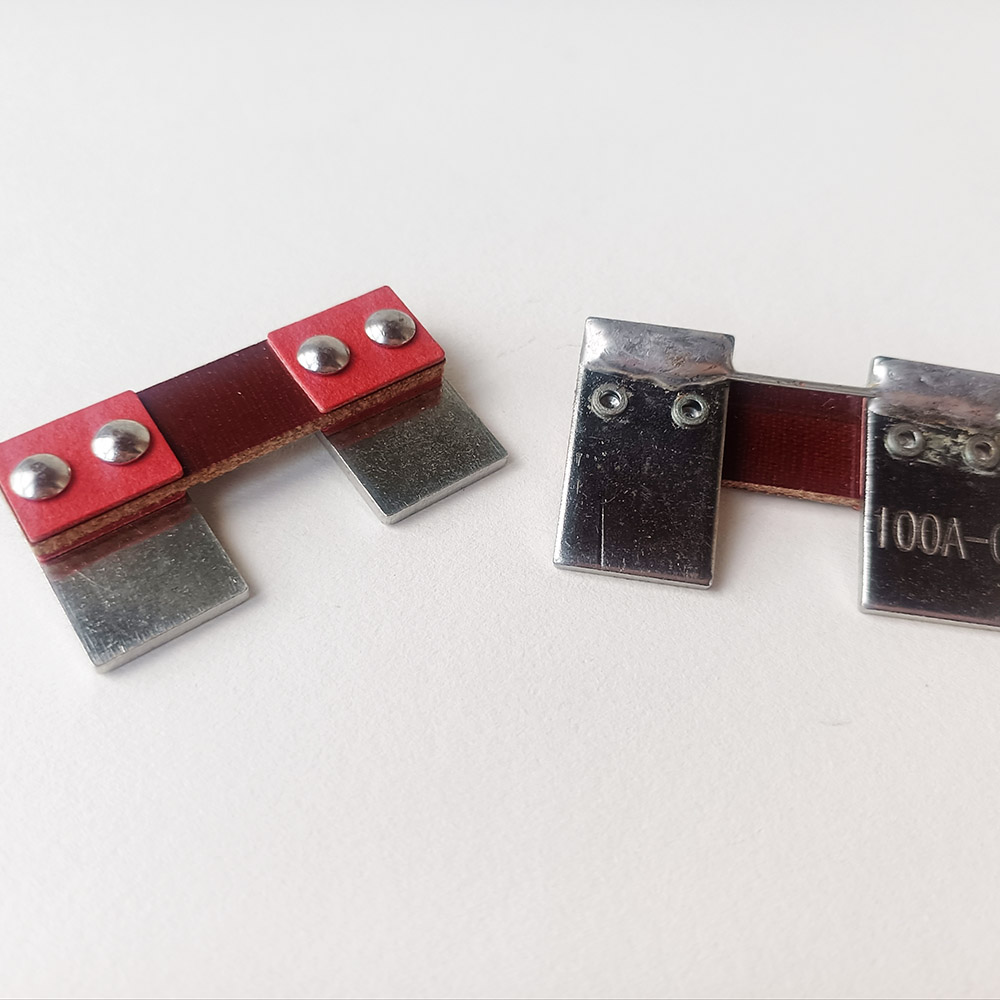

Pre-Installation Planning and Inspection
Successful installation begins with thorough preparation. Rushing this phase is the leading cause of field failures and maintenance issues.
Materials and Tools Checklist
- BZ-2 Fuse Holder assembly (Body, Contacts, Cover).
- Specified mounting hardware (screws, nuts, washers - typically MS or NAS).
- Correct wire gauge and terminals (e.g., ring terminals) compatible with the holder's stud size.
- Calibrated torque wrench and appropriate screwdriver/driver bits.
- Wire stripping and crimping tools.
- Multimeter for continuity verification.
- Approved cleaning solvent and lint-free cloth.
Component Inspection
Before installation, inspect all parts against the packing list and for any defects:
Holder Body & Cover: Check for cracks, porosity in castings, or damaged threads.
Copper Contacts/Studs: Verify they are clean, free of oxidation, and move smoothly if designed to pivot.
Hardware: Ensure no corrosion or physical damage on screws and washers.
Always refer to the official YM technical drawing for the specific BZ-2 variant you are installing.
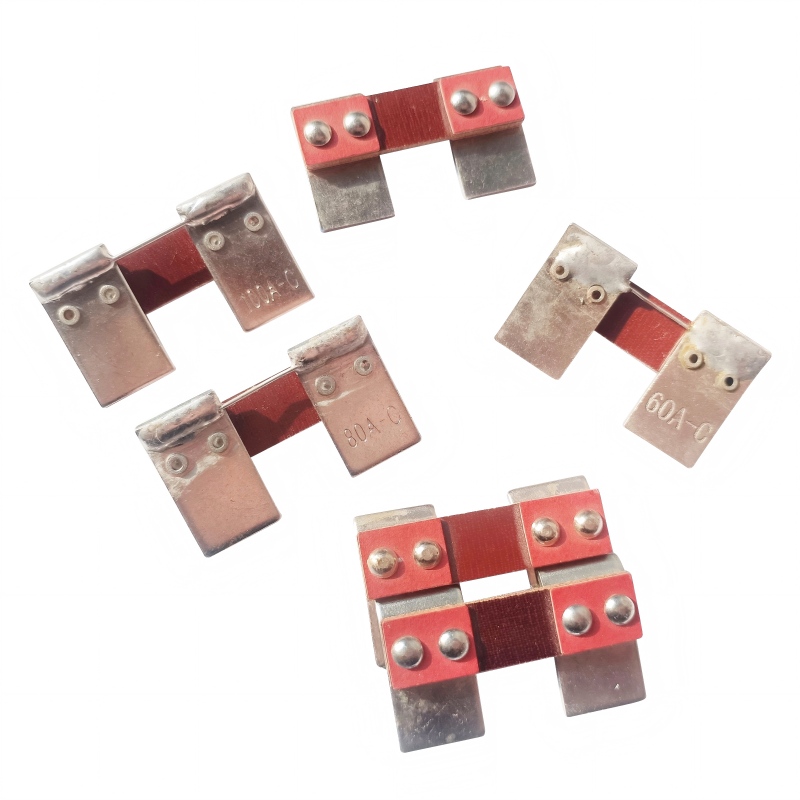
Step-by-Step Installation Procedure
Follow these steps meticulously to ensure a safe, reliable, and compliant installation. This procedure assumes installation on a flat panel or sub-panel.
- System Safety & Preparation:
- Ensure the circuit is de-energized and locked out/tagged out (LOTO).
- Identify and confirm the mounting location on the panel. Ensure there is adequate clearance for wire bends, heat dissipation, and future fuse replacement.
- Panel Preparation:
- Drill and deburr mounting holes according to the holder's template or drawing dimensions. Remove all metal shavings.
- Clean the mounting surface to ensure good electrical ground (if applicable) and to remove contaminants.
- Holder Assembly & Mounting:
- Assemble the holder body with any insulating gaskets or shims as specified.
- Place the holder in position and secure it using the provided hardware. Use a calibrated torque wrench to tighten mounting screws/nuts to the value specified in the YM installation data. Overtightening can crack the housing; undertightening can lead to loosening under vibration.
- Electrical Connection:
- Strip wires to the correct length for the terminal lugs.
- Crimp or solder approved terminals onto the wires.
- Connect the wires to the holder's input and output studs. Typically, the line/power source connects to the designated "LINE" or top stud. Secure with nuts, applying the correct torque.
- Dress wires neatly and secure with clamps to prevent strain on the terminals.
- Final Assembly & Fuse Insertion:
- Insert the correct high quality aviation rated fuse (e.g., an 8X37 cartridge fuse for the corresponding BZ-2 size).
- Place the cover and secure it with its fastener. Ensure the cover seats evenly and any sealing gasket is compressed correctly.
Industry Trends and Connector Technology Evolution
New Technology R&D: Vibration-Resistant and Smart Holders
R&D is moving beyond passive components. Innovations include holders with integrated spring-loaded or wedge-lock contact mechanisms that maintain constant pressure on the fuse end caps under extreme vibration, preventing "fretting" corrosion and intermittent connections. Furthermore, "smart" holders with embedded micro-switches or current sensors can provide remote status (fuse blown/healthy) to the aircraft's health monitoring system, a significant advance for aviation fuses & fuse holders for drone and hard-to-access locations.
Industry Trend Analysis: Lightweighting and Material Science
While copper remains the standard for conductivity, there is a strong trend towards aluminum alloys for holder bodies and even plated aluminum for high-current contacts to reduce weight. The BZ-2's use of high-conductivity copper is now often justified by its superior performance in high-vibration, high-reliability applications like military aviation fuses & fuse holders or aircraft engine accessory feeds, where minimal contact resistance over the lifecycle is paramount. Coatings and platings (tin, silver, nickel) are also advancing to reduce oxidation and maintain low resistance.

Procurement and Quality Assurance: The Russian Market Viewpoint
For Russian aerospace procurement, a fuse holder is evaluated as a critical connection point with long-term implications:
- Material Certification and GOST Compliance: Demand for certified mill reports for the copper alloy used, proving its conductivity and mechanical properties. Holder design and performance must comply with relevant Russian standards (e.g., GOST R 53323 for electrical apparatus, specific OST standards).
- Vibration and Mechanical Life Testing Data: Suppliers must provide test reports demonstrating the holder's performance under prolonged high-frequency vibration (per GOST 30630 or MIL-STD-810) and its mechanical cycle life (insertion/removal of fuse) without degradation of contact pressure.
- Complete Interface Compatibility: Guarantee of dimensional interchangeability with existing fuse panels and the specific fuse types (Russian or Western) used in the fleet. This includes precise stud thread specifications (e.g., metric vs. UNF).
- Corrosion Protection Specification: Detailed documentation on the specific plating or finish applied (e.g., nickel plating per QQ-N-290), including salt spray test results per GOST 9.308 or ASTM B117 to guarantee performance in humid/marine environments.
- Batch Traceability and Long-Term Spare Parts: Each holder lot must be traceable. There is also a strong emphasis on the supplier's commitment to producing spare covers, contacts, and gaskets for the BZ-2 series for the platform's entire service life (30+ years), supported by a lifecycle parts program.
Maintenance, Troubleshooting, and Industry Standards
Routine Maintenance and Inspection Schedule
During regular aircraft or system checks:
Visual Inspection: Look for signs of overheating (discoloration, melted insulation), corrosion on terminals, and secure mounting.
Thermal Inspection: If possible, use a thermal camera during system operation to check for abnormal hot spots at the connections.
Torque Check: Periodically (as per maintenance schedule) verify the torque on critical terminal and mounting hardware.
Contact Resistance Check: During major overhaul, measure the voltage drop across the installed holder (under load) or its DC millivolt drop to identify deteriorating contacts.
Common Installation & Operational Faults
Symptom: Intermittent circuit operation.
Probable Cause: Loose terminal connection, corroded contacts, or a cracked holder body.
Symptom: Fuse holder overheating.
Probable Cause: Undersized wiring, loose connection (high resistance), using a fuse holder rated below the circuit current, or a failed/corroded contact.
Action: De-energize the circuit, inspect, correct the fault, and replace damaged components with genuine YM parts.

Governing Industry Standards
Design, testing, and installation reference key standards:
SAE AS 21712: Specification for Fuseholders, Cartridge, General Purpose for Aerospace Applications.
MIL-F-23484: Military specification for fuseholders.
RTCA/DO-160: Sections for vibration, shock, temperature, and humidity.
National Electrical Code (NEC) / IEC 60934: General principles of circuit protection (referenced for best practice).
YM Manufacturing: Precision for Critical Connections
Dedicated Electrical Interconnect Production
The BZ-2's reliability stems from precision manufacturing. Our electrical interconnect production line utilizes CNC machining for consistent contact fabrication, precision stamping for terminals, and automated plating lines for uniform, spec-compliant coatings. Each holder undergoes a functional test, including a specified insertion/withdrawal force check for the fuse and a dielectric withstand test. This rigorous process ensures that every BZ-2 holder provides a flawless interface for high quality aviation engine control circuits and mission-critical systems.

R&D Focus: Contact Physics and Environmental Sealing
Our R&D team studies the fundamental physics of electrical contact under vibration. A key innovation is our "Constant-Force Contact" design, used in the BZ-2 series. This uses a proprietary beryllium copper spring design that maintains optimal contact force on the fuse end cap throughout its service life, compensating for material creep and thermal cycling. Additionally, we have developed a high-temperature silicone sealing gasket that maintains its elasticity across a -65°C to +200°C range, ensuring environmental protection for holders used in demanding locations on Train, Plane, and UAVs.
Frequently Asked Questions (FAQ)
Q1: What is the proper torque for the terminal nuts on the BZ-2 holder, and why is it so critical?
A: The exact torque value is specified in the installation data sheet for your specific BZ-2 variant (e.g., for a 3/8" stud, it might be 50-60 in-lbs). It is critical because under-torquing leads to high resistance, heat, and potential fire. Over-torquing can strip threads, crack insulators, or deform the contact, also leading to high resistance. Always use a calibrated torque wrench.
Q2: Can the BZ-2 holder be used in both pressurized and unpressurized areas of an aircraft?
A: The standard BZ-2 is designed for general use. For installations in unpressurized areas or those exposed to severe moisture, fuel, or hydraulic fluid, you must specify and use a variant with the appropriate environmental sealing (e.g., with an O-ring sealed cover). Check the part number suffix or consult our environmental ratings guide.
Q3: We are upgrading an older panel. Are BZ-2 holders backwards compatible with older "BH" or "BJ" series fuse holders?
A: Often, yes, but not always. The BZ-2 typically shares the same panel cutout and mounting hole pattern as many older MIL-spec holders for the same fuse size (e.g., 8X37). However, terminal stud location and orientation may differ. It is essential to compare the technical drawings of the old and new holder to verify mechanical and wiring compatibility before procurement and installation.
References and Further Reading
1. SAE International. (2016). AS21712B: Fuseholders, Cartridge, General Purpose for Aerospace Applications. Warrendale, PA: SAE International.
2. U.S. Department of Defense. (1992). MIL-F-23484/1: Fuseholder, Cartridge, 1-1/4 Inch Length, 1/4 Inch Diameter, 30 Ampere. Washington, D.C.: DODSSP.
3. Slade, P. G. (Ed.). (2014). Electrical Contacts: Principles and Applications (2nd ed.). CRC Press. [Fundamental reference on contact physics].


