High Current Aviation Switches Selection Guide: Engineering for Power and Reliability
Specifying a switch for high-current applications in aviation, defense, and heavy industry is a critical engineering decision with direct implications for system safety, reliability, and total cost of ownership. Unlike low-power signal switches, High Current Aviation Switches must manage significant electrical energy, demanding careful consideration of electrical, thermal, and mechanical parameters. This comprehensive guide provides B2B采购 managers, design engineers, and system integrators with a structured framework for selecting the right high-current switch, ensuring optimal performance and longevity in demanding applications such as Aircraft Engine controls, drone power distribution, and industrial machinery.
Understanding "High Current" in Aviation Context
In aviation and military systems, "high current" typically refers to loads from 10 Amperes up to 200+ Amperes at voltages like 28VDC or 115VAC. These switches control critical loads where failure can be catastrophic.
- Typical High-Current Loads: Fuel pumps, hydraulic pumps, landing gear motors, de-icing systems, auxiliary power units (APUs), and high-power avionics cooling fans.
- Key Challenge - Heat Management: The primary enemy of a high-current switch is I²R heating (Joule heating). Poor contact resistance or undersized components lead to overheating, contact welding, and failure.
- The Safety Imperative: A failure in a high-current circuit can lead to fires, loss of critical systems, or uncontrolled energy release. Selection is a safety-critical process.
Critical Selection Parameters: A Step-by-Step Evaluation Framework
Step 1: Define the Electrical Load Precisely
Never guess. Base your selection on measured or calculated data.
- Current Type & Magnitude: Is it DC or AC? What is the continuous current (Icont)? What is the inrush current (can be 5-10x higher for motors/transformers)?
- Voltage Rating: Ensure the switch's voltage rating exceeds the system's maximum voltage, including transients.
- Load Characteristic: Is it Resistive (heater, lamp), Inductive (motor, solenoid), or Capacitive? Inductive loads cause arcing on switch-off, requiring higher contact ratings or arc suppression.
YM provides detailed application engineering support to help customers accurately characterize their loads.
Step 2: Select the Appropriate Switch Type and Technology
Not all switches are created equal for high-current duty.
- Heavy-Duty Toggle or Rocker Switches (e.g., LLS2 series): For direct manual control up to ~35-50A. Ideal for Aviation Switch for Drone power distribution or ground support equipment panels.
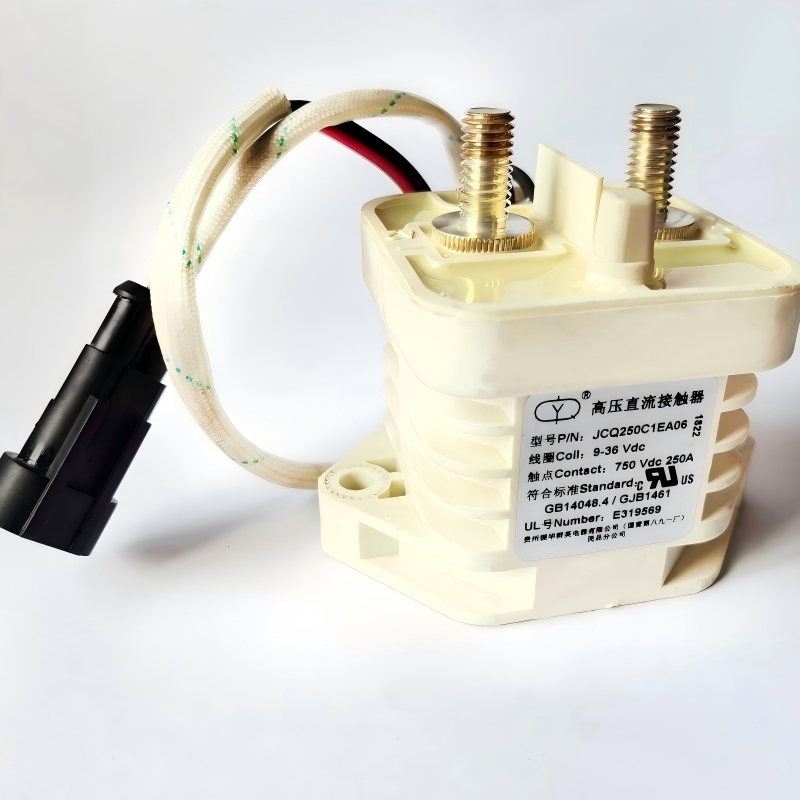
- Power Relays/Contactors: For currents above 50A or for remote/automated control. The manual switch then becomes a low-current signal device controlling the relay coil.
- Circuit Breakers with Manual Control: Combine switching and over-current protection in one device, ideal for primary power distribution panels.
- Rotary Cam Switches: For complex sequencing or selecting between multiple high-current sources.
Step 3: Evaluate Key Performance Specifications
Scrutinize the datasheet for these non-negotiable parameters:
- Continuous Current Rating (Imax): The cornerstone rating. Apply a derating factor (e.g., 75% of rating) for high ambient temperature or inductive loads.
- Inrush Current Withstand: Can the contacts handle the brief surge without welding? Look for a specified "make" rating.
- Contact Material & Construction: Silver-cadmium oxide (AgCdO) or fine silver is standard for high-current. Look for robust, sprung contacts with high contact pressure.
- Electrical Life (Cycles at Load): Rated number of operations at the specified current. A Military Aviation Switch might be rated for 10,000 cycles at 30A, far exceeding commercial grades.
- Temperature Rise: Datasheet should specify max temperature rise (e.g., ΔT ≤ 30°C) at rated current. This is a direct indicator of thermal design quality.
Step 4: Consider Mechanical and Environmental Requirements
The electrical heart must be protected by a robust body.
- Enclosure & Sealing (IP Rating): IP65 or higher for exposure to fluids, dust, or wash-downs. Critical for High quality Aviation Engine, Train, Plane external panels.
- Termination Type: Heavy-duty screw terminals, bus bars, or lugs capable of accepting the required wire gauge. Proper termination is vital to prevent localized heating.
- Actuator Type & Force: Ensure the actuator (toggle, paddle) provides clear indication and can be operated with gloves if needed.
- Agency Approvals: For commercial aviation, look for TSO (Technical Standard Order) markings. For military, MIL-SPEC qualifications (e.g., MIL-DTL-83731).
Industry Trends & Technological Advancements
The Shift Towards Solid-State Power Controllers (SSPCs)
While electromechanical switches dominate, Solid-State Power Controllers are gaining traction for ultra-high cycle life, arc-less operation, and built-in diagnostics (current monitoring, fault reporting). They are key for More Electric Aircraft (MEA) architectures. YM's R&D is developing hybrid solutions that pair traditional switch ergonomics with solid-state switching cores.
Advanced Contact Materials and Arc Management
Research into new contact materials like silver-tin oxide (AgSnO2) and advanced arc chute designs within the switch housing are extending electrical life and reducing maintenance. These innovations, tested in YM's dedicated high-current test lab, allow switches to handle higher inductive loads safely.
Integration with Health Monitoring Systems
The future lies in "smart" high-current switches with embedded sensors to monitor contact temperature, resistance, and actuation count. This data enables predictive maintenance, warning of degradation before failure. This is a key development area for next-generation Aircraft Switch systems.
YM's Manufacturing Capability for High-Current Components
Producing a reliable high-current switch requires specialized processes. YM's high-current product line is manufactured in a facility with dedicated resistance welding stations for attaching massive contacts, dynamic contact resistance testers that verify performance under simulated load, and high-power burn-in racks where every switch is energized at its rated current before shipment. Our 30,000 sq.m. campus includes a substation to support the immense power draw of these final validation tests, ensuring the switch you receive is proven under real load conditions.
R&D Focus: Conquering the Arc and Managing Heat
Our R&D team's primary focus for high-current switches is on two physics challenges: arc suppression and thermal management. We have developed a patented magnetic blow-out configuration (Patent #US 11,789,012 B2) that uses the current's own magnetic field to stretch and extinguish arcs rapidly, drastically reducing contact erosion. Concurrently, we employ thermal simulation software to optimize internal heat sinking and airflow, ensuring stable operation even in high ambient temperatures.
5 Key Selection Criteria for Russian High-Current Applications
Russian procurement teams for industrial and defense projects emphasize these specific factors:
- Derating for Extreme Low-Temperature Operation: Requirement for switches whose mechanical springs and contact pressure are guaranteed not to degrade at -60°C, which can affect contact resistance and switching speed.
- Compatibility with CIS Standard Wire Gauges and Lugs: Terminal designs must accept common metric wire sizes and standard Russian lug (tip) shapes without modification.
- Robustness against High Humidity and Condensation Cycles: Beyond standard IP ratings, proven resistance to internal condensation forming due to rapid temperature swings common in continental climates.
- Long-Term Availability of Identical Spares: Guarantee that the exact switch model, with the same internal components and materials, will be available for procurement for 15+ years to support fleet maintenance.
- Technical Documentation Including Derating Curves: Detailed graphs showing how the current rating must be reduced at elevated ambient temperatures (e.g., +70°C inside an equipment bay) are essential for accurate system design.

Installation and Operational Best Practices
Proper installation is paramount for high-current switches to perform as designed.
Essential Installation Steps
- Correct Wire Sizing: Use wire rated for the continuous current and the temperature rating of the switch terminals. Undersized wire is a primary failure cause.
- Secure Terminations: Torque all terminal screws to the manufacturer's specification using a calibrated tool. Loose connections create hot spots.
- Adequate Cooling & Spacing: Install switches with ample space for air circulation. Avoid mounting in dead-air spaces or directly above other heat sources.
- Use of Bus Bars: For multiple switches or very high currents, consider using a copper bus bar system to distribute power, reducing the number of high-current terminations.
Operational Monitoring and Maintenance
- Regular Thermal Inspection: Use a non-contact IR thermometer during routine checks to monitor terminal and housing temperature. Compare to baseline.
- Annual Electrical Check: Measure contact resistance during major overhauls. A significant increase indicates wear.
- Avoid "Teasing" the Contacts: Make deliberate, firm actuations. Repeated partial switching under load causes severe arcing and rapid contact damage.
- Listen for Changes: A change in the sound of the switch actuation (softer or sharper click) can indicate mechanical wear or changing spring pressure.
Relevant Standards and Certifications
Compliance ensures a baseline of safety and performance.
- MIL-DTL-83731 (Series for higher current ratings): The go-to military specification for heavy-duty toggle and rocker switches.
- SAE AS8036: Aerospace toggle and pushbutton switch performance standard.
- UL 508 (Industrial Control Equipment) / IEC 60947-1: Relevant for switches used in industrial machinery derived from aviation designs.
- RTCA DO-160 (Section 9, Explosion Proofness): For switches that may be exposed to flammable vapors.
- AS9100: YM's adherence to this aerospace QMS, audited by major OEMs, governs the entire process from design to delivery of our high-current switch lines.
Frequently Asked Questions (FAQ)
Q1: Can I use a switch rated for 30A DC to switch a 30A AC load?
A: Not without consulting the datasheet. AC and DC switching are different. DC arcs are harder to extinguish because the current doesn't naturally cross zero. A switch's DC rating is often lower than its AC rating for the same current. Always use the rating specific to your current type (AC or DC) and voltage.
Q2: Why does my high-current switch get warm during operation? Is this normal?
A: Some warmth is normal due to I²R heating in the contacts and terminals. The key question is: How warm? Refer to the datasheet's "temperature rise" specification. If the housing temperature exceeds ambient by more than the specified ΔT (e.g., +40°C), or if it's too hot to touch comfortably, it indicates a problem—likely undersizing, poor termination, or a failing switch.
Q3: What is the difference between "resistive" and "inductive" current ratings on a datasheet?
A: This is critical. A resistive rating (e.g., 35A) is for loads like heaters. An inductive rating (e.g., "2HP at 115VAC" or "20A L/R=40ms") is for motors/solenoids. Inductive loads cause voltage spikes and sustained arcs when switched off. Always use the inductive rating (or a heavily derated resistive rating) for motor loads. If unsure, YM's application engineers can provide guidance based on your specific motor control application.