Military Component Pricing Strategies: A B2B Procurement Guide for Aviation Electronics
For procurement managers sourcing Military Aviation Contactors, Aviation Relays, and other mission-critical components, understanding Military Component Pricing Strategies is as crucial as evaluating technical specifications. In a market defined by stringent standards, long lifecycles, and complex supply chains, price is not merely a number—it's a reflection of quality, compliance, and total cost of ownership. This guide breaks down the factors that drive costs and provides a framework for making informed, value-driven purchasing decisions.
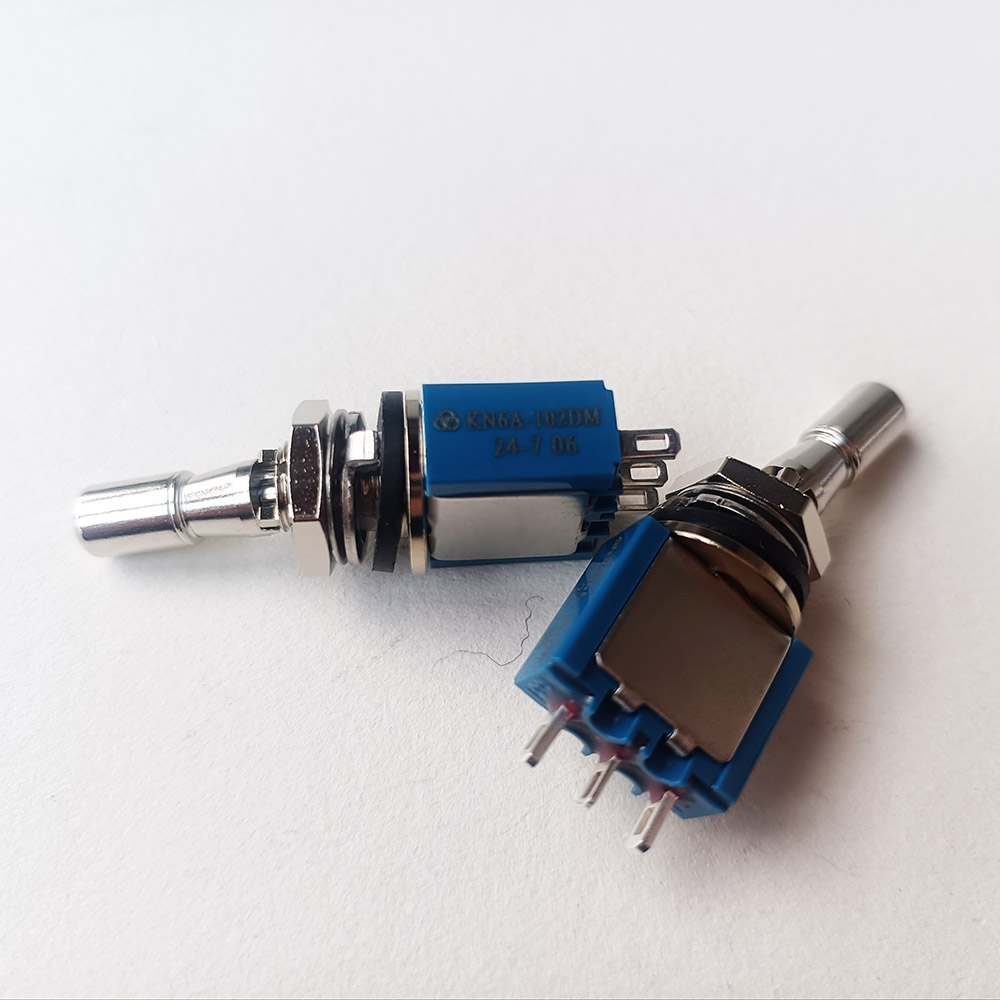
Key Drivers of Military Aviation Component Pricing
The price of a Military Aviation Relay or an Aircraft Engine sensor is built upon multiple non-negotiable cost layers that ensure reliability and compliance.
1. Certification & Compliance Costs
This is the single most significant price driver. Meeting standards like MIL-PRF-6106 (for relays) or AS9100 requires:
- Extensive Qualification Testing: Each component design must undergo rigorous environmental, shock, vibration, and lifecycle testing per DO-160 or specific MIL-SPECs.
- Continuous Auditing: Maintaining certifications requires regular (and costly) third-party audits of the entire quality management system.
- Documentation & Traceability: The administrative cost of providing full lot traceability, material certifications, and test reports for every batch of Aviation Fuses or contactors is substantial.
2. Material and Manufacturing Complexity
- Specialized Materials: Components like High-Quality Aviation Engine sensors or Military Aviation Contactors require high-grade alloys, precious metal contacts (e.g., gold, silver), and mil-spec wiring that are costlier than commercial equivalents.
- Low-Volume, High-Mix Production: Military orders are often smaller batch sizes with highly customized requirements, preventing the economies of scale seen in automotive or consumer electronics.
- Advanced Manufacturing Processes: Precision machining, hermetic sealing, and specialized plating processes add significant cost.
Strategic Framework: Evaluating True Cost vs. Price
Smart procurement looks beyond the unit price. Follow this three-step evaluation:
Step 1: Calculate Total Cost of Ownership (TCO)
- Acquisition Cost: The initial unit price of the Aircraft Contractor or relay.
- Integration & Testing Cost: Will the part require additional validation or modification at your facility?
- Lifecycle Cost: Includes forecasted maintenance, mean time between failures (MTBF), and availability/cost of spare parts over the platform's 20-30 year lifespan.
- De-Risking Cost: The financial risk mitigation provided by a supplier's proven track record, financial stability, and obsolescence management program.
Step 2: Scrutinize the Supply Chain & Value Proposition
Partner with suppliers who offer tangible value that justifies their pricing:
- Vertical Integration: Manufacturers like YM, who control processes from raw material sourcing to final test, offer better cost control and quality consistency than pure assemblers.
- Engineering Support: Free or low-cost design-in support for Aviation Meters for Drones or custom Aviation Sensors can save significant engineering hours downstream.
- Supply Chain Security: A reliable, long-term partner prevents costly production line stoppages.
Industry Trends Impacting Price and Procurement
New Technology R&D and Dual-Use Applications
R&D in solid-state power distribution (replacing traditional Military Aviation Contactors) and miniaturized Aviation Sensors is costly but can lead to long-term savings through higher reliability and reduced maintenance. Conversely, commercial drone and urban air mobility (UAM) development is creating "dual-use" components, where commercial volumes can help absorb some R&D costs, potentially benefiting military pricing.
Regional Focus: 5 Concerns for Procurement from Russia & CIS Markets
Based on market engagement, buyers in these regions prioritize a strict value-for-money equation:
- Certification Validity: Insistence on verifiable, internationally recognized certifications to avoid platform approval issues.
- Price-to-Performance Ratio: Extreme scrutiny of whether the price premium for a branded Military Aviation Relay is justified versus alternatives.
- Logistics & Customs Simplicity: Preference for suppliers experienced in navigating complex export controls (like ITAR) and regional customs.
- Long-Term Parts Availability: Given long platform service lives, guaranteed spare parts supply for 20+ years is a critical pricing factor.
- Technical Adaptation: Willingness to support minor design adaptations for legacy system compatibility without exorbitant cost.
How YM Electronics Balances Cost with Uncompromising Quality
Our Military Component Pricing Strategies are built on transparency and efficiency, not cost-cutting on quality.
Factory Scale & Modern Facilities
Our 50,000 sq.m. integrated manufacturing campus allows for significant efficiencies. Automated SMT lines for board assembly, in-house precision machining for Aircraft Engine component housings, and a fully equipped environmental testing lab under one roof reduce logistics costs and lead times, allowing us to offer competitive yet realistic pricing for High-Quality Aviation Engine parts.
Proactive R&D & Cost Engineering
Our R&D team, comprising veterans from aerospace engineering backgrounds, focuses on Design for Manufacturability (DFM). For instance, a recent patent for a modular Aircraft Contractor design reduced assembly time by 30% and material waste by 15%, cost savings we can share with long-term partners. This philosophy extends to developing cost-effective, yet reliable, Aviation Meters for Drones for growing market segments.
Product Knowledge: Use, Maintenance, and Standards
Industry Standards that Dictate Cost
Understanding these explains the "why" behind pricing:
- AS9100D: The aerospace QMS standard. Compliance requires documented processes at every stage, adding administrative cost but ensuring reliability.
- MIL-SPEC Profiles: e.g., MIL-PRF-23419 for fuses, MIL-DTL-38999 for connectors. Testing to these specs is expensive but mandatory.
- DO-254 / DO-178C: For complex electronic hardware/software. Compliance escalates development cost significantly for intelligent Aviation Sensors or meters.
Maintenance Tips to Protect Your Investment
- Proper Storage: Keep spare Aviation Fuses and contactors in controlled, dry environments. Corrosion is a major failure point that turns a low-cost spare into a costly system failure.
- Use Diagnostic Tools: Regularly monitor the performance of Aviation Sensors and Aviation Relays with appropriate test equipment to predict failures before they occur.
- Follow OEM Procedures: Always use the correct torque, tools, and locking compounds specified in the maintenance manual during installation.
Frequently Asked Questions (FAQ) on Pricing
Q1: Why is there such a large price difference between a "commercial-grade" and a "MIL-SPEC" relay that looks identical?
A: The difference is in the unseen processes: the MIL-SPEC Military Aviation Relay uses higher-grade materials with tighter tolerances, has undergone thousands of hours of qualification testing, and is backed by full traceability and a guaranteed performance envelope under extreme conditions. The commercial part has none of this assurance.
Q2: Can I negotiate price on military components like I do for commercial parts?
A: Yes, but the leverage points are different. Focus on long-term volume commitments, blanket purchase orders, or partnerships on multiple programs rather than just haggling over a single line item. This gives the supplier cost predictability, which can translate to better pricing.
Q3: Is the lowest price compliant with ITAR and other export regulations?
A> Not necessarily. Ensuring regulatory compliance adds cost. A suspiciously low price may indicate a supplier cutting corners on compliance, putting you at severe legal and financial risk. Always verify a supplier's export compliance credentials.
Q4: How does YM approach pricing for small-volume, specialized orders?
A: We employ a transparent, cost-plus-margin model for prototypes and low-volume orders. We provide a breakdown of NRE (Non-Recurring Engineering) and tooling costs versus unit cost, so you understand exactly what you are paying for. Our goal is to be a fair partner from development through to full-scale production.
References & Industry Sources
- Defense Logistics Agency (DLA). (2023). MIL-PRF-6106R: Performance Specification Relay, Electromagnetic, Established Reliability. Retrieved from https://www.dla.mil/
- Aviation Week & Space Technology. (2024, March 10). Supply Chain Report: The True Cost of Obsolescence in Military Aviation. AviationWeek.com.
- Johnson, M. [@ProcurementPro]. (2023, December 5). Discussion: How do you evaluate TCO for long-lifecycle Aerospace Components? Reddit, r/Procurement. https://www.reddit.com/r/Procurement/comments/...
- International Aerospace Quality Group (IAQG). (2024). AS9100D: Quality Management Systems - Requirements for Aviation, Space and Defense Organizations. Retrieved from https://www.sae.org/iaqg
- Wikipedia contributors. (2024, January 15). Total cost of ownership. In Wikipedia, The Free Encyclopedia. Retrieved from https://en.wikipedia.org/wiki/Total_cost_of_ownership
- U.S. Department of State. (2023). International Traffic in Arms Regulations (ITAR). Retrieved from https://www.pmddtc.state.gov/