XI'AN YUMU ELECTRONICS TECHNOLOGY CO.,LTD
Home> NEWS> Military Component Test Equipment Guide

Military Component Test Equipment Guide

2025,12,11

Military Component Test Equipment Guide: Ensuring Reliability in Critical Applications

For procurement managers sourcing components like Military Aviation Relays, Aircraft Contactors, and Aviation Sensors, the reliability of each part is non-negotiable. The bridge between component manufacturing and field deployment is rigorous testing. This guide explores military-grade test equipment, standards, and strategic considerations for B2B buyers ensuring supply chain resilience and compliance in aerospace, defense, and heavy industry sectors.

default name

Core Types of Military Component Test Equipment

Military and aerospace testing validates performance under extreme conditions. Key equipment categories include:

Environmental Stress Screening (ESS) Equipment

  • Thermal Shock Chambers & Temperature Cycling Ovens: Subject components like Aviation Fuses and Military Aviation Contactors to rapid temperature extremes (-55°C to +125°C+) per MIL-STD-810 and DO-160 standards.
  • Vibration and Shock Test Systems: Simulate the harsh mechanical environments experienced in aircraft, missiles, and ground vehicles. Critical for validating the structural integrity of Aircraft Engine sensors and mounting brackets.
  • Altitude/High-Pressure Chambers: Test performance and sealing under low-pressure (high-altitude) conditions for cockpit and external components.
default name

Electrical Performance & Functional Test Equipment

  • Automated Test Equipment (ATE) Rigs: Custom-built systems for validating the electrical functionality, timing, and response of complex units like an Aviation Relay or complete Aviation Meter for Drone assemblies.
  • High-Precision Multimeters & Sources: Measure and supply exact voltages/currents to verify sensor accuracy and contactor pull-in/drop-out thresholds.
  • HIPOT (Dielectric Withstand) and Insulation Resistance Testers: Ensure electrical isolation and safety, preventing short circuits in high-voltage applications.

Key Standards Governing Military & Aerospace Testing (MIL-STD, DO-160)

Compliance is defined by standards. Understanding them is crucial for specifying test equipment.

  • MIL-STD-810: The overarching US Department of Defense standard for environmental engineering considerations and laboratory test methods. It defines test procedures for shock, vibration, temperature, humidity, sand/dust, etc.
  • RTCA/DO-160: The global benchmark for environmental testing of airborne equipment. Sections cover everything from temperature and altitude to voltage spike and conducted susceptibility tests.
  • MIL-STD-202 & MIL-STD-750: Focus on test methods for electronic and electrical component parts, respectively.
  • MIL-STD-461/464: Govern electromagnetic compatibility (EMC) requirements and testing for control of electromagnetic interference.

The 5-Step Process for Validating a Component with Test Equipment

  1. Requirement Mapping: Analyze the component's intended application (e.g., a Military Aviation Relay for engine control) to identify which standards (MIL-STD-810, DO-160G Section) and test levels apply.
  2. Test Plan Development (ATP): Create an Acceptance Test Procedure detailing the specific tests, parameters, pass/fail criteria, and equipment to be used.
  3. Fixture Design & Setup: Design and fabricate mounts/fixtures that accurately interface the component (like an Aviation Sensor) with the test equipment without influencing results.
  4. Execution & Monitoring: Run the tests in sequence (e.g., vibration followed by thermal cycling), continuously monitoring performance with in-situ measurement.
  5. Data Analysis & Reporting: Compile all data, including any failures or deviations, into a formal test report. This report is a critical part of the certification and quality record.

Top 5 Concerns for Russian Procurement Managers

When sourcing test equipment or tested components, Russian B2B buyers prioritize:

  1. Compliance with GOST Standards alongside MIL/DO: Equipment must facilitate testing that satisfies both international and Russian national (GOST) military standards for components like Train and Plane subsystems.
  2. Equipment Calibration Traceability to Recognized Metrology Institutes: Proof that the test equipment itself is calibrated through a chain traceable to a body recognized within their regulatory framework.
  3. Ruggedness & Long-Term Serviceability: Preference for robust, serviceable equipment designs with guaranteed spare parts availability for decades, minimizing downtime.
  4. Technical Training & Documentation in Russian: Comprehensive operational and maintenance manuals, as well as training, available in Russian to ensure proper long-term use.
  5. Local Support & Service Center Access: The presence of a technical support hub or authorized service partner within the Eurasian Economic Union to reduce lead times for repairs and support.
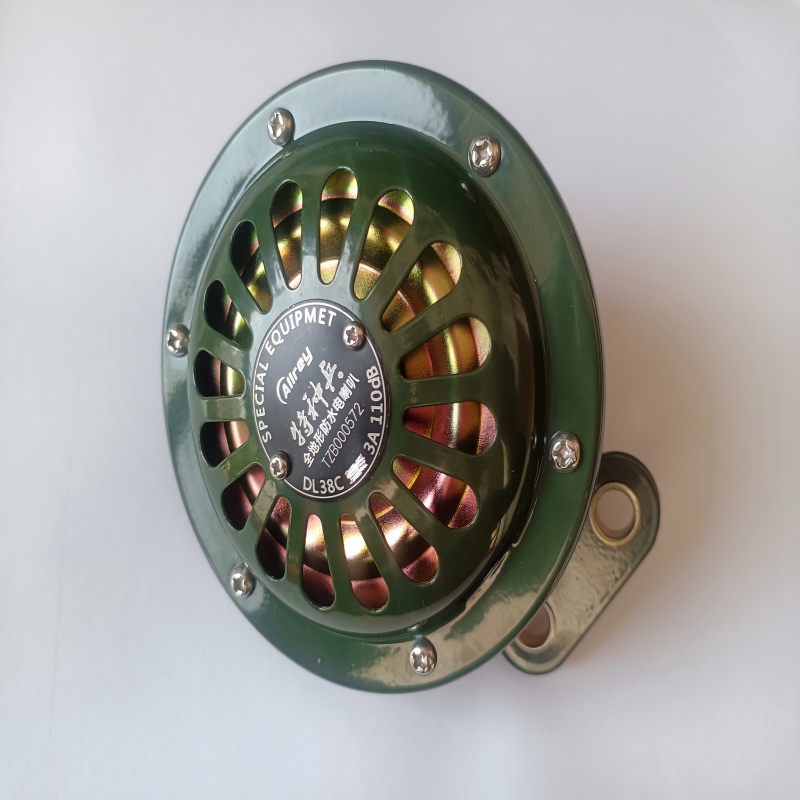
DL38 Horn

Industry Trends: AI, Connectivity, and Portable Solutions

AI-Powered Predictive Analysis & Condition-Based Monitoring

Modern test systems are integrating AI to analyze sensor data during tests. This can predict potential High quality Aviation Engine component failures earlier by identifying subtle anomaly patterns in vibration or electrical signatures beyond simple pass/fail limits.

The Rise of Portable & In-Situ Test Equipment

There is growing demand for rugged, portable testers that can perform functional checks and diagnostics on the flight line, in maintenance depots, or aboard naval vessels, reducing the need to remove components like an Aircraft Contactor for bench testing.

YM's In-House Testing Capabilities: From Factory to Certification

Reliability is engineered and proven internally. Our investment in verification infrastructure ensures that every component meets its specified performance.

Advanced Laboratory Facilities

Our 2,000 sq.m. dedicated testing facility houses a full suite of certified equipment, including 3-axis vibration systems, thermal shock chambers from -70°C to +180°C, and precision electrical test stations. This allows us to perform MIL-STD-202 and DO-160 compliance testing on our Military Aviation Contactors and Aviation Fuses under one roof, ensuring data integrity and speed.

default name

R&D Focus on Test Methodologies

Our engineering team doesn't just use test equipment; we develop custom Automated Test Equipment (ATE) solutions for our product lines. This deep expertise ensures our Aviation Meters for Drones are validated with efficiency and precision that mirrors end-user operational profiles.

Best Practices for Operating and Maintaining Test Equipment

  • Regular Calibration: Adhere to a strict calibration schedule traceable to NIST or equivalent standards. Uncalibrated equipment invalidates all test data.
  • Preventive Maintenance (PM): Follow the manufacturer's PM schedule for cleaning, lubrication, and inspection of mechanical parts (like shaker armatures) and cooling systems.
  • Operator Training: Ensure all personnel are thoroughly trained. Improper fixturing or programming can damage both the test equipment and the valuable Military Aviation Relay or sensor under test.
  • Environmental Control: Maintain stable temperature and humidity in the test lab to ensure measurement accuracy and equipment longevity.
J6-6100-60

Frequently Asked Questions (FAQ)

Q1: What is the main difference between commercial, industrial, and military-grade test equipment?

A: Military-grade equipment is built to more stringent environmental specs (wider temperature range, higher shock/vibration tolerance), offers higher measurement accuracy and long-term stability, and is designed to meet specific military standards (MIL-STDs) for construction and performance. It is also subject to stricter documentation and traceability requirements.

Q2: Can I use standard industrial test equipment to validate components to MIL-STD-810?

A: Only if the industrial equipment itself is verified to meet the specific accuracy, range, and control requirements outlined in the MIL-STD-810 test method. Often, it cannot generate the required extreme profiles (e.g., very high random vibration Grms levels), making dedicated military-grade equipment necessary.

Q3: How important is EMI/EMC testing for Aircraft Engine components?

A: Critically important. The engine environment is electrically noisy. MIL-STD-461 tests ensure components like FADEC (Full Authority Digital Engine Control) sensors and actuators are immune to interference and do not emit excessive EMI that could affect other aircraft systems.

References and Further Reading

  • Department of Defense. (2019). MIL-STD-810H, Department of Defense Test Method Standard: Environmental Engineering Considerations and Laboratory Tests. Washington, DC: US DoD.
  • RTCA, Inc. (2010). DO-160G, Environmental Conditions and Test Procedures for Airborne Equipment. Washington, DC: RTCA.
  • Department of Defense. (2015). MIL-STD-461G, Requirements for the Control of Electromagnetic Interference Characteristics of Subsystems and Equipment. Washington, DC: US DoD.
  • Wilson, C. [TestEngineerPro]. (2023, August 22). Budgeting for MIL-SPEC test equipment: New vs. refurbished. [Online forum post]. Reddit, r/Engineering.
  • Aerospace Testing International. (2022, June 15). The future of aviation component testing: More data, less time. Retrieved from AerospaceTestingInternational.com.
  • Wikipedia contributors. (2024, February 28). Environmental Stress Screening. In Wikipedia, The Free Encyclopedia.
Contact Us

Author:

Ms. Linda Deng

Phone/WhatsApp:

+86 13759943660

Popular Products
You may also like
Related Categories

Email to this supplier

Subject:
Email:
Message:

Your message must be between 20-8000 characters

Contact Us

Author:

Ms. Linda Deng

Phone/WhatsApp:

+86 13759943660

Popular Products

Contact

Send Inquiry

We will contact you immediately

Fill in more information so that we can get in touch with you faster

Privacy statement: Your privacy is very important to Us. Our company promises not to disclose your personal information to any external company with out your explicit permission.

Send