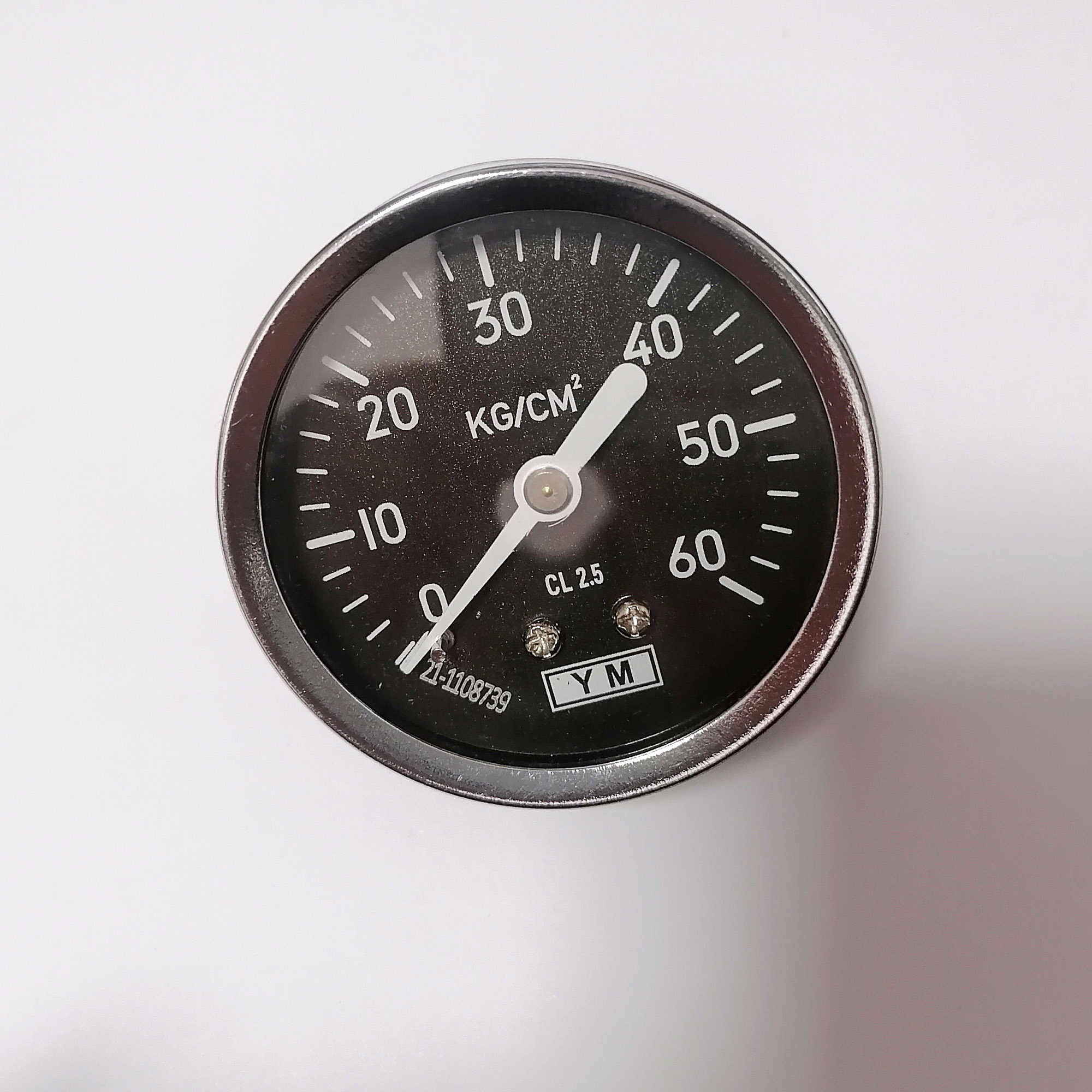
Pressure Gauge 0-60 kgs Calibration Guide: Ensuring Accuracy for Critical Systems
In aviation, defense, and industrial sectors, accurate pressure measurement is vital for safety, performance monitoring, and system control. A pressure gauge reading in kilograms per square centimeter (kgs/cm²) is a standard in many global markets. The Aviation pressure gauge 0~60 kgs is a critical instrument for monitoring hydraulic, fuel, oil, and pneumatic systems. Regular, precise calibration is not optional—it's a mandatory practice to maintain airworthiness and operational safety. This comprehensive guide details the professional calibration procedures for a 0-60 kgs range gauge, providing B2B采购 managers, maintenance supervisors, and quality technicians with the knowledge to ensure measurement traceability and reliability for aviation-grade instruments.

Understanding Calibration: Why It Matters for a 0-60 kgs Gauge
Calibration is the process of comparing a gauge's reading against a known, more accurate standard under controlled conditions to determine and correct any error.
- Safety Critical: Inaccurate pressure readings in an Aircraft Engine oil system or aircraft hydraulics can lead to catastrophic failure. Calibration ensures the gauge provides a true picture of system health.
- Regulatory Compliance: Aviation regulations (FAA, EASA, etc.) and military standards (MIL-PRF-39000) mandate periodic calibration of flight-critical instruments to maintain certification.
- Process Reliability: For industrial applications, calibration ensures quality control and process efficiency, preventing downtime or product defects.
- Financial & Legal Integrity: Accurate records from calibrated instruments are essential for maintenance billing, lease agreements, and incident investigations.
Pre-Calibration Preparation and Requirements
Proper preparation is essential for a valid calibration.
Essential Equipment (The Calibration Standard)
- Reference Standard: A digital pressure calibrator or deadweight tester with a range exceeding 60 kgs/cm² (e.g., 0-100 kgs/cm²). Its accuracy should be at least 4 times better than the gauge under test (e.g., gauge accuracy ±1.0% FS, standard accuracy should be ≤±0.25% FS).
- Pressure Source & Controller: A precision hand pump or automated pressure controller capable of generating and finely adjusting pressure up to 60 kgs/cm².
- Connection Kit: Proper adapters, hoses, and seals compatible with the gauge's pressure port and the standard. Must be rated for the pressure and medium (usually oil or air).
- Data Sheet/Calibration Certificate Template: For recording as-found/as-left data.
Environmental and Gauge Preparation
- Stabilization: Allow the gauge and reference standard to acclimate to the calibration lab environment (typically 20°C ±5°C) for several hours to minimize thermal error.
- Visual Inspection: Inspect the gauge for physical damage, glass integrity, pointer condition, and legibility of the 0-60 kgs scale. Check for signs of fluid ingress or contamination.
- Zero Check (Unpressurized): With no pressure applied, observe if the pointer rests exactly on zero. Note any "zero shift." For gauges with a live zero, check against the datum.
- Review Documentation: Consult the YM gauge datasheet and calibration manual for any specific procedures or tolerances.
Step-by-Step Calibration Procedure
Follow this methodical process to perform a basic calibration check and adjustment.
Step 1: Setup and Connection
- Mount the 0-60 kgs gauge securely on a test stand or bench.
- Connect the pressure source, reference standard, and the gauge under test in a closed loop using the appropriate fittings. Ensure all connections are leak-tight.
- Vent any air from the system if using a hydraulic fluid medium.
Step 2: "As-Found" Test (Upscale & Downscale)
This test documents the gauge's performance before any adjustment.
- Gradually increase pressure from 0 kgs/cm² to 60 kgs/cm² in approximately 5-6 evenly spaced points (e.g., 0, 12, 24, 36, 48, 60 kgs).
- At each point, allow pressure to stabilize. Record the reference standard's reading (applied pressure) and the gauge's indicated reading.
- After reaching full scale (60 kgs), begin decreasing pressure back to zero, recording readings at the same points on the downscale. This checks for hysteresis (difference between upscale and downscale readings at the same pressure point).
- Calculate the error at each point: Error = Gauge Reading - Reference Reading.
Step 3: Adjustment (If Necessary and Possible)
If the "as-found" errors exceed the allowable tolerance (e.g., ±1% of 60 kgs = ±0.6 kgs), adjustment may be performed.
- Zero Adjustment: Most gauges have an external zero-adjust screw. With no pressure applied, use a small screwdriver to carefully move the pointer to exactly zero.
- Span/Full Scale Adjustment: This is often an internal adjustment. Apply pressure near full scale (e.g., 60 kgs). Using the reference standard as guide, adjust the span mechanism (often via a screw on the movement) until the gauge reads correctly at this high point. Note: Adjusting span can affect zero, so iterations between zero and span adjustments may be needed.
- Caution: Not all aviation gauges are field-adjustable. Some are sealed at the factory. For these, if out of tolerance, the gauge must be replaced or returned to the manufacturer (like YM's certified repair center) for recalibration.
Step 4: "As-Left" Test and Final Verification
- Repeat the full upscale/downscale test sequence as in Step 2 after adjustments.
- Record all "as-left" data. All errors should now be within the specified tolerance band.
- Perform a final check at a common operating point (e.g., 30 kgs for a hydraulic system) to ensure accuracy where it matters most.
Step 5: Documentation and Sealing
- Complete the calibration certificate/data sheet, including:
- Gauge model, serial number, range (0-60 kgs).
- Reference standard ID and its calibration due date.
- Environmental conditions (temperature).
- "As-found" and "As-left" data, maximum error, and pass/fail statement.
- Calibrator's name, date, and next due date.
- If required by procedure, apply a calibration seal (tamper-evident sticker) to the gauge.
- Affix a status label indicating "Calibrated" and the next due date.
Industry Trends in Pressure Instrument Calibration
Automated Calibration Systems and Data Management
High-volume facilities are moving to automated pressure controllers and data acquisition systems. These systems apply precise pressure ramps, electronically record gauge responses, and generate certificates automatically, reducing human error and improving throughput. YM's own production calibration lines use such technology to ensure every gauge leaving our facility is perfectly characterized.
Traceability to Digital Twins and Remote Calibration
The concept of a "digital twin" for instruments is emerging, where calibration history and performance drift are modeled. Furthermore, "remote calibration" using smart, network-enabled pressure standards is being explored for field-deployed equipment, allowing experts to oversee calibration from a central location.
Increased Focus on Low-Pressure and Differential Pressure Calibration
With the growth of Aviation Aviation Instruments & Timers for Drone and environmental control systems, there is increased demand for precise calibration of gauges in lower ranges (e.g., 0-1 kgs for airspeed or cabin pressure) and differential pressure gauges, requiring even more sensitive standards.
YM's Calibration Infrastructure and Expertise
Our commitment to accuracy extends beyond manufacturing. YM operates an A2LA-accredited calibration laboratory (ISO/IEC 17025) dedicated to supporting our customers and our own production. The lab is equipped with primary standards like high-accuracy deadweight testers for ranges including 0-60 kgs, maintained in a controlled environment. Our metrology engineers are trained to national and international standards, ensuring that calibration services for Military Aviation Aviation Instruments & Timers meet the strictest defense and aerospace requirements.
R&D for Enhanced Stability and Calibration Intervals
A key R&D goal is to design pressure instruments that stay calibrated longer. This involves research into advanced Bourdon tube materials (like Ni-Span C) that minimize elastic hysteresis and temperature effects, and improved movement bearing designs to reduce friction-induced drift. By extending the time between required calibrations, we reduce our customers' total cost of ownership for High quality Aviation Engine, Train, Plane instrumentation.
5 Key Calibration Considerations for Russian Technical Teams
When establishing or auditing a calibration process, Russian metrology and maintenance teams emphasize:
- Traceability to the Russian State Primary Standard (GET): Demand for calibration certificates that explicitly document an unbroken chain of traceability from the working reference standard back to GOST-specified national standards, not just to international ones.
- Environmental Test as Part of Calibration (GOST 8.001): Expectation that the calibration report includes verification of gauge performance at specified high and low temperatures, not just at room temperature, to validate its specification across the operational range.
- Strict Adherence to GOST 2405 for Manometers: Specific requirements for calibration intervals, test point selection, and maximum permissible errors as defined in the GOST standard for pressure gauges, which may differ from MIL or ISO norms.
- Documentation in Russian with GOST Terminology: Calibration certificates and reports must be provided in Russian or bilingual format, using the correct metrological terms as per Russian regulatory language.
- On-Site Calibration Capability for Fielded Equipment: Strong preference for suppliers or service partners who can perform accredited calibration on-site at their hangars or facilities using mobile standards, minimizing equipment downtime and logistics.
Usage Tips and Post-Calibration Handling
To Maintain Calibration Integrity
- Avoid Overpressure: Never subject the gauge to pressure above its maximum scale (60 kgs), even briefly. This can cause permanent distortion of the Bourdon tube.
- Minimize Pulsation and Shock: Use snubbers or restrictors if installing in systems with pressure pulsations (e.g., from pumps) or potential for water hammer.
- Proper Mounting: Mount the gauge in a position that minimizes vibration and is easily readable. Use appropriate torque on the connection to avoid stress on the socket.
- Regular In-Service Checks: Compare the gauge reading against other system indicators periodically to catch sudden drifts or failures.
Relevant Standards for Calibration and Performance
The calibration process is defined by stringent international and military standards:
- ISO/IEC 17025: General requirements for the competence of testing and calibration laboratories.
- ISO 2787: Pneumatic tools and machines - Rotary tools - Test methods for performance (relevant for pressure source characterization).
- MIL-PRF-39000: Performance specification for pressure indicating dial type gauges.
- ASME B40.100: Pressure gauges and gauge attachments.
- GOST 2405-88: Manometers, vacuum gauges, manovacuum gauges, pressure gauges, draught gauges. (Key Russian standard).
- YM's processes are designed to comply with these and customer-specific requirements, documented in our quality management system.