
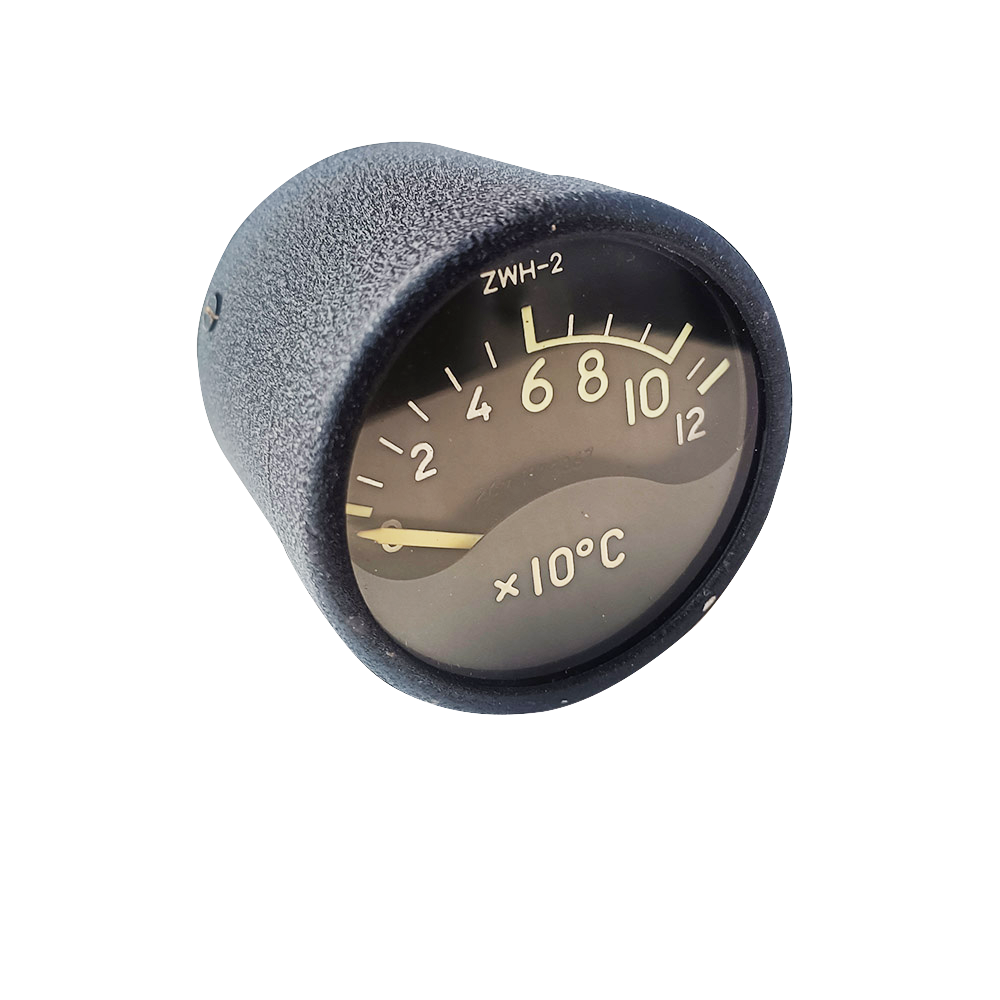


Model No.: ZWH-2
Brand: YM


The ZWH-2 Military Aviation Sensor Thermometer is a precision-engineered temperature measurement instrument designed for critical thermal monitoring in demanding aerospace environments. Engineered specifically for aircraft engine temperature monitoring, drone thermal management systems, and commercial Aviation Applications, this high-quality thermometer provides reliable, accurate temperature data essential for system performance optimization, safety monitoring, and preventive maintenance programs.
Manufactured with the same rigorous quality standards as our Military Metal Relay and Polarized Relay product lines, the ZWH-2 represents YM's commitment to producing measurement instruments that deliver exceptional accuracy and durability under extreme temperature conditions and vibration environments.
Designed and tested to withstand extreme temperature conditions encountered in military aviation operations, from arctic cold to desert heat environments. The instrument maintains calibration integrity under thermal cycling conditions that would compromise commercial-grade thermometers.
Features a precision-engineered analog dial with high-contrast temperature markings, anti-parallax design, and optional illuminated display for readability in all lighting conditions. The temperature scale is optimized for quick, accurate reading even during high-vibration flight conditions.
Incorporates hermetic sealing techniques developed through our expertise in Metal Sealing Relay manufacturing. The multi-layer sealing system ensures protection against moisture ingress and environmental contaminants while maintaining measurement accuracy throughout the instrument's service life.
Weighing under 3 grams, the ZWH-2 provides essential temperature measurement capabilities without significant weight penalty—critical for aircraft and drone applications where every gram affects performance, range, and fuel efficiency.
With optimized thermal sensor design, this thermometer provides responsive temperature readings essential for real-time system monitoring and thermal management in critical aviation systems.
Designed to operate accurately in electrically noisy aviation environments, complementing our PCB Signal Relay and Solid State Relay products in integrated electronic systems without measurement interference.
Utilizes precision bimetallic coils or gas-filled thermal systems for reliable temperature measurement with minimal hysteresis and excellent repeatability over extreme temperature ranges.
Constructed from materials specifically selected for resistance to aviation fluids, fuels, and environmental corrosion, ensuring long-term reliability in harsh chemical and weather environments.
Critical for monitoring oil temperature, cylinder head temperature, exhaust gas temperature, and bearing temperatures in both turbine and piston aircraft engines. Provides essential data for engine management systems and preventive maintenance programs.
Essential for monitoring battery temperature, motor temperature, and electronic component temperatures in military and commercial drones. The lightweight design preserves flight endurance while delivering critical thermal operational data.
Monitors cabin air temperature, bleed air temperature, air conditioning system temperatures, and anti-icing system temperatures in both military and commercial aircraft platforms.
Provides accurate hydraulic fluid temperature measurement for flight control systems, landing gear systems, and utility hydraulic systems, ensuring optimal fluid viscosity and system performance.
Critical for fuel temperature monitoring in aircraft fuel systems, including wing tanks and engine feed systems, ensuring proper fuel flow characteristics and system safety.
Provides accurate temperature measurement for aircraft maintenance equipment, engine test stands, and ground support systems during maintenance operations and system testing.
Provides accurate, real-time temperature data enabling early detection of thermal issues before they cause component failures or safety incidents, reducing operational risks and supporting regulatory compliance.
Extended service life (10,000+ thermal cycles) and minimal calibration requirements lower total cost of ownership compared to temperature instruments requiring frequent replacement or recalibration.
Accurate temperature monitoring enables optimal system operation, reducing energy consumption, improving system performance, and extending component service life in critical aviation systems.
Standardized mounting and connection interfaces compatible with common aviation temperature measurement systems reduce integration time and costs compared to custom measurement solutions.
The ZWH-2 Military Aviation Sensor Thermometer is designed and manufactured to meet or exceed the following standards:
All instruments include calibration certificates traceable to national standards, with optional NIST-traceable certification available. Materials are certified for aviation use with full traceability documentation.
The ZWH-2 is manufactured in YM's controlled-environment production facilities using precision CNC machining for critical components and automated calibration equipment. Our manufacturing process incorporates statistical process control to ensure consistent quality and performance across all production batches.
Every instrument undergoes rigorous testing and validation:
Our in-house calibration laboratory, maintained to ISO/IEC 17025 standards, features precision temperature baths, dry blocks, and infrared calibrators traceable to national measurement institutes. Regular proficiency testing ensures our calibration capabilities meet the highest industry standards.
Verify that the ZWH-2 temperature range, accuracy class, stem length, and installation requirements match your system specifications. Check temperature and vibration specifications against your operational environment.
Install the thermometer in the designated location using appropriate mounting hardware. Ensure proper orientation (typically vertical) and accessibility for reading and maintenance.
Install the thermometer stem or bulb in the temperature measurement point using appropriate thermal compound or installation techniques. Ensure proper immersion depth for accurate measurement.
For instruments with electrical contacts or transmitters, connect according to wiring diagrams. For systems incorporating Automotive Relay or Flash Relay components, ensure proper circuit protection and isolation.
After installation and system stabilization, verify calibration accuracy using a calibrated temperature source. Document installation calibration data for future reference and maintenance records.
Recommended calibration interval: 12 months for standard applications, 6 months for critical flight systems or harsh operating environments. All calibrations are documented with certificates traceable to national standards.


 Contact Now