


High-Performance JX-3C Military Relay RG4.566.007 for Aviation Application
Product Overview
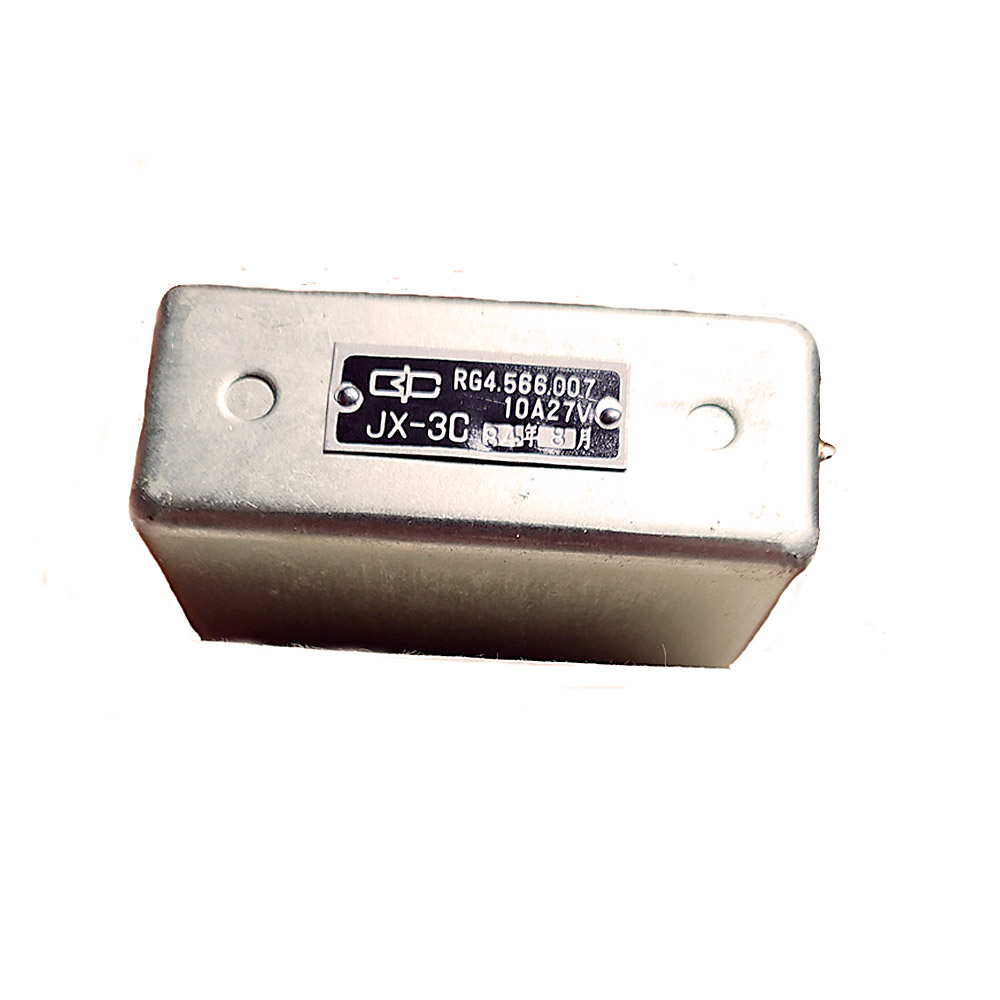
The JX-3C RG4.566.007 is a Military Aviation Metal DC Relay engineered for mission-critical applications where failure is not an option. This Metal Sealed Military Relay meets the rigorous demands of aviation systems, drone platforms, and military electronics, offering unparalleled reliability under extreme environmental stress. With a compact, hermetically sealed metal package and a robust DPDT 8Pin 27V Relay configuration, it serves as a dependable switching solution for signal and intermediate power control in Aircraft Engine maintenance systems, flight control boards, and other high-integrity applications.

Product Features & Advantages
This relay is designed to outperform standard PCB Signal Relays and Automotive Relays in harsh environments. Its core advantages stem from a military-spec design philosophy:
- Hermetic Metal Sealing: Full metal-can weld sealing ensures protection against moisture, dust, salt spray, and other contaminants, guaranteeing stable performance from high altitudes to ground-level humidity. This Military Metal Sealing is the gold standard for long-term reliability.
- Military & Aviation Grade Construction: Built to withstand extreme vibration, mechanical shock, and wide temperature fluctuations encountered in aviation and drone operations.
- High-Speed Switching: With an action time of ≤4ms and release time of ≤4ms, it provides rapid response for critical control circuits in flight systems.
- Ultra-Low Power Consumption: Coil power consumption is optimized between 0.3W and 0.43W, making it suitable for power-sensitive avionics and portable military equipment.
- Dual Contact Performance: Reliably handles both standard resistive loads (1A, 28V DC) and low-level signal loads (10-50µA, 10-50mV), offering versatility within a single, robust package.
Unlike many commercial relays, the JX-3C is part of our specialized family that includes Aviation Latching Relay and Polarized Relay JH-2S solutions, sharing the same commitment to extreme-environment performance.
Technical Specifications
The following parameters define the operational envelope of the JX-3C (RG4.566.007) relay, providing engineers with the data needed for system integration.
Electrical Characteristics
- Contact Configuration: DPDT (Double Pole Double Throw)
- Rated Coil Voltage: 27V DC
- Contact Rating:
- Resistive Load: 1A at 28V DC
- Low-Level Load: 10-50 µA at 10-50 mV
- Coil Power Consumption: 0.3W to 0.43W
- Initial Contact Resistance: ≤ 50 mΩ
- Contact Resistance After Life Test: ≤ 200 mΩ
Performance & Timing
- Operational Life: 100,000 cycles minimum (under rated resistive load)
- Action Time: ≤ 4 milliseconds
- Release Time: ≤ 4 milliseconds
- Incentive Pulse Width: 10 to 50 milliseconds
Environmental & Physical
- Dielectric Strength:
- At Normal Pressure: 500 Vr.m.s., 50Hz
- At Low Pressure: 250 Vr.m.s., 50Hz
- Insulation Resistance: > 500 MΩ (initial); > 50 MΩ (after high-level life test)
- Sealing (Leakage Rate): ≤ 1.0 x 10⁻³ Pa·cm³/s
- Weight: < 3 grams
Application Scenarios
The JX-3C relay is a critical component in systems where reliability is paramount. Its primary application is in aerospace and defense, but its robustness extends to other demanding fields.
- Aviation & Aerospace: Flight control systems, Aircraft Engine monitoring and maintenance units, landing gear control, and cockpit instrumentation. Its sealing makes it ideal for both pressurized cabin and engine-adjacent environments.
- Unmanned Aerial Systems (Drones): Power distribution modules, payload (camera/sensor) switching, and communication system control in military and industrial-grade drones.
- Military Ground Vehicles & Communications: Ruggedized electronic systems, encrypted comms equipment, and mobile command unit controls.
- High-Reliability Industrial: While it shares the robust DNA of our Industrial Power Relay line, the JX-3C is specified for niche industrial applications where environmental factors rule out standard components, such as in maritime or remote telemetry systems.
Production & Quality Assurance
Every JX-3C relay is born in YM's controlled manufacturing environment. Our process ensures the consistency demanded by aviation and military specifications.
- Precision Component Fabrication: Critical parts are machined to micron-level tolerances using advanced CNC equipment.
- Cleanroom Assembly: Assembly of the sensitive contact and magnetic systems takes place in a temperature and humidity-controlled cleanroom to prevent contamination.
- Laser Hermetic Sealing: The final, critical step is automated laser welding of the metal casing, performed in an inert atmosphere to achieve the specified leak rate of ≤10⁻³ Pa·cm³/s.
- 100% Automated Testing: Each unit undergoes a full battery of tests, including contact resistance, operate/release time, dielectric strength, and seal integrity (helium leak testing).
- Lot Traceability: Full material and process traceability is maintained for every production batch, a non-negotiable requirement for our Military Electromagnetic Relay products.
Metal Sealed Military Relay
Military Aviation Metal DC Relay JX-3C RG4.566.007 6A 27V
High-Performance JX-3C Military Relay RG4.566.007 For Aviation Application
Advanced Military Aviation Relay JX-3C RG4. 566 .007 For Drone Use
Military Aviation Relay JX-3C RG4 566 007 6A 27V For Aviation Engine Maintain
Metal Relay Designed for Aviation and Military Applications
Aviation Relay with Military Grade Metal Design
Military Aviation Relay for Drone,Aircraft Engine PCB Board
High quality Aviation relay for Engine,Train,Plane maintain
JX-3C RG4.566.007 6A 27V
Certifications & Compliance
The JX-3C relay is designed and manufactured to meet or exceed a suite of international standards relevant to its application domain. While specific certification marks depend on the customer's qualification program, the relay is built to the performance criteria of:
- Relevant portions of MIL-PRF-6106 for established reliability electromagnetic relays.
- Environmental test conditions analogous to RTCA/DO-160 for airborne equipment.
- Materials and processes compliant with RoHS directives.
YM's quality management system provides the framework for this consistent, high-standard production.
Frequently Asked Questions (FAQ)
Q1: Is the JX-3C a latching or non-Latching Relay?
A: The JX-3C (RG4.566.007) is a standard electromagnetic, non-latching relay. It requires continuous coil voltage to maintain the switched state. For applications requiring zero holding power, please inquire about our Aviation Latching relay solutions.
Q2: Can this relay be used as a direct replacement for part number XYZ in an existing avionics system?
A: The JX-3C may be a form-fit-function equivalent for many military and aviation relay footprints. However, for direct replacement in certified systems, a formal cross-reference and qualification process is required. Our engineering team can provide detailed comparison data to support your qualification efforts.
Q3: What is the key difference between the JX-3C and a standard PCB Board Relay?
A: The primary differences are the hermetic metal seal and the military-grade construction. A standard PCB Board Relay is typically housed in plastic and is not designed to operate reliably under the extreme vibration, thermal cycling, and contaminant exposure that the JX-3C is built to endure.
Q4: Do you offer customization on the coil voltage or pin configuration?
A: Yes. As part of our commitment to serving OEM/ODM partners, YM offers customization options for this platform, including specific coil voltages, special pin coatings, and modified termination styles for high-volume projects. Contact our sales team to discuss your requirements.
Q5: How does the sealing performance compare to epoxy-potted relays?
A: Metal hermetic sealing provides superior long-term stability compared to epoxy potting. Epoxy can absorb moisture over time and may outgas in a vacuum, potentially affecting internal components. The laser-welded metal seal of the JX-3C creates a permanent, impermeable barrier, offering definitive protection for the relay's operational lifetime.


 Contact Now